Tempeh Bolognese That Actually Hits (38g Protein, No Pasta)
A plant-based bolognese that earns its place on the dinner table — crispy pan-fried tempeh simmered into a deep San Marzano tomato sauce, folded with Greek yogurt for creaminess, and served over zucchini noodles. 38g of protein per serving, 30 minutes start to finish, and no one will miss the meat.
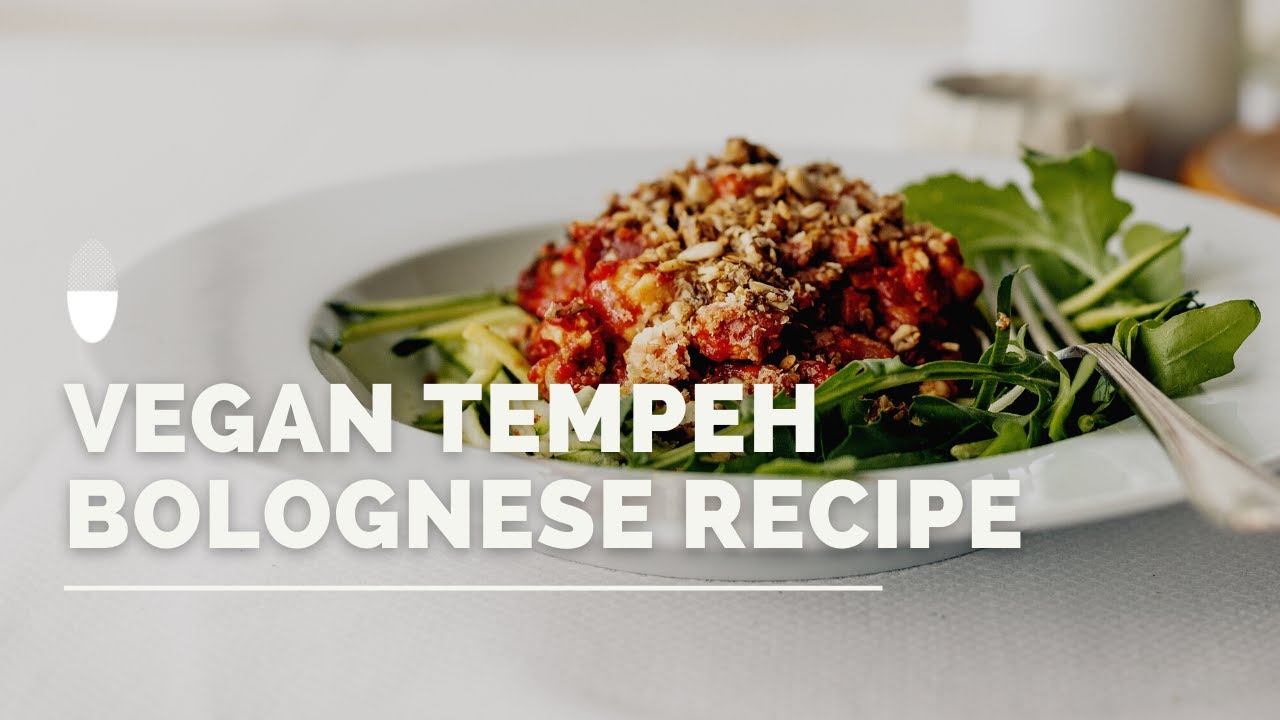
“Most plant-based bolognese tastes like marinara with an apology note where the meat should be. This one doesn't. The difference is technique: you fry the tempeh first, hard, until it's golden and slightly crispy, then build the sauce around it. That single step transforms tempeh from a spongy afterthought into something that actually holds its own against a San Marzano tomato sauce. Thirty-seven minutes. One pan. Thirty-eight grams of protein.”
Why This Recipe Works
Tempeh has a reputation problem. Most people's first encounter with it is in a sad stir-fry or a sandwich where it plays the role of "the thing that isn't meat." They eat it politely, acknowledge that it's technically food, and never buy it again. This is a technique failure, not a tempeh failure.
The Crisp-First Principle
The defining move in this recipe is frying the tempeh before it ever touches the sauce. Tempeh is a compressed fermented soybean cake — dense, protein-rich, and inherently porous. That porosity is a liability if you add it raw to liquid; it just absorbs the sauce and turns into a mush. But expose it to high dry heat first, and those same pores create a surface structure that browns and crisps like ground meat.
Six to eight minutes in a hot cast iron skillet with a tablespoon of olive oil. Irregular crumbled pieces, not uniform cubes. Minimal stirring so the contact side actually forms a crust instead of steaming. When the edges are golden and the kitchen smells nutty rather than beany, you're there. This step takes more time than everything else in the recipe combined — and it's why this dish works.
Tomato Paste Before Tomatoes
Most weeknight cooks treat tomato paste as a thickener — a tablespoon dumped in to add body. This recipe treats it as a flavor-building ingredient that needs heat, time, and agitation before anything else goes in the pan. Two minutes of constant stirring over medium heat turns the paste from bright red and tinny-tasting to a deeper brick color that smells sweet and complex. You're triggering the Maillard reaction — the same browning chemistry that happens when you sear a steak.
The difference in final flavor is not subtle. A sauce built on caramelized paste tastes like it's been going for three hours. One built on raw paste tastes like it's been going for twenty-five minutes. Given that this recipe actually takes twenty-five minutes, the paste technique is the only reason the sauce can punch above its weight.
The Yogurt Fold
Greek yogurt is the creaminess vehicle here — it replaces the heaviness of a traditional Bolognese's milk or cream reduction with something that adds protein instead of just fat. But it has a fatal flaw: it curdles if it hits active heat. This is not a gentle warning. Stir yogurt into a simmering sauce and you get small white granules distributed through your bowl instead of a silky finish.
The fix is procedural: take the pan completely off the burner, wait sixty seconds, then fold in the whisked yogurt. The residual heat is sufficient to incorporate it smoothly. This isn't a trick — it's just respecting the chemistry. Dairy proteins denature fast above a certain temperature. Remove the heat source, and they stay intact.
The Zucchini Problem
A spiralizer turns two zucchini into noodles in under two minutes, but zucchini is ninety-five percent water by weight. Unlike pasta, which absorbs sauce, zucchini noodles shed water into it. Leave them sitting in warm bolognese for five minutes and you've diluted your sauce by half.
The solution is timing and separation. Keep the noodles raw and room temperature. Plate them first, then ladle the hot sauce over the top immediately before eating. The residual heat from the sauce softens the noodles enough to eat comfortably without triggering the water-release cascade that comes from prolonged heat exposure.
For meal prep, this means storing sauce and noodles in entirely separate containers and combining them at the moment of eating — not the moment of packing. Treat the zucchini like fresh herbs: the last thing added, not the foundation everything else sits on.
Why 38 Grams
Tempeh is one of the most protein-dense whole plant foods available — eight ounces delivers around thirty grams before anything else gets added to the bowl. The Greek yogurt contributes another eight to ten grams across four servings. Nutritional yeast and Parmesan round it out. The thirty-eight gram figure is not aspirational; it's what happens when you stack three high-protein ingredients in the same dish and actually measure.
For anyone using food to support muscle building or satiety goals, this matters. A chicken breast Bolognese delivers roughly the same protein count with twice the prep complexity. This comes together in one pan in under forty minutes and keeps in the fridge for four days.
The architecture here is simple: a technique that actually respects the ingredient, a sauce that builds real depth in thirty minutes, and a protein count that earns the meal's place in a serious eating plan.
Where Beginners Mess This Up
Before we start, read this. These are the 4 reasons your tempeh bolognese that actually hits (38g protein, no pasta) will fail:
- 1
Not frying the tempeh long enough: Tempeh added directly to sauce without crisping up first turns soft, spongy, and flavorless. It needs 6-8 minutes in hot oil before it ever touches the tomatoes — you want golden edges and a slightly firm bite. That crust is where the flavor lives.
- 2
Adding yogurt over heat: Stirring cold Greek yogurt directly into a simmering sauce causes it to curdle into grainy white lumps. Pull the pan completely off the heat, let it sit for 60 seconds, then fold the yogurt in. The residual heat is enough to incorporate it smoothly.
- 3
Skipping the tomato paste caramelization: Two minutes of constant stirring on the tomato paste before adding the crushed tomatoes is not optional. Raw tomato paste tastes tinny and one-dimensional. Caramelized tomato paste tastes like it's been simmering for hours. This is where depth comes from in a 30-minute sauce.
- 4
Serving immediately over the zucchini noodles: Zucchini releases water rapidly once it contacts warm sauce. If you're not eating immediately, keep the noodles and sauce separate until the moment of plating, or your bowl will be swimming in diluted liquid within three minutes.
The Video Reference Library
Want to see it in action? Here are the exact videos we analyzed and combined to build this foolproof recipe translation:
The source video for this recipe. Covers the tempeh crisping technique and sauce-building sequence clearly, with good close-ups of the texture you're aiming for before and after the simmer.
🛠️ Core Equipment
- Large skillet or wide sauté panYou need surface area to crisp the tempeh in a single layer. A crowded pan steams instead of fries. Twelve inches minimum — a [cast iron skillet](/kitchen-gear/review/cast-iron-skillet) is ideal for the high initial heat.
- SpiralizerTurns two zucchini into noodles in under two minutes. A [spiralizer](/kitchen-gear/review/spiralizer) with a julienne blade gives you the thinnest, most pasta-like result. A vegetable peeler works as a backup but produces flat ribbons, not noodles.
- Small whiskFor smoothing the Greek yogurt before folding it into the sauce. Lumpy yogurt folds in lumpy. Thirty seconds of whisking beforehand ensures a silky, even incorporation.
- Wooden spoon or silicone spatulaFor constant stirring during the tomato paste caramelization. You need something that can scrape the bottom of the pan without scratching — this step burns fast if you're not attentive.
Tempeh Bolognese That Actually Hits (38g Protein, No Pasta)
🛒 Ingredients
- ✦8 oz tempeh, crumbled into bite-sized pieces
- ✦2 tablespoons extra virgin olive oil, divided
- ✦1 medium yellow onion, finely diced
- ✦4 cloves garlic, minced
- ✦1 can (28 oz) crushed San Marzano tomatoes
- ✦2 tablespoons tomato paste
- ✦1/2 cup plain Greek yogurt
- ✦2 medium zucchini, spiralized into noodles
- ✦1 teaspoon dried oregano
- ✦1/2 teaspoon red pepper flakes
- ✦2 tablespoons balsamic vinegar
- ✦1 teaspoon kosher salt
- ✦1/2 teaspoon black pepper
- ✦1/4 cup fresh basil, loosely chopped
- ✦2 tablespoons grated Parmesan cheese
- ✦1 tablespoon nutritional yeast
👨🍳 Instructions
01Step 1
Crumble the tempeh into small, irregular bite-sized pieces using your hands or a fork.
02Step 2
Heat 1 tablespoon olive oil in a large skillet over medium-high heat. Add the crumbled tempeh and cook for 6-8 minutes, stirring occasionally, until golden brown and slightly crispy on the edges.
03Step 3
Transfer the crisped tempeh to a clean plate and set aside.
04Step 4
Add the remaining 1 tablespoon olive oil to the same skillet over medium heat. Add the diced onion and sauté for 4-5 minutes until soft and translucent.
05Step 5
Stir in the minced garlic and cook for 60-90 seconds until fragrant. Do not let it brown.
06Step 6
Add the tomato paste and stir constantly for 2 minutes, scraping the bottom of the pan, until it darkens slightly and smells sweet.
07Step 7
Add the crushed tomatoes, crisped tempeh, oregano, and red pepper flakes. Stir well to combine.
08Step 8
Reduce heat to low and simmer for 12-15 minutes, stirring occasionally, until the sauce thickens slightly and the flavors meld.
09Step 9
Remove the pan from heat completely. Whisk the Greek yogurt in a small bowl until smooth, then fold it into the sauce.
10Step 10
Season with balsamic vinegar, kosher salt, and black pepper. Taste and adjust.
11Step 11
Divide the spiralized zucchini noodles among four plates or bowls.
12Step 12
Ladle the tempeh bolognese generously over the noodles. Top with fresh basil, Parmesan, and nutritional yeast. Serve immediately.
Nutrition Per Serving
Estimates based on standard preparation. Adjustments alter macros.
🔄 Substitutions
Instead of Tempeh...
Use Crumbled extra-firm tofu or brown lentils mixed with walnuts
Tofu offers milder flavor and similar protein content but a softer bite. The lentil-walnut blend provides chewier texture and a complete amino acid profile — cook lentils separately before adding to the sauce.
Instead of Greek yogurt...
Use Cashew cream (1/2 cup raw cashews blended with 1/4 cup water)
Fully vegan, slightly richer mouthfeel. Adds 3-4g additional protein per serving. Blend until completely smooth before folding in, or the texture will be grainy.
Instead of Zucchini noodles...
Use Edamame pasta or shirataki noodles
Edamame pasta adds another 10g of plant-based protein per serving and has a chewier, more traditional pasta texture. Shirataki noodles are virtually carb-free but require thorough rinsing and a dry pan-toast before serving to remove the odor.
Instead of Parmesan cheese...
Use Hemp seeds or additional nutritional yeast
Hemp seeds add subtle earthiness and all 9 essential amino acids. Nutritional yeast is the closer flavor match — 2 tablespoons replaces the cheesy, umami note almost exactly. Use both for maximum effect.
🧊 Storage & Reheating
In the Fridge
Store the sauce in an airtight container for up to 4 days. Keep zucchini noodles separate — they deteriorate quickly once cut and turn watery if stored with the sauce.
In the Freezer
Freeze the sauce (without yogurt) for up to 2 months in portioned containers. Thaw overnight in the fridge, reheat gently, and fold in fresh yogurt before serving.
Reheating Rules
Reheat sauce in a small saucepan over low heat with a splash of water to loosen it. Add a fresh spoonful of Greek yogurt after reheating to restore creaminess. Do not microwave with the yogurt already in — it separates.
❓ Frequently Asked Questions
Does tempeh need to be cooked before adding to the sauce?
Yes, and it needs to be cooked properly. Tempeh added directly to the sauce without crisping first turns soft and absorbs the sauce flavor without contributing any texture of its own. Six to eight minutes in hot oil until the edges are golden is the minimum — this step is what makes tempeh bolognese actually satisfying.
Why does my sauce taste bitter?
Tempeh has a naturally earthy, slightly bitter flavor from the fermentation process. Steaming it briefly before crisping reduces this significantly. Alternatively, the caramelized tomato paste and balsamic vinegar in the sauce should balance most of it. If the bitterness is still pronounced, add a pinch of sugar or a small pour of balsamic to counteract.
Can I make this fully vegan?
Yes, easily. Swap the Greek yogurt for cashew cream, omit the Parmesan or replace it with hemp seeds and extra nutritional yeast. Every other ingredient is already plant-based. The protein count stays near 30-35g per serving depending on your substitutions.
Can I use regular pasta instead of zucchini noodles?
Absolutely. The sauce works on any base — traditional spaghetti, chickpea pasta, or lentil pasta all work well. Chickpea or lentil pasta adds another protein boost if that's a priority. Adjust the nutritional values accordingly.
How do I prevent the zucchini noodles from making the dish watery?
Two approaches: salt the spiralized zucchini 15 minutes before serving and pat dry, which draws out excess moisture in advance. Or keep the noodles raw and separate until the moment of plating, then serve immediately. The zucchini releases its water fast once it contacts heat or liquid — either manage the moisture proactively or work quickly.
Is tempeh bolognese actually high protein, or is that marketing?
It's legitimate. Eight ounces of tempeh contains roughly 30g of protein on its own. The Greek yogurt adds another 8-10g across four servings. Combined with the nutritional yeast and Parmesan, 38g per serving is an accurate figure for the modified recipe. That's comparable to a chicken breast in a standard pasta bolognese.
The Science of
Tempeh Bolognese That Actually Hits (38g Protein, No Pasta)
We turned everything on this page into a beautiful, flour-proof PDF cheat sheet. Print it out, stick it to your fridge, and never mess up your tempeh bolognese that actually hits (38g protein, no pasta) again.
*We'll email you the high-res PDF instantly. No spam, just perfectly cooked meals.
AlmostChefs Editorial Team
We translate the internet's most popular cooking videos into foolproof, beginner-friendly written recipes. We analyze multiple methods, test them in our kitchen, and engineer a single "Master Recipe" that gives you the best possible result with the least possible stress.