Crispy Tangsuyuk (The Korean Sweet and Sour Pork That Actually Stays Crunchy)
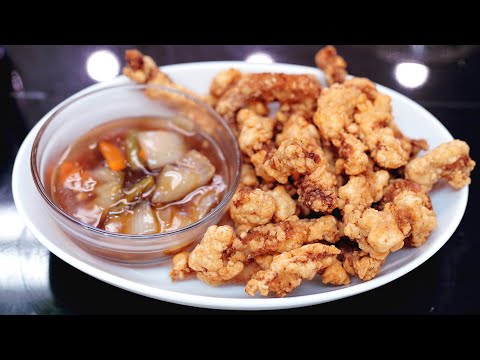
Korean-Chinese crispy fried pork in a glossy sweet and sour sauce — the dish that defined a generation of Korean-Chinese restaurant culture. We decoded the coating technique that keeps the crust intact even after saucing, so you get that satisfying crunch all the way through.

“Tangsuyuk is the dish that made Korean-Chinese restaurants legendary. It's also the dish that most home cooks get wrong in the same two ways: a coating that turns soggy the moment the sauce hits it, and a sauce that's either too sweet or too sharp. The fix for both is simpler than you think — one is about how you press the starch onto the meat, and the other is about adding the thickener incrementally instead of all at once.”
Why This Recipe Works
Tangsuyuk is not sweet and sour pork. It shares a lineage — Chinese-Korean cuisine (jungshik) adapted Cantonese techniques through the lens of Korean flavor preferences — but the dish that emerged is its own thing entirely. The coating is drier and more structural. The sauce is less sweet, more precisely balanced. The entire experience is engineered around textural contrast: the shell-like crunch of the exterior against the tender, lightly seasoned meat inside.
Understanding why the dish exists at this level of specificity makes it much easier to execute correctly.
The Coating Is a Structure, Not a Batter
Most fried food recipes ask you to make a batter — a liquid mixture that surrounds the protein and fries into a crust. Tangsuyuk doesn't work that way. The potato starch goes onto the meat dry, with only egg white as a binder, and it's pressed — not dipped, not dusted — into the surface until it forms a dense, almost paste-like layer on each piece.
Why does this matter? Because a batter has voids — tiny air pockets throughout the fried exterior that absorb liquid on contact. A pressed dry-starch coating has far fewer voids. It's denser. When the sweet-sour sauce hits it, the surface resists penetration for long enough that you can eat the dish while the coating is still meaningfully crunchy.
Potato starch specifically is ideal because its granules gelatinize at a lower temperature than cornstarch, creating a translucent, glassy exterior rather than the opaque chalky texture cornstarch produces. That glass-like quality is the signature tangsuyuk look — and it's structural, not cosmetic.
Oil Temperature Is a Precision Problem
The batter-drop test the creator uses in the video is not a shortcut — it's actually a more reliable signal than a thermometer for this application. A thermometer tells you the ambient oil temperature, but what you really care about is how quickly the coating sets when it hits the oil. That depends on the thermal mass of your pot, how much oil you're using, and how cold your meat is coming out of the fridge.
Drop a pea-sized piece of coated pork into the oil before the batch. If it sinks to the bottom and stays, the oil is too cold and you'll get greasy, pale results. If it floats instantly without sinking at all, the oil is too hot and the exterior will char before the interior cooks. The correct behavior — brief sink, immediate rise — tells you the oil is ready regardless of what the thermometer reads.
The second fry is optional but worth knowing about. Running the fried pieces through hotter oil for 60-90 seconds drives out residual moisture trapped in the coating during the first fry. This is standard practice in Korean-Chinese restaurants. It extends the crunch window significantly, buying you time between frying and eating.
The Sauce Is a Ratio, Not a Recipe
The sweet-sour balance in tangsuyuk sauce is supposed to be calibrated at the table, not fixed in advance. The creator in the video explicitly tastes and adjusts before thickening — and that sequencing matters. You cannot easily correct the flavor once the starch slurry has been added and the sauce has thickened into its final consistency. Taste first, adjust, then thicken.
Equal parts sugar and vinegar (3 tablespoons each) is a neutral starting point, not a mandate. Some households run sweeter. Some run sharper. The dark soy sauce provides the savory foundation that keeps either direction from tasting flat. The small amount of garlic and ginger in the oil base adds aromatic depth without asserting themselves — you should be able to sense they're there without identifying them.
The wok or heavy pan matters for the sauce too. You need a surface that holds and distributes heat evenly through the vegetables' brief stir-fry and into the sauce's boil. A thin pan will cool the moment the water goes in, extending the time to boil and softening the vegetables past the point of usefulness.
Why the Pour-vs-Dip Debate Exists
The fact that Koreans argue seriously about whether to pour the sauce over the tangsuyuk or serve it for dipping is not trivial. It's a proxy argument about what the dish is actually for. Pour-over treats tangsuyuk as a sauced dish where the coating is a delivery mechanism for the flavor combination. Dip treats the crispy coating as a feature in itself, worth preserving as long as possible.
Both positions are structurally correct. This recipe's coating, pressed and double-fried, can handle being sauced and still deliver crunch for a few minutes — long enough to eat. If you want the crunch to last the full meal, serve the sauce in a bowl beside the platter. Either way, eat fast.
Where Beginners Mess This Up
Before we start, read this. These are the 4 reasons your crispy tangsuyuk (the korean sweet and sour pork that actually stays crunchy) will fail:
- 1
Not pressing the starch firmly enough: Tangsuyuk's coating fails when the potato starch is loosely dusted on rather than pressed and kneaded into the meat. You need to squeeze each piece firmly so the starch fuses with the surface proteins. A loose coating absorbs sauce immediately and turns to paste. A tight, dry coating stays crisp because there's no gap for the sauce to penetrate.
- 2
Frying at the wrong temperature: Too cold and the meat absorbs oil, turning greasy. Too hot and the outside chars before the inside cooks through. The correct test: drop a small piece of batter into the oil — it should sink briefly, then rise immediately to the surface. If it rises before sinking, the oil is too hot. If it sinks and stays, not hot enough.
- 3
Adding the starch slurry all at once: Dumping the entire slurry into the sauce in one shot creates gluey clumps and a texture closer to wallpaper paste than glossy sauce. Add one spoonful at a time, stir to incorporate, then evaluate. You want the sauce to coat a spoon and run off in a slow ribbon — not a gel.
- 4
Overcooking the vegetables in the sauce: The onion, bell pepper, and carrot should retain some bite. They're there for texture and sweetness, not to become soft. A quick stir-fry — 90 seconds maximum — is all they need before the liquid goes in.
The Video Reference Library
Want to see it in action? Here are the exact videos we analyzed and combined to build this foolproof recipe translation:
🛠️ Core Equipment
- Deep heavy-bottomed pot or wokFor stable, even frying temperature. A [wok](/kitchen-gear/review/wok) holds heat through repeated batches and allows you to move oil around the sides to control temperature. Thin pans spike and drop in temperature every time a cold piece of meat goes in.
- Thermometer or wooden chopstickFor oil temperature verification. If you don't have a [kitchen thermometer](/kitchen-gear/review/instant-read-thermometer), a wooden chopstick inserted into hot oil should produce a steady stream of small bubbles — the visual equivalent of 170–180°C.
- Wire rack over a baking sheetFor draining the fried pork. Paper towels trap steam underneath the crust and soften it. A [wire rack](/kitchen-gear/review/wire-cooling-rack) lets air circulate on all sides, keeping the coating crisp while you finish the sauce.
- Small bowl for the slurryMix your potato starch and water separately before the sauce is ready. Once the sauce is boiling, you're adding incrementally and there's no time to measure.
Crispy Tangsuyuk (The Korean Sweet and Sour Pork That Actually Stays Crunchy)
🛒 Ingredients
- ✦400g pork loin, lean cut
- ✦Seasoned salt (맛소금), several shakes
- ✦1 tablespoon cheongju (Korean rice wine)
- ✦Black pepper, to taste
- ✦Sesame oil, a few drops
- ✦1 egg white
- ✦1 cup potato starch (gamja jeonbun)
- ✦Rice flour or frying powder, as needed to supplement
- ✦Cooking oil, generous amount for deep frying
- ✦1/2 tablespoon cooking oil for sauce
- ✦1/2 medium onion, cut into chunks
- ✦1/2 green bell pepper, cut into chunks
- ✦1/3 medium carrot, cut into chunks
- ✦Garlic, a very small amount (1/4 teaspoon)
- ✦Ginger, a very small amount (1/4 teaspoon)
- ✦1/2 cup water
- ✦1 tablespoon dark soy sauce (jin ganjang)
- ✦3 tablespoons sugar
- ✦3 tablespoons vinegar
- ✦1/3 teaspoon chicken stock powder or oyster sauce, optional
- ✦1 tablespoon potato starch mixed with 3 tablespoons water, for slurry
👨🍳 Instructions
01Step 1
Cut the pork loin into bite-sized pieces, roughly 3cm chunks.
02Step 2
Season the pork with several shakes of seasoned salt, rubbing it in firmly.
03Step 3
Add cheongju, black pepper, and a few drops of sesame oil to the pork. Massage everything together thoroughly.
04Step 4
Add the egg white and mix until every piece is coated.
05Step 5
Add the potato starch and press it firmly into each piece of meat. Knead and squeeze — the starch should feel dry and tight against the surface, not loose or dusty. If your starch runs short, supplement with rice flour or frying powder.
06Step 6
Heat a generous amount of cooking oil in a deep pot or wok to approximately 170-180°C. Test with a small piece of batter — it should sink briefly, then rise immediately.
07Step 7
Fry the pork in batches, pressing each piece once more just before it goes into the oil to ensure the coating is tight and dry.
08Step 8
Fry each batch for 3-4 minutes until golden and crispy. Remove and drain on a wire rack.
09Step 9
Optional: For extra crunch, fry the pork a second time at slightly higher heat for 60-90 seconds. Remove immediately and drain.
10Step 10
In a clean pan or wok, heat 1/2 tablespoon of oil over medium heat. Add the onion, bell pepper, and carrot. Stir-fry for 60-90 seconds — they should be barely softened with some color but still firm.
11Step 11
Add the garlic and ginger. Stir-fry for 30 seconds until just fragrant.
12Step 12
Add the water, dark soy sauce, sugar, and vinegar. Stir to combine. Add chicken stock powder or oyster sauce if using. Bring to a boil.
13Step 13
Taste the sauce. Adjust sweetness by adding more sugar, acidity by adding more vinegar. The balance should be clearly sweet-sour with the soy providing a savory backbone.
14Step 14
Mix the potato starch slurry. While the sauce is boiling, add it one spoonful at a time, stirring between each addition, until the sauce reaches a glossy, ribbon-like consistency that coats a spoon.
15Step 15
Pour the sauce over the crispy fried pork and serve immediately.
Nutrition Per Serving
Estimates based on standard preparation. Adjustments alter macros.
🔄 Substitutions
Instead of Potato starch...
Use Rice flour or frying powder
The creator uses this in the video when potato starch runs short. Rice flour produces a slightly lighter, more delicate crust. Frying powder (튀김가루) often contains leavening agents that create a thicker, bubblier coating.
Instead of Cheongju (Korean rice wine)...
Use Dry sherry or sake
Any dry rice-based alcohol works for the marinade's deodorizing function. Avoid sweet cooking wines — the residual sugar changes the meat's surface behavior during frying.
Instead of Chicken stock powder...
Use Oyster sauce or omit entirely
The creator treats this as genuinely optional. The sauce has enough flavor without it. Oyster sauce adds deeper umami; chicken stock adds savory roundness. Both are valid. Neither is mandatory.
Instead of Pork loin...
Use Pork shoulder or chicken breast
Shoulder has more fat and forgives overcooking better than loin. Chicken breast works surprisingly well — the coating technique is identical, and the lighter protein lets the sauce flavors come forward more clearly.
🧊 Storage & Reheating
In the Fridge
Store the fried pork and sauce separately in airtight containers for up to 2 days. Combined, the coating begins softening within 30 minutes.
In the Freezer
Freeze the fried pork (without sauce) for up to 1 month. Spread pieces on a tray to freeze individually before bagging, otherwise they fuse together.
Reheating Rules
Reheat fried pork in an air fryer at 190°C for 4-5 minutes, or in a 200°C oven on a wire rack for 8-10 minutes. Reheat the sauce separately in a small pan. Combine at the table.
❓ Frequently Asked Questions
Why does my tangsuyuk coating get soggy immediately?
Two causes: either the starch wasn't pressed firmly enough onto the meat before frying, or the sauce was added too early. The coating needs to be dry and tight before it goes into the oil. Once fried, serve within minutes — tangsuyuk is a time-sensitive dish.
Can I bake or air-fry instead of deep-frying?
Air frying works at 200°C for 12-15 minutes, flipping halfway. The coating won't be identical — deep frying surrounds the meat in hot oil that hits all surfaces simultaneously, while air frying relies on convection. The result is still good, just different. Baking is not recommended — the coating needs direct high heat to set properly.
What's the difference between tangsuyuk and Chinese sweet and sour pork?
Chinese-American sweet and sour pork typically uses a thick batter, pineapple, and a very sweet red sauce. Korean tangsuyuk uses a dry potato starch coating, a cleaner sweet-sour ratio without cloying sweetness, and vegetables like onion, carrot, and bell pepper instead of pineapple. The texture goal is also different — Korean tangsuyuk prioritizes the contrast between crispy coating and tender meat above all else.
Do I pour the sauce over or dip?
This is a genuine ongoing debate in Korean food culture. The 'boo-eoh' (pour over) versus 'jjik-eo' (dip) argument is taken seriously. Purists argue dipping preserves the crust longest. Pragmatists pour and eat fast. Both are correct depending on your priorities.
My sauce turned gummy and thick. Can I fix it?
Yes — add water a tablespoon at a time over low heat, stirring constantly. The starch gelatinization is reversible with heat and additional liquid. Bring it back to a gentle simmer while adding water until the consistency loosens to what you want.
Can I make the coating ahead of time?
You can marinate and coat the pork up to 2 hours ahead and hold it in the fridge uncovered. The cold helps the starch adhere more firmly. Do not go beyond 2 hours — the starch begins absorbing moisture from the meat and the coating loses its dry, tight texture.
The Science of
Crispy Tangsuyuk (The Korean Sweet and Sour Pork That Actually Stays Crunchy)
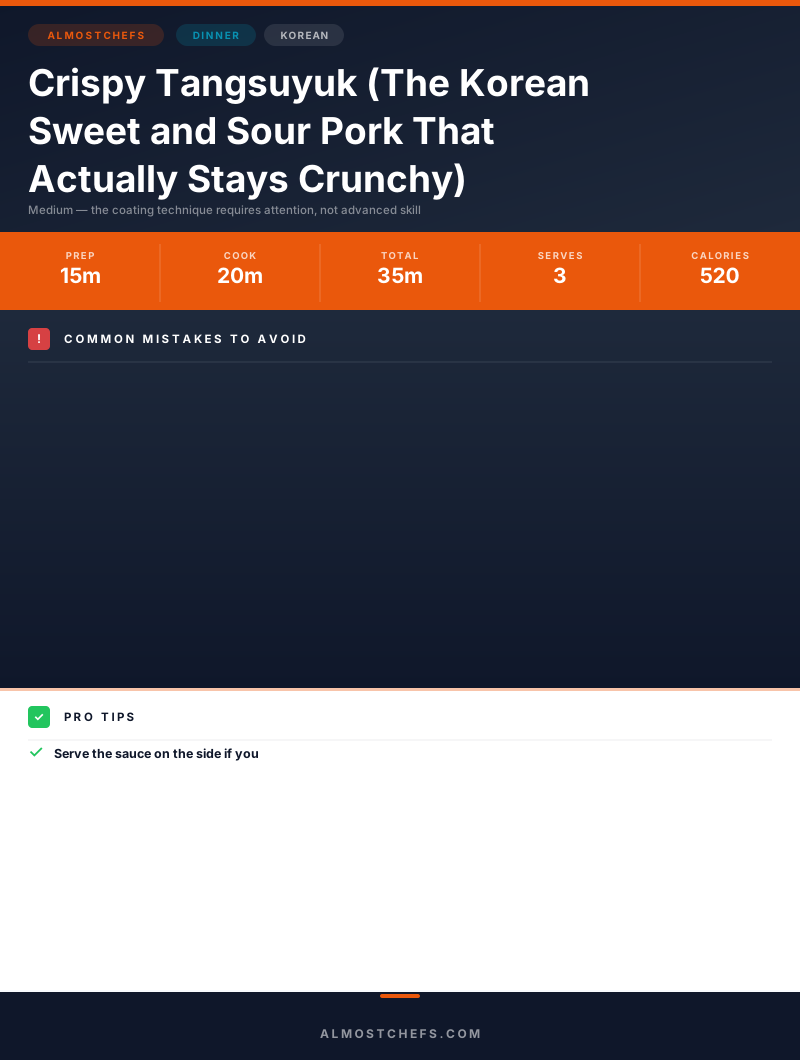
We turned everything on this page into a beautiful, flour-proof PDF cheat sheet. Print it out, stick it to your fridge, and never mess up your crispy tangsuyuk (the korean sweet and sour pork that actually stays crunchy) again.
*We'll email you the high-res PDF instantly. No spam, just perfectly cooked meals.
AlmostChefs Editorial Team
We translate the internet's most popular cooking videos into foolproof, beginner-friendly written recipes. We analyze multiple methods, test them in our kitchen, and engineer a single "Master Recipe" that gives you the best possible result with the least possible stress.