Tandoori Chicken (Yogurt Marinade, Spice Crust, Broiler Method)
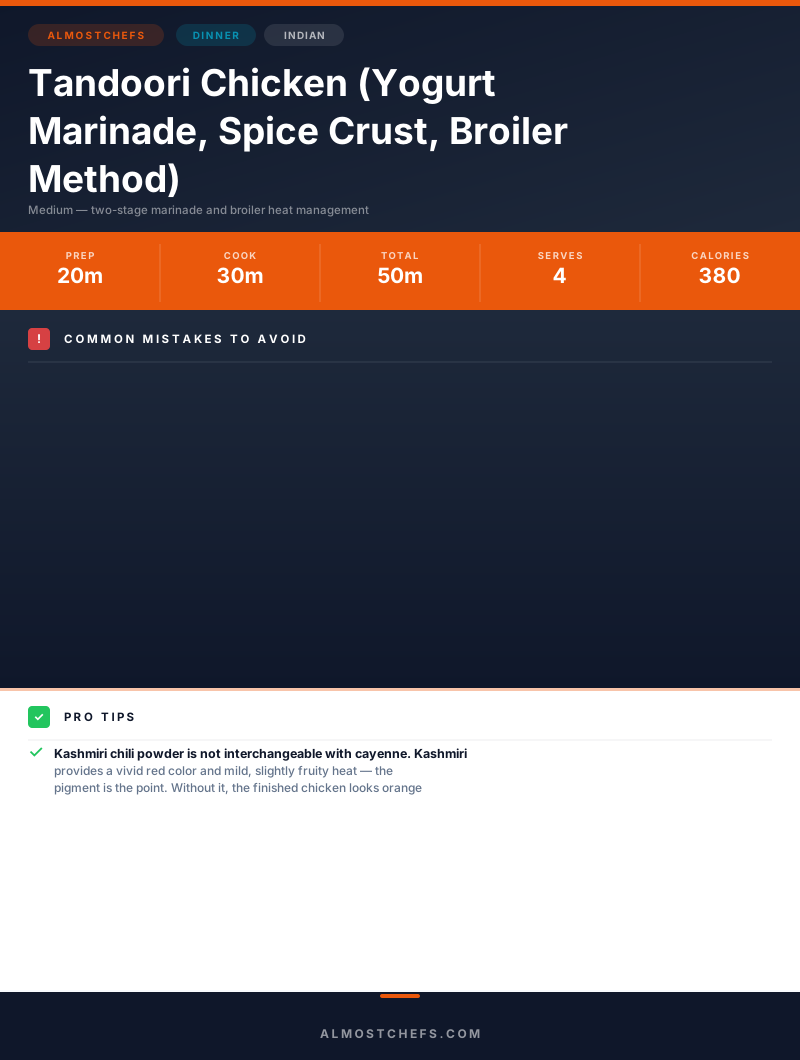
Tandoori chicken built on a two-stage yogurt marinade and broiled at maximum heat to approximate a tandoor oven. The yogurt char is the technique. The spice crust is the flavor.

“Every home version of tandoori chicken that comes out pale, steamed, and flavorless has one thing in common: the cook didn't understand what the marinade is actually doing. It isn't seasoning. It's surface chemistry. The yogurt is a dehydrating agent, a Maillard reaction catalyst, and a fat delivery system simultaneously. Get that right and a domestic broiler produces results that belong on the same plate as restaurant tandoor chicken.”
Why This Recipe Works
Tandoori chicken is one of the most recognizable dishes in Indian cuisine, and one of the most consistently failed when attempted outside a restaurant kitchen. The failure mode is always the same: pale, steamed, timidly spiced chicken that tastes like seasoned baked chicken rather than the charred, deeply flavored, slightly acidic result you get from a proper tandoor. The assumption is that this gap is equipment — that without a clay oven reaching 700-900°F, the dish is inaccessible at home. That assumption is wrong. The gap is technique, and specifically, it is understanding what the marinade is physically doing to the chicken.
The Two-Stage Marinade: Dehydration Before Flavor
Most recipes present tandoori marinade as a single step: mix everything together and coat the chicken. This is a shortcut that produces inferior results, and understanding why requires knowing what yogurt actually does to protein.
Yogurt is approximately 85% water, 3-4% fat, 5% lactose, and 3-4% protein. When applied to chicken, the water in the yogurt creates a surface film that must evaporate under broiler heat before any char can develop on the underlying meat surface. This is why single-stage marinated chicken emerges from the broiler looking orange and steamed — the water in the marinade is steaming the surface from the inside out rather than searing it.
The first marinade — lemon juice and salt — addresses this directly. Lemon juice lowers the surface pH of the chicken, beginning protein denaturation at the surface layer. Salt draws moisture out of the tissue by osmosis — the same mechanism that makes salted vegetables weep. In 20 minutes of contact time, a meaningful volume of surface moisture migrates to the exterior, where it is patted away before the yogurt coating is applied. The surface that the yogurt now coats is drier. It has more microscopic surface irregularity from the beginning protein denaturation. The yogurt-spice mixture bonds to it differently — it adheres rather than sitting on top.
The scoring is the second part of this system. Cuts made 1/2 inch deep down to the bone accomplish two things. First, they create interior channels that the marinade penetrates by direct contact rather than diffusion through solid muscle tissue — flavor now has a physical pathway to the center of the piece. Second, they create additional surface area that the Maillard reaction can operate on. The Maillard reaction — the non-enzymatic browning that creates the thousands of aroma and flavor compounds associated with seared, roasted, and broiled food — only occurs on exposed surfaces. More surface area means more Maillard chemistry, means more char, means more flavor. This is not optional surface work. It is the mechanism that makes bone-in tandoori chicken taste like something rather than just smell like something.
What Yogurt Does Under Heat
The yogurt coating is doing something specific under the broiler that a simple oil marinade cannot replicate. As broiler heat hits the yogurt-coated surface, water drives off rapidly. What remains is a concentrated layer of milk protein, lactose, and fat. The lactose undergoes Maillard browning with the milk proteins — this is a distinct reaction from the Maillard reaction on the chicken surface itself, and it produces different flavor compounds. The blackened blisters that characterize properly charred tandoori chicken are concentrated caramelized lactose reacting with amino acids from the milk proteins. They are not burned marinade. They are a distinct flavor element produced by the thermal chemistry of dairy under intense heat.
The fat in full-fat yogurt also acts as a fat-soluble spice carrier. Garam masala, cumin, coriander, and especially the paprika-family pigments are fat-soluble — they dissolve into fat rather than water. In a full-fat yogurt marinade, these compounds dissolve into the fat fraction and are physically carried against the chicken surface in continuous molecular contact during the marinating period. This is fundamentally different from the same spices floating in a water-based marinade where they remain largely suspended rather than bonding to the protein surface. The fat-dissolved spice flavor is richer, more complex, and penetrates deeper into the scored meat.
Broiler Mechanics: Approximating 800°F
A home broiler operates at approximately 500-550°F. A traditional tandoor clay oven operates at 700-900°F. This is a substantial gap, and no technique eliminates it entirely. The adaptations that close it most effectively are rack position and surface moisture management.
Rack position determines the intensity of radiant heat reaching the chicken surface. At 4-5 inches from the broiler element, the radiant heat flux is high enough to produce meaningful Maillard browning on the yogurt coating within the first 8-10 minutes. Beyond 6 inches and the intensity drops off following the inverse square law — double the distance, quarter the heat flux. The result at greater distances is cooked chicken with an orange-colored marinade that has dried but not charred.
Surface moisture is the other critical variable. Water on the surface of the chicken has a specific heat of absorption — it requires significant energy to evaporate before the surface temperature can rise above 212°F. Until the surface temperature exceeds that threshold, Maillard browning cannot begin. A wet surface delays char indefinitely. Patting the marinated chicken pieces dry before broiling removes the free surface water and allows the surface temperature to rise into Maillard territory rapidly. The yogurt coating is not dry — the fat and protein are still present — but the excess water is gone.
The Cast Iron Skillet Preheat Technique
One professional adaptation for home broiler use is preheating a cast iron skillet under the broiler element for 5 minutes before adding the chicken. The cast iron stores enormous amounts of thermal energy and releases it through direct conduction to the bottom surface of whatever contacts it. Combined with broiler radiant heat from above, this creates a two-directional heat environment that more closely approximates the 360-degree heat of a tandoor. The bottom surface of the chicken sears on contact with the preheated iron rather than sitting in its own dripped marinade, and the result is char development on both surfaces simultaneously rather than the sequential top-then-flip approach a wire rack requires.
This technique is optional but meaningful if maximizing char development is the goal. It does require more careful temperature management — the preheated cast iron plus maximum broiler heat can overcook bone-in chicken pieces if you're not monitoring the internal temperature closely.
Bone-In vs. Boneless: Why the Bone Is the Point
Boneless chicken thighs are convenient. They are also the wrong choice for this recipe, and the reason is thermal mass and cooking windows.
Bone-in chicken pieces with skin have significantly more thermal mass than boneless pieces. They take longer to reach internal temperature. That additional time in the broiler is what allows the surface to develop the char this recipe requires — the surface needs 20-25 minutes of broiler time to go from marinated coating to properly charred crust, and bone-in thighs with their bone and surrounding muscle can withstand that window without the interior drying out.
Boneless thighs cook through in 12-15 minutes under a hot broiler. At 15 minutes, meaningful char has barely started. The cook faces a choice: pull the chicken at safe internal temperature with inadequate char, or continue broiling until the char develops and overcook the interior. Neither is the right answer. The bone solves the problem by slowing interior heat penetration while the surface does its work.
Why Kashmiri Chili Powder Matters
The characteristic red-orange color of restaurant tandoori chicken comes from Kashmiri chili powder — a mild pepper with high pigment content and a specific fruity, slightly floral heat quality that is categorically different from cayenne or standard chili powder. The carotenoid pigments in Kashmiri chili are fat-soluble and bloom in the yogurt fat fraction of the marinade, producing a vivid color that penetrates the meat surface during the marinating period. Smoked paprika approximates the color; it does not replicate the flavor. If you have access to an Indian grocery, Kashmiri chili powder is worth sourcing specifically for this application.
Where Beginners Mess This Up
Before we start, read this. These are the 4 reasons your tandoori chicken (yogurt marinade, spice crust, broiler method) will fail:
- 1
Skipping the first marinade stage: The two-stage marinade is not a time-saving trick that can be collapsed into one step. The first stage — lemon juice, salt, and shallow scoring — draws surface moisture out of the chicken and creates microscopic channels in the skin and flesh for the second marinade to penetrate. Skip it and the yogurt-spice coating sits on the surface rather than bonding to the protein. The char develops on the marinade, not on the chicken. These are different things with different flavor outcomes.
- 2
Using low-fat yogurt: Full-fat yogurt is not interchangeable with low-fat or nonfat for this application. The fat in whole-milk yogurt carries fat-soluble spice compounds — particularly the carotenoids in paprika and turmeric — into direct contact with the protein surface. Fat-soluble flavor is categorically more complex than water-soluble flavor. Low-fat yogurt also contains more water, which means more steam under the broiler, which actively prevents the char this recipe depends on. Full-fat, or the result degrades.
- 3
Broiling without a wire rack: If the chicken sits on a flat baking sheet under the broiler, it steams in its own released liquid rather than charring. The chicken must be elevated on a wire rack over a sheet pan so that all surface area — including the underside — is exposed to air circulation and the liquid drips away from the protein. No rack means no char on the bottom surface, accumulated steam on the top surface, and a result that is cooked but not tandoor-approximating.
- 4
Not scoring the chicken pieces: Bone-in chicken pieces have dense muscle mass that broiler heat can't fully penetrate in the available cooking window. Scoring — making parallel cuts 1/2 inch deep down to the bone — solves two problems simultaneously: it dramatically accelerates marinade penetration into the interior, and it creates additional surface area for the Maillard reaction to operate on. An unscored thigh has one exterior surface. A scored thigh has that exterior surface plus the interior faces of every cut. More surface area means more char, more crust, more flavor.
The Video Reference Library
Want to see it in action? Here are the exact videos we analyzed and combined to build this foolproof recipe translation:
The primary technique reference for this recipe. Clear demonstration of the two-stage marinade, scoring method, and broiler setup. Pay close attention to the visual cues for char development — the color transition from red-orange to deep brown at the edges is the target.
🛠️ Core Equipment
- Wire rack set inside a rimmed baking sheetElevation is non-negotiable. The rack lifts the chicken above the pan surface so released liquid drips away, air circulates underneath, and every surface is exposed to broiler heat. Line the sheet pan with foil for cleanup — the dripping marinade burns onto bare sheet pans and is nearly impossible to remove.
- Cast iron skillet or heavy broiler-safe panA [cast iron skillet](/kitchen-gear/review/cast-iron-skillet) preheated under the broiler for 5 minutes before the chicken goes in creates an intense bottom sear from direct conductive heat in addition to the radiant broiler heat from above. This two-directional heat source more closely replicates the 360-degree heat of a tandoor oven than a wire rack alone.
- Instant-read thermometerBone-in chicken thighs and legs must reach 165°F at the thickest point — not at the surface, and not adjacent to the bone where readings run artificially high. A thermometer removes the guesswork from a broiler environment where surface char can obscure doneness entirely.
- Microplane or fine graterGarlic and ginger must be grated to a paste for the marinade, not minced. Minced aromatics in a yogurt marinade leave chunks that burn under the broiler before the chicken is cooked through. Grated paste distributes evenly and integrates into the yogurt coating without creating hot spots.
Tandoori Chicken (Yogurt Marinade, Spice Crust, Broiler Method)
🛒 Ingredients
- ✦2 lbs bone-in chicken pieces (thighs and drumsticks)
- ✦Juice of 1 lemon
- ✦1 teaspoon salt (for first marinade)
- ✦1 cup full-fat plain yogurt
- ✦2 tablespoons vegetable oil
- ✦4 cloves garlic, grated to a paste
- ✦1 tablespoon fresh ginger, grated to a paste
- ✦2 teaspoons garam masala
- ✦1.5 teaspoons ground cumin
- ✦1 teaspoon ground coriander
- ✦1 teaspoon smoked paprika
- ✦1 teaspoon turmeric
- ✦1 teaspoon salt
- ✦1/2 teaspoon cayenne pepper
- ✦1 teaspoon Kashmiri chili powder (or substitute additional smoked paprika)
- ✦Lemon wedges and sliced raw onion, to serve
👨🍳 Instructions
01Step 1
Score the chicken pieces. Using a sharp knife, make 3-4 parallel cuts on each piece, cutting 1/2 inch deep down to the bone. This is not cosmetic — it determines marinade penetration and interior doneness.
02Step 2
Combine lemon juice and 1 teaspoon salt in a bowl. Rub this first marinade thoroughly into the chicken pieces, working it into the score marks. Set aside for 20 minutes at room temperature.
03Step 3
While the first marinade works, combine yogurt, vegetable oil, grated garlic, grated ginger, garam masala, cumin, coriander, smoked paprika, turmeric, remaining salt, cayenne, and Kashmiri chili powder. Whisk until uniform.
04Step 4
Pat the first-marinade chicken pieces dry with paper towels to remove the drawn-out surface liquid. This step creates a drier surface for the yogurt coating to bond to.
05Step 5
Coat the chicken pieces thoroughly in the yogurt-spice marinade, pressing it into the score marks with your fingers. Every surface and every score mark interior should be coated. Cover and refrigerate for a minimum of 4 hours, up to 24 hours.
06Step 6
Remove chicken from refrigerator 30 minutes before cooking to allow it to come closer to room temperature. Preheat the broiler to maximum heat. Position the oven rack so the chicken surface will be 4-5 inches from the broiler element.
07Step 7
Set the chicken pieces on a wire rack set inside a foil-lined rimmed baking sheet. Do not crowd them — leave at least 1 inch between pieces for air circulation.
08Step 8
Broil for 15-18 minutes until deeply charred and colored on top. Using tongs, flip each piece and broil another 10-12 minutes on the second side.
09Step 9
Verify internal temperature at 165°F at the thickest point. Rest for 5 minutes before serving.
10Step 10
Serve with lemon wedges, thinly sliced raw onion, and naan or flatbread.
Nutrition Per Serving
Estimates based on standard preparation. Adjustments alter macros.
🔄 Substitutions
Instead of Full-fat plain yogurt...
Use Greek yogurt thinned with 2 tablespoons of milk
Greek yogurt is too thick as-is and produces a marinade that clumps rather than coats evenly. Thinned with milk to the consistency of regular yogurt, it works identically. Do not use nonfat Greek yogurt under any circumstances.
Instead of Kashmiri chili powder...
Use Equal parts smoked paprika and a small pinch of cayenne
This approximates the color reasonably well but misses the specific fruity quality of Kashmiri pepper. If you can source Kashmiri chili powder at an Indian grocery, it is worth the trip specifically for this recipe.
Instead of Vegetable oil...
Use Neutral oil or melted ghee
Ghee is the more traditional fat and produces a richer flavor in the finished char. Its higher saturated fat content also helps the marinade cling to the yogurt coating rather than separating. If using ghee, add it melted and let the marinade cool before applying to the chicken.
🧊 Storage & Reheating
In the Fridge
Store cooked tandoori chicken in an airtight container for up to 4 days. The char softens on refrigeration but the spice penetration into the meat remains fully intact.
In the Freezer
Freeze cooked pieces individually on a sheet pan until solid, then transfer to a freezer bag for up to 3 months. The texture on the exterior changes after freezing — the char becomes slightly leathery — but the interior flavor is preserved.
Reheating Rules
Reheat under the broiler on a wire rack for 5-6 minutes rather than in a microwave. The broiler re-crisps the exterior. Microwave reheating steams the chicken and produces a soggy, pale result.
❓ Frequently Asked Questions
Can I make this without a broiler, just using the regular oven?
Yes, with reduced char. Set the oven to its maximum temperature — typically 500-550°F — and bake on a wire rack for 25-30 minutes. Rotate once halfway through. You won't achieve the same surface char that the direct radiant heat of a broiler produces, but the spice penetration and flavor will be identical. Finish under the broiler for the final 3-5 minutes if your oven has one.
Why is my chicken sticking to the rack?
The yogurt marinade bonds to metal racks as it dries under heat. Lightly oil the wire rack with a paper towel before placing the chicken on it. Do not spray the rack while it's near the broiler element — aerosol near open flame is a fire hazard. Oil it cold, before the rack goes anywhere near heat.
My chicken came out gray and steamed, not charred. What went wrong?
Three possible causes, in order of likelihood: the rack was too far from the broiler element, there was too much surface moisture on the chicken before it went in, or the pieces were crowded on the rack. Move the rack to the highest position compatible with 4-5 inch clearance, always pat the marinated chicken dry before broiling, and ensure at least 1 inch of space between each piece.
Is the red color from the spices or from food coloring?
Restaurant tandoori chicken is frequently dyed with red food coloring. This recipe relies entirely on Kashmiri chili powder and smoked paprika for color. The result is a deep red-orange rather than the almost fluorescent red of many restaurant versions. The flavor is the same or better. If you want the exact restaurant color, add 1/4 teaspoon of red food coloring to the second marinade.
Can I use boneless chicken breast?
You can, but it's the wrong choice for this technique. Chicken breast has less fat than thighs, cooks through faster, and has no bone providing thermal mass. By the time meaningful surface char develops under the broiler, the breast interior is overcooked and dry. If you must use breast, cut it into large chunks rather than whole breasts, reduce broil time to 8-10 minutes total, and watch the internal temperature closely.
Why does my marinade slide off during broiling?
The most common cause is insufficient drying after the first marinade stage. The lemon-salt first stage draws moisture out of the chicken surface. If you don't pat that moisture away before applying the yogurt marinade, the yogurt is layered over a wet surface and will not bond. Pat thoroughly dry with paper towels before the second marinade goes on.
The Science of
Tandoori Chicken (Yogurt Marinade, Spice Crust, Broiler Method)
We turned everything on this page into a beautiful, flour-proof PDF cheat sheet. Print it out, stick it to your fridge, and never mess up your tandoori chicken (yogurt marinade, spice crust, broiler method) again.
*We'll email you the high-res PDF instantly. No spam, just perfectly cooked meals.
AlmostChefs Editorial Team
We translate the internet's most popular cooking videos into foolproof, beginner-friendly written recipes. We analyze multiple methods, test them in our kitchen, and engineer a single "Master Recipe" that gives you the best possible result with the least possible stress.