The Only Taco Salsas You Need (Roasted, Raw, and Verde Done Right)
Three essential taco salsas — a charred salsa roja, a bright pico de gallo, and a roasted salsa verde — built from the same counter mise en place. We broke down the most-watched salsa methods on YouTube and distilled the techniques that actually produce depth, balance, and heat that lasts past the first chip.
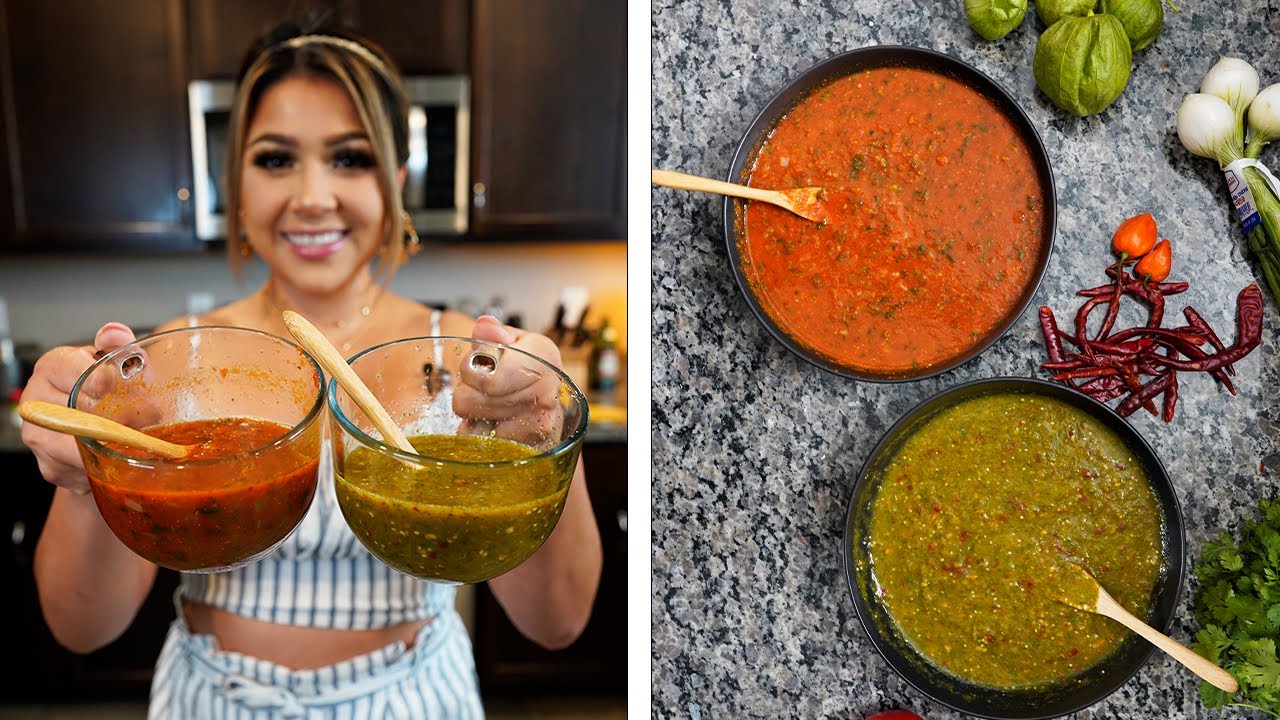
“Store-bought salsa is tomato paste with ambition. The real thing takes under 30 minutes, uses five ingredients per batch, and produces something layered enough to eat with a spoon. The difference between a flat salsa and one that makes people ask what restaurant you ordered from comes down to one thing: whether you applied direct heat to your tomatoes before you blended them. We built three versions — roasted roja, fresh pico, and tangy verde — so you're never reaching for a jar again.”
Why This Recipe Works
Salsa is not a recipe. It's a technique with a hundred correct answers and one wrong one: doing nothing to the tomatoes before you blend them. The entire architecture of a great taco salsa — that layered, complex heat that settles into the back of your throat rather than assaulting the front — is built on what happens to a vegetable under direct, unforgiving heat. Everything else is seasoning.
The Charring Principle
Tomatoes are mostly water and acid. In their raw state, they taste bright and sharp — useful in a salad, aggressive in a salsa. When you press a halved Roma tomato cut-side down onto a screaming-hot cast iron skillet and leave it completely alone for four minutes, two things happen simultaneously. The Maillard reaction attacks the sugars in the cut surface, converting them into hundreds of new flavor compounds — the same transformation that separates a seared steak from a boiled one. At the same time, the direct heat collapses the cell walls of the tomato flesh, concentrating the liquid and intensifying everything that was already there.
The result looks intimidating — deep black patches on the surface, collapsed structure, a slight acrid smell. It's correct. Those charred bits, blended in, become the smoky backbone that no spice blend can fabricate. This is why restaurant salsa tastes different. It's not a secret ingredient. It's a process.
The same principle applies to tomatillos for the verde, but with an important difference: tomatillos release significant liquid as they char. Do not drain it. Let it cook off and caramelize in the pan, then scrape every bit of it into the blender. That concentrated, slightly sticky residue is where the verde's depth lives.
Three Salsas, One Station
The smartest way to make taco salsas is to build all three simultaneously from a shared charring station. The roja uses Roma tomatoes and dried chiles. The verde uses tomatillos and serranos. The pico requires no heat at all — just precise knife work and lime. While your dried guajillos are rehydrating in hot water, you're charring your tomatillos. While the charred vegetables cool before blending, you're dicing tomatoes for pico. The whole operation takes 45 minutes of active time and produces three distinct condiments that cover every register: smoky and rich (roja), fresh and acid-bright (pico), tangy and herbal (verde).
This is how taqueria prep actually works — not three separate recipe sessions but one orchestrated mise en place. Once you internalize the logic, you stop following the recipe and start reading the pan.
The Dried Chile Question
Most home cooks ignore dried chiles because they require an extra step — and that step, it turns out, is doing most of the work. A guajillo chile is not spicy in the way a fresh jalapeño is spicy. It's complex in the way dark chocolate is complex: fruity, smoky, faintly sweet, with a slow-building warmth that doesn't peak until you've already swallowed. An ancho brings earthiness and a hint of dried plum. Together, they build a roja with more flavor architecture than anything you'd achieve with fresh chiles alone.
The toasting step is mandatory. Thirty seconds per side in a dry skillet wakes up the volatile oils in the dried chile skin and transforms the aroma from dusty to compelling. Over-toast them and you introduce bitterness that no amount of acid or salt will correct. The visual cue: the chile should darken slightly and become pliable, not brittle. The smell should be chocolate and fruit, not smoke. If it smells like a campfire, start over.
Blending Is Not Puréeing
This is where most home cooks make their second critical error, after skipping the char. A blender or food processor set to full speed and run for 30 seconds produces baby food. Taco salsa should have enough texture to cling to a tortilla chip, enough body to sit on a taco without running off the edge. The technique is pulse — eight to ten short bursts, pausing between each to assess the texture. Stop when you have something rough and cohesive. You're not making a smoothie.
The exception is a deliberately thin, pourable salsa roja — the style you often see in small plastic cups at taquerias. For this version, blend smooth and pass through a fine-mesh strainer to remove seeds and skins. The result pours like a sauce and works best drizzled rather than spooned. Both styles are correct; neither is better. They're just different tools for different applications.
Rest Is Not Optional
Freshly blended salsa tastes unfinished. The raw garlic is sharp, the lime is aggressive, the chile heat is one-dimensional. Give it fifteen minutes at room temperature and the acid from the tomatoes and lime begins breaking down the garlic's harshness while the aromatic compounds from the chiles and cilantro distribute evenly through the sauce. The salt penetrates. The heat rounds out. This is not resting for the sake of resting — it is a continuation of the cooking process, powered by chemistry instead of heat.
Make all three salsas at least an hour before you need them. If you can make the roja and verde the day before, do it. They improve significantly overnight, which is why every serious taquero makes salsa at the start of the shift rather than to order.
Where Beginners Mess This Up
Before we start, read this. These are the 4 reasons your the only taco salsas you need (roasted, raw, and verde done right) will fail:
- 1
Blending raw tomatoes without charring first: Raw blended tomatoes produce a thin, acidic salsa with no depth. The charring step — broiler, dry skillet, or open flame — triggers the Maillard reaction on the tomato skin, converting sharp acidity into rich, smoky complexity. Skip this and you get juice, not salsa.
- 2
Over-blending to a smooth purée: Authentic taco salsa has texture. When you blend until completely smooth, you lose the chunky, irregular character that holds up against meat and tortilla. Pulse in short bursts and stop when you have a rough, cohesive sauce — not a soup.
- 3
Under-seasoning at the wrong stage: Salt added after blending sits on the surface and tastes sharp. Salt added before or during roasting penetrates the tomatoes as they cook. Taste after blending, adjust, then taste again after 10 minutes of resting — the flavor continues developing as the salsa cools.
- 4
Not resting the salsa before serving: Fresh salsa served immediately tastes unintegrated — the garlic is raw and sharp, the lime is aggressive. Even 15 minutes of rest lets the acid mellow and the aromatics meld. Overnight is ideal for the roja and verde. Pico is better same-day but still needs 10 minutes minimum.
The Video Reference Library
Want to see it in action? Here are the exact videos we analyzed and combined to build this foolproof recipe translation:
The source video demonstrating all three salsa techniques in one session. Particularly useful for understanding the visual cues on charring tomatoes — what 'properly blistered' actually looks like versus 'burnt and bitter.'
Deep dive into the dry-roasting technique for tomatoes and chiles. Covers the difference between broiling and skillet charring and when to use each method depending on your equipment.
Step-by-step tomatillo breakdown — how to peel, char, and balance the natural tartness with the right amount of onion and serrano. Essential watching before your first verde attempt.
🛠️ Core Equipment
- Cast iron skillet or heavy comalFor dry-charring tomatoes, tomatillos, and chiles without oil. A thin non-stick pan won't get hot enough to produce proper char — you get steam instead of browning, and the salsa tastes boiled rather than roasted.
- Blender or food processorA blender gives smoother results; a food processor gives more textured, chunky salsa. Either works — the key is pulsing rather than running continuously. Immersion blenders work in a pinch but produce inconsistent texture.
- Fine-mesh strainerOptional but useful for salsa roja. If you want a thinner, restaurant-style pourable salsa, passing it through a strainer removes seeds and skins while keeping the flavor. For chunky table salsa, skip this step.
- Molcajete (volcanic stone mortar)The traditional tool for hand-grinding salsa. It creates a rough, uneven texture that no blender replicates — the volcanic stone actually seasons the salsa as you grind. Not essential, but if you have one, use it for the pico.
The Only Taco Salsas You Need (Roasted, Raw, and Verde Done Right)
🛒 Ingredients
- ✦**Salsa Roja (Roasted Red):**
- ✦6 Roma tomatoes, halved
- ✦3 dried guajillo chiles, stems and seeds removed
- ✦1 dried ancho chile, stem and seeds removed
- ✦4 cloves garlic, unpeeled
- ✦1/2 white onion, roughly chopped
- ✦2 serrano peppers
- ✦1 tablespoon neutral oil
- ✦1/2 teaspoon ground cumin
- ✦1/2 teaspoon Mexican oregano
- ✦Juice of 1 lime
- ✦Salt to taste
- ✦**Pico de Gallo (Fresh):**
- ✦4 Roma tomatoes, finely diced
- ✦1/2 white onion, finely diced
- ✦2 jalapeños, seeded and minced
- ✦1/2 cup fresh cilantro leaves, chopped
- ✦Juice of 2 limes
- ✦1/2 teaspoon kosher salt
- ✦**Salsa Verde (Roasted Tomatillo):**
- ✦1 pound fresh tomatillos, husks removed
- ✦3 serrano peppers
- ✦4 cloves garlic, unpeeled
- ✦1/2 white onion, quartered
- ✦1/3 cup fresh cilantro leaves
- ✦Juice of 1 lime
- ✦Salt to taste
👨🍳 Instructions
01Step 1
**Salsa Roja — Toast the dried chiles:** Heat a dry cast iron skillet over medium-high heat. Press the guajillo and ancho chiles flat against the surface for 20-30 seconds per side until they soften, blister slightly, and become fragrant. Do not let them blacken — bitter is unrecoverable.
02Step 2
**Salsa Roja — Rehydrate the chiles:** Transfer toasted chiles to a bowl and cover with hot water. Soak for 15 minutes until completely pliable. Reserve 1/4 cup of the soaking liquid.
03Step 3
**Salsa Roja — Char the tomatoes and aromatics:** In the same skillet over high heat, char the tomato halves cut-side down, the unpeeled garlic, and the serrano peppers. Cook undisturbed for 4-5 minutes until deeply blistered and blackened in spots. Flip and char the other side for 2-3 minutes. Peel the garlic when cool enough to handle.
04Step 4
**Salsa Roja — Blend:** Combine charred tomatoes, peeled garlic, serranos, rehydrated chiles, oil, cumin, and oregano in a blender. Pulse 8-10 times until you reach a rough, chunky consistency. Add soaking liquid one tablespoon at a time if too thick.
05Step 5
**Salsa Roja — Season and rest:** Transfer to a saucepan and simmer over medium heat for 5 minutes, stirring occasionally. Add lime juice and salt. Rest for at least 15 minutes before serving.
06Step 6
**Pico de Gallo — Dice and combine:** Combine diced tomatoes, onion, jalapeño, and cilantro in a bowl. Add lime juice and salt. Toss gently.
07Step 7
**Pico de Gallo — Rest:** Cover and let sit at room temperature for at least 10 minutes before serving. The salt will draw out moisture and the flavors will integrate.
08Step 8
**Salsa Verde — Char the tomatillos:** Heat the cast iron skillet to high. Add tomatillos, serrano peppers, quartered onion, and unpeeled garlic. Char for 4-5 minutes per side until deeply blistered and softened. The tomatillos should be collapsing and juicy. Peel the garlic.
09Step 9
**Salsa Verde — Blend:** Add charred tomatillos (and any juices from the pan), garlic, serranos, and onion to a blender. Add cilantro. Pulse 6-8 times until you have a slightly chunky sauce. Add lime juice and salt.
10Step 10
**Salsa Verde — Taste and adjust:** Verde should taste bright, tangy, and herbal with heat on the back end. If it's too tart, add a pinch of sugar or a few extra cilantro sprigs. If it's too mild, add another roasted serrano. Rest 10 minutes before serving.
Nutrition Per Serving
Estimates based on standard preparation. Adjustments alter macros.
🔄 Substitutions
Instead of Guajillo chiles...
Use New Mexico dried chiles or ancho chiles only
Guajillos provide bright red color and mild fruity heat. New Mexico chiles are the closest substitute — earthier but same heat level. Doubling the ancho and skipping the guajillo gives a darker, richer salsa with less brightness.
Instead of Fresh tomatillos...
Use Canned whole tomatillos (drained)
Skip the charring step entirely. Drain thoroughly and blend directly. The result is brighter and less smoky than roasted but still authentically verde. Good emergency backup.
Instead of Serrano peppers...
Use Jalapeños (for less heat) or habaneros (for more)
Jalapeños produce a milder, more widely approachable salsa. Habaneros add fruity heat and a Caribbean edge — start with half a habanero and taste before adding more.
Instead of Fresh cilantro...
Use Flat-leaf parsley plus 1 teaspoon lime zest
For cilantro-averse cooks. Parsley gives the green herbal note without the soapy compound (aldehyde) that some people are genetically sensitive to. Not identical, but functional.
🧊 Storage & Reheating
In the Fridge
Salsa roja and verde keep in sealed glass jars for up to 7 days. Pico de gallo is best within 48 hours — after that the tomatoes release too much water and the texture deteriorates.
In the Freezer
Salsa roja and verde freeze well for up to 3 months in airtight containers. Thaw overnight in the refrigerator. Pico de gallo cannot be frozen — the fresh tomatoes turn to mush.
Reheating Rules
Roja and verde are served at room temperature or slightly warm. If refrigerated, let them sit on the counter for 20 minutes before serving. Do not microwave — it changes the flavor profile.
❓ Frequently Asked Questions
Why does my homemade salsa taste flat compared to restaurant salsa?
Two reasons: charring and resting. Restaurants char their tomatoes and tomatillos hard — deeply blackened, not just golden. They also make salsa in large batches that rest for hours before service. The flavors need time to integrate. Make your salsa the day before and you'll notice a dramatic improvement.
How do I make salsa less watery?
For pico, salt the diced tomatoes first, let them sit in a strainer for 10 minutes, and discard the liquid before combining with other ingredients. For blended salsas, simmer the finished salsa in a hot pan for 5 minutes to evaporate excess moisture. Do not add water during blending.
Can I make these salsas without a blender?
Yes — and traditionally, salsa was always made this way. A molcajete (stone mortar) produces the best hand-ground texture. Start with garlic and salt, grind to a paste, then add chiles and tomatoes progressively. The rough, stone-ground texture is notably different from blender salsa and worth experiencing.
How much heat should taco salsa have?
In Mexico, table salsa is typically medium to hot — the point is to provide heat that layers over the taco, not to demonstrate endurance. A standard batch with 2 serranos is medium. For a crowd, use 1 jalapeño seeded. For heat-seekers, add a roasted habanero half to the roja or verde.
What's the difference between salsa and hot sauce?
Salsa has texture and fresh vegetable character. Hot sauce is vinegar-forward, usually fully liquefied, and designed to add heat and acid rather than body. Taco salsas are condiments meant to be spooned on in quantity. Hot sauce is a seasoning used in drops.
Can I use a broiler instead of a skillet to char the vegetables?
Yes, and many cooks prefer it for large batches. Place tomatoes and tomatillos cut-side up on a foil-lined baking sheet under a high broiler for 8-10 minutes until charred and blistered. You get even charring across the whole surface without having to flip and monitor. The result is slightly less smoky than skillet-charred but cleaner and more consistent.

The Science of
The Only Taco Salsas You Need (Roasted, Raw, and Verde Done Right)
We turned everything on this page into a beautiful, flour-proof PDF cheat sheet. Print it out, stick it to your fridge, and never mess up your the only taco salsas you need (roasted, raw, and verde done right) again.
*We'll email you the high-res PDF instantly. No spam, just perfectly cooked meals.
AlmostChefs Editorial Team
We translate the internet's most popular cooking videos into foolproof, beginner-friendly written recipes. We analyze multiple methods, test them in our kitchen, and engineer a single "Master Recipe" that gives you the best possible result with the least possible stress.