Authentic Lebanese Tabbouleh (Parsley-Forward, Not Bulgur-Forward)
Authentic Lebanese tabbouleh is 70% parsley, 30% everything else — it is not a grain salad with herbs sprinkled in. Fine bulgur #1 grade, aggressively drained, aggressive lemon, and tomatoes added at the last possible second. The herb-to-grain ratio is the whole argument.

“Tabbouleh is one of the most copied and most mangled salads in the Mediterranean canon. The version that shows up at most potlucks is a bulgur salad with some herbs in it. Authentic tabbouleh is the opposite: a herb salad with some bulgur in it. That ratio inversion is the whole game. Get it right, drain the grains properly, and add the tomatoes at the last possible second, and you have one of the most vibrant, satisfying no-cook dishes in existence.”
Why This Recipe Works
Tabbouleh has an identity problem in the West. Walk into any grocery store deli counter and you'll find a beige, grain-heavy mound with a few specks of green, labeled "tabbouleh." That product is to actual tabbouleh what a gas station croissant is to something from a Paris boulangerie — it shares the name and some of the ingredients and that's where the relationship ends.
The real dish is aggressively green. It smells like a lemon grove in a rainstorm. The bulgur is there to give the herbs something to cling to, not to be the star of the plate. Invert the ratio — put the grain first, herbs second — and you've made a different, lesser dish that happens to be vegan.
The Herb-to-Grain Ratio
Three cups of flat-leaf parsley to one cup of bulgur. That's the ratio. If it sounds extreme, consider that the name "tabbouleh" derives from the Arabic root for seasoning and spice — the dish is, by its own etymology, a vehicle for bold flavors. The parsley delivers vitamin K, folate, and a clean, slightly peppery bitterness that no other ingredient can replicate. The mint adds a cooling counterpoint. The bulgur is texture and body.
Most Western adaptations halve the herbs and double the grain because bulgur is cheap, filling, and politically inoffensive at a catered lunch. Authentic Lebanese cooks would find this embarrassing. Use the full three cups.
Moisture Is the Enemy
There are three sources of unwanted water in this salad: the bulgur, the tomatoes, and the cucumber. Each requires a different intervention.
The bulgur steeps in boiling water and absorbs all of it — in theory. In practice, the outer bran layers of each grain hold residual surface moisture that releases slowly into the bowl over the next hour. The fix is mechanical: transfer the steeped grains to a fine-mesh sieve and press firmly with the back of a spoon. You should see liquid run out. This takes 60 seconds and makes the difference between a salad that travels well and one that needs to be eaten immediately from the bowl it was made in.
Tomatoes are trickier. The moment you dice them, they begin releasing their cell liquid. There is no technique that stops this — you can only delay it by adding them at the last possible moment. Fold in tomatoes and cucumber when you are ready to put the salad on the table. Not five minutes before. Not while you're finishing the dishes. At the table.
The Knife Is a Tool, Not a Food Processor
Three cups of finely chopped parsley takes about five minutes with a sharp chef's knife. Most people try to shortcut this with a food processor. The result is bruised, wet herb paste that oxidizes to army green within the hour. Parsley cells rupture under the blunt force of a processor blade, releasing chlorophyll into the liquid and accelerating enzymatic browning. A sharp knife shears cleanly, leaving cell walls intact, keeping the leaves vivid green for hours.
This is the one technique constraint in an otherwise effort-light recipe. Sharpen the knife. Do the work.
The Dressing Math
The dressing is aggressive by design. Equal parts lemon juice and olive oil, heavy on the salt, raw garlic. Taste it before it goes in and it will seem too sharp. That's correct. The bulgur absorbs a significant portion of the acid, the herbs mellow the garlic, and the 30-minute rest period in the fridge allows everything to integrate. A timid dressing gets completely lost. Go bold at mixing, trust the math.
The rest period also serves a structural purpose: lemon juice is mildly acidic, and given time, it slightly softens the outer layer of the bulgur grains, improving texture and making the whole salad feel more cohesive rather than like dressed gravel with herbs on top.
This is a simple dish. The technique is almost entirely about sequence and restraint — knowing when to act (drain the bulgur, dress aggressively, chop by hand) and when to stay out of the way (don't add tomatoes early, don't skip the rest, don't reach for the food processor). Get the sequence right and the ingredients do everything else.
Where Beginners Mess This Up
Before we start, read this. These are the 4 reasons your authentic lebanese tabbouleh (parsley-forward, not bulgur-forward) will fail:
- 1
Too much bulgur, not enough parsley: Classic tabbouleh is herb-dominant. The parsley should be the primary ingredient by volume — three cups of it to one cup of bulgur. Most Western recipes flip this ratio, producing a heavy, starchy salad that sits in your stomach like a brick. The herbs are not a garnish. They are the dish.
- 2
Wet bulgur ruins everything: After steeping in boiling water, bulgur holds onto residual moisture that will pool at the bottom of the bowl within minutes and dilute your dressing into thin, flavorless water. Pressing the hydrated grains in a fine-mesh sieve is not optional — it's the step that keeps the salad cohesive for hours instead of minutes.
- 3
Adding tomatoes too early: Tomatoes release liquid from the moment they're cut. Add them to the bowl more than a few minutes before serving and they'll waterlog the entire salad. Fold them in at the absolute last moment — right before plating. Same logic applies to cucumber if your variety is particularly seedy.
- 4
Skipping the rest period: Tabbouleh needs at least 30 minutes in the fridge after assembly for the lemon juice to work into the bulgur, the garlic to mellow, and the herbs to release their volatile oils into the dressing. Serve it straight from assembly and it tastes flat and disjointed. Patience is the only technique here.
The Video Reference Library
Want to see it in action? Here are the exact videos we analyzed and combined to build this foolproof recipe translation:
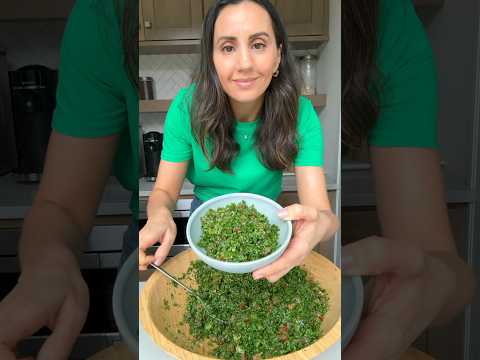
The primary reference video for this recipe. Demonstrates the correct herb-to-bulgur ratio and the hand-chopping technique for parsley that keeps the leaves intact and bright green.
2. How to Make Perfect Tabbouleh Every Time
Covers the moisture management steps — sieving the bulgur and the late-add tomato technique — in clear close-up detail. Good reference for understanding why the sequence of additions matters.
3. Mediterranean Salad Basics: Tabbouleh & BeyondBroader context on Levantine herb salads that explains why tabbouleh is fundamentally a parsley dish, not a grain dish. Useful for understanding the philosophy before you start chopping.
🛠️ Core Equipment
- Fine-mesh sieve ↗Essential for pressing excess moisture from the hydrated bulgur. A colander with large holes lets the grains fall through. You need a tight weave to support the grain while you press.
- Sharp chef's knife ↗You're finely chopping three cups of flat-leaf parsley by hand. A dull knife bruises and blackens the leaves instead of cutting cleanly. Bruised parsley oxidizes fast and tastes bitter within the hour.
- Large mixing bowl ↗Tabbouleh expands as the herbs are added. Start with a bowl that looks too big — you'll need the surface area for folding without crushing the herbs.
- Small whisk or fork ↗For emulsifying the lemon-olive oil dressing. Lemon juice and olive oil don't combine on their own — you need to agitate them until the mixture turns slightly opaque and coats a spoon.
Authentic Lebanese Tabbouleh (Parsley-Forward, Not Bulgur-Forward)
🛒 Ingredients
- ✦1 cup fine bulgur wheat (#1 grade)
- ✦1.5 cups boiling water
- ✦3 cups fresh flat-leaf parsley, finely chopped
- ✦½ cup fresh mint leaves, finely chopped
- ✦2 medium Roma tomatoes, finely diced
- ✦1 medium cucumber, finely diced
- ✦4 scallions, thinly sliced
- ✦¼ medium red onion, minced
- ✦2 cloves garlic, minced
- ✦⅓ cup fresh lemon juice
- ✦⅓ cup extra virgin olive oil
- ✦1.5 teaspoons sea salt
- ✦½ teaspoon freshly ground black pepper
👨🍳 Instructions
01Step 1
Pour the boiling water over the fine bulgur wheat in a large mixing bowl. Cover tightly with plastic wrap or a plate.
02Step 2
Let the bulgur steep undisturbed for 20 minutes until the grains are tender and all the liquid is absorbed.
03Step 3
Transfer the hydrated bulgur to a fine-mesh sieve. Press firmly with the back of a large spoon to remove all excess moisture. Return to the bowl and spread flat to cool.
04Step 4
Finely chop the flat-leaf parsley by hand until you have 3 cups loosely packed. This should take 5-8 minutes with a sharp knife.
05Step 5
Whisk together the lemon juice, olive oil, minced garlic, salt, and black pepper in a small bowl until slightly emulsified.
06Step 6
Add the chopped parsley, mint, scallions, and red onion to the cooled bulgur. Toss gently to distribute.
07Step 7
Pour the dressing over the mixture and fold with a wooden spoon until everything is evenly coated.
08Step 8
Cover and refrigerate for at least 30 minutes to let the flavors meld.
09Step 9
Right before serving, fold in the diced tomatoes and cucumber. Do not add them earlier.
10Step 10
Taste and adjust — more lemon juice for brightness, salt for depth, or olive oil for richness. Re-toss gently and serve at room temperature or lightly chilled.
Nutrition Per Serving
Estimates based on standard preparation. Adjustments alter macros.
🔄 Substitutions
Instead of Fine bulgur wheat...
Use Quinoa (1 cup uncooked, cooked and cooled)
Slightly nuttier and firmer texture. Higher protein content — makes the salad more filling as a standalone meal. Press out cooking liquid the same way you would the bulgur.
Instead of Scallions...
Use Chives or shallots
Chives are milder and work well if raw scallion is too sharp for your palate. Shallots add sweetness. Use half the quantity by volume — both are more concentrated than scallions.
Instead of Extra virgin olive oil...
Use Walnut oil
Deeper, earthier flavor that pairs well with the bulgur. Higher in omega-3s. Use the same quantity. Don't heat walnut oil — this is a cold application anyway.
Instead of Fresh mint...
Use Fresh basil
Shifts the flavor profile toward Italian rather than Levantine. Works well, tastes different. You can also do half mint, half basil for complexity without losing the traditional character entirely.
🧊 Storage & Reheating
In the Fridge
Store without the tomatoes and cucumber mixed in for up to 3 days. If already combined, consume within 24 hours before the vegetables turn watery and the herbs oxidize.
In the Freezer
Not recommended. The parsley and mint turn dark and mushy on thawing. Fresh is the only way.
Reheating Rules
Tabbouleh is a cold salad. Do not reheat. Serve directly from the fridge or let it sit at room temperature for 10 minutes before plating.
❓ Frequently Asked Questions
Why is my tabbouleh watery?
Two likely culprits: you didn't press enough liquid from the bulgur after steeping, or you added the tomatoes too early. Both release water into the bowl. Drain the grains aggressively, and fold in tomatoes and cucumber only at the moment of serving.
Can I make tabbouleh gluten-free?
Yes — swap the bulgur for cooked and cooled quinoa. The texture and flavor shift slightly (quinoa is nuttier and firmer) but the overall salad structure holds. Everything else in the recipe is naturally gluten-free.
How far in advance can I make tabbouleh?
You can prep and dress the bulgur-herb mixture up to 24 hours ahead and refrigerate it covered. Keep the tomatoes and cucumber separate. Combine everything within an hour of serving. Beyond 24 hours the herbs begin to lose color and the lemon starts breaking down the textures.
My parsley turned dark — what happened?
Two possibilities: your knife was dull and bruised the leaves, or the salad sat too long after dressing. Bruised parsley oxidizes quickly. Use a sharp knife, chop with clean cuts, and serve within a few hours of assembly.
Is tabbouleh actually healthy?
By most measures, yes. It's high in fiber (9g per serving), anti-inflammatory from the olive oil and parsley, entirely plant-based, and moderate in calories at around 310 per serving. The parsley alone delivers significant vitamin K, vitamin C, and folate. It's one of the genuinely nutrient-dense dishes in Mediterranean cuisine, not just marketed that way.
What do I serve with tabbouleh?
The classic mezze companions: hummus, baba ganoush, warm flatbread, labneh, and falafel. It also works as a side to grilled lamb or chicken — the acidity of the lemon dressing cuts through rich proteins cleanly. Stuffed into a pita with grilled halloumi is an underrated move.
The Science of
Authentic Lebanese Tabbouleh (Parsley-Forward, Not Bulgur-Forward)
We turned everything on this page into a beautiful, flour-proof PDF cheat sheet. Print it out, stick it to your fridge, and never mess up your authentic lebanese tabbouleh (parsley-forward, not bulgur-forward) again.
*We'll email you the high-res PDF instantly. No spam, just perfectly cooked meals.
AlmostChefs Editorial Team
We translate the internet's most popular cooking videos into foolproof, beginner-friendly written recipes. We analyze multiple methods, test them in our kitchen, and engineer a single "Master Recipe" that gives you the best possible result with the least possible stress.