Silky Sweet Potato Soup (Anti-Inflammatory Powerhouse)
A velvety blended soup built on roasted sweet potatoes, fresh ginger, turmeric, and coconut milk. Vegan, gluten-free, and ready in 40 minutes — we broke down the technique so every batch comes out perfectly smooth with deep, layered spice flavor.

“Sweet potato soup looks simple. Cube some potatoes, boil them, blend them, done. And that's exactly why most versions taste flat — like baby food with a hint of spice. The difference between a forgettable bowl and one that tastes like it came out of a real kitchen is about three technical decisions: toasting your spices in fat before the liquid goes in, building aromatics in layers, and not overcooking the potatoes into waterlogged mush before blending. Get those right and this 40-minute soup punches well above its weight.”
Why This Recipe Works
Sweet potato soup is one of those dishes that rewards technique far more than it rewards ingredients. You can put the same list in front of ten cooks and get ten different results — and the gap between the best and worst bowl has nothing to do with the quality of the sweet potatoes. It has everything to do with what happens in the first five minutes.
The Spice Blooming Problem
Most home cooks add spices to the liquid. This is wrong, and it's why most homemade soups taste like a less-interesting version of something you could pour out of a can.
Ground spices are dense, hydrophobic compounds. Their aromatic oils are tightly bound and only fully release under two conditions: sustained dry heat or contact with hot fat. When you dump turmeric and cumin into vegetable broth, neither condition is met — the water is too hot to allow the Maillard reaction but too wet to let the spices toast. The result is raw, dusty spice flavor that never integrates.
The fix is 30 seconds of spice blooming in hot olive oil immediately before the liquid goes in. The oil temperature triggers the Maillard reaction on the spice compounds, releasing their volatile aromatics into the fat. Those fat-soluble flavor molecules then distribute evenly through the entire soup. The same spices, in the same amount, produce a fundamentally different flavor profile. This is not a minor tweak — it's the difference between a bowl that tastes assembled and one that tastes cooked.
Building the Aromatic Base
The onion-garlic-ginger foundation works in sequence for a reason. Onions go first because they take the longest — 4-5 minutes to sweat down and release their sugars. Garlic and ginger go second because they burn fast and only need 60 seconds. Add them both at the start and you get bitter, scorched garlic. Add the garlic first and you get bitter garlic with undercooked onion underneath.
Fresh ginger provides two things that ground ginger cannot: bright, citrusy top notes and natural enzymes that help tenderize everything they touch. If you only have ground ginger, use half the amount and expect a warmer, less vibrant result.
Why Coconut Milk, Not Cream
Heavy cream makes a richer soup. Full stop. But it also flattens the spice profile — the butterfat coats your palate and mutes the turmeric and ginger. Light coconut milk adds body and a subtle tropical sweetness without overwhelming the aromatics. It also keeps the recipe vegan, which matters if you're cooking for a mixed table.
The coconut milk goes in after blending, not before. Adding it during the simmer phase causes the milk solids to break and give the soup a slightly grainy texture. Stir it into the finished blended base over gentle heat and it integrates smoothly every time.
The Texture Equation
Sweet potato is about 20% starch by weight. That starch is what gives blended sweet potato soup its signature velvety body — no cream, no butter, no thickener required. But the starch only works for you if you don't overcook the potatoes before blending.
Overcooked sweet potatoes absorb excess water and their cell walls break down completely. When blended, the result is thin and slightly gluey — the starch has already done its worst. Pull the potatoes at exactly tender (fork goes in with no resistance, potato still holds its shape) and the blender converts that intact starch into a thick, silky base.
An immersion blender is worth owning for soups alone. No transfers, no hot-liquid risk, no batches. Ninety seconds of continuous blending in the pot and you're done. Run it long enough — the temptation to stop early is real — and the texture will reward you.
Where Beginners Mess This Up
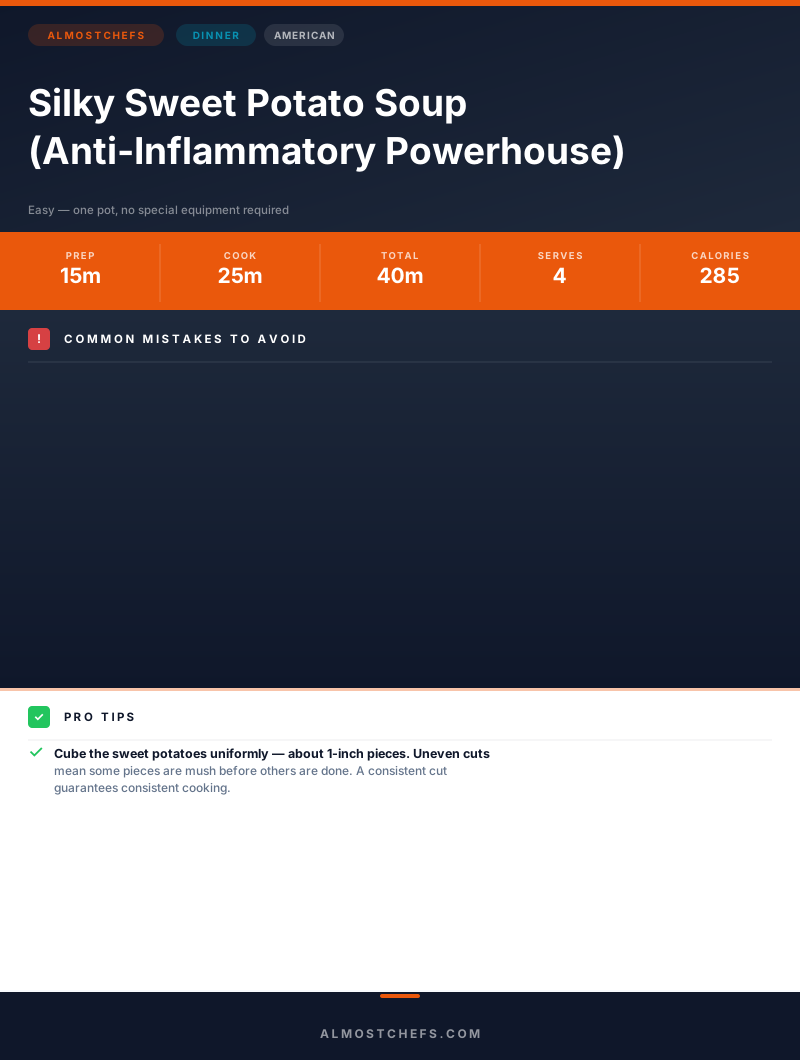
Before we start, read this. These are the 4 reasons your silky sweet potato soup (anti-inflammatory powerhouse) will fail:
- 1
Adding spices directly to the broth: Ground turmeric and cumin need to bloom in hot fat for 30-45 seconds before any liquid touches them. Spices added directly to broth taste dusty and one-dimensional. Toasting in oil triggers the Maillard reaction on the spice compounds, releasing volatile aromatics that dissolve into the fat and distribute evenly through the entire pot.
- 2
Overcooking the sweet potatoes: Fifteen to eighteen minutes at a gentle simmer is all you need. Push past 25 minutes and the potatoes absorb excess water and lose structural starch — the blended result is thin and watery no matter how much you reduce it. Test with a fork at 15 minutes and pull them the moment they yield.
- 3
Blending without caution: Hot liquid in a blender expands when the blade spins. Fill the blender more than halfway and the pressure blows the lid off and coats your ceiling. Work in small batches, hold the lid down with a folded towel, and start on low speed. An immersion blender eliminates the risk entirely.
- 4
Skipping the acid finish: Lime juice at the end is not optional garnish. Acid brightens every other flavor in the bowl — the sweetness of the potatoes, the warmth of the ginger, the earthiness of the turmeric. Without it, the soup tastes flat and slightly muddy. Add it off heat, taste, then adjust.
The Video Reference Library
Want to see it in action? Here are the exact videos we analyzed and combined to build this foolproof recipe translation:
The primary reference video for this recipe. Demonstrates the full technique from aromatics to finish, with clear visual cues for when the sweet potatoes are properly tender.
🛠️ Core Equipment
- Large heavy-bottomed potEven heat distribution for sautéing aromatics without scorching. Thin pots create hot spots that burn garlic and ginger before the onions are done. A [Dutch oven](/kitchen-gear/review/dutch-oven) is ideal but any thick-walled pot works.
- Immersion blenderThe safest and fastest way to blend hot soup. No transferring, no batches, no lid explosions. If you don't own one, a countertop blender works — just follow the hot-liquid safety protocol above.
- Fine-mesh sieve (optional)If you want an ultra-silky result, pass the blended soup through a fine-mesh sieve to remove any fibrous bits. Not required, but it elevates the texture from good to restaurant-quality.
Silky Sweet Potato Soup (Anti-Inflammatory Powerhouse)
🛒 Ingredients
- ✦3 medium sweet potatoes, peeled and cubed
- ✦2 tablespoons extra virgin olive oil
- ✦1 large yellow onion, finely diced
- ✦3 cloves garlic, minced
- ✦1 tablespoon fresh ginger, grated
- ✦1 teaspoon ground turmeric
- ✦1/2 teaspoon ground cumin
- ✦1/4 teaspoon cayenne pepper
- ✦4 cups vegetable broth
- ✦1 can (13.5 ounces) light coconut milk
- ✦1 bay leaf
- ✦1/2 teaspoon sea salt
- ✦1/4 teaspoon black pepper
- ✦1 tablespoon fresh lime juice
- ✦2 tablespoons fresh cilantro, chopped
- ✦2 green onions, sliced thin
👨🍳 Instructions
01Step 1
Heat olive oil in a large heavy-bottomed pot over medium-high heat until it shimmers, about 1 minute.
02Step 2
Add the diced yellow onion and sauté for 4-5 minutes, stirring occasionally, until soft and translucent.
03Step 3
Add the minced garlic and grated ginger. Cook for 1 minute, stirring constantly, until fragrant.
04Step 4
Sprinkle the turmeric, cumin, and cayenne over the aromatics. Stir continuously for 30 seconds to bloom the spices in the oil.
05Step 5
Add the cubed sweet potatoes and stir to coat them with the spiced oil. Cook for 2 minutes.
06Step 6
Pour in the vegetable broth, add the bay leaf, and bring to a boil over medium-high heat.
07Step 7
Reduce heat to medium and simmer for 15-18 minutes, until the sweet potatoes are completely tender and easily pierced with a fork.
08Step 8
Remove from heat. Discard the bay leaf.
09Step 9
Blend the soup until completely smooth using an immersion blender directly in the pot. If using a countertop blender, work in small batches and hold the lid down firmly with a folded towel.
10Step 10
Stir in the light coconut milk until fully combined.
11Step 11
Season with salt and black pepper. Stir in the lime juice.
12Step 12
Reheat gently over medium heat for 2-3 minutes if needed, stirring occasionally.
13Step 13
Ladle into bowls and garnish with fresh cilantro and sliced green onions. Serve immediately.
Nutrition Per Serving
Estimates based on standard preparation. Adjustments alter macros.
🔄 Substitutions
Instead of Light coconut milk...
Use Greek yogurt or cashew cream
Greek yogurt adds a slight tang and more protein. Cashew cream (soaked raw cashews blended with water) gives comparable richness without the coconut flavor. Neither is dairy-free if using Greek yogurt.
Instead of Vegetable broth...
Use Homemade vegetable stock or bone broth
Homemade stock has significantly deeper flavor and no added sodium. Bone broth adds collagen and a richer mouthfeel but makes the recipe no longer vegan.
Instead of Ground turmeric and cumin...
Use Fresh turmeric root and toasted cumin seeds
Fresh turmeric grates like ginger and delivers brighter color and more intense flavor. Toast whole cumin seeds in the dry pan before adding oil — 30 seconds until fragrant, then grind coarsely.
Instead of Cayenne pepper...
Use Fresh red chili or smoked paprika
Smoked paprika shifts the soup in a slightly different direction — less heat, more depth. Fresh red chili gives a cleaner, fruitier heat. Either works well with the sweet potato base.
🧊 Storage & Reheating
In the Fridge
Store in an airtight container for up to 4 days. The flavors develop overnight — day two is often better than day one.
In the Freezer
Freeze in individual portions for up to 3 months. Leave headspace in the container as the soup expands when frozen.
Reheating Rules
Reheat on the stovetop over medium-low heat with a splash of broth or water, stirring frequently. Microwave works in a pinch — cover and use 50% power to avoid hot spots.
❓ Frequently Asked Questions
Why does my sweet potato soup taste flat?
Two likely culprits: you didn't bloom the spices in oil before adding liquid, or you forgot the lime juice at the end. Spice blooming is non-negotiable for depth. Lime juice at the finish line lifts every other flavor in the bowl. Fix both and the soup transforms.
Can I make this soup without a blender?
You can use a potato masher for a chunky, rustic texture — it won't be silky but it will be good. Alternatively, use a food mill. A fork technically works but you'll be there a while and the result won't be smooth.
Is this recipe actually vegan?
Yes, as written. Sweet potatoes, olive oil, aromatics, vegetable broth, and coconut milk are all plant-based. The only substitution that breaks the vegan status is swapping in bone broth or Greek yogurt.
How do I make the soup thicker?
Simmer uncovered for 5-10 minutes after blending to reduce and concentrate. Alternatively, add a second sweet potato — more starch equals thicker texture. Avoid adding cornstarch or flour, which can make the soup gluey.
Can I roast the sweet potatoes instead of simmering?
Yes, and it's worth it if you have time. Roast cubed sweet potatoes at 425°F for 20-25 minutes until caramelized, then add them to the pot with the sautéed aromatics and broth. The caramelized sugars from roasting add a complexity that simmering can't match.
Why is my blended soup stringy?
You didn't blend long enough. Sweet potato has fibrous strands that need sustained blending to break down completely. Run the immersion blender for at least 90 seconds, moving it around the pot. If strings persist, pass the soup through a fine-mesh sieve.
The Science of
Silky Sweet Potato Soup (Anti-Inflammatory Powerhouse)
We turned everything on this page into a beautiful, flour-proof PDF cheat sheet. Print it out, stick it to your fridge, and never mess up your silky sweet potato soup (anti-inflammatory powerhouse) again.
*We'll email you the high-res PDF instantly. No spam, just perfectly cooked meals.
AlmostChefs Editorial Team
We translate the internet's most popular cooking videos into foolproof, beginner-friendly written recipes. We analyze multiple methods, test them in our kitchen, and engineer a single "Master Recipe" that gives you the best possible result with the least possible stress.