Crispy Sweet Potato Fries (The Oven Method That Actually Works)
Homemade sweet potato fries that hit genuinely crispy — not soft, not soggy, not sad. We broke down the spacing, heat, and cut geometry that most recipes get wrong so yours come out golden and crackly every time.
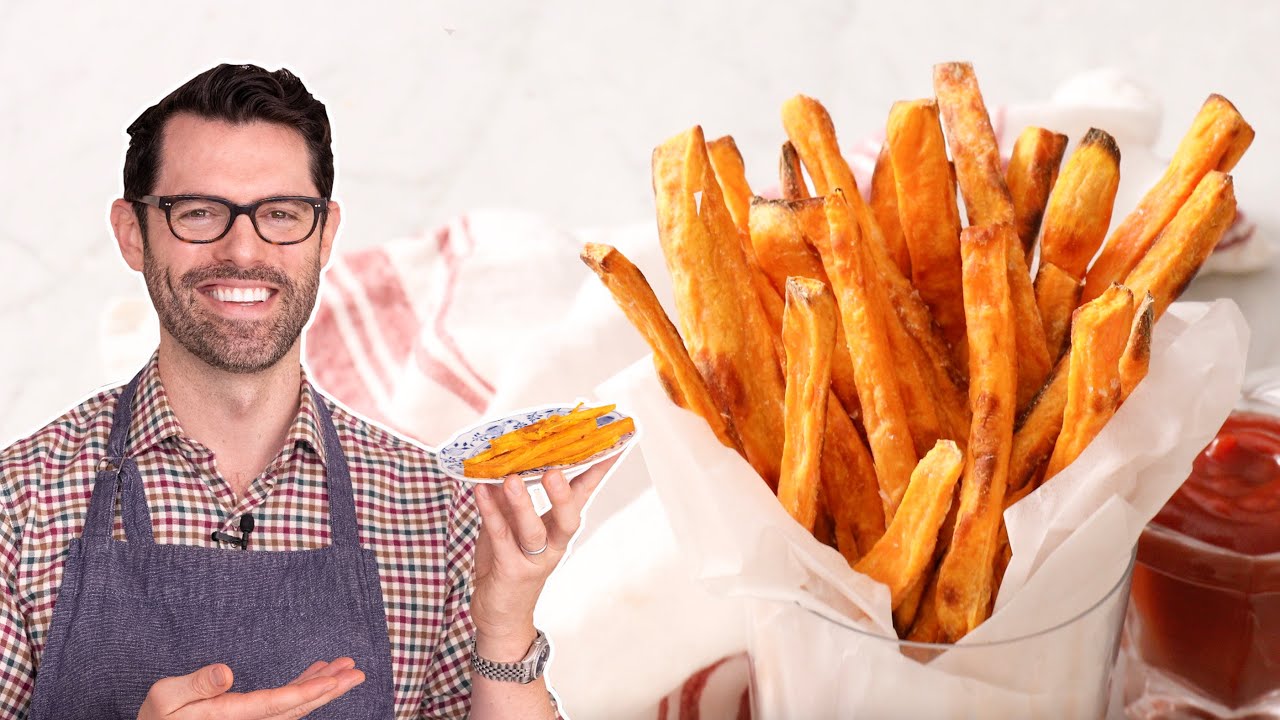
“Sweet potato fries have a reputation for being impossible to make crispy at home. That reputation is earned — but not because of the sweet potato. It's because of how people cut them, coat them, and cram them onto a pan. Fix those three things and the oven does the rest. This is the version that actually delivers the crunch.”
Why This Recipe Works
Sweet potato fries should not be a compromise. The refrain — "they're never as good as restaurant fries" — is a myth built on bad technique, not bad ingredients. Restaurant kitchens get crispy sweet potato fries by submerging them in oil at a controlled temperature. You don't have that equipment. But you can recreate the same result in an oven if you understand what's actually happening and stop making the three decisions that guarantee sogginess every time.
The Moisture Problem
Sweet potatoes contain significantly more water and natural sugar than russet potatoes. That combination creates a beautiful caramelized exterior when conditions are right — and a steam-cooked, soft interior when they're not. The difference is whether you give the surface moisture somewhere to go.
At 425°F with proper spacing, the surface water evaporates fast enough that the natural sugars hit the Maillard threshold and begin browning. Pack the fries together and that moisture has nowhere to go — it builds up as steam in the trapped air between pieces, and you get braised sweet potato with a vaguely golden color and zero crunch. This is why two baking sheets for two pounds of potato is not optional. It's the physics of the recipe.
Drying the fries before coating is the same principle applied earlier in the process. Any water clinging to the surface has to evaporate before browning starts. Let the oven do that work and you're wasting 8-10 minutes of critical roasting time while the fries sit at a temperature too low to brown, getting progressively softer.
The Cut Geometry
A quarter-inch cut isn't arbitrary. It's the thickness at which a sweet potato fry can shed surface moisture fast enough to crisp before the interior overcooks. Thicker fries — anything approaching half an inch — have a longer path for interior steam to travel outward. By the time the core is cooked through, the exterior has already gone soft.
Consistency across cuts matters as much as the dimension itself. A sharp chef's knife is the right tool because it produces even slices at speed without tearing the cell structure. Torn or ragged cuts expose more surface area unevenly, creating pieces that brown at different rates. You'll pull the pan and find half the fries perfect and the other half either burnt or raw.
The Spice Architecture
Smoked paprika is the ingredient doing the heaviest lifting in the seasoning. Sweet potato's dominant flavor is — predictably — sweet, and that sweetness needs a counterbalance to read as a savory side dish rather than a dessert adjacent. Smoked paprika provides the faint char note that signals savory without introducing any real heat. Cayenne adds heat underneath it, and garlic powder adds depth. Together they create seasoning that makes people reach back into the bowl.
The nutritional yeast is worth adding if you have it. It crisps slightly in the residual heat of the oven and adds a savory, almost cheesy umami layer that deepens the entire seasoning profile. It also adds protein and B vitamins if that matters to you, though the flavor contribution is the real reason it's here.
The lime juice at the end is acid-as-seasoning, a technique that applies to almost every roasted vegetable. Acid sharpens flavors by contrast — it makes the sweet taste sweeter and the savory taste more distinct. Without it, roasted sweet potato fries tend to taste a little flat, a little one-note. The lime brings everything into focus.
The Timing Problem
Sweet potato fries have almost no holding window. The natural sugars that create the crispiness also draw moisture back to the surface quickly as the fries cool, softening the crust within minutes. This is not a make-ahead dish. It's not a dish you roast and leave on a wire rack while you finish setting the table. You plate it, you serve it, you eat it. Every minute of waiting is a minute of softening.
If you need to hold them — and sometimes you do — a rimmed baking sheet on the lowest rack of a 200°F oven buys you about 10 minutes without significant loss. Beyond that, you're serving soft fries and pretending they're fine. Better to time the rest of the meal around the fries than the other way around.
Where Beginners Mess This Up
Before we start, read this. These are the 4 reasons your crispy sweet potato fries (the oven method that actually works) will fail:
- 1
Cutting them too thick: Fries thicker than 1/4 inch take too long to crisp on the outside before the inside turns to steam-softened mush. Sweet potatoes have higher sugar and water content than russets — they need thinner cuts to shed moisture fast enough for browning to happen.
- 2
Crowding the pan: This is the single biggest home cook mistake with any roasted vegetable. When fries overlap, they trap steam between them. Instead of roasting, they braise. You get soft, pallid fries no matter how hot your oven runs. Two baking sheets, single layer, no exceptions.
- 3
Skipping the dry before coating: Surface moisture is the enemy of crispiness. Pat the cut fries completely dry before adding oil. Any water on the surface has to evaporate before browning can start — which wastes the first 10 minutes of oven time and leaves you with steamed fries in the critical early phase.
- 4
Pulling them too early: The edges need to look properly golden — not pale gold, not lightly colored. If you're second-guessing whether they're done, give them three more minutes. Sweet potatoes have enough natural sugar that they brown fast at the end. Learn to trust the color.
The Video Reference Library
Want to see it in action? Here are the exact videos we analyzed and combined to build this foolproof recipe translation:
The foundational video for this method. Clear demonstration of cut thickness, pan spacing, and what properly golden edges actually look like before pulling from the oven.
🛠️ Core Equipment
- Two large rimmed baking sheetsOne sheet for two pounds of fries is guaranteed overcrowding. You need the surface area to keep every fry in a single, non-overlapping layer. Rimmed sheets also prevent pieces from rolling off when you stir halfway.
- Parchment paperPrevents sticking and makes cleanup effortless, but more importantly it creates a slightly insulating layer that prevents the bottom of the fries from burning before the tops have crisped. Silicone mats work but trap more steam — parchment is better here.
- Large mixing bowlYou need enough volume to toss the fries with oil and spices without piling them — every piece needs even coating or you get uneven browning. A bowl that fits 2 pounds of cut sweet potato without crowding is the right size.
- Sharp chef's knifeUniform 1/4-inch cuts matter. Uneven fries have different cook times — the thin pieces burn before the thick ones crisp. A [sharp chef's knife](/kitchen-gear/review/chefs-knife) is the only tool that gives you consistent geometry at speed.
Crispy Sweet Potato Fries (The Oven Method That Actually Works)
🛒 Ingredients
- ✦4 medium sweet potatoes, about 2 pounds total
- ✦2 tablespoons extra virgin olive oil
- ✦1 teaspoon sea salt
- ✦1/2 teaspoon ground black pepper
- ✦1/2 teaspoon garlic powder
- ✦1/2 teaspoon smoked paprika
- ✦1/4 teaspoon cayenne pepper, optional
- ✦1/4 teaspoon dried oregano
- ✦2 tablespoons nutritional yeast, optional
- ✦Parchment paper for baking sheets
- ✦1 tablespoon fresh lime juice, for serving
- ✦Fresh cilantro, chopped, for garnish
👨🍳 Instructions
01Step 1
Preheat your oven to 425°F and line two large baking sheets with parchment paper.
02Step 2
Scrub the sweet potatoes under cold running water, then pat them completely dry with a clean kitchen towel.
03Step 3
Cut each sweet potato lengthwise into quarters, then slice each quarter into fries approximately 1/4 inch thick.
04Step 4
Toss the cut fries in a large mixing bowl with the olive oil until every piece is lightly coated.
05Step 5
In a small bowl, combine sea salt, black pepper, garlic powder, smoked paprika, cayenne, and dried oregano. Sprinkle over the oiled fries and toss until every piece is evenly seasoned.
06Step 6
Arrange the seasoned fries in a single layer across both baking sheets with no pieces overlapping or touching.
07Step 7
Roast for 20 to 25 minutes, flipping the fries once at the halfway mark, until the edges are golden brown and the tips show color.
08Step 8
Remove from the oven and immediately sprinkle with nutritional yeast if using.
09Step 9
Transfer to a serving platter, drizzle with fresh lime juice, and garnish with chopped cilantro.
10Step 10
Serve immediately. Sweet potato fries do not hold well — they soften quickly as the interior steam redistributes. Eat them hot.
Nutrition Per Serving
Estimates based on standard preparation. Adjustments alter macros.
🔄 Substitutions
Instead of Extra virgin olive oil...
Use Avocado oil
Higher smoke point means less degradation at 425°F. Flavor is neutral and clean. Good swap if you're roasting frequently at high heat.
Instead of Sea salt...
Use Pink Himalayan salt or potassium-based salt substitute
Reduces sodium by roughly 30% per serving. Subtle mineral flavor that enhances rather than masks. Works identically in the recipe.
Instead of Smoked paprika and cayenne...
Use Turmeric and black pepper
Earthy, warm flavor replaces the smokiness. Black pepper activates the curcumin in turmeric, which has documented anti-inflammatory effects. Visually striking — the fries turn deep gold.
Instead of Nutritional yeast...
Use Grated Parmesan or a Parmesan and ground flaxseed blend
Not vegan, but richer umami flavor with added protein. Flaxseed adds omega-3s and fiber. Either option increases satiety compared to nutritional yeast alone.
🧊 Storage & Reheating
In the Fridge
Store in an airtight container for up to 2 days. They will soften — this is unavoidable. Reheat in the oven, not the microwave.
In the Freezer
Not recommended. The high water content of sweet potato means freezing and thawing produces a mushy, unappetizing texture that no amount of reheating rescues.
Reheating Rules
Spread on a parchment-lined baking sheet and roast at 400°F for 5-8 minutes until the edges crisp again. Do not microwave — it turns them soft and rubbery.
❓ Frequently Asked Questions
Why are my sweet potato fries always soggy?
Almost always one of three causes: the fries weren't dried before coating, the pan was overcrowded and they steamed instead of roasted, or they were cut too thick and the interior moisture overwhelmed the exterior before browning could set in. Address all three at once.
Do I need to peel the sweet potatoes?
No. The skin is thin, edible, and crisps nicely. Peeling is personal preference. If you leave the skin on, scrub the potatoes well — you're eating it.
Can I use an air fryer instead?
Yes, and it produces excellent results. Air fry at 400°F for 12-15 minutes, shaking the basket halfway through. The circulating air solves the steam problem automatically. You may need to work in batches depending on basket size — don't overcrowd an air fryer either.
Why do sweet potato fries get soft so quickly?
Sweet potatoes have more natural sugar than russets. That sugar browns fast in the oven but also draws moisture back to the surface quickly as the fries cool. This is why serving immediately matters — there's no way to hold them at peak crispiness for more than about 5 minutes.
Can I make these ahead of time?
You can cut and season the fries up to 24 hours ahead and refrigerate them uncooked on the baking sheets covered with plastic wrap. The cut surfaces will oxidize slightly but flavor is unaffected. Roast from cold — add 3-5 minutes to the cook time.
What dipping sauce works best?
Greek yogurt with minced garlic and a squeeze of lemon is the cleanest option — the tang cuts the sweetness perfectly. Chipotle aioli, tahini with lime, or a simple sriracha-honey blend also work well. Classic ketchup is fine but undersells what these fries are doing.
The Science of
Crispy Sweet Potato Fries (The Oven Method That Actually Works)
We turned everything on this page into a beautiful, flour-proof PDF cheat sheet. Print it out, stick it to your fridge, and never mess up your crispy sweet potato fries (the oven method that actually works) again.
*We'll email you the high-res PDF instantly. No spam, just perfectly cooked meals.
AlmostChefs Editorial Team
We translate the internet's most popular cooking videos into foolproof, beginner-friendly written recipes. We analyze multiple methods, test them in our kitchen, and engineer a single "Master Recipe" that gives you the best possible result with the least possible stress.