Suyuk (Korean Boiled Pork)
Tender pork belly simmered low and slow with doenjang, garlic, and ginger until melt-in-your-mouth soft. Sliced thin and served with dipping sauces and ssam.
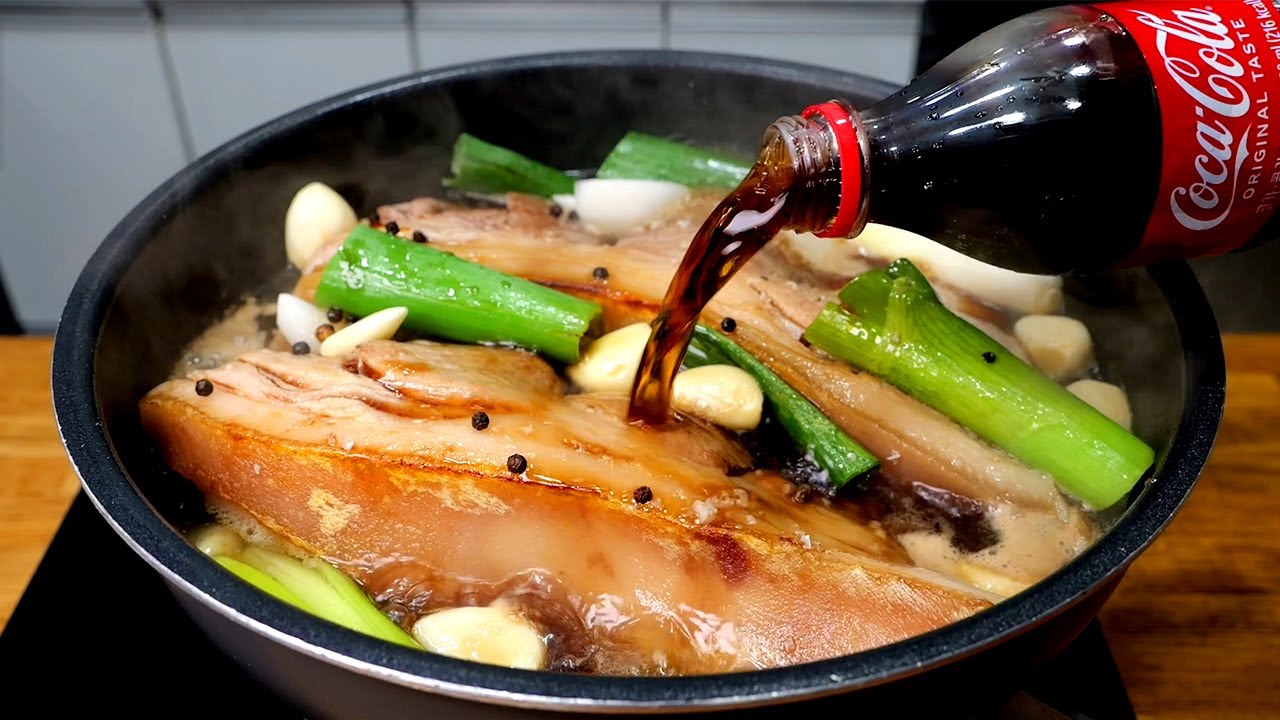
Why This Recipe Works
Most people have never eaten truly good boiled pork. They've eaten overcooked, gray, rubbery pork that someone boiled too hard and sliced too soon. They've eaten pork belly with a faint background odor they politely ignored. They've eaten suyuk assembled from shortcuts and approximations and called it authentic. This recipe is none of those things. It is a methodical, unromantic, chemically defensible procedure for producing pork belly that is so tender it yields to the slightest pressure — fat rendered to silk, muscle fibers intact, flavor concentrated and clean. Every step exists for a reason. Here are the reasons.
The Blanch Is Not Optional
The first thing this recipe asks you to do is boil the pork and throw the water away. To the uninitiated, this feels wasteful. It is not. Pork belly at the grocery level contains trapped blood, oxidized myoglobin, dissolved proteins, and fat that will turn your simmering liquid cloudy and your finished meat vaguely funky. The five-minute blanch in cold-start water coagulates and expels those impurities before they can embed themselves in the flesh. The rinse afterward removes the residue. What you return to the pot is chemically cleaner pork that will absorb the subsequent aromatics without competition. Skipping this step produces edible pork. It does not produce great pork.
Coffee and Doenjang Are Doing Molecular Work
The two most unconventional additions in this recipe — instant coffee and doenjang — are both present for documented biochemical reasons, not flavor trends.
Doenjang is a fermented soybean paste that contains active proteases: enzymes that break down protein bonds at the surface of the meat over the course of the simmer. This is the same enzyme activity that makes any fermented marinade a superior tenderizer over acidic ones. Fermentation-derived proteases work at low-and-slow temperatures where acidic tenderizers become counterproductive and make meat mushy. Doenjang also contributes glutamates — the same ones responsible for deep umami in aged cheese and miso — that diffuse into the pork as it cooks.
Coffee contains tannins and chlorogenic acids. Tannins bind to the sulfur-containing compounds responsible for the characteristic smell of pork fat. This is why the technique is used professionally: it is chemically suppressing odor at the source, not masking it with competing aromatics. Instant coffee outperforms brewed here because the concentration of soluble solids is higher per unit volume. The pork will not taste like coffee. The bitterness is absorbed and neutralized by the doenjang's saltiness and the fat's richness. What remains is cleaner-tasting meat.
Temperature Discipline Is Everything
This is where home cooks reliably ruin it. A vigorous boil is not a faster simmer. It is a categorically different physical event. Rapid boiling agitates the meat fibers against each other continuously, tightening proteins and squeezing moisture out of the muscle tissue. The result is firm, dry pork that chews like a bad decision. A gentle simmer — barely moving, surface occasionally breaking — maintains the temperature needed to render the intramuscular fat and dissolve the collagen in the skin without toughening the lean meat. Use a large pot with enough volume to keep the liquid temperature stable. Thin, small pots fluctuate. Fluctuating temperature means fluctuating texture. Stable, low heat is not a suggestion — it is the mechanism by which this recipe works.
The doneness test is a chopstick inserted into the thickest part of the slab. It should slide through with no resistance — not with a tug, not with effort. If it drags, the collagen is not yet dissolved. That collagen is what gives finished suyuk its characteristic gelatinous, yielding bite. Undercooked suyuk is just boiled pork. Correctly cooked suyuk is something else entirely.
The Rest Is Structural, Not Ceremonial
Ten minutes of rest off the heat is not a chef affectation. During cooking, heat drives moisture toward the cooler center of the slab. The moment cooking stops, that moisture gradient begins to equalize. Give it ten minutes and the juices redistribute throughout the meat. Slice too early and those juices run out onto the cutting board where they are useless to you. The resting period also allows the outer surface to firm slightly — a practical benefit for slicing a fat-rich slab cleanly.
Slice against the grain at a quarter inch. Against the grain shortens the muscle fibers, reducing the work your jaw does. A quarter inch is thick enough to hold the fat layer intact but thin enough to fold into a lettuce wrap without structural failure.
Why Ssam Is the Correct Delivery System
Butter lettuce exists in this context as a functional palate cleanser, not a garnish. The fat content of pork belly at this preparation level is substantial: 28 grams per serving, with a significant saturated fraction. The crisp, water-dense lettuce resets your palate between bites. Ssamjang — a blended paste of doenjang, gochujang, sesame, and garlic — adds the heat and funk that the clean-simmered pork deliberately lacks. Raw garlic and green chili contribute sharp volatiles that cut through fat. Salted shrimp provides concentrated brine. Together, they form a complete flavor system. Each component is necessary. None of them are optional flourishes.
Suyuk is, historically, the centerpiece of bossam spreads and a canonical Korean anju — food designed to accompany soju. The logic is direct: heavily fatty, deeply savory food metabolizes the alcohol more slowly, buffers the stomach, and makes the evening sustainable. The recipe does not exist by accident. It was engineered over generations by people who understood the relationship between food and function. This version respects that engineering and executes it correctly.
Suyuk (Korean Boiled Pork)
🛒 Ingredients
- ✦2 lbs pork belly, whole slab
- ✦1 tablespoon doenjang (fermented soybean paste)
- ✦1 tablespoon instant coffee (or 2 tablespoons brewed coffee)
- ✦6 cloves garlic, smashed
- ✦1 tablespoon whole black peppercorns
- ✦2-inch piece ginger, sliced
- ✦1 large onion, quartered
- ✦2 green onions
- ✦1 tablespoon soy sauce
- ✦Water to cover
- ✦Butter lettuce leaves for wrapping
- ✦Sliced garlic and green chili for serving
- ✦Ssamjang (dipping paste) for serving
- ✦Salted shrimp (saeujeot) for dipping
👨🍳 Instructions
01Step 1
Place pork belly in a large pot. Add cold water to cover by 2 inches. Bring to a rolling boil over high heat. Boil for 5 minutes, then drain and rinse the pork under cold water. Discard the blanching water.
02Step 2
Return pork to the cleaned pot. Add fresh cold water to cover by 1 inch. Add doenjang, coffee, garlic, peppercorns, ginger, onion, green onions, and soy sauce.
03Step 3
Bring to a boil, then immediately reduce to a gentle simmer. Cook for 50-60 minutes, covered, until a chopstick slides through the thickest part with no resistance.
04Step 4
Remove pork from the broth. Let it rest for 10 minutes — don't skip this. The juices redistribute and the meat firms slightly for cleaner slicing.
05Step 5
Slice against the grain into 1/4-inch thick pieces. Arrange on a platter.
06Step 6
Serve with butter lettuce, ssamjang, salted shrimp, sliced raw garlic, and green chili peppers. Wrap a slice of pork with accompaniments in lettuce.
Nutrition Per Serving
Estimates based on standard preparation. Adjustments alter macros.
🔄 Substitutions
Instead of Pork belly...
Use Pork shoulder (moksal)
Leaner, equally tender when simmered — the traditional home-style choice
Instead of Doenjang...
Use Red miso paste
Similar effect but milder flavor — use 1.5 tablespoons
Instead of Instant coffee...
Use 2 black tea bags
Same tannin-based tenderizing effect
🧊 Storage & Reheating
In the Fridge
Store whole (unsliced) in broth for up to 3 days. Slice fresh before serving.
In the Freezer
Freeze sliced portions for up to 2 months. Thaw in fridge overnight.
Reheating Rules
Steam sliced pork for 5 minutes to warm without drying. Or microwave briefly with a damp paper towel.
❓ Frequently Asked Questions
What is the difference between suyuk and bossam?
Suyuk is the boiled pork itself — the cooking method. Bossam is the full spread: suyuk served with napa cabbage wraps, pickled radish, fresh oysters, and various dipping sauces. Suyuk is the star; bossam is the party.
Why add coffee to boiled pork?
Coffee contains tannins that neutralize the smell of pork fat and help tenderize the meat. This is a common technique in Korean professional kitchens — Chef Kim popularized it for home cooks. The pork won't taste like coffee; the bitterness is masked by the doenjang and aromatics.

The Science of
Suyuk (Korean Boiled Pork)
We turned everything on this page into a beautiful, flour-proof PDF cheat sheet. Print it out, stick it to your fridge, and never mess up your suyuk (korean boiled pork) again.
*We'll email you the high-res PDF instantly. No spam, just perfectly cooked meals.
AlmostChefs Editorial Team
We translate the internet's most popular cooking videos into foolproof, beginner-friendly written recipes. We analyze multiple methods, test them in our kitchen, and engineer a single "Master Recipe" that gives you the best possible result with the least possible stress.