Sundubu Jjigae (Soft Tofu Stew)
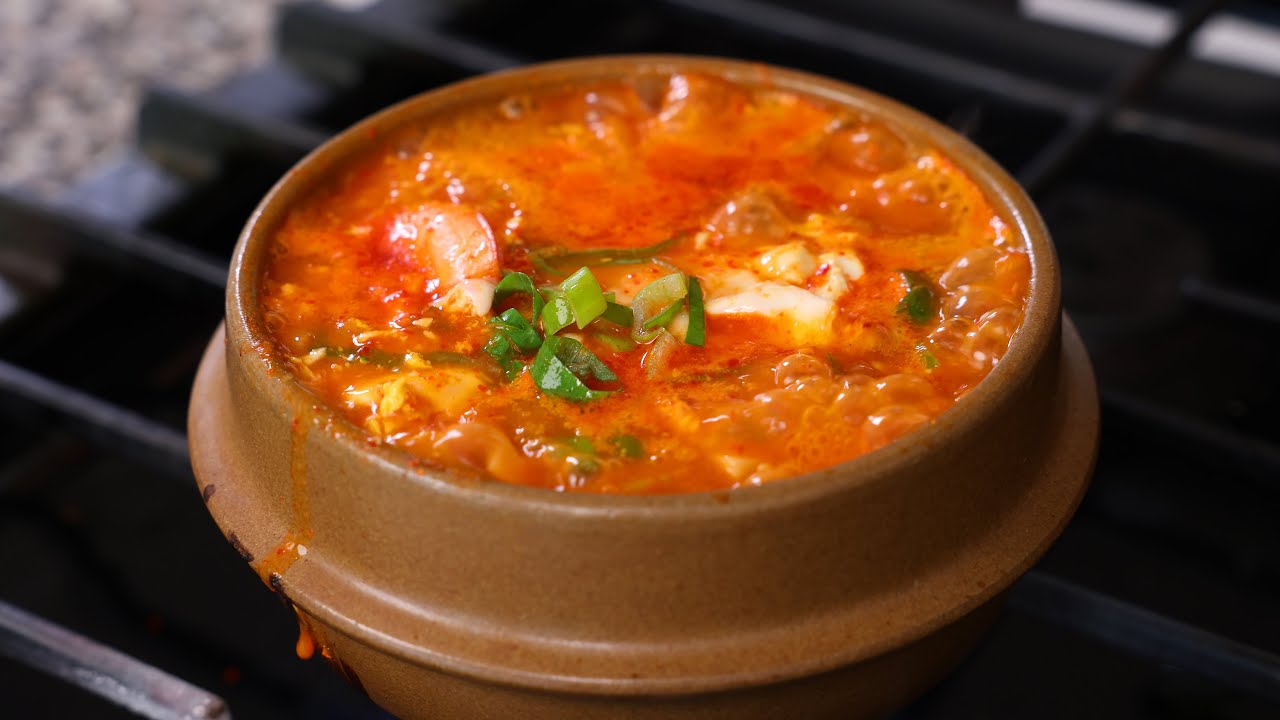
Silky soft tofu in a fiery, savory broth with seafood or pork, finished with a raw egg cracked into the bubbling pot. Korean comfort in a stone bowl.
Why This Recipe Works
Let's be direct: most home cooks get sundubu jjigae wrong not because the technique is difficult, but because they treat it like a simple soup. It isn't. It's a precision instrument — a dish engineered over centuries to deliver textural contrast, fat-soluble flavor extraction, and residual thermal cooking all in a single vessel. Here is why every step in this recipe exists, and why cutting corners will produce a mediocre pot of red water with floating tofu.
The Blooming Protocol Is Non-Negotiable
The gochugaru does not go into water. It goes into hot sesame oil, into rendered pork fat, and it goes there first. Capsaicin, the compound responsible for heat, is almost entirely fat-soluble. Dissolving it in water — as you would if you added the chili flakes to the broth — produces a thin, one-dimensional heat that sits on the tongue and disappears. Blooming gochugaru in oil extracts capsaicin alongside annatto-adjacent pigments and aromatic volatile compounds that are equally lipophilic. The result is a deep, layered heat that coats the palate rather than assaulting it, and a broth with actual color depth rather than the diluted orange of shortcuts.
The Pork Renders, Then Builds the Base
Pork belly in sundubu jjigae is not a protein component. It is a fat delivery system. The goal in the first three minutes on stone pot or heavy pot is not to cook pork — it is to render intramuscular fat into the sesame oil, creating a blended animal-vegetable fat base that will carry the gochugaru bloom and season every molecule of the subsequent broth. Crisped edges are a bonus. A generous fond on the bottom of the pot is the actual prize.
Sundubu Is Not Soft Tofu. Know the Difference.
Korean sundubu — the kind sold in pressurized plastic tubes at Asian grocery stores — is unset or minimally set soy curd. It contains significantly more whey than block soft tofu, which means it bleeds moisture into the broth as it heats, thickening it slightly and creating that characteristic silky body. Standard block soft tofu, pressed and firmed, does not do this. If you substitute it, you get cleaner broth and firmer tofu cubes — a structurally different dish. Neither is wrong, but they are not the same. Use sundubu if you can find it. Spoon it in large, intact curds. Do not crumble it. It will partially dissolve on its own.
The Stock Matters More Than You Think
Anchovy-dashima stock is not flavored water. It is the umami backbone of the entire dish — a broth built on glutamates from dried anchovies and kombu, producing a savory depth that neither chicken stock nor plain water can replicate. The stock's mild oceanic character recedes behind the gochugaru and garlic in the finished stew, but remove it and you will immediately notice a flatness, a lack of resonance. It is the bass note you don't consciously hear until it's gone.
The Ttukbaegi Is an Engineering Decision
A ttukbaegi — the Korean stone pot, unglazed clay fired at high heat — is not a stylistic choice for Instagram. It is a thermal mass problem solved by Korean ceramics over a thousand years. Stone pots retain heat dramatically longer than metal cookware. When you pull a ttukbaegi off the burner and set it on the table, the stew inside continues at a rolling simmer for anywhere from five to twelve minutes depending on the pot's thickness and the ambient room temperature. This matters for two reasons: it continues cooking the zucchini and tofu without the risk of overcooking them on the stove, and more critically, it provides the residual heat needed to gently set the egg white without nuking the yolk. You can replicate this partially with a small heavy pot — cast iron works reasonably well — but the thermal characteristics are different, and you'll need to manage timing more carefully.
The Egg Is a Sauce Delivery Mechanism
Cracking a raw egg into bubbling stew at the end is not theater. The white sets just enough in the residual heat of the ttukbaegi to add body to the broth. The yolk — kept runny by precise timing and a pulled pot — breaks as you eat, creating a rich, fatty emulsion that mingles with the spicy red broth in the bowl. This is not an optional garnish. It is the textural pivot of the dish. An overcooked yolk produces a grainy, chalky interruption. A well-timed yolk produces what is effectively a homemade broth enrichment, costing you thirty seconds of attention and one egg.
Zucchini as Structural Filler
Hobak (Korean zucchini) absorbs the spiced broth more efficiently than Western zucchini varieties due to its thinner skin and higher water content, but any zucchini cut into half-moons achieves the same effect at a slightly reduced rate. The goal is not nutrition — it is textural variation. Soft tofu, tender zucchini, and fatty pork against spiced broth provides contrast at every spoonful. Remove the zucchini and the dish becomes texturally monotonous. Add it too early and it turns to pulp. Eight to ten minutes from introduction is the window.
Why Serve It With Plain Rice
Because the broth is aggressive. The gochugaru, the fish sauce, the rendered fat — this is a high-intensity flavor environment. Plain steamed rice is not a side dish, it is a palate management tool. You eat a spoonful of stew, you eat a bite of rice. The starch absorbs residual heat and brine, resets the palate, and allows you to eat more stew than you otherwise could. This is not a coincidence. Korean cuisine at its best is a system of deliberate calibration between intensity and neutrality. Sundubu jjigae is that system made visible in a single stone pot.
Sundubu Jjigae (Soft Tofu Stew)
🛒 Ingredients
- ✦1 package (16 oz) Korean soft tofu (sundubu)
- ✦4 oz pork belly, thinly sliced (or 4 oz mixed seafood)
- ✦1 tablespoon sesame oil
- ✦1 tablespoon gochugaru (Korean red pepper flakes)
- ✦1 tablespoon soy sauce
- ✦2 cloves garlic, minced
- ✦1/2 small onion, diced
- ✦1 small zucchini (hobak), sliced into half-moons
- ✦2 green onions, sliced
- ✦1 cup anchovy-dashima stock (or water)
- ✦1 teaspoon fish sauce
- ✦2 eggs
- ✦Salt to taste
👨🍳 Instructions
01Step 1
Heat sesame oil in a ttukbaegi (stone pot) or small heavy pot over medium-high heat. Add pork belly and cook until the fat renders and edges crisp, about 3 minutes.
02Step 2
Add garlic, onion, and gochugaru. Stir-fry for 1 minute until the oil turns red and fragrant.
03Step 3
Pour in anchovy-dashima stock and soy sauce. Bring to a boil.
04Step 4
Gently spoon the soft tofu into the pot in large curds — don't crumble it. The tofu should hold some shape.
05Step 5
Add zucchini slices and fish sauce. Simmer for 8-10 minutes until the zucchini is tender and the broth has developed depth.
06Step 6
Crack an egg directly into the bubbling stew. Cover and cook for 1 minute — the whites should just set while the yolk stays runny.
07Step 7
Scatter green onions on top. Serve immediately in the stone pot with steamed rice on the side.
Nutrition Per Serving
Estimates based on standard preparation. Adjustments alter macros.
🔄 Substitutions
Instead of Pork belly...
Use Shrimp + clams
Seafood sundubu (haemul sundubu) is equally popular — add in the last 5 minutes
Instead of Anchovy-dashima stock...
Use Mushroom stock
For vegetarian version — use dried shiitake soaking liquid
Instead of Gochugaru...
Use Crushed red pepper flakes
More heat, less depth — use half the amount and add paprika for color
🧊 Storage & Reheating
In the Fridge
Store without egg for up to 2 days. Best eaten fresh.
In the Freezer
Not recommended — soft tofu texture changes after freezing.
Reheating Rules
Reheat gently in a pot. Crack a fresh egg in when serving.
❓ Frequently Asked Questions
What is the difference between sundubu and regular tofu?
Sundubu is uncurdled or barely curdled tofu — it has the texture of very thick custard. Regular soft tofu is pressed and holds its shape. Sundubu melts into the broth, creating a creamy, silky stew. You can find it in tubes at Korean markets.
Why crack an egg in the stew?
The egg serves two purposes: the white adds protein and texture to the broth, while the runny yolk acts as a rich, creamy sauce that you mix in as you eat. It's how sundubu jjigae is traditionally served in Korea.

The Science of
Sundubu Jjigae (Soft Tofu Stew)
We turned everything on this page into a beautiful, flour-proof PDF cheat sheet. Print it out, stick it to your fridge, and never mess up your sundubu jjigae (soft tofu stew) again.
*We'll email you the high-res PDF instantly. No spam, just perfectly cooked meals.
AlmostChefs Editorial Team
We translate the internet's most popular cooking videos into foolproof, beginner-friendly written recipes. We analyze multiple methods, test them in our kitchen, and engineer a single "Master Recipe" that gives you the best possible result with the least possible stress.