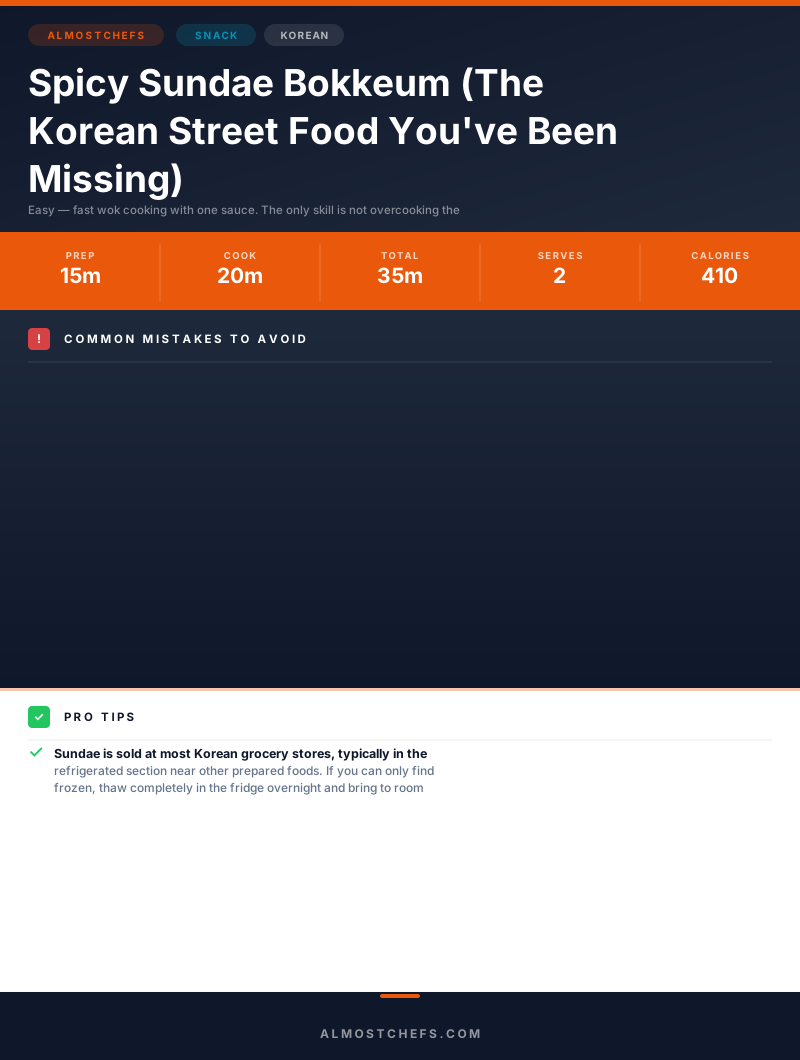
Spicy Sundae Bokkeum (The Korean Street Food You've Been Missing)
Stir-fried Korean blood sausage with chewy rice cakes, crisp vegetables, and a bold gochujang sauce — the pojangmacha staple that most home cooks never attempt. We broke down the technique so you can nail the caramelized glaze and the right texture in a single wok.

“Sundae bokkeum is what Korean street stalls smell like at 11pm — pork and gochujang hitting a blazing wok, the sauce caramelizing in seconds, every piece lacquered in something sweet and violent. It is not subtle. It is not refined. It is exactly what it wants to be, and most home cooks never make it because they don't know where to buy sundae or they assume the technique is more complicated than it is. It isn't. You need a hot pan, a simple sauce, and the confidence to leave it alone long enough to get color.”
Why This Recipe Works
Sundae bokkeum is pojangmacha food — the kind of thing that appears under orange tent canopies at 10pm, served in a styrofoam container with a toothpick, eaten standing up in the cold. It has no interest in being elegant. What it has is a specific and uncompromising flavor: fermented heat from gochujang, the particular soft-dense chew of blood sausage, glass noodles and barley doing quiet structural work inside the casing while a lacquered sauce coats every surface. This is food that knows exactly what it is.
Why Sundae Is Different From What You Expect
Western blood sausage — boudin noir, morcilla, black pudding — leans into richness. High fat content, strong iron flavor, dense crumble. Korean sundae does something different. The filling is primarily glass noodles (dangmyeon), barley, and vegetables, with blood as a binder rather than the star. The result is lighter, chewier, and considerably more neutral — an earthy, faintly savory flavor that sits comfortably inside a spicy stir-fry without fighting it.
This neutrality is a feature. Sundae doesn't need to be the loudest thing in the pan because the sauce is doing that work. The sausage's job is texture and body. It provides the substantial, chewy anchor that rice cakes and vegetables can't fully replicate.
The Wok Problem
Most home cooks don't run their pan hot enough. A real pojangmacha wok runs at temperatures that would set off residential smoke alarms. You can't fully replicate this, but you can approximate it by using a carbon steel wok or heavy cast iron skillet preheated aggressively. The pan must be at full heat before the food touches it. If it isn't, the sundae releases its moisture into the pan before it has time to sear, and you end up with grey, steamed sausage coins sitting in a puddle.
The single-layer rule matters for the same reason. Crowding drops the pan temperature immediately. One batch with space between pieces beats two batches of crowded gray protein every time.
Sauce Timing Is Everything
Gochujang contains enough sugar to burn in under thirty seconds against a screaming pan. The temptation is to add it early and let everything cook together — resist it. The vegetables need to soften, the tteok needs color, and the sundae needs a sear before the sauce enters. Add it in the final sixty to ninety seconds and toss constantly. The sauce reduces rapidly, clings to every surface, and produces that glossy, lacquered finish that distinguishes proper sundae bokkeum from a plate of sausage in red paste.
A wide spatula is worth mentioning here: sundae casing is delicate under high heat, and using tongs to flip pieces almost always punctures the casing and spills the filling. Wide, flat flips preserve the structural integrity of each coin.
The Rice Cake Question
Tteok in this dish is not filler. The cylinder-shaped rice cakes absorb the gochujang sauce deeply while staying chewy at the center, creating flavor-intensity variation within each bite. They also absorb excess liquid from the vegetables as everything cooks, keeping the sauce concentrated rather than watery. The combination of sundae and tteok — one fermented and savory, one neutral and elastic — is what makes sundae bokkeum more than the sum of its parts.
Soak refrigerated tteok for ten minutes before they hit the pan. Straight-from-fridge rice cakes are dense and stiff and will need three times as long to soften, by which point everything else in the pan is overcooked.
What Makes It Street Food
This is a fast dish. Thirty-five minutes start to finish, most of it prep. The actual cooking is under ten minutes if your pan is hot and your sauce is pre-mixed. That's the structure of all good pojangmacha food — minimal barrier to entry, immediate payoff, no patience required after the heat goes on. Make it once and you'll understand why there's a tent full of people eating it at midnight.
Where Beginners Mess This Up
Before we start, read this. These are the 4 reasons your spicy sundae bokkeum (the korean street food you've been missing) will fail:
- 1
Overcrowding the pan: Sundae releases moisture when heated. Pack too many pieces into the skillet and you get steamed, grey sausage sitting in liquid instead of glossy, caramelized bites. Work in a single layer with real space between pieces, or do it in two batches. The extra two minutes is worth it.
- 2
Adding the sauce too early: Gochujang burns fast. If you add the sauce before the sundae has some color and the vegetables have started to soften, the sugar scorches against the pan before the sauce ever gets a chance to coat anything. Get everything 70% cooked first, then add the sauce and let it reduce and cling.
- 3
Using cold sundae straight from the fridge: Cold sundae cooks unevenly — the exterior chars while the center stays dense and stiff. Let it come to room temperature for 15 minutes before stir-frying. It makes a measurable difference in texture.
- 4
Cutting pieces too thin: Sundae sliced thinner than half an inch falls apart in the wok and disintegrates into the sauce. You want thick, confident coins that hold their shape through the toss. Half-inch to three-quarter-inch slices are the target.
🛠️ Core Equipment
- Carbon steel wok or large cast iron skilletHigh, sustained heat is the entire technique. A thin nonstick pan can't hold temperature when the sundae goes in and the wok cools immediately. You need a pan that retains heat under load.
- Wide spatula or wok shovelSundae is fragile when hot. A wide spatula lets you flip pieces without breaking them apart. Tongs puncture the casing and the filling spills out into the sauce.
- Small mixing bowl for saucePre-mix the entire sauce before the wok gets hot. Stir-frying moves too fast to measure gochujang while the pan is screaming. Thirty seconds of prep prevents a burnt, lopsided sauce.
Spicy Sundae Bokkeum (The Korean Street Food You've Been Missing)
🛒 Ingredients
- ✦14 oz sundae (Korean blood sausage), sliced into 1/2-inch coins
- ✦1 cup tteok (cylinder-shaped rice cakes), soaked 10 minutes if refrigerated
- ✦1 medium yellow onion, sliced into half-moons
- ✦2 scallions, cut into 2-inch pieces
- ✦1/2 medium cabbage, roughly chopped (about 2 cups)
- ✦3 green chilies, sliced on the bias
- ✦2 tablespoons gochujang
- ✦1 tablespoon gochugaru (Korean red pepper flakes)
- ✦1.5 tablespoons soy sauce
- ✦1 tablespoon corn syrup or honey
- ✦1 tablespoon sesame oil
- ✦1 tablespoon neutral oil (vegetable or avocado)
- ✦1 teaspoon minced garlic
- ✦1/2 teaspoon sugar
- ✦Toasted sesame seeds for finishing
- ✦Perilla leaves or shiso, torn, for serving (optional)
👨🍳 Instructions
01Step 1
Let the sundae sit at room temperature for 15 minutes. Meanwhile, soak refrigerated tteok in cold water for 10 minutes, then drain.
02Step 2
Mix gochujang, gochugaru, soy sauce, corn syrup, minced garlic, and sugar in a small bowl until smooth. Set aside.
03Step 3
Heat neutral oil in a carbon steel wok or large skillet over high heat until the oil just begins to smoke.
04Step 4
Add the tteok and onion. Stir-fry for 3-4 minutes until the onion softens and the tteok gets a little color.
05Step 5
Add the cabbage and green chilies. Toss everything and cook for 2 more minutes until the cabbage wilts slightly but retains a little bite.
06Step 6
Push the vegetables to the outer edge of the wok. Add the sundae slices to the center in a single layer. Let them cook undisturbed for 90 seconds to develop color on one side, then flip.
07Step 7
Once the sundae has color on both sides, pour the prepared sauce over everything in the pan.
08Step 8
Toss vigorously over high heat for 60-90 seconds until the sauce coats every piece and begins to thicken and cling. You want glossy, not soupy.
09Step 9
Add scallion pieces and sesame oil. Toss once more off the heat.
10Step 10
Transfer to a plate, scatter toasted sesame seeds over the top, and serve immediately with torn perilla leaves if using.
Nutrition Per Serving
Estimates based on standard preparation. Adjustments alter macros.
🔄 Substitutions
Instead of Sundae (blood sausage)...
Use Sliced pork belly or braised pork intestine (gopchang)
Pork belly loses the unique fermented, earthy flavor but is far easier to source and produces a satisfying stir-fry. Gopchang is the closer cultural substitute but requires separate cleaning and parboiling.
Instead of Tteok (rice cakes)...
Use Sliced fish cake (eomuk)
Fish cake absorbs the sauce beautifully and adds oceanic depth. It's a common pojangmacha addition anyway — many versions include both.
Instead of Corn syrup...
Use Honey or rice syrup (mulyeot)
Rice syrup is the most traditional Korean substitute and produces the most authentic glaze. Honey works but adds floral notes that compete slightly with the gochujang.
Instead of Gochugaru...
Use Crushed Calabrian chili or regular red pepper flakes
Korean gochugaru has a specific mild, fruity heat profile that generic red pepper flakes don't replicate. Use half the quantity of any substitute and expect a different character.
🧊 Storage & Reheating
In the Fridge
Technically stores for up to 2 days in an airtight container, but the texture degrades significantly. The rice cakes harden and the sauce loses its gloss.
In the Freezer
Not recommended. Sundae and tteok both change texture irreparably after freezing and reheating.
Reheating Rules
If you must, reheat in a dry skillet over medium-high heat with a tablespoon of water. Microwave turns the tteok rubbery and the sundae dense.
❓ Frequently Asked Questions
What does sundae taste like?
Korean sundae has a mild, slightly earthy flavor — much gentler than Western blood sausage. The dominant taste is savory pork with a hint of fermented depth. The filling of glass noodles and barley makes the texture chewy and substantial rather than rich and fatty. The blood component is subtle, not metallic.
Where do I buy sundae?
Korean grocery stores (H Mart, Hanahreum, local Korean markets) carry it refrigerated or frozen. Some Korean tofu shops and food halls also sell freshly made sundae. Calling ahead saves a wasted trip.
Is sundae bokkeum very spicy?
At standard ratios, it's medium heat — noticeable but not punishing. The gochujang and gochugaru provide layered heat rather than sharp spike. If you're heat-sensitive, halve the gochugaru and use a mild gochujang. If you want it hotter, add sliced fresh red chilies at the end.
Can I make this without the rice cakes?
Yes. The tteok adds chewiness and stretches the dish, but sundae bokkeum existed before rice cakes became standard in the recipe. Without tteok, the dish is leaner and the sundae takes center stage more directly.
Why does my sauce burn before the food is cooked?
You added the sauce too early. The gochujang contains sugar that caramelizes fast and burns faster. Get the vegetables and sundae nearly cooked first, then add the sauce for the final 60-90 seconds. Sauce in at the beginning is the most common mistake.
What's the difference between sundae and sundae bokkeum?
Sundae is the sausage itself — steamed or boiled and typically served with salt and doenjang on the side. Sundae bokkeum is that same sausage stir-fried in a spicy sauce with vegetables and rice cakes. Bokkeum means stir-fry. The base ingredient is the same; the preparation and flavor profile are completely different.
The Science of
Spicy Sundae Bokkeum (The Korean Street Food You've Been Missing)
We turned everything on this page into a beautiful, flour-proof PDF cheat sheet. Print it out, stick it to your fridge, and never mess up your spicy sundae bokkeum (the korean street food you've been missing) again.
*We'll email you the high-res PDF instantly. No spam, just perfectly cooked meals.
AlmostChefs Editorial Team
We translate the internet's most popular cooking videos into foolproof, beginner-friendly written recipes. We analyze multiple methods, test them in our kitchen, and engineer a single "Master Recipe" that gives you the best possible result with the least possible stress.