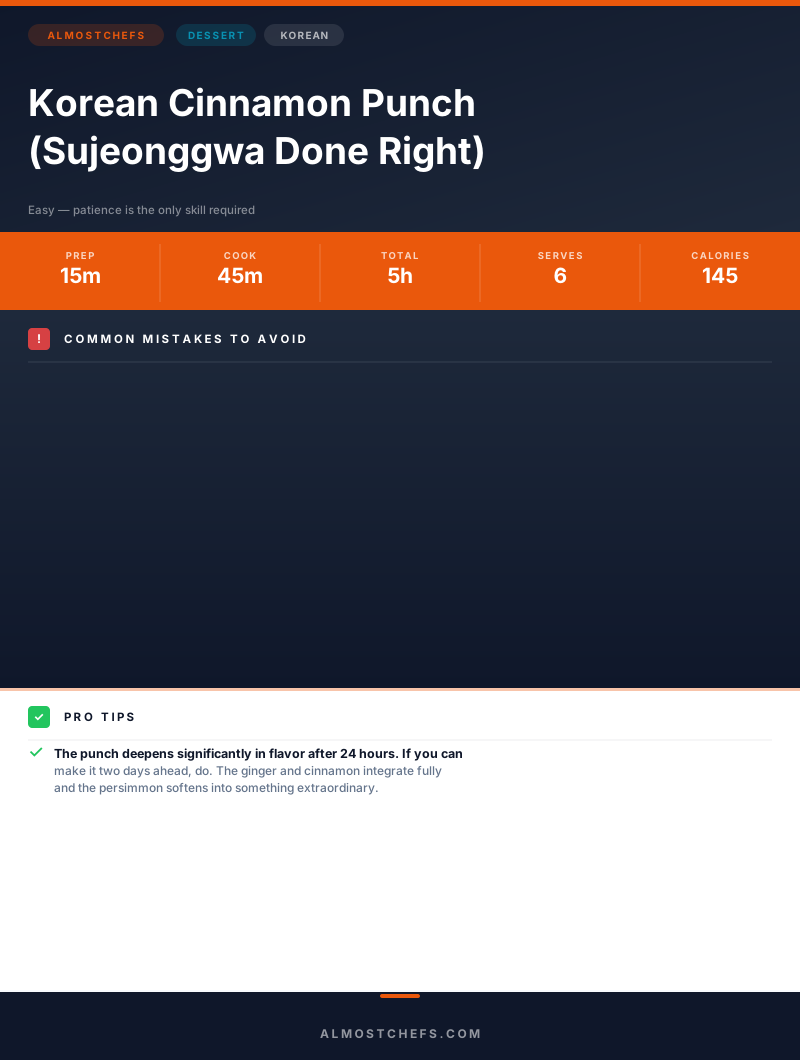
Korean Cinnamon Punch (Sujeonggwa Done Right)
A traditional Korean spiced persimmon punch brewed from whole cinnamon and fresh ginger, sweetened with brown sugar, and served ice cold with floating pine nuts and soft dried persimmon. We broke down why most homemade versions taste flat and thin — and fixed every mistake.

“Sujeonggwa is one of the oldest drinks in Korean culinary history and one of the most underestimated. It looks like sweet tea. It tastes like nothing else on earth — a cold, dark, aromatic punch that lands somewhere between spiced cider and sophisticated digestif. Most homemade versions are watery and one-dimensional because cooks rush the brew and skip the steep. The ginger and cinnamon need to be cooked separately, never together, then combined and chilled for hours. That gap between recipe and technique is why yours has always tasted off.”
Why This Recipe Works
Sujeonggwa is a Korean punch with almost no margin for error — and almost no steps. That tension is what makes it interesting. You brew two ingredients, combine them, sweeten them, and chill them. That's it. The reason most people get it wrong isn't complexity. It's the assumption that simple means forgiving.
The Separate-Brew Architecture
Every version of this recipe that tells you to simmer the ginger and cinnamon together is wrong. Not differently-opinionated — wrong. The two aromatics have fundamentally incompatible extraction profiles.
Fresh ginger is aggressive. Its gingerols and shogaols hit the water within minutes, producing a sharp, pungent heat that intensifies quickly and then plateaus. Cinnamon is slow. The cinnamaldehyde and eugenol locked inside the bark need 30-40 minutes of sustained heat to fully dissolve into the liquid. When you combine them from the start, ginger dominates the first phase of extraction, establishes its flavor profile, and then sits there growing more acrid while the cinnamon finally gets going. The result: a punch that tastes mostly like ginger with a cinnamon afterthought, and neither flavor is clean.
Cook them separately. Brew the cinnamon low and slow for the full 40 minutes. Brew the ginger at a brisk simmer for 25. Strain each independently. Combine the liquids. The flavors are now distinct and additive rather than competing and muddied.
The Cinnamon Variable
Not all cinnamon is created equal. Ceylon cinnamon — the thin-barked, multi-layered variety from Sri Lanka — produces a delicate, floral punch with light sweetness and almost no astringency. Cassia cinnamon, the thick-barked variety sold in most Western grocery stores, produces a bolder, slightly medicinal punch with more heat and tannin.
Both work in sujeonggwa. Ceylon is technically more traditional and produces a more refined result. Cassia is easier to find and cheaper. If you're using Cassia, reduce your brew time by 5 minutes and check frequently — it hits astringency faster. Either way, use a kitchen scale and weigh your cinnamon rather than measuring by volume. A handful of thin Ceylon sticks and a handful of fat Cassia bark contain completely different amounts of spice. Volume measurements are why your punch has never tasted the same twice.
The Persimmon Protocol
Gotgam — dried Korean persimmons — are not an optional garnish. They are a functional ingredient that transforms the punch during the overnight soak. The dried fruit rehydrates slowly in the cold liquid, pulling the honeyed, tannic sweetness of the persimmon into the punch while simultaneously absorbing the spiced liquid into itself. After eight hours, you have a punch that tastes faintly of persimmon and persimmons that taste deeply of cinnamon and ginger.
The critical error is adding them to warm liquid. Heat collapses the persimmon's cell structure too fast. The outside softens while the inside stays leathery, and the fruit releases its sugars in an uncontrolled rush that clouds the punch. Add them cold, let the process happen slowly, and you get a structurally intact fruit that's silky and complex when served.
Why Cold Is Non-Negotiable
Temperature is not a preference in sujeonggwa — it is part of the recipe. Cold suppresses the perception of sweetness and heat, which rounds the sharp edges of the ginger and brings the cinnamon's floral notes forward. The same punch served warm tastes aggressive and medicinal. Served cold, it tastes sophisticated and complex. This is the same phenomenon behind why sparkling water with lemon tastes refreshing cold and flat warm. The drink is chemically the same. Your perception of it is not.
Four hours minimum in the refrigerator. Overnight preferred. Two days ideal. This is a drink that rewards patience in a way that very few recipes do — not because it needs the time to cook, but because it needs the time to become itself.
The Pine Nut Finish
Pine nuts on sujeonggwa are not decoration. They provide the only textural contrast in a drink that is otherwise entirely liquid, and their mild resinous bitterness does something precise: it cuts the sweetness at the finish and leaves the palate clean. A spoonful of punch, a pine nut — the rhythm of eating sujeonggwa is almost architectural. Add them tableside, right before drinking, because they sink within two minutes and lose their visual effect.
This is a drink designed for the end of a meal. Small cup, ice, persimmon, pine nuts. It clears the palate, settles the stomach, and tastes like nothing else in the Korean canon — or anywhere else.
Where Beginners Mess This Up
Before we start, read this. These are the 4 reasons your korean cinnamon punch (sujeonggwa done right) will fail:
- 1
Brewing ginger and cinnamon together: This is the single most common sujeonggwa mistake. Ginger and cinnamon release their compounds at different rates and compete for dominance when brewed simultaneously. The result is a muddy, acrid punch where neither flavor is clean. Cook them in separate pots, strain each independently, then combine. The flavors stay distinct and amplify each other instead of canceling out.
- 2
Not brewing long enough: Simmering cinnamon sticks for 10 minutes pulls surface flavor only. The deep, warming complexity of good sujeonggwa comes from a 30-40 minute low simmer that extracts the inner oils from the bark. If your punch tastes thin and perfumey instead of rich and spiced, the brew time is the problem.
- 3
Adding the dried persimmons too early: Gotgam (dried persimmon) needs to soak in the finished, cooled punch — not simmer in the hot liquid. Heat breaks down the persimmon's texture too fast and muddies the punch with fruit sediment. Add them cold, let them rehydrate overnight, and they become silky, intensely flavored, and structurally intact when served.
- 4
Serving warm or at room temperature: Sujeonggwa is a cold dessert drink. Serving it warm turns a sophisticated punch into a medicinal-tasting ginger tea. It must chill for at least 4 hours — overnight is better. The cold temperature rounds the spice and brings forward the sweetness. The dish is essentially incomplete until it has been properly chilled.
The Video Reference Library
Want to see it in action? Here are the exact videos we analyzed and combined to build this foolproof recipe translation:
Primary reference for the Korean cinnamon ginger punch technique.
🛠️ Core Equipment
- Two medium saucepansOne for ginger, one for cinnamon. This is non-negotiable. Separate pots are the architecture behind a clean, layered punch. Using one pot collapses the flavor.
- Fine-mesh sieve or cheeseclothSujeonggwa must be strained until completely clear. Any remaining ginger fiber or cinnamon sediment turns the punch gritty and bitter. Strain twice if needed.
- Large glass pitcher or jar with a lidFor the overnight chill and persimmon soak. Glass lets you monitor the deepening color. The lid prevents the punch from absorbing refrigerator odors during the long steep.
- Kitchen scaleCinnamon stick measurements by volume are wildly inconsistent — a handful can mean 20g or 60g depending on the sticks. Weighing ensures repeatable results every time.
Korean Cinnamon Punch (Sujeonggwa Done Right)
🛒 Ingredients
- ✦80g cinnamon sticks (about 6-8 medium sticks)
- ✦200g fresh ginger, peeled and sliced into coins
- ✦10 cups water, divided
- ✦3/4 cup dark brown sugar, packed (adjust to taste)
- ✦6 dried persimmons (gotgam), stems removed
- ✦1/4 cup pine nuts, for serving
- ✦Ice, for serving
👨🍳 Instructions
01Step 1
Rinse the cinnamon sticks under cold water to remove dust and debris. Place in a medium saucepan with 6 cups of water. Bring to a boil over high heat, then reduce to a low simmer.
02Step 2
Simmer the cinnamon for 35-40 minutes uncovered until the liquid is deep amber and intensely aromatic.
03Step 3
While the cinnamon simmers, peel and slice the fresh ginger into thin coins. Place in a separate saucepan with 4 cups of water. Bring to a boil, then reduce and simmer for 25-30 minutes.
04Step 4
Strain the cinnamon liquid through a fine-mesh sieve into a large heatproof bowl or pitcher. Discard the spent sticks.
05Step 5
Strain the ginger liquid through the same sieve into the cinnamon liquid. Stir to combine.
06Step 6
While the combined liquid is still warm, add the brown sugar and stir until completely dissolved. Taste and adjust sweetness — the punch should taste slightly too sweet warm, as cold dulls sweetness significantly.
07Step 7
Allow the punch to cool to room temperature, then refrigerate uncovered for at least 1 hour until fully cold.
08Step 8
Score each dried persimmon gently with a knife and add them to the cold punch. Cover and refrigerate overnight, or for a minimum of 4 hours.
09Step 9
To serve, pour the punch into individual cups or bowls. Add one soaked persimmon per serving and float 5-7 pine nuts on the surface.
Nutrition Per Serving
Estimates based on standard preparation. Adjustments alter macros.
🔄 Substitutions
Instead of Dark brown sugar...
Use Raw honey or maple syrup
Honey adds a floral complexity that complements the cinnamon. Maple syrup works but introduces a distinct woodsy note. Both alter the flavor profile meaningfully — neither is neutral.
Instead of Dried persimmons (gotgam)...
Use Medjool dates or dried apricots
Dates provide the sweetness but none of the tannin. Apricots offer more acidity. Neither replicates gotgam's honeyed, jammy depth. Seek gotgam at Korean grocery stores — it's worth the effort.
Instead of Pine nuts...
Use Slivered blanched almonds or sunflower seeds
Pine nuts have a mild resinous quality that pairs specifically with cinnamon punch. Almonds work textually but are flavor-neutral. A functional swap, not a like-for-like.
Instead of Fresh ginger...
Use Dried ground ginger is not recommended
Ground ginger produces a harsh, aggressive heat without the brightness of fresh. If fresh ginger is unavailable, frozen ginger coins work well and are often pre-peeled. Never use ground ginger in sujeonggwa.
🧊 Storage & Reheating
In the Fridge
Store strained punch in a covered glass pitcher for up to 7 days. Keep the soaked persimmons submerged. Flavor continues to develop through day 3.
In the Freezer
Freeze the strained punch (without persimmons) in an airtight container for up to 2 months. Thaw overnight in the refrigerator. Re-soak fresh gotgam before serving.
Reheating Rules
Sujeonggwa is not reheated. It is a cold drink. Serve straight from the refrigerator over ice.
❓ Frequently Asked Questions
Why do I need to cook the ginger and cinnamon separately?
They compete when brewed together. Ginger releases pungent volatile compounds quickly and aggressively. Cinnamon needs a long, slow simmer to open up. When combined from the start, ginger dominates early and the cinnamon never fully develops. Separate pots give each ingredient the conditions it needs, and combining the strained liquids afterward produces a cleaner, more balanced punch.
Where do I buy dried persimmons (gotgam)?
Korean grocery stores carry gotgam year-round, often in vacuum-sealed packages. They are also available at many Asian supermarkets and online. Look for ones that are dark orange to brown, pliable but not sticky, and uniformly dried. Avoid any that have visible mold or smell fermented.
Can I make sujeonggwa without persimmons?
Yes. The punch itself — cinnamon, ginger, sugar, water — is complete without them. The persimmons are the traditional garnish and soaking ingredient, but the punch stands on its own. Serve with just pine nuts for a simpler presentation. The gotgam adds texture, sweetness, and visual drama, but their absence doesn't break the drink.
How sweet should sujeonggwa be?
Traditional sujeonggwa is noticeably sweet — this is a dessert drink, not a tea. The sweetness should be pronounced but not cloying. A good benchmark: it should taste slightly too sweet at room temperature, because cold serving temperature will reduce the perceived sweetness by about 20 percent. Adjust sugar levels warm, then chill and taste again before serving.
Can I serve sujeonggwa warm in winter?
Technically yes, though purists would object. If serving warm, do not add the persimmons — they become unpleasantly mushy in hot liquid. Serve in small cups like a mulled wine, and garnish with just pine nuts. Be aware that the flavor profile shifts significantly: the ginger becomes sharper and more medicinal, and the cinnamon more aggressive. It's a different experience entirely.
Why does my punch taste bitter?
Two likely causes: the cinnamon simmered too long at too high a heat (above a gentle simmer extracts tannins and turns bitter), or the punch wasn't strained finely enough and ginger fiber is contributing harshness. Brew at a low, gentle simmer and always strain through cheesecloth for the cleanest result.
The Science of
Korean Cinnamon Punch (Sujeonggwa Done Right)
We turned everything on this page into a beautiful, flour-proof PDF cheat sheet. Print it out, stick it to your fridge, and never mess up your korean cinnamon punch (sujeonggwa done right) again.
*We'll email you the high-res PDF instantly. No spam, just perfectly cooked meals.
AlmostChefs Editorial Team
We translate the internet's most popular cooking videos into foolproof, beginner-friendly written recipes. We analyze multiple methods, test them in our kitchen, and engineer a single "Master Recipe" that gives you the best possible result with the least possible stress.