Classic Stromboli (The Roll That Actually Holds Together)
An Italian-American rolled sandwich stuffed with cured meats, fresh mozzarella, sautéed vegetables, and Italian seasonings, baked until the exterior is deep golden and the inside is a molten spiral. We analyzed the most common failure modes to give you a roll that slices clean every time.
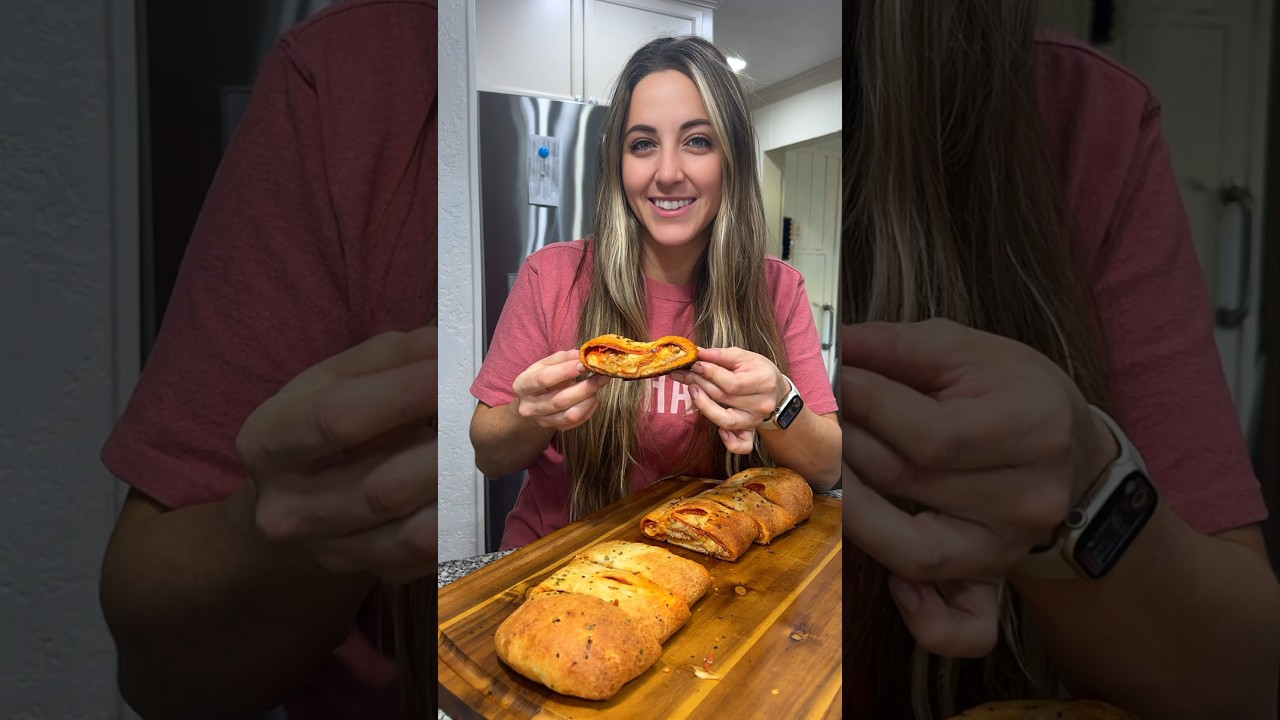
“Most homemade stromboli fails in one of two ways: the dough tears during rolling, or the whole thing unravels in the oven and spills its filling across the pan. Neither failure is about talent. Both are about rolling mechanics and moisture management. Get those two things right and the rest takes care of itself.”
Why This Recipe Works
Stromboli is a roll. That sounds obvious until you're standing over a burst seam, watching your mozzarella pool across a parchment sheet like a slow crime scene. The technique is simple — roll, seal, bake — but each of those three words contains a specific failure mode that most recipes skip entirely.
The Moisture Problem
Spinach is roughly 91% water. Bell peppers are 92%. When you layer raw or underdone vegetables inside stromboli dough and slide it into a 400°F oven, those vegetables steam from the inside out. The dough around them absorbs that steam and turns into a pale, dense, bread-pudding texture — chewy in the wrong direction, structurally weak, impossible to slice clean.
The fix is cook time before assembly. Sauté your onion, peppers, and spinach until the pan looks completely dry. Not until the spinach wilts — until the liquid that releases from the wilted spinach fully evaporates. This takes about 8-10 minutes total and it's the difference between a stromboli that cuts like a terrine and one that falls apart on the plate.
The same principle applies to the mozzarella. Fresh whole-milk mozzarella is packed in water. If you use it straight from the container, that water releases into the dough during baking. Pat the slices dry with paper towels before layering. Two minutes of work; significant payoff.
The Roll Mechanics
Think of stromboli dough as a sheet of wet paper. It has elasticity — it wants to return to its resting shape. If you roll too gently, the dough springs back between turns and you end up with a loose, airy coil that has nowhere to go but outward during baking. Roll with conviction. Each turn should compress the previous one. Apply steady, even pressure across the entire width.
The seam placement is not decorative. When the seam faces down on the baking sheet, two things work in your favor: gravity presses the seam closed, and the heat from the pan welds the dough together before the interior gets hot enough to push outward. Seam-side up means the oven heat hits the seam first and pries it open before it can set. This is the entire reason 80% of stromboli photographs on the internet show one ugly split running along the top.
The Egg Wash Architecture
An egg wash is not a finishing flourish — it's structural. The proteins in the egg set into a firm, glossy shell that holds the exterior crumb together and creates the contrast between the crispy outside and the tender interior. Applied thin, it does nothing. Applied thick and in two coats, it produces a crust that audibly cracks when you press it.
Brush the first coat generously over every surface, including the ends. Wait thirty seconds for it to become slightly tacky, then apply a second coat. Sprinkle the Parmesan immediately after the second coat while it's still wet so it adheres. This is also why pre-assembled stromboli shouldn't get the egg wash until right before baking — refrigerated dough draws moisture out of the egg wash and you lose the lacquer effect.
The Rest Imperative
Mozzarella at 400°F is liquid. It flows. Cutting into stromboli straight from the oven is the culinary equivalent of opening a pressurized container — the interior wants to escape through whatever opening you make. Five minutes off heat drops the internal temperature enough that the cheese transitions from fully molten to viscous. The spiral stays intact. The slice is clean. The effort you put into the roll is finally visible on the plate.
Everything else in this recipe is execution. The dough is forgiving. The filling is customizable. The baking is straightforward. Master the moisture, the roll tension, and the rest time, and every stromboli you make from here will hold together exactly as intended.
Where Beginners Mess This Up
Before we start, read this. These are the 4 reasons your classic stromboli (the roll that actually holds together) will fail:
- 1
Wet vegetable filling: If you skip cooking the moisture out of the spinach and peppers before assembling, the steam they release in the oven turns your dough soggy from the inside. Cook the vegetables until visibly dry before spreading them. Press down with a spoon and watch for no liquid pooling at the bottom of the pan.
- 2
Rolling too loose: A slack roll has air pockets that expand in the oven, pushing seams open and letting cheese escape. Roll firmly, like a burrito — each turn should compress the previous one. The tighter the roll, the cleaner the cross-section when you slice it.
- 3
Skipping the rest before slicing: Cutting into a hot stromboli immediately releases all the melted cheese onto the cutting board. Five minutes of rest lets the interior set enough to hold its spiral shape when the knife goes through.
- 4
Egg wash applied too thin: A pale, barely brushed egg wash produces a soft, anemic crust that tears rather than snaps. Use a pastry brush and apply generously — the crust should look lacquered before it goes into the oven.
The Video Reference Library
Want to see it in action? Here are the exact videos we analyzed and combined to build this foolproof recipe translation:
The source video for this recipe. Covers rolling technique, seam placement, and the visual cues for doneness — specifically what 'deep golden' actually looks like versus underbaked pale.
🛠️ Core Equipment
- Rimmed baking sheet with parchment paperThe rim catches any cheese that escapes during baking. Parchment prevents sticking and makes cleanup instant. Never bake stromboli on a bare, unlined sheet.
- Large skilletYou need surface area to cook moisture out of the vegetables efficiently. A crowded skillet steams instead of sautés, leaving the filling wet.
- Rolling pinEven dough thickness is critical. Uneven rolling creates thick spots that stay raw and thin spots that burn or tear. A [rolling pin](/kitchen-gear/review/rolling-pin) gives you consistent pressure across the entire rectangle.
- Pastry brushFor applying the egg wash evenly. A pastry brush lets you work into the seam and coat every surface — fingers leave streaks and miss edges.
Classic Stromboli (The Roll That Actually Holds Together)
🛒 Ingredients
- ✦1 pound whole wheat pizza dough (store-bought or homemade)
- ✦8 ounces fresh mozzarella cheese, sliced thin
- ✦4 ounces sliced Italian ham
- ✦3 ounces sliced pepperoni
- ✦1 medium red bell pepper, thinly sliced
- ✦2 cups fresh baby spinach, roughly chopped
- ✦1 small yellow onion, finely diced
- ✦3 cloves garlic, minced
- ✦2 tablespoons extra virgin olive oil
- ✦1 teaspoon Italian seasoning blend
- ✦1/2 teaspoon red pepper flakes
- ✦1/4 teaspoon sea salt
- ✦1/4 teaspoon black pepper
- ✦1 egg, lightly beaten (for egg wash)
- ✦1 cup marinara sauce or pizza sauce, for serving
- ✦2 tablespoons grated Parmesan cheese
- ✦1 tablespoon fresh basil, finely chopped
👨🍳 Instructions
01Step 1
Preheat your oven to 400°F and line a rimmed baking sheet with parchment paper.
02Step 2
Heat olive oil in a large skillet over medium-high heat. Add the diced onion and sauté until translucent and fragrant, about 3 minutes.
03Step 3
Add the minced garlic and cook for 30 seconds until the raw edge softens.
04Step 4
Add the sliced bell pepper and cook for 4-5 minutes, stirring occasionally, until slightly softened.
05Step 5
Fold in the chopped spinach and cook for 2-3 minutes, stirring frequently, until fully wilted and all visible moisture has cooked off.
06Step 6
Remove from heat, season with Italian seasoning, red pepper flakes, salt, and black pepper. Set aside to cool slightly.
07Step 7
Lightly flour your work surface and roll the pizza dough into a rectangle approximately 14 by 10 inches.
08Step 8
Lay the mozzarella slices in a single layer over the dough, leaving a 1-inch border on all sides.
09Step 9
Layer the Italian ham and pepperoni evenly over the cheese.
10Step 10
Spread the cooled vegetable mixture over the meats in an even layer, pressing gently so the filling adheres.
11Step 11
Starting from the longer edge closest to you, roll the dough firmly away from you, tucking in the sides as you go. Pinch the seam closed and place seam-side down on the prepared baking sheet.
12Step 12
Brush the entire surface generously with the beaten egg. Sprinkle Parmesan and fresh basil over the top.
13Step 13
Bake for 25-30 minutes until the exterior is deep golden brown and sounds hollow when tapped.
14Step 14
Rest for 5 minutes before slicing diagonally into 4-6 portions. Serve warm with marinara sauce on the side.
Nutrition Per Serving
Estimates based on standard preparation. Adjustments alter macros.
🔄 Substitutions
Instead of Whole wheat pizza dough...
Use Store-bought white pizza dough
More elastic and easier to roll thin without tearing. Less fiber and a lighter, airier crumb. Any pizza dough works — the technique is identical.
Instead of Fresh mozzarella...
Use Low-moisture shredded mozzarella
Melts more aggressively and releases less water. Produces a stringier, more pizza-like interior. Pat fresh mozzarella dry if using to control moisture.
Instead of Italian ham and pepperoni...
Use Salami, soppressata, or roasted turkey
Any cured or cooked meat works. Avoid raw meat — it won't fully cook through inside the roll. Roasted turkey is the lowest-fat option.
Instead of Bell pepper and spinach...
Use Roasted mushrooms and sun-dried tomatoes
Cook roasted mushrooms until completely dry before using — they hold enormous amounts of water. Sun-dried tomatoes packed in oil should be drained and blotted.
🧊 Storage & Reheating
In the Fridge
Wrap tightly in foil or store in an airtight container for up to 3 days. The crust softens overnight but firms back up when reheated.
In the Freezer
Slice before freezing. Wrap individual portions in foil and freeze for up to 2 months. Thaw overnight in the fridge.
Reheating Rules
Reheat in a 375°F oven for 8-10 minutes directly on the rack to re-crisp the crust. Microwave reheating makes the dough rubbery — use the oven.
❓ Frequently Asked Questions
Why did my stromboli unroll in the oven?
The roll was too loose, or the seam wasn't placed face-down on the baking sheet. Roll firmly, pinch the seam completely closed, and always bake seam-side down so gravity and the baking sheet hold it shut while the dough sets.
Can I use store-bought pizza dough?
Yes — it's what most people should use. Store-bought whole wheat or white pizza dough is consistent, already proofed, and ready to roll. Let it sit at room temperature for 20-30 minutes before rolling so the gluten relaxes and it stops springing back.
How do I know when it's fully baked?
Deep golden brown exterior — not pale yellow. Tap the top and it should sound hollow, not dense. Internal temperature should read 200°F if you're using a thermometer. Pale stromboli is undercooked stromboli, regardless of what the timer says.
My filling keeps falling out when I slice it. What went wrong?
You sliced it too soon. The filling needs 5 minutes of rest after baking to set. Molten mozzarella is liquid — it flows out the moment you cut into it. Five minutes is non-negotiable for clean slices.
What's the difference between stromboli and calzone?
A calzone is folded — dough over filling, like a half-moon. A stromboli is rolled, creating a spiral cross-section. Stromboli is always baked open with the seam underneath; calzone is sealed on top. The fillings are similar but the structure and crust-to-filling ratio differ significantly.
Can I make this ahead of time?
Yes. Assemble the stromboli, wrap it tightly in plastic wrap, and refrigerate for up to 24 hours before baking. Remove from the fridge 20 minutes before baking and apply the egg wash right before it goes into the oven. Do not apply egg wash before refrigerating.

The Science of
Classic Stromboli (The Roll That Actually Holds Together)
We turned everything on this page into a beautiful, flour-proof PDF cheat sheet. Print it out, stick it to your fridge, and never mess up your classic stromboli (the roll that actually holds together) again.
*We'll email you the high-res PDF instantly. No spam, just perfectly cooked meals.
AlmostChefs Editorial Team
We translate the internet's most popular cooking videos into foolproof, beginner-friendly written recipes. We analyze multiple methods, test them in our kitchen, and engineer a single "Master Recipe" that gives you the best possible result with the least possible stress.