Copycat Starbucks Egg Bites (The Water Bath Secret They Don't Tell You)
Creamy, custard-textured egg bites with uncured bacon, sharp cheddar, and baby spinach — made at home using a simple water bath that replicates the sous vide technique behind the original. We broke down exactly why the Starbucks version tastes different from every other egg muffin, and how to replicate it without any special equipment.

“The reason Starbucks egg bites taste different from every egg muffin you've ever made at home is not the ingredients. It's the temperature. Sous vide cooking holds the eggs at a precise low temperature — around 172°F — for long enough that the proteins set slowly, producing a custardy, silky interior instead of the rubbery, squeaky texture that direct oven heat creates. You don't need a sous vide machine. You need a water bath and a low oven. Here's how to make it work.”
Why This Recipe Works
The Starbucks egg bite is not a fancy egg muffin. It's a different product entirely, built on a different principle — and the difference is temperature control.
Standard egg muffins bake at 350-400°F in direct contact with a metal tin. At those temperatures, egg proteins hit their setting point fast, contract hard, and expel moisture. You get a cooked egg. The Starbucks original uses sous vide: vacuum-sealed eggs cooked in a water bath held at a precise 172°F for an extended time. The proteins set slowly and gently, never contracting aggressively, never squeezing out moisture. The result is a custard — soft, silky, and slightly yielding — not a cooked egg.
The home version replicates this by combining a low oven temperature (325°F) with a water bath. The water surrounding the muffin tin acts as a thermal buffer: water physically cannot exceed 212°F at sea level, so no matter what your oven is doing, the environment around the eggs stays below that threshold. You get the same slow, gentle protein set that produces the custardy texture without the sous vide machine.
The Cheese Problem
Pre-shredded cheese is the stealth saboteur of egg bites. Manufacturers coat shredded cheese in cellulose powder (wood pulp) and potato starch to prevent clumping in the bag. These coatings also prevent the cheese from melting into a smooth, homogeneous mass — instead, you get small, discrete cheese pieces suspended in the custard rather than a uniformly creamy interior.
Freshly grated sharp cheddar from a block melts completely into the egg mixture during the low, slow bake, integrating with the protein network and contributing to the overall custard texture. This is not a minor quality difference. It is a structural one. A box grater takes 90 seconds. Use it.
The Water Bath Setup
The mechanics matter here. The roasting pan needs to be large enough to hold the muffin tin with clearance on all sides — a tight fit prevents proper water circulation and creates uneven heating. The water level should reach exactly halfway up the sides of the muffin tin: too low and the thermal buffer is insufficient; too high and you risk water sloshing into the cups when you transfer the setup to the oven.
Start with hot water from a kettle. Cold water takes 15-20 minutes to come up to temperature in the oven, during which time the eggs are baking in essentially dry direct heat — exactly what you're trying to avoid. Hot water means the water bath is functional from minute one.
Doneness Is Counterintuitive
The moment most people overbake these is when they see the jiggle and assume the eggs aren't done. They are. The slight wobble in the very center is the hallmark of properly set custard, not evidence of rawness. The egg proteins at the center will finish setting during the mandatory 5-minute rest inside the tin, where residual heat from the surrounding custard carries the temperature without any additional cooking from below.
Pull the bites when they look slightly underdone. Trust the rest. Every extra minute in the oven is a step toward rubbery, and there's no recovering from overcooked custard.
Why These Actually Taste Better Than Starbucks
The original uses liquid whole eggs, liquid egg whites, Monterey jack, and cream cheese — a heavily processed formulation designed for consistency at scale and extended shelf life. This version uses whole pasture-raised eggs with intact yolk fat, real grated cheddar, and actual chopped vegetables instead of processed vegetable preparations. The result has more flavor, more texture variation, and noticeably better nutritional density. At roughly a third of the cost per bite, it also makes the Starbucks version feel like an expensive downgrade.
Where Beginners Mess This Up
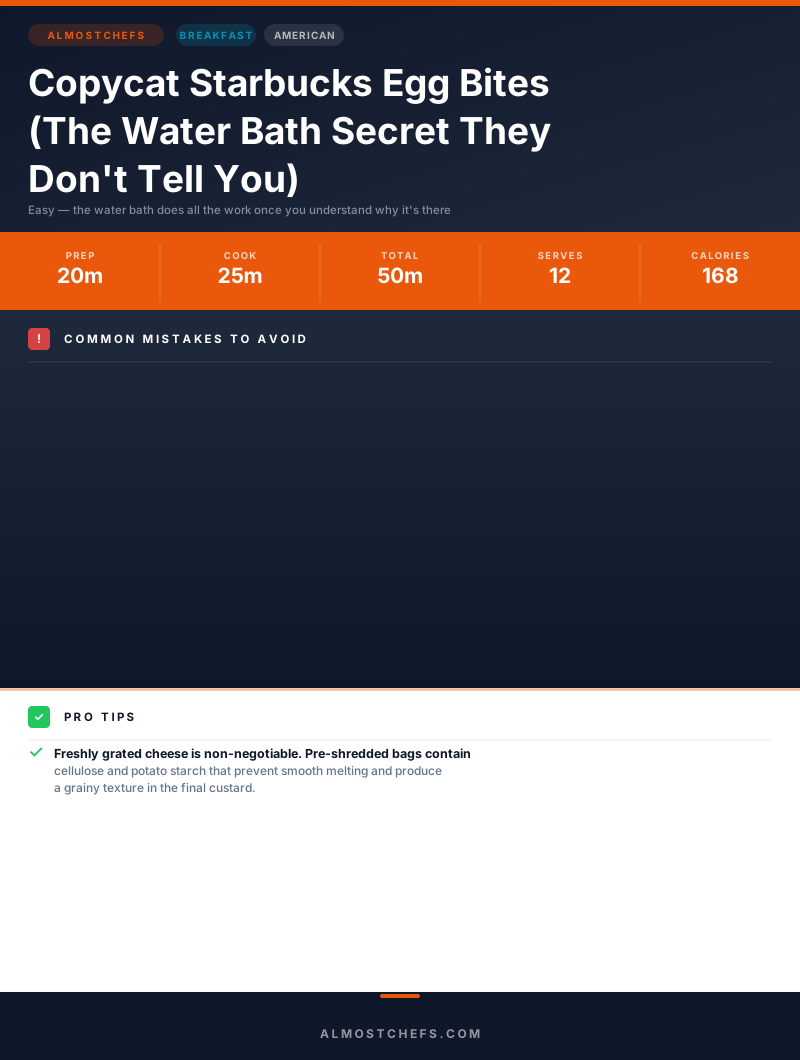
Before we start, read this. These are the 4 reasons your copycat starbucks egg bites (the water bath secret they don't tell you) will fail:
- 1
Baking without a water bath: This is the single failure that separates good egg bites from great ones. Without a water bath, the muffin tin conducts direct heat into the eggs, setting the exterior fast while the interior stays raw — then overcooking the whole thing by the time the center catches up. The water bath acts as a thermal buffer, keeping the ambient temperature around the eggs at 212°F maximum so they cook gently and evenly throughout.
- 2
Using too high an oven temperature: 325°F is not arbitrary. Above 350°F, egg proteins contract rapidly and squeeze out moisture, producing a texture closer to scrambled eggs than custard. The low temperature is what allows the water bath to maintain control. If your oven runs hot, drop to 310°F and add 5 minutes to the bake time.
- 3
Pulling the bites too early — or too late: The eggs should still have a slight jiggle in the very center when you pull them. They look underdone. They are not. Residual heat will carry them to perfect doneness during the 5-minute rest in the tin. If they're completely set in the oven, they're already overcooked and will turn rubbery once cooled.
- 4
Overfilling the muffin cups: Three-quarters full is the maximum. Egg mixtures expand during baking — especially with the gentle, even heat of a water bath. Overfilled cups overflow into the water bath and create a mess. Undermixed cups produce flat, dense bites without the characteristic dome.
The Video Reference Library
Want to see it in action? Here are the exact videos we analyzed and combined to build this foolproof recipe translation:
The source video for this recipe method. Clear demonstration of the water bath setup and the jiggle test for pulling the bites at exactly the right moment.
🛠️ Core Equipment
- Standard 12-cup muffin tinThe shape creates the portioned, cylindrical bite. Silicone muffin molds work even better because the flexibility makes unmolding without breaking the delicate custard much easier.
- Large roasting pan or baking dishMust be large enough to hold the muffin tin with clearance on all sides. This is the vessel for your water bath — it needs to hold enough water to reach halfway up the sides of the muffin tin.
- Fine grater or box graterPre-shredded bagged cheese contains anti-caking agents that prevent smooth melting. Freshly grated sharp cheddar melts into the custard uniformly. This is a noticeable difference in final texture.
- Thin flexible knife or offset spatulaFor unmolding. The custard texture means these bites are more fragile than standard egg muffins. A thin blade run around the edge before the 5-minute rest releases surface tension without tearing.
Copycat Starbucks Egg Bites (The Water Bath Secret They Don't Tell You)
🛒 Ingredients
- ✦8 large pasture-raised eggs
- ✦4 slices uncured, nitrate-free bacon
- ✦1 cup sharp cheddar cheese, finely grated (not pre-shredded)
- ✦1 cup fresh baby spinach, chopped
- ✦1/4 cup diced roasted red peppers
- ✦1/4 cup whole milk
- ✦2 tablespoons grass-fed butter, melted
- ✦1/2 teaspoon sea salt
- ✦1/4 teaspoon black pepper
- ✦1/8 teaspoon cayenne pepper
- ✦1/4 teaspoon garlic powder
- ✦2 tablespoons fresh chives, minced
- ✦1/4 cup diced yellow onion
- ✦Cooking spray or additional butter for greasing
👨🍳 Instructions
01Step 1
Preheat your oven to 325°F. Grease a standard 12-cup muffin tin thoroughly with cooking spray or butter, including the flat top surface around each cup.
02Step 2
Cook the uncured bacon in a skillet over medium heat until crispy, about 8 minutes. Transfer to a paper towel-lined plate and let cool, then chop into small pieces.
03Step 3
In a large mixing bowl, whisk together the eggs and whole milk until completely combined and slightly frothy, about 60 seconds.
04Step 4
Add the melted butter, sea salt, black pepper, cayenne, garlic powder, and minced chives to the egg mixture. Whisk until fully incorporated.
05Step 5
Gently fold in the grated cheddar, chopped spinach, diced red peppers, diced onion, and bacon pieces until evenly distributed throughout the mixture.
06Step 6
Divide the egg mixture evenly among the 12 muffin cups, filling each about three-quarters full.
07Step 7
Set the muffin tin inside a larger roasting pan. Pour hot water into the roasting pan until it reaches halfway up the sides of the muffin tin.
08Step 8
Carefully transfer the entire water bath setup to the preheated oven. Bake for 22-25 minutes until the bites are set at the edges but still have a slight jiggle in the very center.
09Step 9
Remove the muffin tin from the water bath. Let the bites rest in the tin for 5 minutes — this is where residual heat finishes the center.
10Step 10
Run a thin knife around the edge of each bite to loosen it, then let cool for an additional 10 minutes before removing.
11Step 11
Transfer to a wire rack to cool completely before refrigerating or freezing.
Nutrition Per Serving
Estimates based on standard preparation. Adjustments alter macros.
🔄 Substitutions
Instead of Whole milk...
Use Unsweetened almond milk or oat milk
Slightly lighter mouthfeel with minimal flavor change. Maintains the custard-like consistency. Good option for those reducing lactose.
Instead of Sharp cheddar cheese...
Use Gruyère or aged gouda
Elevated umami depth and more sophisticated flavor profile. Both have similar melting properties. Gruyère in particular produces an exceptionally creamy interior.
Instead of Uncured bacon...
Use Smoked salmon or prosciutto
Smoked salmon adds omega-3s and a different but equally satisfying savory note. If using prosciutto, reduce the added salt by half — it's considerably saltier than bacon.
Instead of Roasted red peppers...
Use Sun-dried tomatoes or caramelized mushrooms
More concentrated savory flavor. Mushrooms add earthiness; sun-dried tomatoes add slight tang. Chop finely so they distribute evenly through the custard.
🧊 Storage & Reheating
In the Fridge
Store in an airtight container for up to 5 days. Stack with parchment between layers to prevent sticking.
In the Freezer
Freeze individually on a baking sheet until solid, then transfer to a zip bag. Keeps up to 3 months. Thaw overnight in the fridge or microwave from frozen.
Reheating Rules
Microwave individual bites for 45-60 seconds. For best texture, use a 300°F oven for 8-10 minutes — it reheats without steaming the exterior and maintains more of the original custard texture.
❓ Frequently Asked Questions
Do I really need a water bath, or can I just bake them normally?
You can bake without a water bath, but the result is a different product — closer to a standard egg muffin with a drier, spongier texture. The water bath is what creates the signature custardy interior. It takes 2 extra minutes to set up and it's the whole point.
Why are my egg bites rubbery after reheating?
Microwaving on high power overheats the eggs rapidly, causing the proteins to tighten and squeeze out moisture. Reheat at 50% power in 30-second intervals, or use a low oven. The gentler the reheating, the closer the texture to fresh.
Can I make these without bacon for a vegetarian version?
Yes. Replace the bacon with sautéed mushrooms, sun-dried tomatoes, or both. Add an extra pinch of smoked paprika to compensate for the smokiness you're losing. The water bath method works identically.
My bites stuck to the tin and fell apart when I unmolded them. What went wrong?
Two likely causes: insufficient greasing, or unmolding before they were cool enough. The custard needs the full 15-minute rest (5 in tin, 10 after loosening) to firm up enough to hold its shape. Silicone muffin molds solve this problem entirely.
Can I add the ingredients directly to the muffin cups instead of mixing everything together?
Yes — this is actually how Starbucks does it. Layer your solids in each cup first, then pour the egg-milk mixture over. You get more control over distribution but the end result is nearly identical.
How do I know the water bath temperature is right?
It doesn't need to be precise — the oven regulates it. Just use hot water from a kettle when filling the roasting pan so it starts close to temperature. The water will stabilize at around 200°F inside the oven, which is exactly what you want.
The Science of
Copycat Starbucks Egg Bites (The Water Bath Secret They Don't Tell You)
We turned everything on this page into a beautiful, flour-proof PDF cheat sheet. Print it out, stick it to your fridge, and never mess up your copycat starbucks egg bites (the water bath secret they don't tell you) again.
*We'll email you the high-res PDF instantly. No spam, just perfectly cooked meals.
AlmostChefs Editorial Team
We translate the internet's most popular cooking videos into foolproof, beginner-friendly written recipes. We analyze multiple methods, test them in our kitchen, and engineer a single "Master Recipe" that gives you the best possible result with the least possible stress.