Fresh Vietnamese Spring Rolls (Stop Tearing the Wrapper)
Delicate rice paper rolls packed with cooked shrimp, rice vermicelli, cucumber, carrots, and a mountain of fresh mint and cilantro. We broke down the most common assembly failures to give you a foolproof technique that produces tight, translucent rolls that actually hold together on the plate.
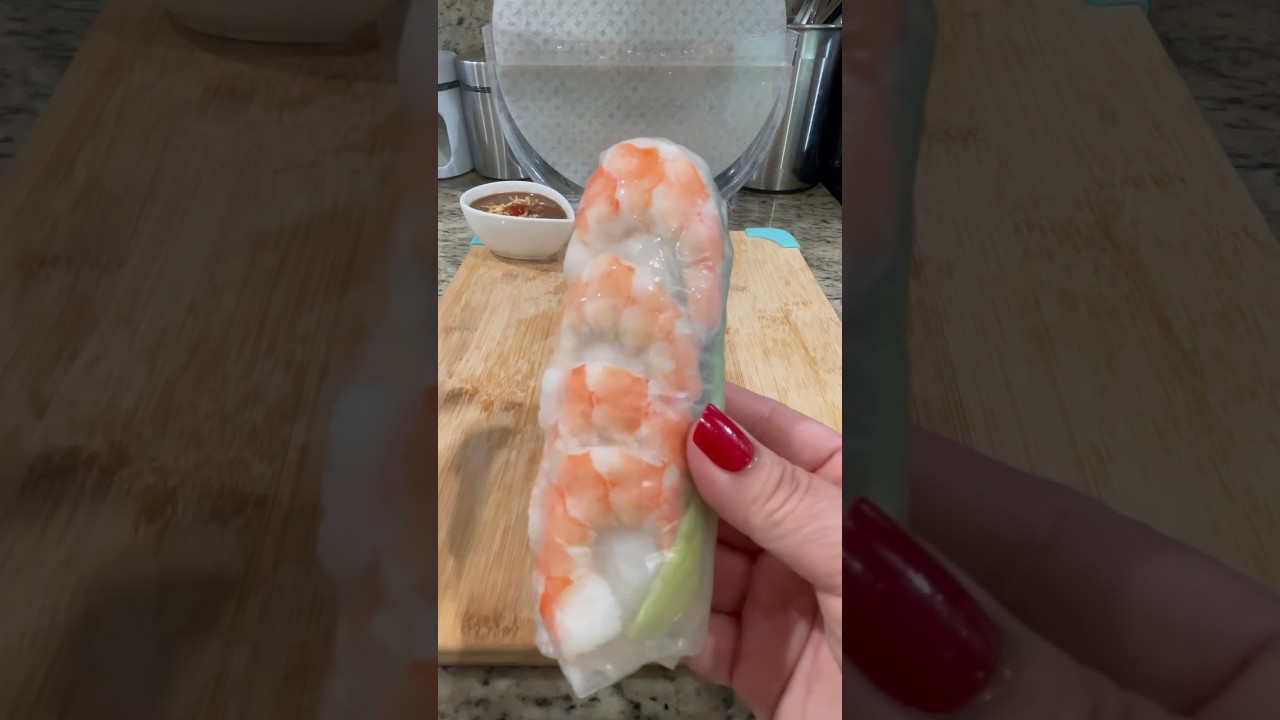
“Spring rolls look simple. They are simple. But roughly 80% of first attempts produce torn wrappers, soggy rolls, or filling that falls out the moment someone picks one up. The problem is almost never the ingredients — it's a two-second misunderstanding of how rice paper actually works. Fix that, and every roll comes out tight, translucent, and photo-ready.”
Why This Recipe Works
Spring rolls are the dish people assume they can improvise because the ingredient list looks harmless. It's vegetables, noodles, shrimp, and a piece of translucent paper. How complicated could it be? Complicated enough that most first attempts produce torn wrappers, soggy filling, and rolls that fall apart before they reach anyone's mouth. The technique is simple — but the margin for error is smaller than it looks.
The Wrapper Problem
Rice paper is not pasta dough. It's not pie crust. It's a dehydrated starch sheet that reactivates with water and then continues to change long after you've pulled it from the bowl. This is the fact that defeats most first-time spring roll makers: the wrapper isn't done when it comes out of the water. It's about 70% of the way to fully pliable, and it finishes the remaining 30% on your work surface while you build the filling.
The instruction to soak for "5-10 seconds until just beginning to soften" is not cautious hedging — it is the exact window you need. A wrapper that feels completely pliable in the water is already over-hydrated. By the time you've laid it flat, added the lettuce, measured the noodles, and arranged the shrimp, that wrapper has continued softening and is now on the structural edge. The fold stress from tucking the sides will split it.
Work on a damp kitchen towel or silicone mat. Rice paper bonds aggressively to dry surfaces and to itself. A bone-dry cutting board will hold the wrapper hostage mid-roll and tear it when you try to lift it.
The Moisture Architecture
Every component in this roll needs to be as dry as possible before it goes inside the wrapper. This is non-negotiable and non-intuitive — you're looking at vegetables sitting in a fresh herb context, and the instinct is to keep them bright and hydrated. That instinct will destroy your rolls.
Rinse the vermicelli in cold water after cooking, then spread them on a towel for five minutes. Wet noodles transfer their cooking water directly to the rice paper, softening it from the inside within minutes. Pat the shrimp dry aggressively before assembly — cooked shrimp carry surface moisture from refrigeration or cooking liquid that has the same effect.
The only moisture going into this roll should come from the natural water content of the cucumber and carrots, which is minimal. Everything else comes in dry.
The Peanut Sauce
The dipping sauce is not an afterthought. It is, for many people, the primary reason to eat these. Peanut butter and hoisin don't combine naturally — peanut butter is a fat suspension and hoisin is water-based. Whisking them vigorously with lime juice and fish sauce creates a temporary emulsion, stabilized by the natural lecithins in the peanut butter. Use a small whisk, not a spoon. Stirring produces lumps; whisking produces gloss.
The sriracha is marked optional in the ingredient list, but it isn't optional in the flavor sense. Without heat, the sauce sits flat — sweet and nutty with nothing to push back. Start with one tablespoon and adjust. The garlic provides sharpness and the fish sauce provides umami depth that prevents the peanut butter from dominating.
The Rolling Sequence
Bottom edge up and over the filling. Sides in. Roll forward with continuous tension. That sequence is not arbitrary — it creates a sealed tube with no open ends. Skipping the side folds produces a roll that looks fine on the plate and dumps its filling the moment someone bites the end.
The filling band should be compact: three inches wide, flat rather than mounded, and positioned slightly below center of the wrapper so the bottom has enough paper to fold up and over before the sides come in. A tall mound of filling means the bottom fold doesn't reach the filling, the sides don't tuck cleanly, and the whole roll stays loose.
Shrimp halved lengthwise goes on top of the filling, cut-side down, as the last layer before rolling. When finished, those shrimp are pressed flat against the outer wrapper and visible through the translucent rice paper. It's one of the rare cases in cooking where presentation is built directly into the assembly sequence — not added at the end.
Where Beginners Mess This Up
Before we start, read this. These are the 4 reasons your fresh vietnamese spring rolls (stop tearing the wrapper) will fail:
- 1
Over-soaking the rice paper: Rice paper continues to soften after it leaves the water. If it feels fully pliable in the bowl, it will tear the moment you try to fold it. Dip for 5-10 seconds until it just begins to yield — it should still feel slightly stiff when you lay it flat. It will finish softening on the board while you arrange the filling.
- 2
Piling on too much filling: The rice paper can only stretch so far before it splits. Two tablespoons of noodles and 3-4 shrimp halves is the maximum. It feels like almost nothing. It is enough. Overstuffed rolls don't roll — they explode.
- 3
Wet noodles and wet shrimp: Any excess moisture from undrained noodles or shrimp makes the rice paper soggy within minutes and causes the roll to slip apart. Rinse noodles in cold water and spread them to dry on a towel for at least 5 minutes. Pat the shrimp dry aggressively before assembly.
- 4
Working on a dry surface: Rice paper sticks violently to dry cutting boards and dry hands. Use a damp board or a clean, slightly damp kitchen towel. If the wrapper bonds to the surface mid-roll, it will tear when you try to lift it.
The Video Reference Library
Want to see it in action? Here are the exact videos we analyzed and combined to build this foolproof recipe translation:
The source video for this recipe. Covers the rice paper soaking technique, proper filling amounts, and the fold-tuck-roll sequence in real time.
🛠️ Core Equipment
- Shallow wide dish or pie plateThe rice paper wrapper needs to lie completely flat during the soak. A narrow bowl forces you to fold or crumple it, creating weak spots that tear during rolling.
- Fine-mesh sieveFor rinsing and draining the rice vermicelli thoroughly. Noodles that retain cooking water carry steam into the roll and soften the wrapper from the inside.
- Damp kitchen towel or silicone matYour rolling surface. A lightly moistened towel prevents the softened wrapper from bonding to the board. Replace the water in the towel every 4-5 rolls as it dries out.
- Small whisk or forkThe peanut sauce ingredients don't combine easily by stirring alone. A whisk emulsifies the peanut butter with the lime juice and hoisin into a smooth, glossy sauce instead of a lumpy paste.
Fresh Vietnamese Spring Rolls (Stop Tearing the Wrapper)
🛒 Ingredients
- ✦1 package (16 sheets) rice paper wrappers
- ✦1 pound cooked large shrimp, halved lengthwise
- ✦3 ounces rice vermicelli noodles, dried
- ✦1 head butter or leaf lettuce, separated into leaves
- ✦1/2 cup fresh mint leaves, loosely packed
- ✦1/2 cup fresh cilantro, loosely packed
- ✦1 medium cucumber, julienned into thin matchsticks
- ✦2 medium carrots, julienned into thin matchsticks
- ✦3 tablespoons creamy peanut butter
- ✦3 tablespoons hoisin sauce
- ✦2 tablespoons fresh lime juice
- ✦2 tablespoons fish sauce
- ✦1 to 2 tablespoons sriracha or chili sauce, optional
- ✦3 garlic cloves, minced
- ✦Warm water (100-110°F) for dipping rice paper
👨🍳 Instructions
01Step 1
Bring a small pot of water to a boil and cook the rice vermicelli noodles according to package directions until tender, approximately 4-5 minutes.
02Step 2
Drain the noodles through a fine-mesh sieve and rinse thoroughly with cold water to stop the cooking process.
03Step 3
Spread the noodles on a clean kitchen towel or paper towels and let them dry completely, about 5 minutes.
04Step 4
Pat the cooked shrimp dry with paper towels to remove any excess moisture.
05Step 5
Whisk together the peanut butter, hoisin sauce, lime juice, minced garlic, fish sauce, and sriracha in a small bowl until smooth.
06Step 6
Pour warm water (100-110°F) into a shallow wide dish. Dip one rice paper wrapper for 5-10 seconds until it just begins to soften but still feels slightly firm.
07Step 7
Lay the softened wrapper on a clean, lightly damp cutting board or kitchen towel.
08Step 8
Place a piece of lettuce slightly below center, tearing it to fit if needed.
09Step 9
Layer approximately 2 tablespoons of dried rice noodles in a horizontal line over the lettuce.
10Step 10
Scatter a small pinch of mint leaves and cilantro over the noodles, then add a few cucumber and carrot matchsticks in a single layer.
11Step 11
Arrange 3-4 shrimp halves cut-side down across the top of the vegetables for an attractive presentation when sliced.
12Step 12
Fold the bottom edge of the wrapper tightly up and over the filling. Fold in the left and right sides, then roll upward away from you, pulling firmly to keep the roll tight as you go.
13Step 13
Place the completed roll seam-side down on a serving plate. Cover loosely with a damp cloth while you assemble the remaining rolls.
14Step 14
Serve immediately with the peanut dipping sauce alongside. If making ahead, refrigerate rolls covered in plastic wrap or damp paper towels for up to 4 hours.
Nutrition Per Serving
Estimates based on standard preparation. Adjustments alter macros.
🔄 Substitutions
Instead of Shrimp...
Use Pressed and cubed firm tofu
Makes the recipe fully plant-based. Press the tofu for at least 30 minutes before cubing to remove water. Pan-sear it briefly for better texture and to reduce moisture.
Instead of Peanut butter...
Use Almond butter or tahini
Almond butter produces a milder, more delicate sauce. Tahini adds distinct earthiness. Both work, but tahini is thinner and may need less water to reach the right consistency.
Instead of White rice vermicelli...
Use Brown rice vermicelli or buckwheat noodles
Chewier texture and earthier flavor. Adds 1-2 minutes to the cook time. Rinse and dry the same way — moisture management doesn't change.
Instead of Fish sauce...
Use Coconut aminos or low-sodium soy sauce
Less funky depth but still savory. Use the same quantity. Good option for those sensitive to fish products or managing sodium.
🧊 Storage & Reheating
In the Fridge
Wrap individual rolls tightly in plastic wrap or place them in a single layer in an airtight container lined with damp paper towels. Store for up to 4 hours. Beyond that, the wrapper begins to harden.
In the Freezer
Not recommended. Rice paper wrappers turn brittle and crack when frozen and thawed. These are a same-day dish.
Reheating Rules
These are served cold or at room temperature — no reheating required or recommended. If rolls have been refrigerated, let them sit at room temperature for 10-15 minutes before serving to soften the wrappers slightly.
❓ Frequently Asked Questions
Why does my rice paper keep tearing?
Almost always over-soaking. Dip the wrapper for 5-10 seconds only — it should feel slightly stiff when you lay it flat. It will finish softening on the board. If it's already fully pliable in the water, it will tear when you fold it.
Can I make these ahead of time?
Up to 4 hours ahead. Wrap each roll individually in plastic wrap and refrigerate. Beyond 4 hours, the wrapper starts to harden and crack. Do not make these the day before.
My rolls keep unrolling on the plate. What went wrong?
Two things: not enough tension during rolling, and placing them seam-side up. Roll with consistent downward pressure on the bottom edge, and always set the finished roll seam-side down on the plate.
Can I use rotisserie chicken instead of shrimp?
Yes. Shred it into thin strips and pat it dry. Rotisserie chicken adds a richer, more savory flavor profile and pairs well with the peanut sauce.
What's the right water temperature for soaking the rice paper?
100-110°F — warm but not hot. Cold water under-softens the wrapper and it cracks when folded. Boiling water over-softens it instantly and it tears. Warm tap water is usually close enough.
Why do restaurant spring rolls look so much more translucent than mine?
Filling moisture and rolling speed. Restaurants use very dry fillings and roll immediately after soaking. Every minute the wrapper sits on the board, it absorbs ambient humidity and turns opaque. Work fast, keep fillings dry, and serve immediately.
The Science of
Fresh Vietnamese Spring Rolls (Stop Tearing the Wrapper)
We turned everything on this page into a beautiful, flour-proof PDF cheat sheet. Print it out, stick it to your fridge, and never mess up your fresh vietnamese spring rolls (stop tearing the wrapper) again.
*We'll email you the high-res PDF instantly. No spam, just perfectly cooked meals.
AlmostChefs Editorial Team
We translate the internet's most popular cooking videos into foolproof, beginner-friendly written recipes. We analyze multiple methods, test them in our kitchen, and engineer a single "Master Recipe" that gives you the best possible result with the least possible stress.