Hearty Split Pea Soup (The One-Pot Comfort Fix)
A naturally thick, creamy legume soup built on caramelized aromatics, smoky paprika, and tender split peas that dissolve into something deeply satisfying without a drop of cream. We stripped the classic down to its best mechanics so every batch lands right.
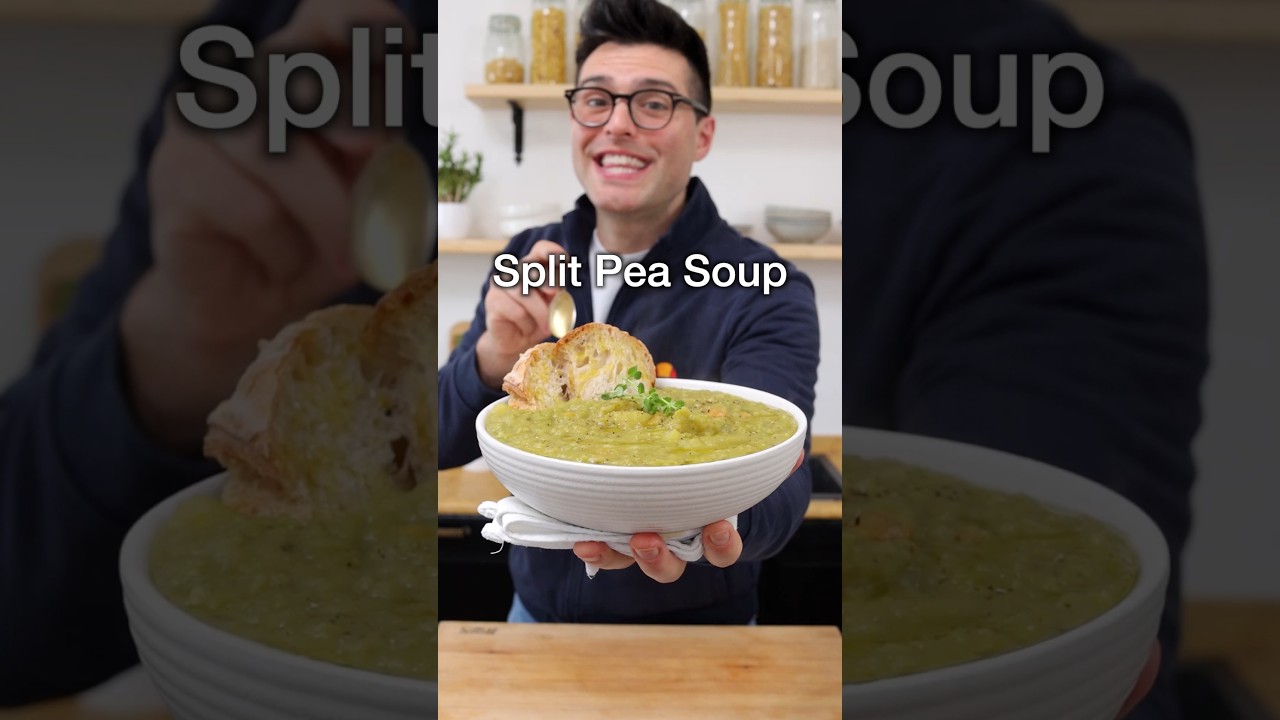
“Split pea soup has a reputation problem. People associate it with the gray, gluey canned version — the one that slides out in a cylinder and smells like a hospital cafeteria. The homemade version is a different animal entirely: thick but not heavy, earthy but bright, satisfying without any dairy propping it up. The split peas do all the work. Your only job is to not rush them.”
Why This Recipe Works
Split pea soup is one of those dishes that sounds humble until you taste a good one. Then it makes complete sense why it's been feeding people through Northern European winters for centuries. It costs almost nothing, requires no technique beyond patience, and produces something genuinely restorative. The problem is most people have only encountered the canned version, which is to homemade split pea soup what instant coffee is to a properly pulled espresso. Technically the same category. Completely different experience.
The Aromatic Foundation
Everything in split pea soup starts with the mirepoix — onion, carrot, celery — and how long you're willing to cook it. Most home cooks go two or three minutes and call it done. The vegetables are soft. That must be enough. It isn't.
Onions contain about five grams of natural sugar per medium onion. At sustained medium-high heat, those sugars begin the Maillard reaction: a cascade of flavor compounds that turns sharp, acrid raw onion into something sweet, complex, and deeply savory. This requires 6-8 minutes of real cooking, not suggestion-of-heat cooking. The onions should have visibly golden edges and smell nutty before the carrots and celery go in.
The garlic goes in last and stays for exactly one minute. Garlic burned even slightly turns bitter in a way that permeates the entire pot. One minute is enough to cook off the raw sharpness. Beyond that and you're in trouble.
What Split Peas Actually Do
Split peas are dried field peas that have been hulled and split — which is why they need no soaking. The outer hull that makes whole dried beans take hours to hydrate has already been removed. What remains is essentially pure starch and protein, which means they soften and dissolve into the broth given enough time and heat.
That dissolution is the mechanism behind the soup's texture. There is no cream, no butter, no roux. The body comes entirely from split pea starch releasing into the liquid over 45-50 minutes of simmering. This is why patience is the technique. Pull the soup at 30 minutes and you have thin broth with intact pea pieces. Carry it to 50 minutes and the peas melt into the liquid, producing something with the texture of velvet without any dairy doing the work.
The smoked paprika and cumin are doing more than you think. Paprika provides warmth and color — the finished soup should have a deep amber-green hue, not pale yellow. Cumin adds an earthy undertone that makes the soup taste like it simmered longer than it did. Together they give the bowl a complexity that a single dried thyme can't produce alone.
The Potato Question
Russet potatoes at the 20-minute mark serve two functions: they add substance so the soup eats as a meal rather than a first course, and their starch contributes additional body to the broth as they soften. They go in after the initial simmer rather than at the beginning because they cook faster than the peas and would turn to mush if added simultaneously.
Using a heavy-bottomed pot matters significantly here. The long simmer required to dissolve the split peas creates consistent hot spots in thin aluminum pots that scorch the settled pea starch on the bottom. A Dutch oven distributes heat evenly across the entire base and up the sides, giving you a gentle, even simmer without any risk of burning.
The Finish
Lemon juice at the end is not optional. A full bowl of split pea soup is heavy with starch and earthy from the legumes. The acid from lemon doesn't make the soup taste lemony — it acts as a brightness trigger that cuts through the weight and makes everything taste more of itself. Without it, the bowl tastes flat even if the seasoning is otherwise correct.
Fresh parsley on top follows the same logic. Raw herb on a finished soup adds volatile aromatic compounds that cooking would have destroyed. It's the difference between a bowl that smells like it was just made and one that smells like it's been sitting on a steam table.
This is not a complicated soup. It never was. It just requires that you take it seriously.
Where Beginners Mess This Up
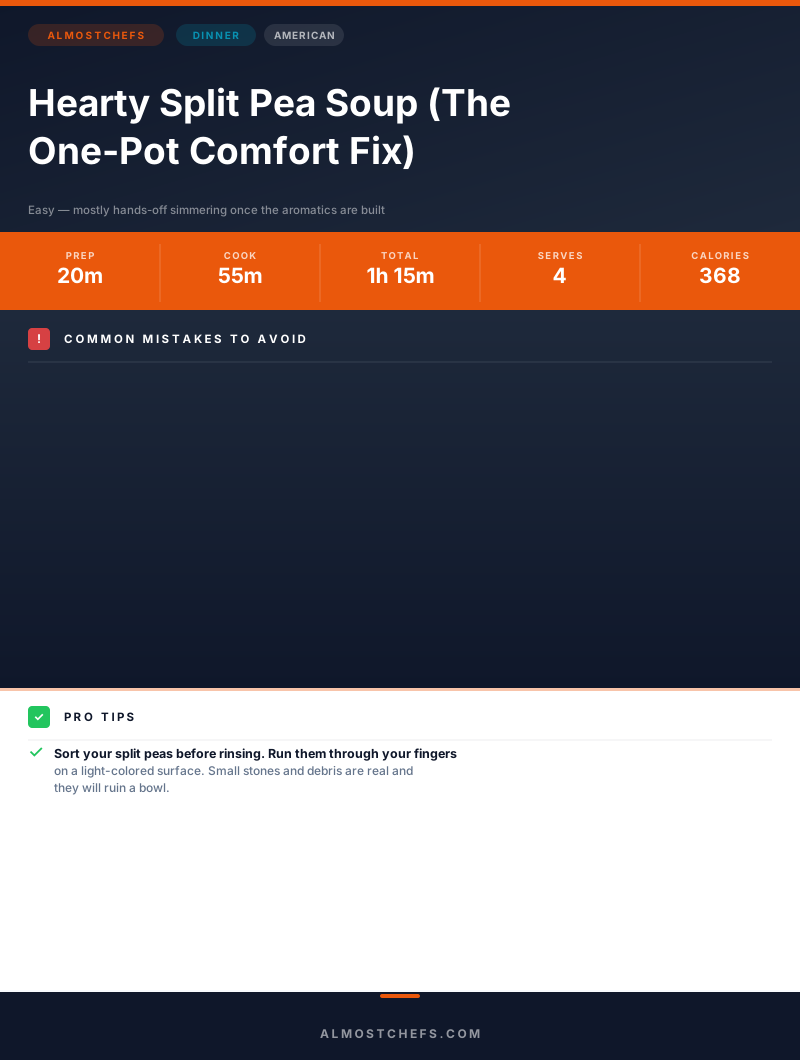
Before we start, read this. These are the 4 reasons your hearty split pea soup (the one-pot comfort fix) will fail:
- 1
Skipping the caramelization on the aromatics: Onions, carrots, and celery cooked for two minutes taste like raw vegetables in broth. Give the onions 6-8 minutes until they have golden edges. That caramelization is where half the soup's flavor lives — the peas provide body, the aromatics provide soul.
- 2
Adding too much liquid too early: Split peas thicken aggressively as they cook and break down. If you drown them in broth from the start, you're just diluting their natural starch. The 8:2 broth-to-water ratio keeps things concentrated and correctable — you can always thin at the end, you cannot un-thin.
- 3
Pulling the soup before the peas fully break down: The creamy texture everyone loves is not from added cream — it's from peas that have dissolved into the broth. This requires full softness, which means 45-50 minutes of real simmering. If you can still see distinct pea shapes, keep going. Patience is the technique.
- 4
Seasoning only at the start: Split peas absorb salt as they cook, which means a soup that tasted balanced at 20 minutes can taste flat by the time it's done. Taste again before serving and adjust. The lemon juice finish is not optional — it cuts through the starch and lifts the entire bowl.
The Video Reference Library
Want to see it in action? Here are the exact videos we analyzed and combined to build this foolproof recipe translation:
The primary reference for this recipe. Clean walkthrough of the aromatics build, split pea timing, and how to judge the finished consistency without blending.
🛠️ Core Equipment
- Large Dutch oven or heavy-bottomed soup potEven heat distribution prevents scorching on the bottom while the peas break down. A thin pot creates hot spots and you will burn the base during the long simmer.
- Wooden spoon or silicone spatulaSplit peas stick and settle. You need to scrape the bottom of the pot every 10-15 minutes to prevent a layer of scorched starch from forming. A flat-edged wooden spoon reaches the corners.
- Fine-mesh sieve or colanderFor rinsing and sorting the dried split peas before cooking. Dried legumes can contain small stones or debris. Rinse thoroughly until the water runs clear.
- LadleSplit pea soup is thick. A wide, deep ladle moves the finished soup cleanly into bowls without splashing or requiring you to tilt a heavy pot.
Hearty Split Pea Soup (The One-Pot Comfort Fix)
🛒 Ingredients
- ✦2 tablespoons extra virgin olive oil
- ✦2 medium yellow onions, finely diced
- ✦3 large carrots, cut into small dice
- ✦3 celery stalks, finely chopped
- ✦4 cloves garlic, minced
- ✦2 cups dried green split peas, rinsed and sorted
- ✦8 cups low-sodium vegetable broth
- ✦2 cups water
- ✦2 bay leaves
- ✦1 teaspoon dried thyme
- ✦1 teaspoon smoked paprika
- ✦1/2 teaspoon ground cumin
- ✦1 teaspoon sea salt, or to taste
- ✦1/2 teaspoon black pepper
- ✦2 medium russet potatoes, peeled and diced into small cubes
- ✦1 cup fresh spinach, roughly chopped
- ✦2 tablespoons fresh parsley, finely minced
- ✦1 tablespoon fresh lemon juice
- ✦Red pepper flakes, optional for serving
👨🍳 Instructions
01Step 1
Heat the olive oil in a large Dutch oven over medium-high heat.
02Step 2
Add the diced onions and cook for 6-8 minutes, stirring occasionally, until softened with golden edges.
03Step 3
Stir in the diced carrots and chopped celery. Cook for 3-4 minutes until the vegetables begin releasing their aroma.
04Step 4
Add the minced garlic and cook for 1 minute, stirring constantly, until fragrant but not browned.
05Step 5
Pour in the rinsed split peas, vegetable broth, and water. Stir to combine.
06Step 6
Add the bay leaves, thyme, smoked paprika, cumin, salt, and black pepper. Stir to distribute evenly.
07Step 7
Bring to a rolling boil over high heat, then immediately reduce to a gentle simmer. Partially cover with a lid.
08Step 8
Simmer for 20 minutes, stirring occasionally, until the split peas begin to soften.
09Step 9
Add the diced potatoes and continue simmering for 25-30 minutes, until both peas and potatoes are very tender and the peas begin breaking down into the broth.
10Step 10
Stir in the fresh spinach and cook for 2-3 minutes until fully wilted.
11Step 11
Taste and adjust seasoning with salt, pepper, or additional lemon juice.
12Step 12
Remove from heat. Discard the bay leaves.
13Step 13
Ladle into bowls and garnish with fresh parsley, a squeeze of lemon juice, and red pepper flakes if desired.
Nutrition Per Serving
Estimates based on standard preparation. Adjustments alter macros.
🔄 Substitutions
Instead of Extra virgin olive oil...
Use Avocado oil or walnut oil
Avocado oil is neutral and high-heat stable. Walnut oil adds subtle nuttiness but has a lower smoke point — keep the heat moderate.
Instead of Low-sodium vegetable broth...
Use Homemade vegetable broth or bone broth
Homemade broth adds deeper complexity and better mouthfeel. Bone broth makes the soup non-vegan but significantly increases the savory depth.
Instead of Russet potatoes...
Use Yukon Gold potatoes plus 1 cup diced parsnips
Yukons have a creamier texture and lower glycemic index. Parsnips add natural sweetness and prebiotic fiber. The combination produces a slightly richer bowl.
Instead of Fresh spinach...
Use Chopped kale or Swiss chard
Heartier and more robust in flavor than spinach. Kale holds its structure longer in the hot soup — add it a minute or two earlier than you would spinach.
🧊 Storage & Reheating
In the Fridge
Store in an airtight container for up to 5 days. The soup thickens as it sits — this is normal and not a sign it's gone off.
In the Freezer
Freeze in individual portions for up to 3 months. Split pea soup freezes exceptionally well. Thaw overnight in the fridge.
Reheating Rules
Reheat on the stovetop over medium-low heat with a splash of broth or water, stirring until loosened to your preferred consistency. Microwave works but the texture can turn gluey — stovetop is better.
❓ Frequently Asked Questions
Do I need to soak split peas before cooking?
No. Unlike whole dried beans, split peas have had their outer hull removed, which dramatically reduces cook time. They go straight from rinsed-and-sorted into the pot. Soaking can actually make them break down faster than you want during the simmer.
Why is my split pea soup not thickening?
Either the heat is too low or you haven't cooked it long enough. Split peas need to fully soften and begin dissolving into the broth to release their starch. If you're 45 minutes in and it's still thin, remove the lid entirely, raise to a medium simmer, and cook for another 10-15 minutes uncovered.
Can I add ham or bacon?
Yes, and it's the traditional approach in Northern European and American versions. A smoked ham hock added with the broth, or diced bacon rendered in the pot before the onions, adds substantial depth. It makes the soup non-vegan but the smoky, savory dimension is significant. Remove the ham hock before serving and shred any meat back into the bowl.
Why is my soup sticking to the bottom?
Two causes: heat too high, or not stirring frequently enough. Split peas settle and their starch scorches easily. Reduce to a true gentle simmer — small bubbles breaking the surface, not aggressive rolling boiling — and scrape the bottom of the pot every 10-15 minutes with a flat-edged spoon.
Is this soup actually vegan?
As written, yes. No animal products. It's also naturally gluten-free. If you use the bone broth substitution it becomes non-vegan, but the base recipe is fully plant-based.
Can I blend the soup completely smooth?
You can, but you lose texture contrast. A full blend produces something closer to a bisque. The better approach: partial blend with an immersion blender — 8-10 seconds — which creates a creamy base while leaving chunks of potato and vegetable visible. That contrast is part of what makes the bowl feel substantial rather than just thick.
The Science of
Hearty Split Pea Soup (The One-Pot Comfort Fix)
We turned everything on this page into a beautiful, flour-proof PDF cheat sheet. Print it out, stick it to your fridge, and never mess up your hearty split pea soup (the one-pot comfort fix) again.
*We'll email you the high-res PDF instantly. No spam, just perfectly cooked meals.
AlmostChefs Editorial Team
We translate the internet's most popular cooking videos into foolproof, beginner-friendly written recipes. We analyze multiple methods, test them in our kitchen, and engineer a single "Master Recipe" that gives you the best possible result with the least possible stress.