The Party-Wrecking Spinach Artichoke Dip (No Watery Disasters)
A warm, creamy baked dip combining thawed frozen spinach and artichoke hearts with cream cheese, sour cream, Parmesan, and mozzarella — infused with fresh garlic and a hit of lemon. We broke down exactly why most versions turn watery or bland, and what actually fixes it.
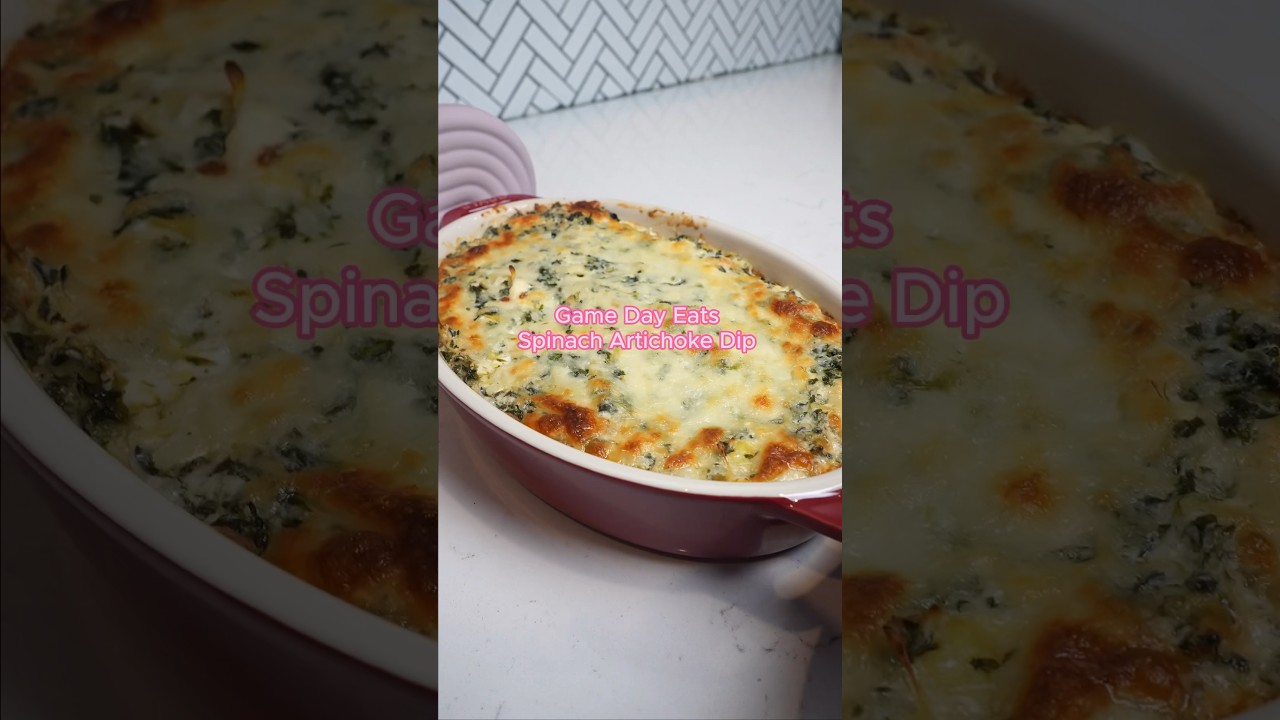
“Spinach artichoke dip is on every party table. It's also one of the most frequently ruined appetizers in home cooking — watery, bland, or oddly grainy from improperly softened cream cheese. The fix isn't a better recipe. It's understanding three minutes of technique that everyone skips.”
Why This Recipe Works
Spinach artichoke dip is one of the easiest appetizers in the home cook's repertoire — which is why it's so embarrassing when it fails. And it fails constantly. The version that arrives at the table thin and weeping, or greyish and gluey, or somehow simultaneously watery on top and dry underneath — that version exists at nearly every party where someone tried this dish without understanding what they were actually doing.
The recipe is not the problem. The technique is.
The Moisture Problem Is Structural
Frozen spinach is a delivery mechanism for water. After thawing, a 10-ounce package contains several ounces of liquid that will go wherever it's pointed — which, if you're not aggressive about removal, is directly into your cream cheese base. The chemistry is simple: cream cheese is an emulsified fat, and it can only absorb so much additional liquid before it breaks. Once it breaks, it doesn't recover in the oven. It just runs.
The solution is mechanical, not chemical. Squeeze the spinach in cheesecloth or a kitchen towel until you have extracted everything extractable. The bowl underneath should collect a surprising amount of dark green liquid. That liquid is the enemy of your dip. Every drop that stays in the spinach is a drop that ruins your texture.
The Cream Cheese Constraint
Cream cheese behaves completely differently at different temperatures. Cold from the fridge, it is dense and plastic — it smears into chunks rather than incorporating, and those chunks resist blending even under aggressive stirring. They don't melt in the oven. They just become slightly softer chunks.
Room temperature cream cheese, by contrast, is nearly fluid. It incorporates with sour cream and mayonnaise in under a minute, producing a base with an even, silky consistency that holds all the other ingredients in uniform suspension. This is the texture you're building the dip on. Get it right at this stage and everything else is easy.
What Artichoke Hearts Are Actually Doing
Artichoke hearts in this dip are not filler. They provide the only textural counterpoint to what is otherwise an entirely soft dish. Which means they need to hold their shape through 28 minutes of baking — and they will, if you chop them correctly.
Half-inch pieces. Not smaller. Every cut beyond that pushes you toward paste, and paste-textured artichokes disappear into the base rather than giving the dip something to chew on. Fold them in gently with a rubber spatula; aggressive stirring accomplishes the same destruction that over-chopping does.
The Cheese Geometry
Two cheeses serve two different roles. Parmesan is there for salt and depth — it contains glutamates that amplify every other savory flavor in the dip and its dry, granular texture blends invisibly into the base. Mozzarella is there for stretch and melt. When the dip comes out of the oven bubbling at the edges, the mozzarella is responsible for the pull. Use part-skim if you're watching fat; it melts almost identically and the difference in finished flavor is genuinely minor.
The fresh garlic is non-negotiable. Garlic powder produces a flat, one-dimensional garlic background note that tastes like it came from a packet. Three cloves of properly minced fresh garlic produce a layered, building heat that integrates into the cream cheese base over the bake. The Worcestershire and lemon juice work the same way — they're not flavor additions so much as flavor amplifiers, sharpening everything around them.
The Baking Logic
A shallow baking dish is the correct vessel because surface area is the variable you're optimizing for. More surface area means more golden, bubbly crust relative to soft center — and the crust is what people fight over. A deep casserole dish inverts that ratio and gives you a pale, underdone center ringed by barely-browned edges.
Twenty-five to thirty minutes at 375°F brings the center to 165°F, which is the point at which all the dairy components have heated through and the dip has set to its final texture. Pull it two minutes early and it's still fluid in the center. Push it five minutes long and the edges get grainy. The instant-read thermometer is not optional if you want consistency — visual cues are too unreliable with a dish this forgiving of overbrowning on the surface.
Rest it two minutes before serving. The dip needs that time to set enough that it holds on a cracker instead of running off the sides. That's not optional either.
Where Beginners Mess This Up
Before we start, read this. These are the 4 reasons your the party-wrecking spinach artichoke dip (no watery disasters) will fail:
- 1
Not squeezing the spinach hard enough: Frozen spinach is 90% water by weight after thawing. If you squeeze it once and call it done, you're folding a small swimming pool into your cream cheese base. The result: a dip that weeps liquid across the baking dish and turns thin and soupy by the time it hits the table. Squeeze until your forearms hurt. Then squeeze again.
- 2
Using cold cream cheese: Cold cream cheese doesn't fully incorporate — it stays in chunks that never fully melt, creating a lumpy, uneven texture. You need it genuinely softened, not 'sat on the counter for five minutes.' Room temperature means pliable enough to smear with a butter knife without tearing. If you forgot to pull it early, unwrap it and microwave in 10-second bursts until yielding.
- 3
Mashing the artichoke hearts into paste: Artichoke hearts should be chopped into half-inch pieces that hold their shape through baking. When you over-process them — whether with a knife or by stirring too aggressively — they dissolve into the base and you lose all textural contrast. Fold gently. The goal is chunks you can bite into.
- 4
Pulling it out of the oven too soon: Golden and bubbly at the edges with a set center is the target. If the center still looks wet and the edges are just starting to bubble, it needs another 5 minutes. An internal temperature of 165°F at the center is your cheat code — use a thermometer if you're unsure.
The Video Reference Library
Want to see it in action? Here are the exact videos we analyzed and combined to build this foolproof recipe translation:
Solid walkthrough of the full technique including the spinach squeeze and the layering order. Clear close-ups of the finished texture you're aiming for.
🛠️ Core Equipment
- Shallow baking dish or cast iron skilletMaximizes surface area so you get more golden, bubbly edges and less pale, underdone center. A deep casserole dish gives you the opposite — more center, less crust.
- Cheesecloth or clean kitchen towelsFor squeezing the spinach. Paper towels work but shred under pressure. Cheesecloth or a clean linen towel gives you a proper grip and won't contaminate the dip with paper fibers.
- Large mixing bowlThe dip doubles in volume when you fold in all the components. A too-small bowl means you're fighting ingredients over the rim and not actually folding — you're compressing.
- Instant-read thermometerTakes the guesswork out of doneness. The center should hit 165°F. Visual cues alone are unreliable — the top can look set while the center is still cold.
The Party-Wrecking Spinach Artichoke Dip (No Watery Disasters)
🛒 Ingredients
- ✦10 oz frozen spinach, thawed
- ✦14 oz canned artichoke hearts, drained and chopped
- ✦8 oz cream cheese, softened to room temperature
- ✦½ cup sour cream
- ✦⅜ cup mayonnaise
- ✦½ cup grated Parmesan cheese
- ✦¾ cup shredded mozzarella cheese
- ✦3 cloves fresh garlic, minced
- ✦1½ tablespoons fresh lemon juice
- ✦½ teaspoon onion powder
- ✦½ teaspoon Worcestershire sauce
- ✦¼ teaspoon red pepper flakes
- ✦¼ teaspoon kosher salt
- ✦⅛ teaspoon black pepper
👨🍳 Instructions
01Step 1
Preheat your oven to 375°F and position the rack to the middle position.
02Step 2
Squeeze the thawed spinach firmly in clean cheesecloth or kitchen towels over a bowl to extract as much moisture as possible. Keep squeezing until almost no liquid comes out.
03Step 3
Mince the fresh garlic cloves into small, even pieces and set aside.
04Step 4
Chop the drained artichoke hearts into ½-inch pieces. Do not mince or over-chop — you want texture, not paste.
05Step 5
Combine the softened cream cheese, sour cream, and mayonnaise in a large mixing bowl. Stir vigorously for about 1 minute until the mixture is completely smooth with no cream cheese lumps.
06Step 6
Fold in the squeezed spinach and chopped artichokes using a rubber spatula with gentle strokes to distribute evenly.
07Step 7
Add the Parmesan and mozzarella cheeses and fold gently until no white streaks remain.
08Step 8
Stir in the minced garlic, lemon juice, onion powder, Worcestershire sauce, and red pepper flakes until fully incorporated.
09Step 9
Taste and adjust salt and black pepper to your preference.
10Step 10
Transfer the dip to a shallow baking dish or [cast iron skillet](/kitchen-gear/review/cast-iron-skillet), smoothing the top into an even layer.
11Step 11
Bake for 25 to 30 minutes until the edges are bubbly and golden brown and the center reads 165°F on an instant-read thermometer.
12Step 12
Remove from the oven and let rest for 2 minutes before serving. This allows the dip to set slightly so it doesn't pour off the cracker.
13Step 13
Serve immediately while still warm with crackers, toasted bread, or fresh vegetable crudités.
Nutrition Per Serving
Estimates based on standard preparation. Adjustments alter macros.
🔄 Substitutions
Instead of Mayonnaise...
Use Greek yogurt (⅜ cup)
Slightly tangier flavor and thicker texture. Maintains creaminess while cutting saturated fat and adding protein. A worthwhile swap that most guests won't detect.
Instead of Sour cream...
Use Plain non-fat Greek yogurt (½ cup)
Lighter and more tangy. May need a slight increase in lemon juice for balance. Doubles the protein per serving and brings probiotic benefits.
Instead of Cream cheese...
Use Whipped neufchâtel cheese (8 oz)
One-third less fat than traditional cream cheese. Blends just as smoothly when properly softened. Virtually indistinguishable in the finished dip.
Instead of Canned artichoke hearts...
Use Fresh artichoke hearts (8-10 medium, trimmed and chopped)
Fresher, earthier flavor with slightly firmer texture. Requires significant additional prep time to trim and cook. Eliminates the sodium from canning liquid. A worthwhile upgrade for a dinner party centerpiece.
🧊 Storage & Reheating
In the Fridge
Store in an airtight container for up to 4 days. The dip firms up when cold — that's normal. It loosens back to the right consistency when reheated.
In the Freezer
Freeze in a sealed container for up to 2 months. Dairy-based dips can separate slightly on thawing — stir vigorously after reheating to recombine.
Reheating Rules
Transfer to an oven-safe dish, cover with foil, and reheat at 350°F for 15-20 minutes until warmed through. Microwave works in a pinch — cover and heat in 45-second bursts, stirring between each, until hot.
❓ Frequently Asked Questions
Why is my spinach artichoke dip watery?
You didn't squeeze the spinach thoroughly enough. Thawed frozen spinach retains enormous amounts of water, and any moisture that makes it into the dip turns the cream cheese base thin and soupy during baking. The fix is physical: squeeze the spinach in cheesecloth until you've extracted every drop you can, then squeeze once more.
Can I make this dip ahead of time?
Yes — and it's actually better this way. Assemble the full dip, cover tightly, and refrigerate unbaked for up to 48 hours. The garlic mellows and the flavors meld. Pull it from the fridge 20 minutes before baking so it doesn't go into the oven stone cold.
Can I use fresh spinach instead of frozen?
You can, but it requires extra work. Fresh spinach needs to be wilted, cooled, and then squeezed just as aggressively as thawed frozen. Use about 1 pound of fresh leaves to end up with the same yield as 10 oz frozen. The flavor is slightly brighter but the difference is subtle in a cheese-heavy dip.
Why is my dip lumpy?
Cold cream cheese. It needs to be genuinely room temperature — soft enough to smear without tearing — before it will incorporate smoothly. If you forgot to pull it early, microwave unwrapped in 10-second bursts until pliable. Then beat it with the sour cream and mayo before adding anything else.
What do I serve with spinach artichoke dip?
Toasted baguette slices, sturdy crackers, pita chips, or raw vegetables like celery, bell pepper strips, and endive leaves. Avoid thin crackers — they shatter under the weight of the dip. You want something with structural integrity.
Can I make this in a slow cooker?
Yes. Combine all ingredients in the slow cooker insert and cook on low for 2 hours or high for 1 hour, stirring once halfway. You won't get the golden crust on top, but the dip stays warm throughout the party without any attention. Finish under a broiler for 3 minutes if you want surface color.

The Science of
The Party-Wrecking Spinach Artichoke Dip (No Watery Disasters)
We turned everything on this page into a beautiful, flour-proof PDF cheat sheet. Print it out, stick it to your fridge, and never mess up your the party-wrecking spinach artichoke dip (no watery disasters) again.
*We'll email you the high-res PDF instantly. No spam, just perfectly cooked meals.
AlmostChefs Editorial Team
We translate the internet's most popular cooking videos into foolproof, beginner-friendly written recipes. We analyze multiple methods, test them in our kitchen, and engineer a single "Master Recipe" that gives you the best possible result with the least possible stress.