Easy Spanish Rice (Toasted Rice, One-Pot Method)
Spanish rice built on the toasting technique — dry rice grains coated in fat before any liquid is added, creating a moisture barrier that prevents clumping and develops nutty Maillard flavor through direct grain-to-pan contact. One pot, no stirring after the lid goes on.
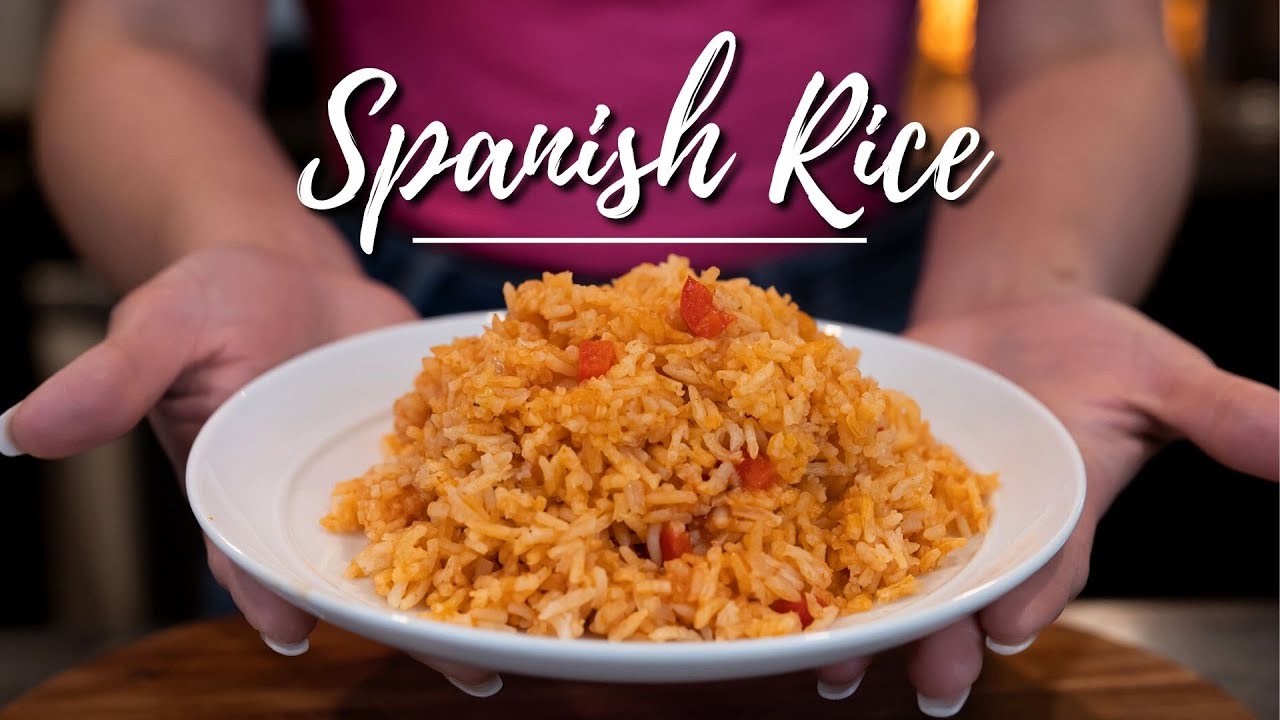
“Spanish rice — properly called arroz rojo or Mexican rice in most of its native context — is one of those dishes that home cooks either nail consistently or perpetually undershoot. The people who nail it know one thing the others don't: you toast the dry rice in oil before any liquid goes in. That single step creates a fat barrier around each grain that prevents starch release and clumping, develops nutty Maillard flavor through direct grain-to-hot-oil contact, and determines whether you get fluffy individual grains or a sticky mass. Everything else in this recipe is secondary to that step.”
Why This Recipe Works
Spanish rice — arroz rojo — is a dish that looks entirely straightforward until it goes wrong the same way three times in a row. Sticky, clumped grains. Mushy paste. Crunchy undercooked centers. Pale, flat-flavored rice that tastes like nothing in particular. Each failure has a specific cause, and most of them trace back to one moment: what happened or didn't happen before the liquid went into the pot.
The toasting step is the recipe. Everything else is execution.
The Starch Science of Toasting Rice
Raw long-grain white rice is approximately 80% starch by dry weight, composed of two starch molecules in distinct proportions: amylose (a long, linear chain) and amylopectin (a highly branched, sticky molecule). The ratio in long-grain varieties is approximately 20–25% amylose to 75–80% amylopectin. When rice cooks in water, the amylopectin on the grain surface gelatinizes and swells, releasing water-soluble starch into the cooking liquid and bonding grains together at their contact points. The degree to which this happens determines whether you get separate fluffy grains or a clumped, sticky mass.
Toasting dry rice in oil before adding liquid addresses this at the grain surface level. When dry rice grains contact hot oil — at the 350–375°F range that a preheated skillet with shimmering olive oil creates — two things occur. First, the surface starch undergoes partial dextrinization: a dry-heat conversion of starch to shorter-chain dextrins that reduces its capacity for water absorption and gelatinization. The dextrinized surface starch is less reactive in the subsequent cooking liquid than untreated starch would be. Second, the grain surface absorbs a thin film of oil, creating a hydrophobic barrier that further limits the rate at which water penetrates the grain during cooking. Both effects together mean that when the broth is added, each grain absorbs liquid at a controlled rate rather than aggressively, and the surface starch doesn't contribute to the sticky gelatinized mass that clumps grains together.
The Maillard reaction also begins during the toasting step, though it proceeds less aggressively on rice starch than on protein-rich foods. The nutty aroma that develops after 2–3 minutes is partially from trace amounts of protein in the grain reacting with reducing sugars from the starch under heat — the same fundamental chemistry as other browning reactions, but producing lighter, more delicate volatile compounds specific to grain Maillard chemistry. These compounds persist in the finished rice as a background nutty flavor that raw-into-liquid rice preparations cannot produce.
Why You Don't Stir After Adding Broth
Stirring rice after the liquid is added is the most common technique error in rice cooking, and it explains a significant percentage of failed Spanish rice attempts. Hot water in contact with hot starch creates the conditions for rapid starch gelatinization — specifically, the amylopectin on each grain's surface is primed to release into the surrounding liquid the moment the grain surface is agitated. Stirring provides exactly this agitation: mechanical movement of grains against each other and through the liquid forces the swollen surface starch off the grain and into suspension in the cooking water. The cooking water becomes thick with suspended amylopectin, which then coats all the grains equally when the liquid is absorbed, producing a sticky, clumped mass rather than separate grains.
One stir after adding the broth — to distribute the tomatoes, spices, and rice evenly — is the functional maximum. After that single stir, the pot is covered and not touched for 18–20 minutes.
The Tomato Juice Liquid Accounting
Canned diced tomatoes contribute juice that is often overlooked in liquid ratio calculations. A standard 14.5-oz can contains approximately 0.5 cup of juice, which counts toward the total liquid budget for the rice. This recipe's ratio is 2 cups rice to approximately 3.5 cups total liquid (3 cups broth + ~0.5 cup tomato juice). Ignoring the tomato juice and adding the full 3 cups broth on top of it produces wet, overhydrated rice.
The tomato juice also serves a secondary function beyond hydration: it provides acidity that affects starch gelatinization kinetics. Slightly acidic cooking liquid — tomato juice is approximately pH 4.0–4.5 — inhibits full starch gelatinization compared to neutral water. This mild acidification is one additional factor contributing to the firmer, more separate grain texture that tomato-based rice preparations tend to produce relative to plain broth-cooked rice.
The Steam Rest After Cooking
Removing the pot from heat and resting with the lid on for 5 minutes is not optional resting time for the cook's convenience. During the 18–20 minute cooking period, the liquid in the pot has been absorbed by the lower and middle layers of rice, but the top layer of grains has been cooking primarily by steam rather than by direct liquid contact. At the moment the burner is turned off, those top-layer grains may have a slight residual chalky center — not fully hydrated. The 5-minute sealed rest allows the residual steam trapped in the pot to continue hydrating these upper grains by convection and condensation on the grain surfaces, without introducing additional liquid or reopening the pot to the cooler kitchen air.
The 5-minute rest also allows the temperature gradient in the pot to equalize. The bottom of the pot, in contact with the burner, is at a higher temperature than the top. A brief rest allows this gradient to diminish, producing more uniformly cooked rice from top to bottom.
The Kitchen Scale Advantage
Measuring rice and liquid by volume is standard home practice and introduces the most common source of liquid ratio error: compression. Measuring cups for dry rice are not standardized in fill technique — one person scoops and levels, another pours and levels, another packs. The difference between a lightly filled and a firmly packed 2-cup measure can be 20–30g, which translates to approximately 0.25 cup of liquid ratio error in either direction. A kitchen scale eliminates this variability entirely. 2 cups of long-grain white rice is approximately 370g by weight. Measuring 370g guarantees the same ratio every time regardless of fill technique, grain size, or brand-specific density differences.
This precision matters most in rice cookery because the margin between properly cooked and undercooked or overcooked is narrow — typically a 10% variation in liquid content is sufficient to shift the outcome from fluffy to mushy or from fluffy to chalky-centered. The toasting step provides some buffer against this by reducing the rate of starch gelatinization, but it does not eliminate the importance of ratio accuracy.
Fork Fluffing and the Final Texture
The last step — fluffing with a fork before serving — is a technique distinction with real consequences. A spoon pressed into the finished rice applies compressive and shear force to the grain surfaces, which are still warm and slightly sticky from residual surface starch. Spoon-stirring smears these surfaces together and partially reverses the work of the toasting step by forcing grain-to-grain adhesion through mechanical pressure. A fork lifted through the rice from below — a loose, aerating upward motion — separates the grains by lifting them individually without pressing them against each other. The finished texture of fork-fluffed Spanish rice is visibly different: individual separate grains with air between them rather than a compressed mass. It is a 15-second step that changes the final presentation and the textural experience of every bite.
Where Beginners Mess This Up
Before we start, read this. These are the 4 reasons your easy spanish rice (toasted rice, one-pot method) will fail:
- 1
Not toasting the rice long enough: Two to three minutes of rice in hot oil until the grains smell nutty and turn opaque is the technical target. Thirty seconds of tossing and immediately adding the liquid is not toasting — it is warming. The Maillard reaction on the starch and trace proteins in each grain requires sustained heat contact. The visual indicator is the grains shifting from translucent white to opaque white, which signals that the surface starch has been partially dextrinized by the heat. The aromatic indicator is a nutty, popcorn-adjacent smell that is unmistakable once you know it. If the rice doesn't smell noticeably different after two minutes, the oil temperature was too low.
- 2
Lifting the lid during cooking: Once the broth has been added and the lid is on, the steam environment inside the pot is doing the work. Lifting the lid releases steam, drops the temperature of the liquid, and disrupts the convective heat pattern that is cooking the rice grains evenly from all sides. Every time the lid is lifted, add 2 minutes to the final cooking time to account for what was lost. The instruction to cook undisturbed for 18–20 minutes is not a suggestion.
- 3
Stirring after adding the broth: Stirring rice after the liquid has been added agitates the grains while their starch surfaces are wet and hot — the exact conditions under which starch granules burst and release amylose, the long-chain starch molecule responsible for sticky, gluey rice. One stir after adding the broth distributes the ingredients evenly; that is the last stir until serving. Subsequent stirring during cooking breaks the grains, releases starch, and turns the finished dish from individual fluffy grains into a thick paste.
- 4
Using the wrong rice: Long-grain white rice is the correct variety for this preparation. Long-grain rice has a higher amylose-to-amylopectin ratio than medium or short-grain rice, meaning it releases less sticky starch during cooking and is more likely to finish as individual separate grains. Medium-grain rice (such as Calrose) will produce acceptable results but will be stickier. Short-grain rice or sushi rice will produce a starchy, cohesive mass — technically cooked but texturally wrong for this application.
The Video Reference Library
Want to see it in action? Here are the exact videos we analyzed and combined to build this foolproof recipe translation:
Primary technique reference for this recipe. Demonstrates the visual and aromatic targets for the toasting step — what properly toasted rice looks like versus undertreated. Also shows the one-stir technique after adding broth.
🛠️ Core Equipment
- Large heavy-bottomed skillet or saucepan with tight-fitting lidThe skillet needs to be large enough to hold the 2 cups of dry rice in a layer thin enough to toast evenly — if the rice is piled too deep, the grains on the bottom char while the grains on top stay raw. A 12-inch skillet provides adequate surface area. The tight-fitting lid is non-negotiable: any gap in the lid allows steam to escape continuously, which lowers the temperature of the liquid below the sustained simmer required to cook the rice.
- Wooden spoon or heat-resistant spatulaUsed for the toasting phase only — you need to move the rice constantly during the 2–3 minute toasting window to ensure even grain contact with the hot oil. After the broth goes in, the spoon goes down.
- Measuring cups and kitchen scaleRice-to-liquid ratios are precise. This recipe uses a 1:1.5 ratio (2 cups rice to 3 cups liquid including the tomato juice from the canned tomatoes). A slight over-measure of liquid produces wet, mushy rice. A slight under-measure produces par-cooked grains with a chalky center. Use measuring cups, or a [kitchen scale](/kitchen-gear/review/kitchen-scale) to weigh both the rice and liquid by mass for the most consistent results.
- Fork for fluffingFluffing the finished rice with a fork rather than stirring it with a spoon is a technique distinction with textural consequences. A fork separates the grains by lifting them individually. A spoon smears and compresses them, releasing surface starch and undoing the work of the toasting step. Fork only, used with a light lifting and turning motion, not a stirring one.
Easy Spanish Rice (Toasted Rice, One-Pot Method)
🛒 Ingredients
- ✦2 tablespoons extra-virgin olive oil
- ✦1 medium yellow onion, finely diced
- ✦4 cloves garlic, minced
- ✦2 cups long-grain white rice, uncooked
- ✦1 red bell pepper, finely diced
- ✦1 can (14.5 oz) diced tomatoes with juice
- ✦3 cups low-sodium vegetable broth
- ✦1 teaspoon smoked paprika
- ✦1 teaspoon ground cumin
- ✦0.5 teaspoon sea salt
- ✦0.25 teaspoon black pepper
- ✦Pinch saffron threads, bloomed in 2 tablespoons warm water (optional)
- ✦0.5 cup frozen peas, thawed
- ✦0.25 cup fresh cilantro, roughly chopped
- ✦1 lime, cut into wedges
👨🍳 Instructions
01Step 1
Heat olive oil in a large heavy-bottomed skillet or saucepan over medium-high heat until shimmering but not smoking.
02Step 2
Add the onion and cook, stirring frequently, for 4–5 minutes until softened and translucent. The onion should be fully softened — not browned, not raw.
03Step 3
Add the dry, uncooked rice to the pan and stir to coat every grain in the oil. Cook over medium-high heat for 2–3 minutes, stirring continuously, until the grains turn opaque and give off a nutty, slightly popcorn-like aroma.
04Step 4
Add the garlic and bell pepper. Stir to combine and cook for 1 minute until fragrant.
05Step 5
Add the canned diced tomatoes with their juice. Stir once — just enough to distribute the tomatoes through the rice — and let the tomato juice sizzle and absorb for 30 seconds.
06Step 6
Add the vegetable broth, smoked paprika, cumin, salt, black pepper, and saffron water if using. Stir once to distribute everything evenly. This is the last stir.
07Step 7
Bring to a full boil, then immediately reduce heat to the lowest setting your burner allows. Cover with a tight-fitting lid. Cook undisturbed for 18–20 minutes.
08Step 8
After 18 minutes, check by lifting one corner of the lid and listening — if you hear active simmering or see liquid bubbling at the edges, cover and continue for 2 more minutes. If the liquid sounds absorbed and the steam is calm, remove from heat.
09Step 9
Remove from heat with the lid on and rest for 5 minutes. The residual steam finishes the outermost rice grains.
10Step 10
Remove lid. Fluff with a fork using a lifting and turning motion — do not stir. Fold in the thawed peas and cilantro. Taste and adjust salt.
11Step 11
Serve immediately with lime wedges on the side.
Nutrition Per Serving
Estimates based on standard preparation. Adjustments alter macros.
🔄 Substitutions
Instead of Long-grain white rice...
Use Basmati rice
Basmati is an excellent substitute with a more aromatic, slightly floral profile. Its amylose content is similar to standard long-grain, so it responds to the toasting step in the same way and produces equally separate, fluffy grains. Reduce liquid by 2 tablespoons — basmati absorbs slightly less.
Instead of Vegetable broth...
Use Chicken broth or water with 1 teaspoon salt
Chicken broth adds richness. Water with salt works but produces a flatter background flavor — the tomatoes and spices carry more of the load. Avoid high-sodium store-bought broths, which can make the finished rice aggressively salty when the liquid concentrates during cooking.
Instead of Canned diced tomatoes...
Use 2 medium fresh tomatoes, roughly chopped, or 2 tablespoons tomato paste + 0.5 cup water
Fresh tomatoes work but introduce more variable moisture — their water content changes the liquid ratio. Tomato paste produces a more intense, less acidic tomato flavor and a deeper red color. If using tomato paste, add it with the garlic and cook for 1 minute before adding the rice.
Instead of Smoked paprika...
Use Regular sweet paprika plus a few drops of liquid smoke
Regular paprika provides color without smoke. A very small amount of liquid smoke — no more than 1/4 teaspoon — provides the smoky dimension. The combination is a reasonable substitute. Use liquid smoke sparingly; it is easy to overdo.
🧊 Storage & Reheating
In the Fridge
Store in an airtight container for up to 4 days. Rice starch retrogrades in the refrigerator, which stiffens the grains — this is the source of the dry, hard texture of cold leftover rice. It is structural, not a quality defect, and reverses on reheating.
In the Freezer
Portion into freezer-safe containers and freeze for up to 3 months. Freeze in single-serving portions to avoid repeatedly thawing more than needed. Frozen rice reheats better than refrigerated rice because the fast-freeze process prevents the extended retrogradation that occurs during slow refrigeration.
Reheating Rules
Reheat in a microwave with 1 tablespoon of water added per cup of rice, covered loosely with a damp paper towel, for 90 seconds on high. The steam generated by the water reverses starch retrogradation and restores the fluffy texture. Or reheat in a saucepan with the same added water over medium-low heat with the lid on.
❓ Frequently Asked Questions
What is the difference between Spanish rice and Mexican rice?
They are the same dish referred to by two different names in North American cooking. 'Spanish rice' is the common Tex-Mex restaurant term in the United States. 'Mexican rice' or 'arroz rojo' (red rice) is the more accurate descriptor. Neither preparation has a strong connection to Spanish cuisine — the dish evolved from Moorish rice-cooking techniques brought to Spain, then adapted in Mexican cooking to incorporate tomatoes and chili spices. The terms are used interchangeably in most American contexts.
Can I use brown rice instead of white?
Yes, with significant adjustments. Brown rice has its bran layer intact, which absorbs water more slowly than white rice. Increase the liquid by 0.5 cup and extend the covered cooking time to 40–45 minutes. The toasting step still works and is still beneficial — toast the brown rice for 3–4 minutes until it darkens slightly and smells nutty. The finished texture is chewier and nuttier than white rice, which works well with the smoked paprika and cumin profile.
Why does my rice come out wet and mushy?
Mushy rice has two primary causes: too much liquid or too much stirring. Check the liquid ratio first — the standard for this recipe is 1:1.75 (2 cups rice to 3.5 cups total liquid including tomato juice). If you used more liquid, the excess water gelatinized additional starch. If the liquid ratio was correct, stirring during cooking is the likely cause — agitating the hot grains releases surface starch into the liquid and produces a thick, sticky mass.
Can I make this ahead of time?
Yes. Spanish rice holds well and is a practical make-ahead side dish. Cook fully, cool at room temperature for 30 minutes before refrigerating, and reheat with a tablespoon of water per cup of rice. The flavor actually deepens slightly after 24 hours as the tomato and spice compounds distribute further through the rice. Make-ahead rice is a common restaurant practice for this dish.
Why add peas at the end instead of cooking them with the rice?
Frozen peas are already cooked during the blanching step in their commercial processing. Adding them during the 18–20 minutes of covered simmering turns them gray and mealy — they have no resistance to heat and overcook in minutes. Adding thawed peas at the end retains their color (bright green rather than army green) and their texture (tender with a slight pop). They only need to be warm, not cooked.
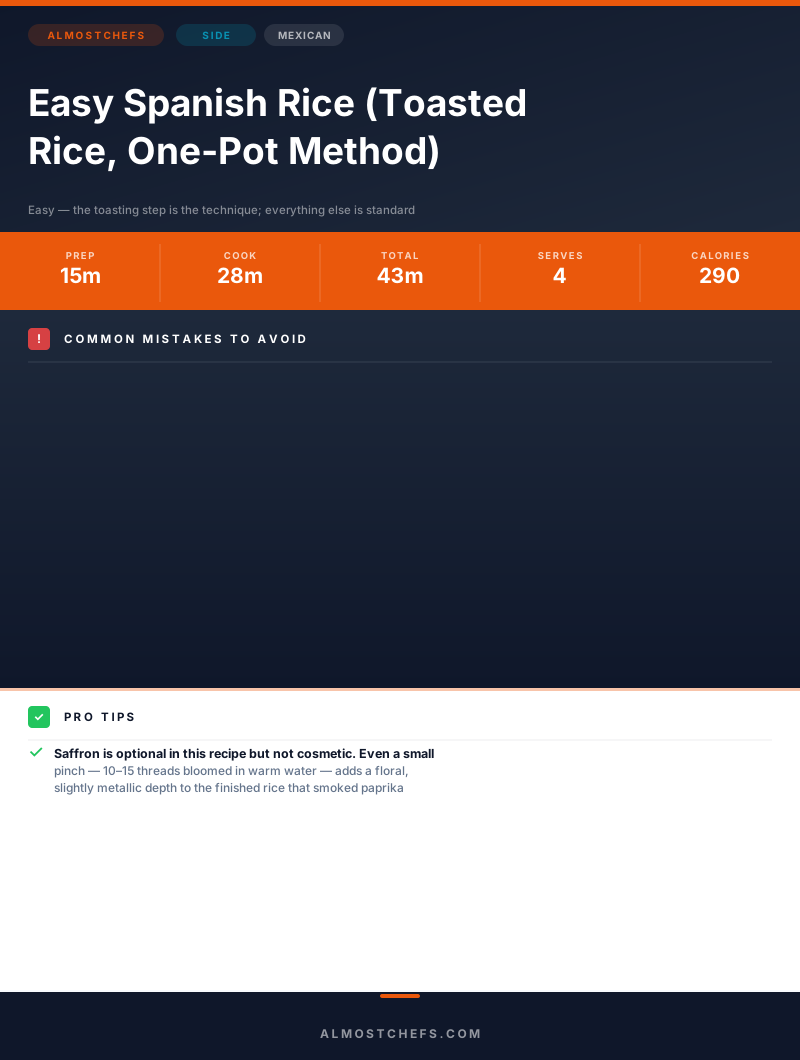
The Science of
Easy Spanish Rice (Toasted Rice, One-Pot Method)
We turned everything on this page into a beautiful, flour-proof PDF cheat sheet. Print it out, stick it to your fridge, and never mess up your easy spanish rice (toasted rice, one-pot method) again.
*We'll email you the high-res PDF instantly. No spam, just perfectly cooked meals.
AlmostChefs Editorial Team
We translate the internet's most popular cooking videos into foolproof, beginner-friendly written recipes. We analyze multiple methods, test them in our kitchen, and engineer a single "Master Recipe" that gives you the best possible result with the least possible stress.