Crispy Greek Spanakopita (Stop Letting Soggy Phyllo Ruin It)
A traditional Greek spinach and feta pie wrapped in paper-thin layers of buttery, golden phyllo dough. We broke down the most common failures — soggy filling, torn sheets, flabby crust — and built a foolproof method that delivers a shatteringly crispy exterior and a creamy, herbaceous center every time.

“Spanakopita fails in one of three ways: the filling is wet and turns the bottom to mush, the phyllo tears mid-assembly and the whole thing falls apart, or it comes out of the oven pale and soft instead of shatteringly golden. None of these are recipe failures. They're technique failures. Fix the moisture, respect the phyllo, and this dish becomes one of the most reliable things you can make for a crowd.”
Why This Recipe Works
Spanakopita is not complicated. It is exacting. There's a difference, and understanding that difference is the entire recipe. The dish has four components — spinach, cheese, eggs, phyllo — and three of them are mostly water. Your entire job is moisture management. Get that right and the rest follows naturally.
The Moisture Problem Is the Only Problem
Fresh spinach is 91% water. Ricotta is 72% water. Eggs are 75% water. You're building a filling out of three of the most water-dense foods in your refrigerator, then sealing it inside a pastry so delicate it disintegrates in humidity. The math is not in your favor unless you intervene aggressively.
The spinach is the primary offender. Raw, it looks enormous — one pound fills a large mixing bowl. Cooked properly, it reduces to a dense, concentrated cup of leaf. That reduction is water leaving the pan, and every drop that stays in the spinach is a drop that will migrate into your phyllo during the 40-minute bake. You're not just wilting the spinach. You're desiccating it. The large skillet matters here: a crowded pan traps steam and prolongs the process. Give the spinach space to actually dry.
Then you cool it completely before adding the cheese. Hot spinach plus cold ricotta equals steam inside your filling, which equals, again, moisture in your phyllo. The 10-minute cooling rest is not optional patience-building. It's physics.
What Phyllo Actually Is
Phyllo is not forgiving pastry. It is flour, water, and almost nothing else — no fat in the dough itself, no leavening, no structural integrity of its own. It exists as a vehicle for the butter you apply between each layer, which is what creates the laminated, crispy texture when it bakes. The butter also acts as a moisture barrier. Think of each buttered layer as a tiny waterproof membrane between the filling and the air.
This means two things. First, every sheet needs real butter coverage — not a token swipe. Use a pastry brush and brush generously, edge to edge, going slightly past the borders. Second, the sheets need to stay pliable while you work. Phyllo exposed to air for more than 60 seconds begins to crack at the edges. Keep a damp towel over the unused stack. This is the single most important technique note in the entire recipe and it is ignored constantly.
When a sheet tears — and sheets will tear — lay the next one directly on top and keep going. Tears beneath seven layers of buttered phyllo are invisible and structurally irrelevant. The only catastrophic tear is the one you respond to by abandoning the recipe.
The Pre-Score Is Non-Negotiable
Baked phyllo is essentially laminated glass. Trying to cut through 15 sheets of it after baking produces shattering, cratering, and a presentation that looks like someone sat on it. Score the top halfway through before it goes into the oven — the cuts bake in, crisp up cleanly, and become natural cut lines that a sharp knife can finish in one clean stroke.
This is the technique that separates Greek home cooking from the disaster that ends up hacked apart on a serving plate. Score now. Everything is easier after.
Why This Combination Works
Feta contributes salt, tang, and structure. Ricotta contributes creaminess and volume. The eggs bind both into a filling that holds its shape when cut rather than sliding out the sides. The dill is not decoration — it's a flavor bridge between the mineral saltiness of the feta and the earthiness of the cooked spinach. Nutmeg is traditional and correct: a quarter teaspoon amplifies the dairy without tasting like nutmeg. Leave it out and the filling tastes slightly flat.
The Parmesan on top is a technique play, not a flavor flourish. Parmesan's low moisture content and high protein level create a Maillard crust that accelerates browning and adds a savory snap to the top surface. It also means the surface reaches the right color at the same time the interior finishes cooking — a small calibration that produces a dramatically better result.
Where Beginners Mess This Up
Before we start, read this. These are the 4 reasons your crispy greek spanakopita (stop letting soggy phyllo ruin it) will fail:
- 1
Not drying the spinach thoroughly: Spinach is roughly 90% water by weight. If you don't cook off every drop of that moisture before it hits the cheese filling, the water migrates into the phyllo layers during baking and turns your base into wet cardboard. The spinach should look almost impossibly dry in the pan before you pull it off the heat.
- 2
Adding filling to the phyllo while it's still hot: Hot filling releases steam against cold butter-brushed phyllo, which softens the sheets and makes them stick together in clumps. Cool the filling completely — at least 10 minutes at room temperature — before layering. This is not optional.
- 3
Letting phyllo sheets dry out: Phyllo desiccates in minutes when exposed to air. Dry sheets crack, tear, and refuse to seal at the edges. Keep the unused stack covered with a damp kitchen towel the entire time you work. If a sheet tears, lay another on top and keep going — the layers will cover it.
- 4
Skipping the pre-score: Spanakopita cuts cleanly before baking, and a nightmare after. The baked phyllo shatters when you try to cut through it fully, destroying the presentation. Score the top down to the filling layer before it goes into the oven. The cuts bake in, and you just finish them when serving.
The Video Reference Library
Want to see it in action? Here are the exact videos we analyzed and combined to build this foolproof recipe translation:
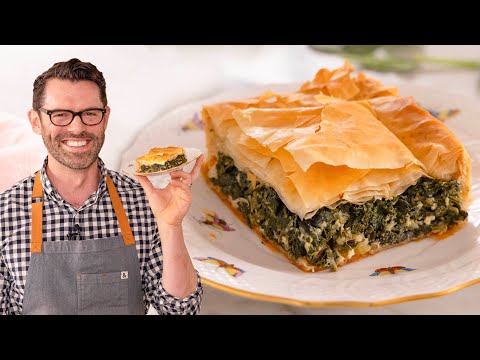
The foundational walkthrough covering phyllo handling, spinach moisture management, and the butter-brushing technique that creates the distinct laminated crust.
2. How to Handle Phyllo Dough Without It Falling Apart
Focused entirely on the phyllo technique — keeping sheets pliable, managing tears mid-assembly, and understanding how butter acts as both adhesive and moisture barrier.
3. Greek Grandmother's Spanakopita MethodOld-school approach with no shortcuts. Best for understanding why each step exists and what the filling should look, smell, and feel like at each stage.
🛠️ Core Equipment
- 9x13-inch baking dish ↗The standard size for even phyllo layering and consistent baking. Glass or ceramic distributes heat more evenly than dark metal pans, which can scorch the bottom layer before the top browns.
- Pastry brush ↗Even butter distribution across every phyllo sheet is what creates the laminated, crispy layers. A pastry brush gets into the corners. A spoon leaves streaks and pools.
- Large skillet ↗You need surface area to evaporate spinach moisture quickly. A crowded pan steams the spinach instead of drying it. Wider is better.
- Sharp chef's knife ↗Dull knives drag through phyllo instead of cutting it cleanly. Pre-scoring requires a blade sharp enough to slice through 15 layers of dough without pressing or tearing.
Crispy Greek Spanakopita (Stop Letting Soggy Phyllo Ruin It)
🛒 Ingredients
- ✦1 pound fresh spinach, roughly chopped (or 10 ounces frozen spinach, thawed)
- ✦2 medium yellow onions, finely diced
- ✦4 cloves garlic, minced
- ✦8 ounces crumbled feta cheese
- ✦6 ounces whole milk ricotta cheese
- ✦2 large eggs
- ✦3 tablespoons fresh dill, finely chopped (or 1.5 teaspoons dried dill)
- ✦1/4 teaspoon ground nutmeg
- ✦Salt and freshly cracked black pepper to taste
- ✦1 pound phyllo dough sheets (approximately 16-20 sheets), thawed if frozen
- ✦6 ounces unsalted butter, melted
- ✦2 ounces grated Parmesan cheese
- ✦1 tablespoon olive oil for cooking
👨🍳 Instructions
01Step 1
Preheat your oven to 375°F and lightly brush a 9x13-inch baking dish with melted butter.
02Step 2
Heat the olive oil in a large skillet over medium heat until shimmering. Add the diced onions and sauté, stirring frequently, until translucent and fragrant, about 5 minutes.
03Step 3
Stir in the minced garlic and cook for 30 seconds until the raw smell dissipates.
04Step 4
Add the chopped spinach to the skillet in batches if needed and cook, stirring occasionally, until all moisture has evaporated and the spinach is completely wilted and dry — 8-10 minutes for fresh, 4-5 minutes for thawed frozen.
05Step 5
Transfer the spinach mixture to a bowl and allow it to cool to room temperature, about 10 minutes.
06Step 6
Add the crumbled feta, ricotta, eggs, dill, nutmeg, salt, and pepper to the cooled spinach mixture. Fold gently until well combined.
07Step 7
Lay the phyllo stack on a flat surface and cover it immediately with a damp kitchen towel. Keep this towel in place every time you're not actively pulling a sheet.
08Step 8
Place one phyllo sheet in the prepared baking dish, allowing edges to drape over the sides. Brush generously with melted butter. Repeat for 7 layers total.
09Step 9
Spread the cooled filling evenly over the layered phyllo base, leaving a half-inch border around the edges.
10Step 10
Layer the remaining phyllo sheets on top — about 8-10 sheets — brushing each one with melted butter before adding the next.
11Step 11
Tuck all overhanging phyllo edges down and inward around the filling. Brush the entire top surface generously with the remaining butter.
12Step 12
Using a sharp knife, score the spanakopita into squares or triangles — cutting halfway through the phyllo layers only, not all the way to the bottom.
13Step 13
Sprinkle grated Parmesan evenly over the top. Bake for 35-45 minutes until deep golden brown and crispy, rotating halfway through if your oven runs hot.
14Step 14
Remove from the oven and rest for 10-15 minutes before cutting through the score lines and serving warm.
Nutrition Per Serving
Estimates based on standard preparation. Adjustments alter macros.
🔄 Substitutions
Instead of Unsalted butter...
Use Extra virgin olive oil
Equally crispy results with a more pronounced Mediterranean character. Slightly lighter mouthfeel. Brush with the same generosity — don't reduce the amount.
Instead of Whole milk ricotta...
Use Low-fat Greek yogurt
Tangier flavor and slightly thinner consistency. Drain the yogurt through cheesecloth for 30 minutes first to reduce excess liquid before mixing into the filling.
Instead of Fresh spinach...
Use Fresh kale, finely chopped
Heartier and slightly bitter — pairs well with salty feta. Requires the same cooking time. Chop it fine or it creates lumps in the filling.
Instead of Regular phyllo dough...
Use Whole wheat phyllo sheets
Nuttier flavor and slightly thicker layers. Reduce oven temperature to 350°F — whole wheat browns faster and can tip into burnt before the center is done.
🧊 Storage & Reheating
In the Fridge
Store covered in the baking dish or in an airtight container for up to 3 days. The phyllo softens slightly but flavor deepens.
In the Freezer
Freeze unbaked spanakopita (fully assembled, pre-scored) for up to 2 months. Bake directly from frozen at 375°F, adding 15-20 minutes to the bake time.
Reheating Rules
Reheat in a 350°F oven for 10-12 minutes on a wire rack set over a baking sheet. The rack allows air circulation under the base, which restores crispiness. Never microwave.
❓ Frequently Asked Questions
Why is the bottom of my spanakopita soggy?
Wet spinach. All of it. The spinach releases moisture during baking that migrates straight down into the base phyllo layers. Cook the spinach until the pan is visibly dry before mixing in the cheese. If you used frozen spinach, squeeze it aggressively in a kitchen towel before cooking.
Can I make spanakopita ahead of time?
Yes — and it's actually better that way. Assemble completely, score the top, and refrigerate unbaked for up to 24 hours. Pull it out 20 minutes before baking and add 5 minutes to the bake time. The filling firms up in the fridge and holds its shape better when cut.
My phyllo keeps tearing. What do I do?
Keep going. Tears are not failures — they're covered by the next sheet. The only thing that actually breaks spanakopita is letting the phyllo dry out. Keep the unused stack covered with a damp towel at all times, and work at a pace where you're never leaving sheets exposed to air for more than 30 seconds.
Can I use puff pastry instead of phyllo?
Technically yes, but it's a different dish. Puff pastry produces a thick, bready crust rather than the shatteringly thin, layered crunch that defines spanakopita. The filling-to-pastry ratio shifts dramatically. If that's what you have, it'll be edible — just don't call it spanakopita.
How do I know when it's done?
Deep golden brown across the entire surface — not pale gold, not light tan. Deep amber. The edges should pull very slightly away from the sides of the dish and the top should sound hollow when you tap it lightly. If it's browning too fast on top before 35 minutes, tent loosely with foil.
Do I have to add ricotta, or can I use only feta?
Feta alone produces a sharper, saltier, denser filling. The ricotta adds creaminess and tempers the salt. If you go feta-only, use 12 ounces and reduce or eliminate any added salt — sheep's milk feta is intensely salty on its own and will overpower everything else.
The Science of
Crispy Greek Spanakopita (Stop Letting Soggy Phyllo Ruin It)
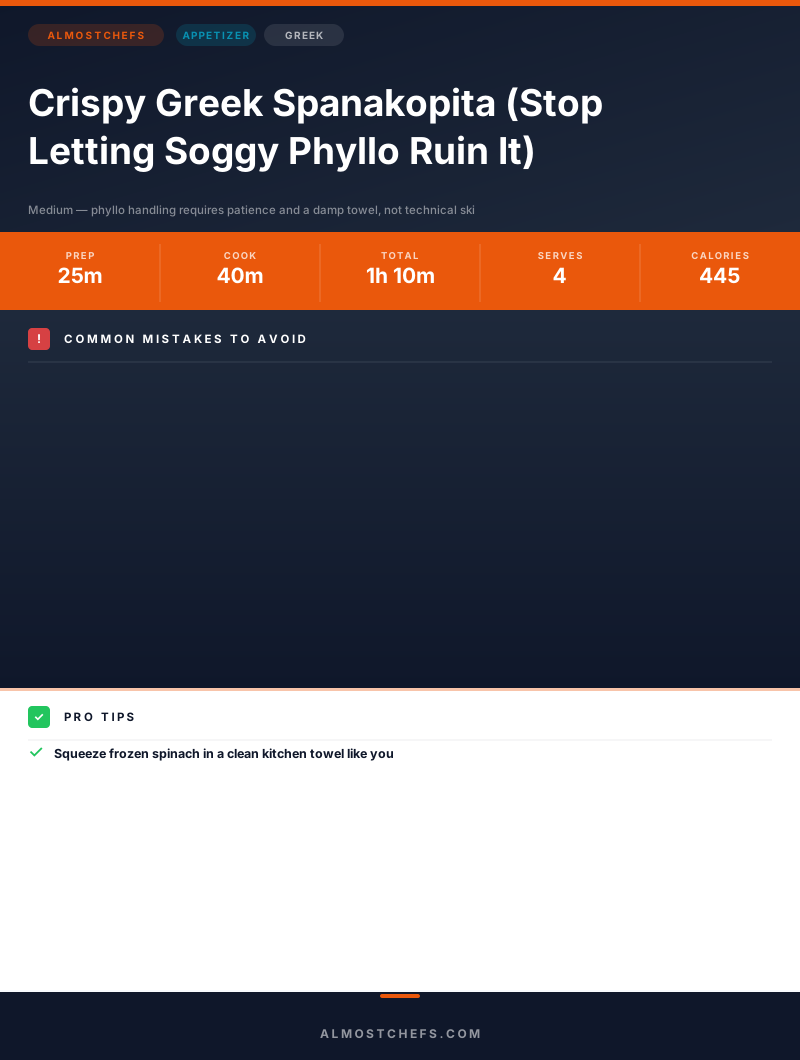
We turned everything on this page into a beautiful, flour-proof PDF cheat sheet. Print it out, stick it to your fridge, and never mess up your crispy greek spanakopita (stop letting soggy phyllo ruin it) again.
*We'll email you the high-res PDF instantly. No spam, just perfectly cooked meals.
AlmostChefs Editorial Team
We translate the internet's most popular cooking videos into foolproof, beginner-friendly written recipes. We analyze multiple methods, test them in our kitchen, and engineer a single "Master Recipe" that gives you the best possible result with the least possible stress.