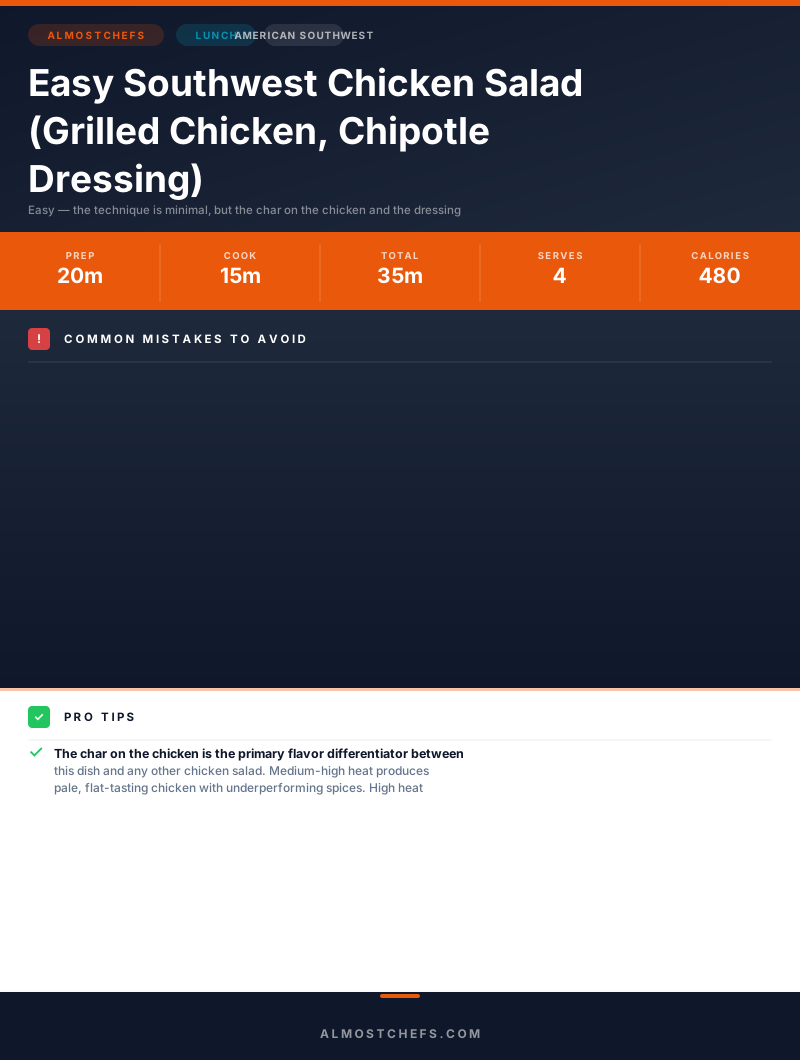
Easy Southwest Chicken Salad (Grilled Chicken, Chipotle Dressing)
Spice-rubbed chicken breast seared over high heat until charred, sliced thin, and served over romaine with black beans, corn, cherry tomatoes, avocado, and a chipotle-yogurt dressing. The char on the chicken and the chipotle in the dressing are not optional — they are the dish.

“Most chicken salads are a vehicle for dressing. The chicken is pale, the vegetables are raw, the dressing is doing all the work. This one is built differently: the chicken is the anchor, the char on its surface is the primary flavor event, and the chipotle dressing amplifies rather than masks everything beneath it. You need high heat, adequate seasoning, and the discipline to let the chicken develop a real crust before you flip it.”
Why This Recipe Works
Southwest chicken salad exists in two versions in the wild. The first version is a pale, underdressed assembly of chicken pieces, canned beans, and shredded cheese with a bottle of chipotle ranch poured over it. The second version is built on a specific culinary decision: the char on the chicken is the primary flavor architecture, and everything else is chosen to complement and support it. This recipe is the second version. The distinction comes down to heat and equipment.
The Char Is the Dish
The spice blend on this chicken — smoked paprika, cumin, chili powder, garlic powder — is composed of molecules that behave very differently at different temperatures. At medium heat (around 325°F surface temperature), these spices heat through and release their primary volatile compounds: the smoky aldehydes in paprika, the earthy pyrazines in cumin. The chicken tastes seasoned.
At high heat (400-450°F+ surface temperature), these same spice molecules undergo their own Maillard reactions, producing new flavor compounds that don't exist at lower temperatures. The paprika's carotenoids char slightly, producing notes that are smoky and almost bittersweet. The cumin's pyrazines deepen and darken into something nutty and roasted. The chili's compounds bloom and distribute through the surface of the meat. You get a result that is qualitatively different from chicken that is merely seasoned — it is chicken that has been transformed.
A cast-iron skillet is the correct tool for this because it maintains high surface temperature when cold chicken makes contact. Thin or non-stick pans drop in temperature immediately when food is added, stalling the Maillard reaction until the pan recovers. Cast iron's thermal mass sustains the heat through the initial temperature drop and enables continuous browning from the first second of contact. The result is the char crust that justifies the recipe's title.
Why the Rub Composition Matters
The specific combination of smoked paprika, cumin, and chili powder is not interchangeable with generic taco seasoning or a random spice blend. Each spice is doing a defined job. Smoked paprika provides color (deep red-orange crust), mild heat, and smoky dimension. Cumin provides the earthy, slightly astringent base note that reads as "Southwest" to most palates — it is the flavor most strongly associated with the cuisine's identity. Chili powder provides forward heat and rounds the savory quality of the rub. Garlic powder forms a cohesive background that ties the individual spice notes together.
The ratio is calibrated for a rub that is assertive without being overwhelming. The chicken should taste clearly spiced but not incendiary — the chipotle dressing is doing additional heat work at serving, and the two heat sources should complement rather than compete.
The Chipotle Dressing Is Non-Negotiable
A Southwest salad without a chipotle-based dressing is a taco salad with delusions. The chipotle in adobo does four things simultaneously that no other ingredient combination can approximate as efficiently: it provides smoke, heat, a slight tomato sweetness from the adobo sauce, and a distinctive dried-pepper depth that registers as specifically Southwestern rather than generically spicy.
The Greek yogurt base is the correct carrier for this dressing because its lactic acidity interacts with the chipotle's heat in a way that cream or mayo does not. Yogurt contains lactic acid produced during fermentation — the result is a tangy, slightly bright quality that cuts through the spice and prevents the dressing from tasting heavy on a bed of greens. It also provides protein, making the dressing a nutritional contributor rather than pure caloric cost.
Blending the dressing completely smooth is the step most often skipped. A minced chipotle pepper stirred into yogurt distributes unevenly — the first few bites of salad are intensely spicy and smoky, the last few bites are barely seasoned. A blended dressing distributes the chipotle flavor uniformly throughout the yogurt base, ensuring every bite receives the same heat and smoke level.
Structural Logic of the Assembly Order
The assembly order in this salad is not aesthetic — it is structural and textural. The romaine goes down first as the base and primary textural element. The beans, corn, tomatoes, and red onion go on next because they are moisture-releasing components — their liquid migrates downward into the greens during the brief window between assembly and serving. The sliced chicken goes on top, where it stays warm longer and does not compress the greens beneath it. The avocado, cheese, and cilantro go on last because they are delicate — avocado bruises under the weight of other ingredients and cilantro wilts in contact with warm chicken. The tortilla strips go on absolute last, immediately before dressing, because they are the crunch element and are the most vulnerable to moisture absorption.
The dressing goes on at the moment of serving. Not 5 minutes before. Not while carrying the salad to the table. At the table, immediately before eating. The lime juice in the dressing begins wilting romaine on contact, and a wilted romaine salad has lost its most important textural component — the structural crunch of the leaves that provides resistance against the soft beans, creamy avocado, and fluid dressing. Dress at the last possible moment and the crunch is preserved through the entire meal.
The Rest and Slice Protocol
Five minutes of resting after the chicken comes off the pan is not a courtesy — it is moisture management. Chicken breast at 165°F internal has undergone significant protein contraction. The muscle fibers have tightened, pushing moisture toward the center of the breast in a pressurized state. Cut immediately and the pressure differential pushes that liquid onto the cutting board in a visible pool. Rest for five minutes and the fibers begin to relax, redistributing the moisture back through the tissue where it will stay when sliced.
Slicing on the bias — at a 45-degree angle across the breast — increases the apparent surface area of each slice and, more importantly, cuts across the grain of the muscle fibers rather than parallel to them. Cutting parallel to the fibers produces slices that pull apart stringily when bitten. Cutting across the fibers produces slices where the fiber length is short and the texture is distinctly more tender. This technique costs zero additional time and produces a noticeably better eating experience in a dish where the chicken is consumed in thin slices rather than large chunks.
Where Beginners Mess This Up
Before we start, read this. These are the 4 reasons your easy southwest chicken salad (grilled chicken, chipotle dressing) will fail:
- 1
Cooking the chicken over medium or low heat: Medium heat produces pale, steamed-looking chicken with a flat, one-note flavor. The spice rub — smoked paprika, cumin, chili powder — needs high heat to bloom and char at the surface. The Maillard reaction on spice-coated meat produces a qualitatively different flavor profile than the same spices applied to chicken cooked at lower temperatures. High heat. Four to five minutes per side. Do not move the chicken during those minutes.
- 2
Not resting the chicken before slicing: Chicken breast cooked to 165°F has significant internal pressure from heat-contracted muscle fibers. Cutting immediately releases that pressure as liquid running onto the cutting board. Rest 5 minutes — the fibers relax, the internal moisture redistributes, and you retain it in the meat where it belongs.
- 3
Dressing the salad too early: Romaine dressed in advance wilts and becomes limp. Tortilla strips added before serving go completely soft. Both failures are preventable by dressing the salad immediately before serving. If assembling for meal prep, store the dressing, tortilla strips, and avocado separately and combine at eating time.
- 4
Using store-bought chipotle dressing: Commercial chipotle dressings are almost universally too sweet, too viscous, and lacking in actual chipotle heat. The homemade chipotle-yogurt dressing in this recipe takes three minutes. The flavor difference is not subtle — the minced chipotle pepper provides heat and smokiness that cannot be replicated by chipotle powder in a bottled base.
The Video Reference Library
Want to see it in action? Here are the exact videos we analyzed and combined to build this foolproof recipe translation:
The source video for this recipe. Watch the searing sequence — the chicken should be visibly charred at the edges before flipping, not just cooked through.
🛠️ Core Equipment
- Cast-iron skillet or heavy stainless steel panHigh-heat searing requires a pan with significant thermal mass that maintains its temperature when cold chicken hits the surface. A thin non-stick pan drops temperature when the chicken is added, stalling the Maillard reaction. Cast iron or stainless steel sustain the heat through the initial temperature drop and produce a proper char.
- Instant-read thermometerChicken breast must reach 165°F internally without going significantly above it — overcooked breast is dry and unpleasant, and the standard approach of cooking until the juices run clear is imprecise. An instant-read thermometer removes guesswork. Insert into the thickest part of the breast; pull at 163°F (carryover cooking brings it to 165°F during the rest).
- Blender or food processorFor the chipotle dressing. The chipotle pepper, garlic, and lime juice need to be fully integrated into the yogurt base — a fork or whisk leaves visible pepper chunks that create uneven heat distribution in the dressing. A blender produces a completely smooth, emulsified result in 30 seconds.
Easy Southwest Chicken Salad (Grilled Chicken, Chipotle Dressing)
🛒 Ingredients
- ✦2 boneless, skinless chicken breasts
- ✦2 teaspoons smoked paprika
- ✦1 teaspoon ground cumin
- ✦1/2 teaspoon chili powder
- ✦1/4 teaspoon garlic powder
- ✦Salt and freshly ground black pepper to taste
- ✦2 tablespoons olive oil
- ✦8 cups romaine lettuce, chopped
- ✦1 can (15 ounces) black beans, drained and rinsed
- ✦1 cup frozen corn, thawed
- ✦1 cup cherry tomatoes, halved
- ✦1 medium avocado, diced
- ✦1/2 cup shredded cheddar cheese
- ✦1/4 cup red onion, thinly sliced
- ✦1/4 cup fresh cilantro, roughly chopped
- ✦Tortilla strips for serving
- ✦Dressing: 1/3 cup plain Greek yogurt
- ✦Dressing: 2 tablespoons fresh lime juice
- ✦Dressing: 1 tablespoon chipotle pepper in adobo sauce, minced
- ✦Dressing: 1 teaspoon honey
- ✦Dressing: 1 clove garlic
- ✦Dressing: 1 tablespoon extra-virgin olive oil
- ✦Dressing: salt to taste
👨🍳 Instructions
01Step 1
Combine smoked paprika, cumin, chili powder, garlic powder, salt, and black pepper in a small bowl. Pat chicken breasts dry with paper towels, then coat all surfaces evenly with the spice blend. Press the spices into the surface — they should adhere to the dry meat.
02Step 2
Heat olive oil in a cast-iron skillet or heavy stainless steel pan over high heat until the oil just begins to smoke — approximately 2 minutes.
03Step 3
Add the chicken breasts and cook undisturbed for 4-5 minutes. Do not move, press, or check the undersides early. The chicken will initially stick and then release when a proper crust has formed.
04Step 4
Flip once. Cook the second side for 4-5 minutes until an instant-read thermometer inserted in the thickest part reads 163-165°F.
05Step 5
Transfer the chicken to a cutting board and rest for 5 minutes. Do not cover — the steam will soften the crust you just developed.
06Step 6
Make the chipotle dressing: combine Greek yogurt, lime juice, minced chipotle in adobo, honey, garlic, olive oil, and salt in a blender or small food processor. Blend until completely smooth — 30-45 seconds. Taste and adjust salt and lime juice.
07Step 7
Slice the rested chicken on the bias (at a 45-degree angle) into 1/4-inch strips. Slicing on the bias increases the visual surface area per slice and cuts across more muscle fibers, making each bite more tender.
08Step 8
Assemble the salad: arrange romaine in a large bowl or on individual plates. Add black beans, corn, cherry tomatoes, and red onion.
09Step 9
Top with sliced chicken, diced avocado, shredded cheddar, and cilantro. Add tortilla strips last.
10Step 10
Drizzle the chipotle dressing over the top immediately before serving. Serve immediately — this salad does not hold after dressing.
Nutrition Per Serving
Estimates based on standard preparation. Adjustments alter macros.
🔄 Substitutions
Instead of Chicken breast...
Use Boneless skinless chicken thighs
Thighs have higher fat content and are more forgiving of slightly higher internal temperatures. Cook to 170°F internal for thighs — they remain tender at this temperature whereas breast would be dry. The char develops the same way and the flavor is richer.
Instead of Greek yogurt (dressing)...
Use Mayonnaise, sour cream, or dairy-free coconut yogurt
Mayo produces a richer, more traditional dressing. Sour cream produces a tangier result. Dairy-free coconut yogurt works well but adds a mild coconut note. All substitutes use the same quantity.
Instead of Romaine lettuce...
Use Chopped kale or a mix of romaine and shredded red cabbage
Kale holds up better under dressing and can be dressed 30 minutes in advance without wilting. Massage the kale with a small amount of olive oil before assembling the salad to tenderize the leaves. Red cabbage adds crunch and anthocyanin content.
Instead of Cheddar cheese...
Use Cotija, pepper jack, or queso fresco
Cotija is traditional in Southwestern-inspired dishes — salty, crumbly, and less melty than cheddar. Pepper jack adds additional heat that compounds with the chipotle dressing. Queso fresco is mild and creamy, which balances the chipotle heat rather than adding to it.
🧊 Storage & Reheating
In the Fridge
Store components separately in airtight containers for up to 4 days. Cooked chicken keeps well refrigerated. Dressing keeps for up to 1 week. Do not store assembled salad — the dressed greens will wilt overnight. Dice avocado fresh at serving.
In the Freezer
The cooked, sliced chicken freezes well for up to 3 months. Freeze flat in a single layer, then transfer to a bag. Thaw overnight in the refrigerator and serve cold over the salad or reheat briefly in a skillet.
Reheating Rules
The chicken is excellent served cold in this salad. If preferred warm, reheat sliced chicken in a dry skillet over medium heat for 2-3 minutes, or briefly in the microwave at 70% power. The dressing and salad components are served cold.
❓ Frequently Asked Questions
Can I grill the chicken instead of pan-searing it?
Yes, and outdoor grilling produces a very similar char character plus a slight wood-smoke note that is excellent in this application. Grill over direct high heat, 4-5 minutes per side, until the internal temperature reads 165°F. The spice rub will develop the same way over grill grates as it does in a cast-iron pan.
How spicy is the chipotle dressing?
At 1 tablespoon of minced chipotle in adobo, the dressing has moderate heat — noticeable warmth that builds slightly, but not aggressive. For a mild version, use 1 teaspoon and taste before adding more. For a hot version, use 1.5-2 tablespoons and consider adding a small amount of the adobo sauce itself for additional smoky complexity.
Can I use store-bought rotisserie chicken?
Yes. Strip and slice the rotisserie chicken, then toss it with the spice blend in a hot dry skillet for 2-3 minutes to bloom the spices and approximate the char flavor. It won't develop the same crust as freshly seared raw chicken, but the spice-forward result is a practical weeknight shortcut.
What if I can't find chipotle in adobo?
Substitute 1 teaspoon chipotle powder plus 1 teaspoon tomato paste plus 1/2 teaspoon apple cider vinegar. This approximates the heat, smokiness, and acidity of the canned chipotle without replicating the exact texture. It is a serviceable backup but the flavor complexity of the canned version is difficult to fully replicate with dry spices.
Can this be made into a grain bowl instead of a salad?
Yes. Replace the romaine with a base of cooked brown rice, quinoa, or farro. The black beans, corn, tomatoes, chicken, and dressing work equally well over grains. The grain base also holds up to refrigeration much better than dressed greens — grain bowls can be assembled and refrigerated for up to 2 days, making this a strong meal prep option.
The Science of
Easy Southwest Chicken Salad (Grilled Chicken, Chipotle Dressing)
We turned everything on this page into a beautiful, flour-proof PDF cheat sheet. Print it out, stick it to your fridge, and never mess up your easy southwest chicken salad (grilled chicken, chipotle dressing) again.
*We'll email you the high-res PDF instantly. No spam, just perfectly cooked meals.
AlmostChefs Editorial Team
We translate the internet's most popular cooking videos into foolproof, beginner-friendly written recipes. We analyze multiple methods, test them in our kitchen, and engineer a single "Master Recipe" that gives you the best possible result with the least possible stress.