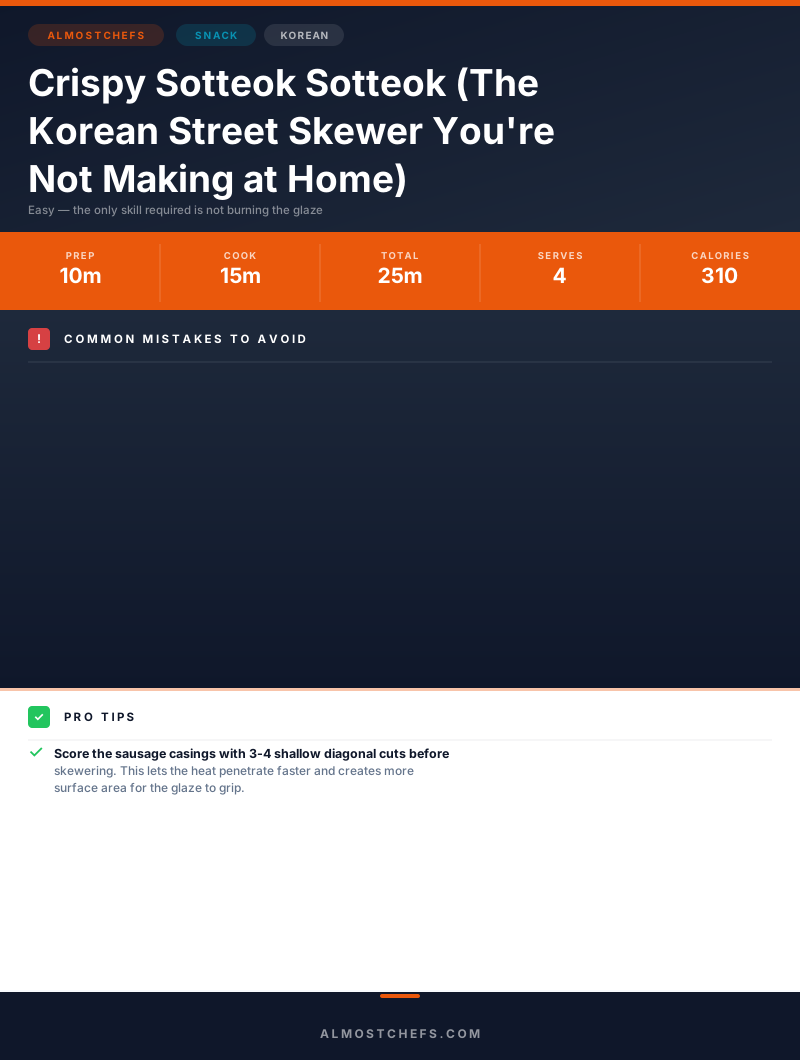
Crispy Sotteok Sotteok (The Korean Street Skewer You're Not Making at Home)
Alternating rice cakes and cocktail sausages skewered, pan-fried until blistered and golden, then lacquered in a sweet-spicy gochujang glaze. This is Seoul street food at its most direct — chewy, savory, sticky, and impossible to stop eating.

“Sotteok sotteok is Korean street food reduced to its most honest equation: sausage plus rice cake plus fire plus sauce. There is no technique to master, no mise en place to stress about. What there is: a specific frying sequence that chars the exterior without bursting the sausage casing, and a glaze that caramelizes into a lacquered shell instead of turning into sticky paste. Most home attempts miss both. We fixed that.”
Why This Recipe Works
Sotteok sotteok is what Korean street food looks like when it stops trying to be sophisticated. No broth, no marinade time, no fermentation waiting period. Just a skewer, a pan, a glaze, and about 25 minutes. The fact that it's this fast is almost suspicious — and it would be, if most home versions didn't manage to get it wrong.
The Tteok Problem
Rice cakes are the structural core of this dish, and they are unforgiving. Pull them out of the refrigerator cold and thread them straight onto a skewer and you've already lost. Cold tteok is rigid. Under high heat, the outside chars while the center stays dense and chalky — you end up with blackened exterior and a core that resists every bite. The fix is a 10-minute warm water soak, which hydrates the starch just enough to restore pliability without turning the piece into mush.
The variety matters too. Cylindrical garae-tteok — the long white rope that gets sliced for tteokguk — is the correct choice. Flat tteokbokki discs don't thread reliably and slide off the skewer once they soften. Garae-tteok grips the skewer, holds the alternating pattern under heat, and develops a slightly crispy outer shell while remaining chewy inside. That contrast is the point.
Why the Alternating Pattern Isn't Just Aesthetic
The sausage-tteok-sausage-tteok sequence looks like a design choice. It's actually thermal engineering. Sausages cook faster than rice cakes and emit fat and steam as they heat. Placing tteok adjacent to sausage on both sides means each rice cake is being basted in rendered sausage fat while it cooks — the fat conducts heat into the tteok surface faster than air alone, accelerating browning without requiring you to crank the heat dangerously high.
Clustering multiple sausages together would cause blowouts and pooling fat. Clustering tteok together produces uneven softening. The alternation distributes the thermal load evenly across the entire skewer.
The Glaze Is a Two-Stage Ingredient
The gochujang glaze does two things in sequence, and conflating them ruins the dish. First, it needs to cook in a saucepan until the sugar and honey reduce and the raw garlic mellows — this takes only 2-3 minutes but transforms the flavor from sharp and acidic to deep and rounded. Second, it needs to be applied to a nearly-finished skewer in the final 2 minutes of cooking, where the residual pan heat caramelizes the sugars into a lacquered shell.
If you add it earlier, the honey burns before the tteok finishes cooking. If you skip the initial reduction, the glaze is too thin and runs off before it sets. The cast iron skillet matters here because it retains heat evenly when you lower the temperature for glazing — thinner pans cool down too fast and the glaze never sets properly.
What Street Carts Do That Home Cooks Miss
The difference between street sotteok and home sotteok is residual heat and rotation. Street vendors cook over sustained high-output heat and rotate skewers constantly, achieving even browning in under a minute per side. Home cooks tend to cook on too-high heat and turn only once or twice, producing skewers that are charred on two sides and raw on two sides.
Medium heat and a turn every two minutes isn't slow — it's correct. It gives the tteok time to build a crust gradually, lets the sausage crisp evenly around its circumference, and ensures the glaze has a fully cooked, stable surface to grip when you add it at the end.
That's the whole recipe. Soak. Thread. Roll. Glaze. The architecture is simple enough that once you understand why each step exists, you can't really get it wrong.
Where Beginners Mess This Up
Before we start, read this. These are the 4 reasons your crispy sotteok sotteok (the korean street skewer you're not making at home) will fail:
- 1
Starting with cold rice cakes: Refrigerated or frozen tteok are dense and rigid. Drop them into hot oil cold and the outside chars before the inside softens. Soak them in warm water for 10-15 minutes before skewering — they should feel pliable and slightly yielding before they ever touch the pan.
- 2
Cooking on heat that's too high: High heat chars the sausage casing immediately and locks in trapped steam, causing blowouts. Medium heat gives the rice cake time to soften through while the sausage develops an even golden-brown crust. The goal is color and texture together, not speed.
- 3
Adding the glaze too early: The sugar in gochujang and honey burns fast. If you brush the glaze onto the skewers before they're fully cooked, you get carbonized sweetness instead of a lacquered coat. Add the glaze only in the final 2 minutes and turn constantly.
- 4
Using the wrong tteok: This recipe requires cylindrical garae-tteok — the long rice cake ropes, cut into 1-inch pieces. Flat tteokbokki discs won't thread cleanly and fall off the skewer when they soften. Garae-tteok holds its shape and provides the chewy-to-crispy contrast the dish depends on.
🛠️ Core Equipment
- Bamboo or metal skewersThe skewer is structural. It holds the alternating pattern under heat and makes the dish a street food rather than a stir-fry. Soak bamboo skewers in water for 20 minutes before use to prevent scorching.
- Wide, flat non-stick or cast iron panYou need surface area to lay the skewers flat and roll them. A narrow pan forces you to cook in batches at angles, which means uneven browning. [Cast iron skillets](/kitchen-gear/review/cast-iron-skillet) retain heat evenly and produce better caramelization on the glaze.
- Silicone brushFor applying the glaze in thin, controlled coats. A regular pastry brush absorbs the sticky sauce unevenly. Silicone applies a thin, even layer that caramelizes instead of pooling.
- Small saucepanTo simmer the glaze until it thickens slightly before application. A cold, unstirred glaze brushed directly onto a hot skewer is too thin and drips off before it sets.
Crispy Sotteok Sotteok (The Korean Street Skewer You're Not Making at Home)
🛒 Ingredients
- ✦16 pieces garae-tteok (cylindrical rice cakes), cut into 1-inch pieces
- ✦16 cocktail sausages or mini hot dogs
- ✦2 tablespoons neutral oil (vegetable or avocado)
- ✦2 tablespoons gochujang (Korean red pepper paste)
- ✦1.5 tablespoons ketchup
- ✦1 tablespoon soy sauce
- ✦1 tablespoon honey or rice syrup
- ✦1 teaspoon sesame oil
- ✦1 teaspoon sugar
- ✦1 clove garlic, finely grated
- ✦Toasted sesame seeds, for finishing
- ✦8 skewers
👨🍳 Instructions
01Step 1
Soak garae-tteok in warm water for 10-15 minutes until pliable. Drain and pat dry.
02Step 2
Thread alternating pieces onto each skewer: sausage, tteok, sausage, tteok, ending with sausage — 2 sausages and 2 rice cakes per skewer.
03Step 3
Combine gochujang, ketchup, soy sauce, honey, sesame oil, sugar, and garlic in a small saucepan. Stir over low heat for 2-3 minutes until the sugar dissolves and the glaze thickens slightly. Remove from heat.
04Step 4
Heat oil in a wide flat pan over medium heat. Add skewers in a single layer and cook for 8-10 minutes, turning every 2 minutes, until the sausages are golden-brown and the rice cakes have developed a light crust.
05Step 5
In the final 2 minutes of cooking, brush the glaze over all sides of each skewer, turning constantly. The glaze should caramelize and set — it will look lacquered and slightly shiny.
06Step 6
Transfer to a plate. Scatter toasted sesame seeds over the top and serve immediately.
Nutrition Per Serving
Estimates based on standard preparation. Adjustments alter macros.
🔄 Substitutions
Instead of Garae-tteok...
Use Frozen tteokbokki-style flat rice cakes, soaked and halved
Less ideal for skewering but workable if you can't find the cylindrical type. Expect some sliding. The texture is similar but the chew is slightly less pronounced.
Instead of Cocktail sausages...
Use Vienna sausages or mini kielbasa, cut into 1-inch rounds
Any pre-cooked small sausage works. Uncooked sausages require longer cook time and the tteok will overcook before the sausage finishes. Stick to pre-cooked.
Instead of Gochujang...
Use Doenjang mixed with a pinch of cayenne and a teaspoon of miso
A rough approximation with more fermented depth and less sweetness. The color will be darker. Not a true substitute but produces a savory glaze that works.
Instead of Honey...
Use Corn syrup (mulyeot) or rice syrup
Traditional Korean street versions use mulyeot because it produces a cleaner shine with less caramelization risk. If you have it, prefer it. The glaze will be glossier.
🧊 Storage & Reheating
In the Fridge
Do not store assembled skewers. The tteok hardens and the glaze becomes tacky. If you must, separate the components — cooked skewers refrigerate for 1 day but the texture degrades significantly.
In the Freezer
Freeze uncooked tteok pieces individually on a sheet tray, then bag. They keep for 2 months. Sausages freeze indefinitely. Assemble and cook from frozen, adding 3-4 minutes to cook time.
Reheating Rules
If reheating cooked skewers, use a dry pan over medium heat for 3-4 minutes per side. The microwave turns the tteok rubbery. Accept that reheated sotteok is a compromise.
❓ Frequently Asked Questions
Where do I find garae-tteok?
Any Korean grocery store carries it refrigerated or frozen. Look for white cylindrical rice cake ropes — sometimes labeled 'rice cake for tteokguk' or simply 'garae-tteok.' H Mart, Hanahreum, and most Asian supermarkets stock it. Online Korean grocery delivery is also reliable.
Can I air fry sotteok sotteok instead of pan-frying?
Yes, with caveats. Air fry at 375°F for 8-10 minutes, flipping halfway. The sausages crisp well but the tteok can dry out slightly. Brush with a thin coat of oil before air frying. Add the glaze in the last 2 minutes, same as the pan method.
Why does my tteok fall off the skewer?
Either the tteok was too soft from over-soaking, or the pieces were too large. Cut them to 1 inch maximum — bigger pieces are heavier and slide. Thread them while they're just barely pliable, not fully softened.
Is this high in blood sugar impact?
Rice cakes have a high glycemic index (around 82), which means they spike blood glucose faster than most carbohydrates. The sausage protein and fat in this dish slow absorption somewhat, but it's still a high-GI snack. Portion control matters if blood sugar is a concern — two skewers is a reasonable serving.
What does 'sotteok sotteok' mean?
'So' (소) comes from sosiji (소시지), the Korean word for sausage. 'Tteok' (떡) means rice cake. The repeated pattern — so, tteok, so, tteok — is literally the name describing the skewer itself. It's one of those Korean food names that tells you exactly what you're eating.
Can I make the glaze less spicy?
Yes. Reduce gochujang to 1 tablespoon and increase ketchup to 2 tablespoons. Add a teaspoon of doenjang (fermented soybean paste) to preserve depth. The result is sweeter and more tomato-forward with mild background heat — closer to a Korean BBQ dipping sauce than a chili glaze.
The Science of
Crispy Sotteok Sotteok (The Korean Street Skewer You're Not Making at Home)
We turned everything on this page into a beautiful, flour-proof PDF cheat sheet. Print it out, stick it to your fridge, and never mess up your crispy sotteok sotteok (the korean street skewer you're not making at home) again.
*We'll email you the high-res PDF instantly. No spam, just perfectly cooked meals.
AlmostChefs Editorial Team
We translate the internet's most popular cooking videos into foolproof, beginner-friendly written recipes. We analyze multiple methods, test them in our kitchen, and engineer a single "Master Recipe" that gives you the best possible result with the least possible stress.