Nude Kimbap Done Right (Rice Outside, Seaweed In)
Nude kimbap flips the classic inside-out — rice coats the outside, seaweed wraps the filling within. Lighter than traditional rolls, visually striking, and easier to eat. We broke down the technique to fix every common rolling failure.

“Everyone knows kimbap. Fewer people know nude kimbap — the inside-out version where the rice lives on the outside and the seaweed wraps tight around the filling. It looks harder. It is actually more forgiving. The rice exterior protects the roll during cutting, the seaweed holds every filling in compression, and you get cleaner slices every time. The trick is not the assembly. It is the rice.”
Why This Recipe Works
Nude kimbap does not exist to be trendy. It exists because the inside-out format solves a structural problem that traditional kimbap ignores: the nori exterior absorbs moisture from fillings and from ambient air within minutes, turning crisp seaweed into something closer to a damp envelope. When you move the rice to the outside, the nori is now sealed — protected from environmental humidity on one side by the fillings, on the other by a layer of starchy grain. The roll stays intact longer, slices cleaner, and holds its shape under pressure without the seaweed splitting along the edges.
This is not theory. Ask any kimbap shop that prepares rolls four hours before a market opens why they often switch to the nude format for extended holding. The nori staying dry is not aesthetic — it is functional engineering.
The Rice Is Everything
Short-grain rice — specifically Korean japonica varieties — is the only rice with enough surface starch to adhere to itself when pressed into a thin exterior layer. Long-grain rice fractures. Medium-grain rice is borderline. Short-grain's higher amylopectin content creates that characteristic tackiness that lets grains bond to adjacent grains without adhesive. Sesame oil interferes with that bonding if overdone, which is why the ratio matters: enough to season and separate the grains, not enough to waterproof them.
Temperature is the other variable most recipes ignore. Rice that has cooled below 45°C loses its plasticity — the starches begin to retrograde, and the grains stop adhering cooperatively. Rice that is too hot steams the nori on contact, triggering premature softening. The window is narrow: warm to the touch, not steaming, not cold. Work within that window or restart the rice.
Filling Geometry
The spine principle governs everything inside the roll. Your most rigid, structurally consistent ingredient — danmuji is ideal, cucumber a close second — belongs dead center in the filling row. That ingredient becomes the structural axis around which everything else compresses during rolling. Soft ingredients like crab, egg, and spinach fill the space around it. Without a rigid center, compression forces collapse the filling into an irregular mass that the knife then has to navigate around rather than through.
Keep the filling row narrow. A bamboo rolling mat can only apply so much inward pressure before the roll begins to bulge rather than compact. Overfilled rolls do not get tighter when you squeeze harder — they split at the seam. The self-discipline to use less filling than feels right is the single most transferable skill in all of kimbap-making.
The Knife Is Not Optional
Cutting kimbap with a dull or dry knife is the final failure point that ruins rolls which survived assembly perfectly. Rice grains are held together by starch gel and compression. A dragging blade breaks that compression zone ahead of the cut, collapsing the structure millimeters before the knife arrives. Slices that look like they exploded were cut with a dry blade.
One damp cloth, folded next to your cutting board. Wipe before every cut. The moisture on the blade reduces friction enough that the knife passes through the starch matrix rather than tearing it. This is the same principle behind why sushi chefs keep a bowl of water on the counter — and why the results look different from home attempts that skip the step.
Nude kimbap rewards patience in rice preparation and speed in assembly. Slow down before you start. Move quickly once the rice hits the nori. Those two disciplines together produce the clean, tight, photogenic rolls that the inside-out format promises — and that most people never quite achieve on the first try.
Where Beginners Mess This Up
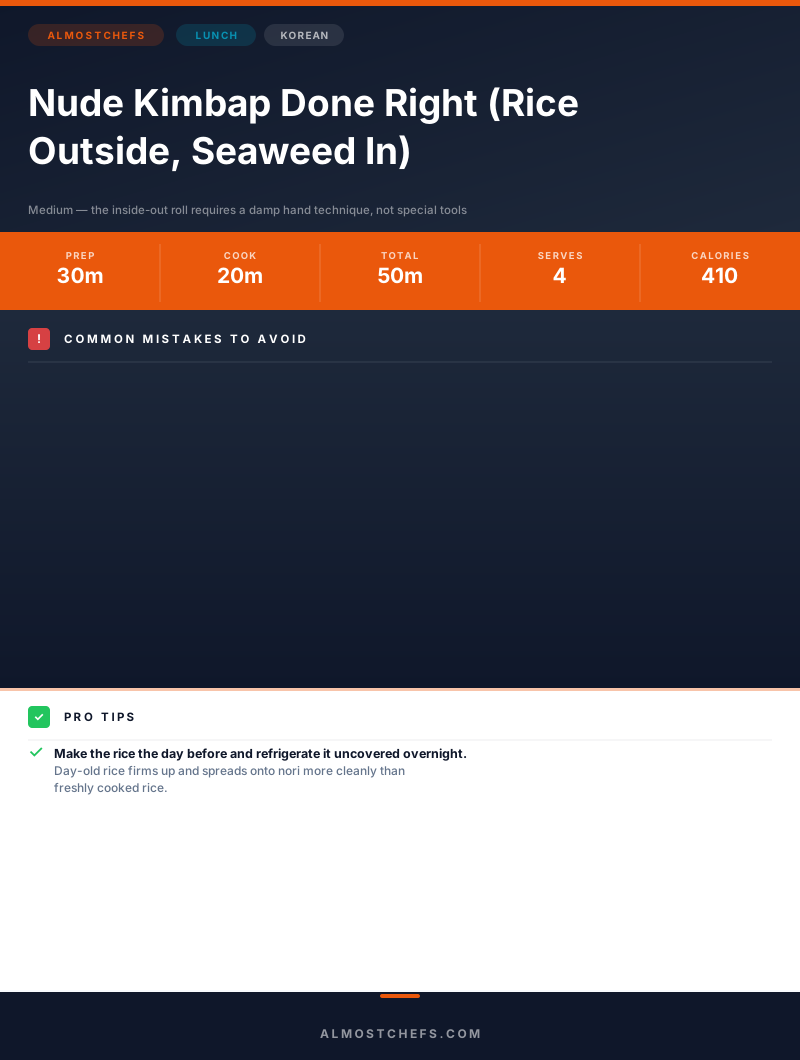
Before we start, read this. These are the 4 reasons your nude kimbap done right (rice outside, seaweed in) will fail:
- 1
Rice that is too wet or too dry: Nude kimbap rice must be warm, well-seasoned, and tacky — not gummy, not crumbly. Overcooked rice turns to paste when pressed against the nori. Undercooked rice cracks and falls apart. Cook your short-grain rice to al dente, season immediately with sesame oil and salt while hot, and use it within 20 minutes.
- 2
Pressing the rice too hard onto the nori: The rice layer should be thin — about 4-5 grains deep. Pressing too hard compacts the grains into a dense mat that becomes rubbery after slicing. Use damp fingertips and a light patting motion, spreading from the center outward, leaving a 1cm border at the far edge.
- 3
Overfilling the roll: Nude kimbap has a smaller filling capacity than traditional kimbap because the rice is on the outside. Overloaded rolls split on the first cut. Use a thin, disciplined row of filling — no wider than your thumb laid flat.
- 4
Cutting with a cold or dry knife: A dry knife drags through rice and tears the roll apart. Wipe the blade with a damp cloth between every single cut. This is not optional. The seam will compress properly only if the cut is clean and fast.
🛠️ Core Equipment
- Bamboo rolling mat (makisu)Creates even compression around the roll as you seal it. Plastic wrap placed over the mat prevents rice from sticking to the bamboo. Without it, the outside rice layer tears every time you lift and re-roll.
- Rice paddle or flat wooden spoonFor seasoning and folding the rice without mashing the grains. Metal spoons cut through short-grain rice and damage the starch structure. A flat paddle folds without compressing.
- Sharp chef's knifeSlice width matters. A dull knife drags through the roll and collapses the structure. A sharp blade cuts in one clean forward motion. Wipe and re-dampen between every cut.
- Shallow bowl of cold waterKeep it next to your work surface. Wet hands prevent rice from sticking to your palms during spreading. Dry hands turn the assembly into a frustrating mess.
Nude Kimbap Done Right (Rice Outside, Seaweed In)
🛒 Ingredients
- ✦2 cups short-grain white rice, uncooked
- ✦2.5 cups water
- ✦1.5 tablespoons sesame oil, divided
- ✦1 teaspoon sea salt
- ✦4 sheets nori (dried seaweed), full size
- ✦4 strips danmuji (yellow pickled radish), cut to sheet length
- ✦4 sticks imitation crab or real crab meat
- ✦1 medium carrot, julienned and briefly sautéed in sesame oil
- ✦4 strips spinach, blanched and squeezed dry
- ✦4 strips cucumber, seeds removed, cut to length
- ✦2 large eggs, beaten and cooked into a thin omelet, sliced into strips
- ✦1 tablespoon toasted sesame seeds
- ✦Plastic wrap, for rolling
👨🍳 Instructions
01Step 1
Cook the short-grain rice with 2.5 cups water. Once done, transfer immediately to a wide bowl.
02Step 2
Season the hot rice with 1 tablespoon sesame oil and 1 teaspoon sea salt. Fold gently with a rice paddle — do not stir. Fan or spread to cool to just above body temperature before using.
03Step 3
Lay a sheet of plastic wrap over your bamboo rolling mat. Place one nori sheet shiny-side down on top of the plastic wrap.
04Step 4
With damp hands, spread a thin, even layer of seasoned rice over the entire nori sheet, pressing lightly with your fingertips. The rice layer should be about 4 grains deep. Leave a 1cm border at the far edge.
05Step 5
Carefully flip the nori over so the rice side faces down onto the plastic wrap. The bare nori side now faces up. This is the inside-out position.
06Step 6
Lay your fillings in a tight horizontal row across the lower third of the nori: danmuji, crab, carrot, spinach, cucumber, and egg strips. Keep the row narrow — no wider than your thumb.
07Step 7
Using the bamboo mat, lift the near edge of the nori and roll it over the fillings, pressing firmly inward to compact. Continue rolling forward, applying steady pressure throughout.
08Step 8
Seal the roll by pressing the plastic wrap tightly around the outside. Rest seam-side down for 2 minutes before cutting.
09Step 9
Brush the outside rice layer lightly with remaining sesame oil. Sprinkle toasted sesame seeds over the surface.
10Step 10
Wipe your knife blade with a damp cloth. Cut the roll into 8 even pieces with a single forward stroke per cut, wiping the blade between each.
Nutrition Per Serving
Estimates based on standard preparation. Adjustments alter macros.
🔄 Substitutions
Instead of Imitation crab...
Use Grilled teriyaki chicken strips or tuna mixed with a little mayo
Both work structurally. Chicken adds more protein; tuna adds richness. Ensure both are fully cooled and as dry as possible before adding.
Instead of Danmuji (yellow pickled radish)...
Use Quick-pickled daikon in rice vinegar and turmeric
The crunch and acidity are what matter. Any firm pickled vegetable that holds its shape under pressure will work.
Instead of Short-grain white rice...
Use Short-grain brown rice
Nuttier and higher in fiber, but requires a longer cook. Brown rice is slightly less sticky — add 1 extra teaspoon of sesame oil to compensate.
Instead of Spinach...
Use Blanched watercress or thinly sliced avocado
Watercress adds a peppery bite. Avocado is richer and creamy — pair it with tuna for a California-roll-adjacent result.
🧊 Storage & Reheating
In the Fridge
Store uncut rolls wrapped tightly in plastic wrap for up to 4 hours. Beyond that, the nori softens and the rice dries at the cut edges. Kimbap is not a leftovers dish — plan accordingly.
In the Freezer
Not recommended. Freezing destroys the texture of both rice and fresh vegetables irreversibly.
Reheating Rules
Do not reheat. Nude kimbap is a cold or room-temperature food. If the rice has hardened slightly in the fridge, let the roll sit at room temperature for 15 minutes before eating.
❓ Frequently Asked Questions
What is the difference between nude kimbap and regular kimbap?
In regular kimbap, nori is on the outside and rice is inside. In nude kimbap, the positions are reversed — rice coats the outside and nori wraps the filling. The result looks similar to a Japanese uramaki (inside-out roll). The rice exterior creates a softer bite and cleaner presentation when sliced correctly.
Why does my outside rice keep falling off?
The rice was either too dry, too cold, or spread too thick. Use warm, freshly seasoned short-grain rice, keep your hands damp throughout, and press gently rather than firmly. A light pat distributes the rice without compacting it into a layer that separates under pressure.
Can I make this without a bamboo mat?
Technically yes, using plastic wrap alone as a guide. But the bamboo mat provides rigid compression that is very difficult to replicate by hand. If you are making kimbap regularly, a [bamboo rolling mat](/kitchen-gear/review/bamboo-rolling-mat) is a two-dollar investment that solves most rolling problems permanently.
Why is my nori tearing during rolling?
The rice moisture softened the nori before you finished rolling. Work faster, ensure your rice is at room temperature rather than hot, and avoid pausing mid-roll. Once rice contacts nori, the clock is running.
How do I get uniform slices?
Consistent slice width comes from two things: a damp knife and a single confident stroke per cut. Mark the roll lightly with the knife at even intervals before cutting. Never saw — one forward motion, then lift and reposition.
Is there a way to make this vegan?
Yes. Replace the egg omelet with thin strips of pan-fried firm tofu seasoned with soy sauce and sesame oil. Replace crab with roasted red pepper or marinated mushrooms. Every other ingredient in this recipe is already plant-based.
The Science of
Nude Kimbap Done Right (Rice Outside, Seaweed In)
We turned everything on this page into a beautiful, flour-proof PDF cheat sheet. Print it out, stick it to your fridge, and never mess up your nude kimbap done right (rice outside, seaweed in) again.
*We'll email you the high-res PDF instantly. No spam, just perfectly cooked meals.
AlmostChefs Editorial Team
We translate the internet's most popular cooking videos into foolproof, beginner-friendly written recipes. We analyze multiple methods, test them in our kitchen, and engineer a single "Master Recipe" that gives you the best possible result with the least possible stress.