Authentic Songpyeon (The Chuseok Rice Cake Most People Shape Wrong)
Half-moon rice cakes made from non-glutinous rice flour dough, stuffed with sesame-honey or sweet red bean filling, and steamed over fragrant pine needles. Korea's most symbolic festival food — and one of the most technique-dependent things you can make by hand.

“Songpyeon is the food Koreans make once a year, together, as a family, and argue about the entire time. Who shaped it prettiest. Who overstuffed it. Whose dough cracked. The arguments exist because the technique actually matters — rice flour dough behaves nothing like wheat dough, and if you don't understand why it behaves the way it does, you'll crack every single one. Here's what the arguments are really about.”
Why This Recipe Works
Songpyeon is not a casual snack. It is a piece of cultural engineering — a food designed to be made slowly, in groups, with hands, on the occasion that most Koreans consider the most important holiday of the year. Chuseok falls on the full moon of the eighth lunar month, and for at least a thousand years, Korean families have spent the night before pressing rice dough into half-moon shapes together. The arguments about technique are a feature, not a bug.
Why the Flour Type Is Non-Negotiable
Korean rice flour culture distinguishes sharply between two products that look nearly identical: non-glutinous rice flour (멥쌀가루, made from regular short-grain rice) and glutinous rice flour (찹쌀가루, made from sweet or sticky rice). Non-glutinous flour produces a firm, distinctly tender bite when steamed. Glutinous flour produces stretch, chew, and stickiness — the texture of mochi or tteok types like injeolmi.
Songpyeon requires non-glutinous flour. The firmer texture is what lets the cake hold its half-moon shape without collapsing, and it's what allows the exterior to develop that smooth, semi-glossy surface after the cold water rinse. Using the wrong flour doesn't ruin something — it creates something else entirely, just not songpyeon.
The Hot Water Science
Non-glutinous rice starch is rigid in its raw state. Cold water cannot dissolve or hydrate it effectively — the particles remain separate and the resulting dough crumbles, tears, and refuses to seal. Boiling water forces the starch granules to absorb water rapidly and partially gelatinize, which converts the loose powder into a cohesive, plastic dough that behaves like modeling clay. This is called partial gelatinization, and it is the entire mechanical basis for why the dough works.
The practical implication: your water must be at a full rolling boil when it hits the flour. Not hot. Not very hot. Boiling. If you let the kettle sit for two minutes while you get organized, heat it again.
The Filling-to-Dough Ratio
Sesame-honey and sweet red bean are the two canonical fillings, and they behave differently inside the dough. Sesame filling is relatively dry and dense — it compresses under the seal and causes fewer splitting problems. Red bean paste is moist and sticky, which means it's more forgiving to shape but more likely to leak if the seam is weak.
Both fillings follow the same constraint: one teaspoon maximum per piece. This sounds like very little, and it looks like very little when you place it in the dough cup. But during steaming, the filling heats up and expands, and any trapped moisture turns to steam inside the sealed pocket. Overfilled songpyeon don't just look bad — they structurally fail. One teaspoon is the engineering specification, not a suggestion.
Pine Needles and the Aromatic Tradition
The traditional steaming bed of pine needles (솔잎) is one of the few cases in Korean cooking where an ingredient exists purely for fragrance rather than flavor or nutrition. Fresh pine needles release a volatile, resinous compound called alpha-pinene when heated, which transfers a faint forest-floor aroma to the exterior of the cakes without penetrating the dough. It's subtle — not perfume, not flavor, just a presence.
A steamer basket lined with pine needles also naturally prevents sticking through a combination of the needles' texture and the volatile oils coating the surface. If you skip the pine needles, use lightly oiled parchment — not bare metal. Bare metal will weld to the dough at steaming temperatures.
The Cold Rinse
The moment songpyeon leave the steamer, they are still cooking from residual heat. Left on a plate in open air, they lose surface moisture, develop a papery skin, and the interior becomes progressively drier and denser. The cold water rinse halts all of this simultaneously. The rapid temperature drop also causes a mild contraction of the outer starch layer, which tightens and glosses the surface. It takes thirty seconds. It changes everything.
The sesame oil toss after drying is not aromatherapy. Oil creates a micro-barrier that keeps the pieces from sticking to each other in the serving dish, and it slows the rate at which the exterior surface loses moisture to the air. Songpyeon that have been oiled stay presentable for two to three hours at room temperature. Songpyeon that haven't been oiled start looking tired in twenty minutes.
Make them with people. Argue about whose shapes are better. That's the whole point.
Where Beginners Mess This Up
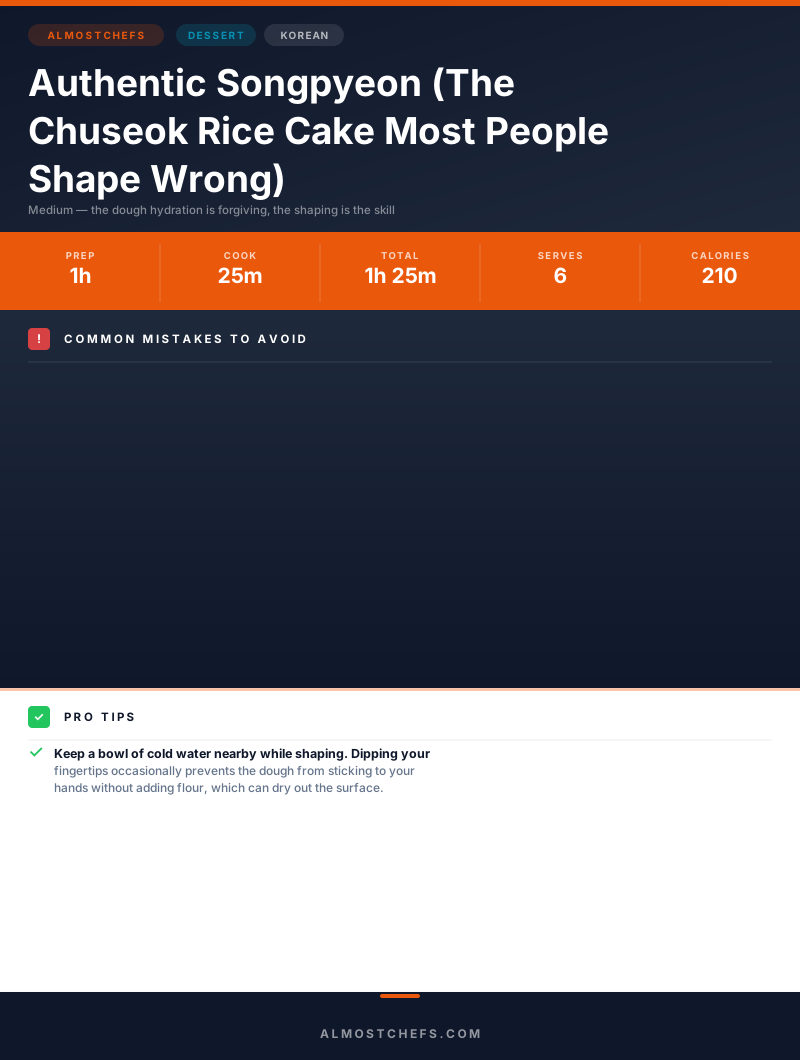
Before we start, read this. These are the 4 reasons your authentic songpyeon (the chuseok rice cake most people shape wrong) will fail:
- 1
Using the wrong rice flour: Songpyeon requires non-glutinous rice flour (멥쌀가루), not sweet rice flour (찹쌀가루). Sweet rice flour produces a chewy, sticky mochi-like texture. Non-glutinous flour produces the firm-yet-tender bite that defines songpyeon. They look identical in the bag. Read the label. This is the single most common failure mode for Korean-American home cooks who grab the wrong bag.
- 2
Adding cold water to the dough: The dough must be made with boiling water, not room temperature. Hot water partially gelatinizes the starch granules immediately, which creates the pliable, smooth dough you can shape without cracking. Cold water leaves the starch raw and brittle. You will feel the difference the moment you try to pinch the edges together.
- 3
Overfilling the dough ball: Each dough ball should be roughly the size of a large grape. The filling should occupy no more than one-third of the interior volume. Overfilled songpyeon split at the seam during steaming because steam pressure builds inside a sealed pocket. The correct amount of filling looks insufficient before you seal it. Trust the ratio.
- 4
Skipping the cold water rinse after steaming: Immediately transferring hot songpyeon to cold water does two things: it stops carryover cooking instantly, and it creates the characteristic glossy sheen on the surface. Songpyeon left to cool in open air turn dull and develop a dry, papery skin within minutes. The rinse is not optional.
🛠️ Core Equipment
- Steamer basket with tight-fitting lidSongpyeon needs indirect steam — direct contact with boiling water makes the exterior gummy. A tiered bamboo or metal steamer keeps the cakes elevated above the water. Line it with pine needles or lightly oiled parchment so nothing sticks.
- Digital kitchen scaleRice flour absorbs water at a precise ratio. Volume measurements for rice flour are notoriously inconsistent because the flour compacts differently every time you scoop it. Weight is the only reliable way to hit the right dough hydration on your first attempt.
- Large mixing bowlThe dough is made by pouring boiling water into the flour and stirring immediately. You need a bowl large enough to work in quickly without splashing. The mixing and initial kneading all happen in the bowl while the dough is still hot enough to be workable.
- Clean kitchen towel (damp)Keeps the shaped but uncooked songpyeon from drying out while you work. Cover the finished pieces as you go. Uncovered rice cake dough forms a dry skin within 5 minutes at room temperature, which causes cracks when you stack pieces in the steamer.
Authentic Songpyeon (The Chuseok Rice Cake Most People Shape Wrong)
🛒 Ingredients
- ✦300g non-glutinous rice flour (멥쌀가루), plus more for dusting
- ✦1/2 teaspoon fine sea salt
- ✦130–145ml boiling water (added gradually)
- ✦1 teaspoon sesame oil (for finished cakes)
- ✦Fresh or dried pine needles, rinsed (optional, for steaming)
- ✦**For the sesame-honey filling:**
- ✦80g toasted sesame seeds
- ✦2 tablespoons honey
- ✦1/4 teaspoon fine sea salt
- ✦**For the sweet red bean filling:**
- ✦150g canned sweet red bean paste (or homemade pat)
- ✦**For natural coloring (optional):**
- ✦1 teaspoon dried mugwort powder (for green dough)
- ✦1/2 teaspoon omija powder or beet powder (for pink/red dough)
- ✦1/2 teaspoon gardenia fruit powder or turmeric (for yellow dough)
👨🍳 Instructions
01Step 1
Prepare the fillings. For sesame-honey: lightly crush the toasted sesame seeds with a mortar and pestle until about half are broken. Mix with honey and salt until it holds together when pressed. For red bean: divide the paste into 1-teaspoon portions and roll into small balls. Set both fillings aside.
02Step 2
Whisk the rice flour and salt together in a large mixing bowl. If making colored doughs, divide the flour into portions first and mix the coloring powder into each portion before adding water.
03Step 3
Bring water to a full boil. Pour approximately 120ml over the flour in a thin stream while stirring rapidly with a wooden spoon or silicone spatula. Mix until shaggy, then knead inside the bowl for 2–3 minutes.
04Step 4
Test the dough: roll a small piece into a ball and press it flat. The edges should not crack. If they crack, add 1 teaspoon boiling water and knead again. Cover the dough with a damp kitchen towel while you work.
05Step 5
Pinch off a piece of dough about the size of a large cherry tomato (roughly 18–20g). Roll it into a smooth ball between your palms, then press your thumb into the center to create a deep depression, forming a small cup.
06Step 6
Place 1 teaspoon of filling into the center of the cup. Do not overfill. Pinch the edges together firmly to seal, working around the perimeter two or three times to ensure no gaps. Shape into a smooth half-moon or oval by pressing gently with your palms.
07Step 7
Place sealed songpyeon on a tray lined with a damp towel. Cover finished pieces as you work. Repeat until all dough and filling are used.
08Step 8
Line the steamer basket with rinsed pine needles in a single layer, or use lightly oiled parchment. Arrange the songpyeon in a single layer with small gaps between each cake.
09Step 9
Steam over vigorously boiling water for 20–25 minutes with the lid on. The songpyeon will become slightly translucent and firm.
10Step 10
Immediately transfer the hot songpyeon into a large bowl of cold water. Let them sit for 30 seconds, then drain.
11Step 11
While still damp, toss the songpyeon gently with 1 teaspoon sesame oil to prevent sticking and add a mild nutty aroma. Serve at room temperature.
Nutrition Per Serving
Estimates based on standard preparation. Adjustments alter macros.
🔄 Substitutions
Instead of Pine needles...
Use Lightly oiled parchment or fresh perilla leaves
Parchment prevents sticking but contributes no flavor. Fresh perilla leaves (깻잎) impart a mild herbal note that complements the sesame filling. Both are widely used in modern Korean home kitchens.
Instead of Sesame-honey filling...
Use Sweet chestnut paste (밤고물)
Boil fresh chestnuts, peel, mash, and sweeten with sugar and a pinch of salt. Drier texture than red bean paste — slightly easier to shape into balls for filling.
Instead of Non-glutinous rice flour...
Use No direct substitute — this is a hard requirement
Glutinous (sweet) rice flour produces a completely different texture. If you can only find sweet rice flour, you are making a different dish. Order non-glutinous flour online if your local store only carries one type.
Instead of Natural coloring powders...
Use Spinach powder (green), beet powder (pink), turmeric (yellow)
Widely available in health food stores. Use the same amounts — 1/2 to 1 teaspoon per 100g flour. Turmeric adds a very faint earthy flavor; the others are neutral.
🧊 Storage & Reheating
In the Fridge
Store in an airtight container, separated by layers of parchment, for up to 2 days. Texture firms considerably when cold — always re-steam or microwave before eating.
In the Freezer
Arrange in a single layer on a parchment-lined tray and freeze until solid, then transfer to a freezer bag. Keeps for up to 1 month. Steam directly from frozen for 8–10 minutes.
Reheating Rules
Steam over boiling water for 3–5 minutes. Alternatively, microwave individual pieces covered with a damp paper towel for 20–30 seconds. Do not reheat in a dry pan — the exterior scorches before the interior warms through.
❓ Frequently Asked Questions
Why is my songpyeon dough cracking when I try to shape it?
Two causes: either the water wasn't hot enough when you added it (boiling water is required to partially gelatinize the starch), or the dough has dried out during shaping. For the first problem, remake the dough with truly boiling water. For the second, knead in a few drops of boiling water until the dough is pliable again.
Can I make songpyeon without pine needles?
Yes. Pine needles are traditional and fragrant but not functionally essential. Lightly oiled parchment paper is the standard substitute and works reliably. The flavor will be slightly less aromatic but the texture and shape will be identical.
Why did my songpyeon split open during steaming?
The seam was not fully closed. Steam pressure builds inside the pocket and escapes through any weak point in the seal. After shaping, run your finger around the entire seam twice and pinch any areas that feel thin or loose before steaming.
My songpyeon turned gummy and sticky after cooling — what went wrong?
This usually means glutinous rice flour was used instead of non-glutinous. The two flours produce fundamentally different textures. Non-glutinous rice flour creates a firm, tender cake; glutinous flour creates a chewy, sticky mochi-like result.
Is the cold water rinse after steaming really necessary?
Yes. It serves two purposes: stopping carryover cooking immediately so the cakes don't become overdone, and creating the glossy exterior surface. Songpyeon cooled in open air turn matte and develop a dry skin within minutes of coming out of the steamer.
What is the significance of songpyeon at Chuseok?
Songpyeon are made during Chuseok, the Korean harvest festival, as an offering to ancestors and a way to celebrate the year's harvest. The half-moon shape represents a full cycle — the belief that the new moon growing into a full moon brings good fortune. Making beautiful songpyeon is traditionally said to bring luck and, specifically, beautiful children — which is why the shaping technique is taken seriously.
The Science of
Authentic Songpyeon (The Chuseok Rice Cake Most People Shape Wrong)
We turned everything on this page into a beautiful, flour-proof PDF cheat sheet. Print it out, stick it to your fridge, and never mess up your authentic songpyeon (the chuseok rice cake most people shape wrong) again.
*We'll email you the high-res PDF instantly. No spam, just perfectly cooked meals.
AlmostChefs Editorial Team
We translate the internet's most popular cooking videos into foolproof, beginner-friendly written recipes. We analyze multiple methods, test them in our kitchen, and engineer a single "Master Recipe" that gives you the best possible result with the least possible stress.