Sogogi Ttaro Gukbap (The Seoul Beef Soup That Changed How I Think About Rice)
A traditional Korean beef soup served with rice on the side — not in it. Deeply flavored bone broth, tender sliced beef, and clean aromatics make this the definitive hangover cure and cold-weather restorative. We broke down the technique so the broth hits right every time.

“Most people have eaten gukbap — rice submerged in soup, served together. Ttaro gukbap is the opposite philosophy: the rice arrives in a separate bowl, and you dip it in on your own terms. It sounds like a small distinction. It isn't. The rice stays intact. The broth stays clear. Each spoonful is a deliberate act. This is the soup Daegu built its culinary reputation on, and there's a reason it outlasted every trend.”
Why This Recipe Works
Daegu has a food identity, and ttaro gukbap is the center of it. The city's version of gukbap — rice-and-soup — breaks from the rest of Korea by insisting that the two components arrive separately and stay that way. This is not a quirk. It is a considered position on texture, temperature control, and how flavor works in a bowl.
Broth Clarity Is Not Aesthetic — It's Technical
The visual difference between cloudy seolleongtang and the pale gold broth of ttaro gukbap corresponds to a real flavor difference. Cloudy broth is emulsified — fat and protein particles suspended throughout the liquid, producing richness and opacity. Clear broth is unemulsified — those same compounds either removed or kept in suspension only loosely, producing a cleaner, more direct flavor with a lighter body.
Neither is better in absolute terms. But ttaro gukbap requires the clear version, and achieving it demands two things: a thorough blanch-and-discard step at the beginning, and a simmer so gentle it barely disturbs the surface. Every heavy-bottomed stockpot you use for this dish is fighting against the broth turning milky. Low heat is your only weapon.
The blanching step eliminates myoglobin and blood proteins before they can integrate. Once discarded, those proteins are gone. What remains in your second pot of fresh water is collagen from the bone matrix, fat from the marrow, and flavor compounds from the meat — all of which extract slowly and cleanly over two-plus hours at low heat.
The Separate Rice Philosophy
When rice sits in hot liquid, it absorbs it. Within two minutes, short-grain rice begins swelling. Within five minutes, the outer layer of each grain starts dissolving into the broth, releasing starch, clouding the liquid, and softening the grain beyond the point of structural integrity. The soup becomes thick. The rice becomes mush. Both are worse.
Ttaro gukbap solves this by handing control to the eater. You add rice when you want it, in the amount you want, and eat it before it degrades. The broth stays clean. The rice stays textured. The interaction between them happens in your mouth, not in the bowl while it's sitting on the table.
This also means you can season your broth independently of your rice. A pinch of gochugaru into the soup, a spoonful of rice, a piece of beef — each component calibrated to your preference rather than averaged together in a single vessel.
Seasoning Sequencing Matters
Bone broth starts neutral and builds. The salt content of unseasoned beef stock is effectively zero — it tastes flat and slightly metallic until seasoning is introduced. This is why ttaro gukbap's seasoning pass, done after straining, is where the dish either succeeds or fails.
Guk-ganjang adds salt and umami without darkening the broth significantly. Doenjang adds fermented depth — used too much, it dominates; used in small amounts, it functions as an invisible backbone. White pepper adds heat that reads as warmth rather than spice. The sequence: guk-ganjang first to establish saltiness, doenjang second to add depth, white pepper last for finish.
Taste after each addition. Broth seasoning is not a formula — it's a conversation between what's in the pot and what it needs.
The Beef Prep
Brisket or shank sliced against the grain, thin and even. This is the difference between beef that's tender and beef that requires chewing. Muscle fibers run lengthwise through a piece of meat; cutting across them shortens each fiber's length, making the chew shorter and easier. Cut with the grain and you're eating long, rope-like fibers that resist every bite.
A sharp slicing knife and a well-rested piece of meat make this trivial. The resting step matters — interior temperature equalizes, juices redistribute, and the protein structure relaxes, making clean cuts dramatically easier. Slice a brisket fresh from the pot and it fights you. Slice it after ten minutes and it cooperates.
The result is a bowl of focused, honest food: broth that took hours to build, beef that rewards the patience, and rice kept separate so neither one compromises the other.
Where Beginners Mess This Up
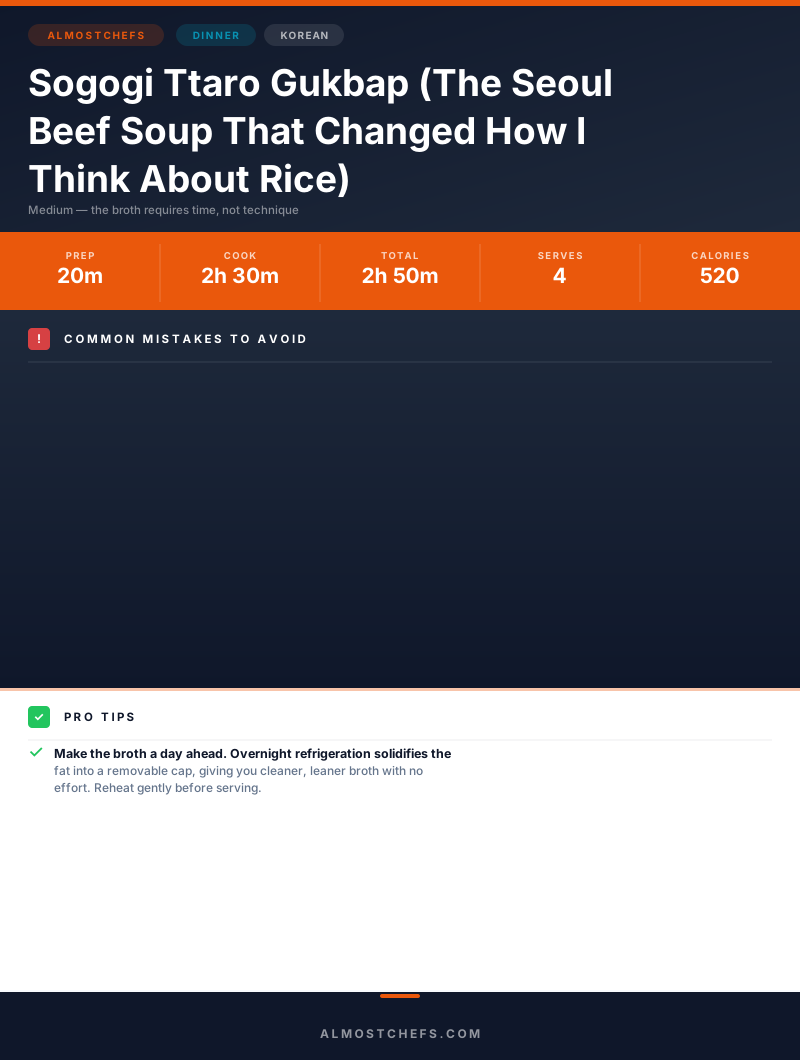
Before we start, read this. These are the 4 reasons your sogogi ttaro gukbap (the seoul beef soup that changed how i think about rice) will fail:
- 1
Skipping the blanching step: Raw beef bones dropped directly into your stockpot will leach gray scum, blood proteins, and off-flavors into the broth for the entire cook. Blanch the bones in boiling water for 5-7 minutes, discard that water entirely, then rinse the bones under cold water before building your actual stock. This one step is the difference between murky and crystalline broth.
- 2
Boiling the broth aggressively: A rolling boil emulsifies fat into the liquid and creates a cloudy, heavy soup. Ttaro gukbap broth should be pale gold and clean. After the initial blanch, simmer at the gentlest possible heat — barely a bubble breaking the surface — for the full cooking time. Patience here is not optional.
- 3
Underseasoning at the end: Beef bone broth has deep base flavor but very low initial salt. The final seasoning pass — doenjang, soup soy sauce (guk-ganjang), and salt — is where the dish either comes alive or dies flat. Season incrementally, taste constantly, and don't stop until the broth has backbone.
- 4
Serving the rice in the soup: This defeats the entire point of ttaro gukbap. The separate rice bowl allows the eater to control texture and ratio. Rice submerged in hot broth for more than two minutes becomes bloated and starchy, muddying both components. Keep them apart until the moment of eating.
🛠️ Core Equipment
- Large stockpot (at least 6 quarts)You need volume for the blanching water and the long simmer. A pot that's too small forces the bones to crowd, which slows collagen extraction and produces weaker broth.
- Fine-mesh sieve or cheeseclothFor straining the finished broth. Even a gentle simmer leaves behind small bone fragments and fat globules. A clean strain produces the clear, refined soup this dish demands.
- Individual stone bowls or deep ceramic bowlsTtaro gukbap is traditionally served in bowls that retain heat. Stone bowls keep the broth hot through the entire meal. If you don't have [dolsot stone bowls](/kitchen-gear/review/dolsot-stone-bowl), thick ceramic works. Thin bowls cool too fast.
- Sharp slicing knifeThe cooked beef brisket or shank needs to be sliced thin and even across the grain. Thick slices are chewy. Uneven slices look amateur. A sharp knife, a rested piece of meat, and a steady hand produce clean results.
Sogogi Ttaro Gukbap (The Seoul Beef Soup That Changed How I Think About Rice)
🛒 Ingredients
- ✦2.2 pounds beef brisket or beef shank, whole
- ✦1.5 pounds beef soup bones (knuckle or femur)
- ✦10 cups cold water, plus more for blanching
- ✦1 medium yellow onion, halved
- ✦6 garlic cloves, smashed
- ✦1 inch fresh ginger, sliced
- ✦3 green onion stalks, whole
- ✦1 tablespoon soup soy sauce (guk-ganjang)
- ✦1 teaspoon doenjang (Korean fermented soybean paste)
- ✦Sea salt to taste
- ✦White pepper to taste
- ✦4 cups cooked short-grain white rice (served separately)
- ✦3 green onions, thinly sliced (garnish)
- ✦1 tablespoon toasted sesame seeds (garnish)
- ✦Gochugaru (Korean red pepper flakes) for serving
- ✦Extra guk-ganjang for serving
👨🍳 Instructions
01Step 1
Place the beef bones in a large pot and cover with cold water. Bring to a boil and cook for 5-7 minutes. The water will turn gray and foamy.
02Step 2
Drain the blanching water completely. Rinse each bone under cold running water, scrubbing off any gray residue. Rinse the pot as well.
03Step 3
Return the cleaned bones and the whole piece of brisket or shank to the pot. Add 10 cups of cold water, the halved onion, smashed garlic, ginger slices, and whole green onion stalks.
04Step 4
Bring to a gentle simmer over medium heat. Once simmering, reduce heat to low and cook uncovered for 2 to 2.5 hours. The surface should barely move — not boil.
05Step 5
After 2 hours, check the brisket or shank with a chopstick. It should pierce easily with no resistance. Remove the meat and set aside to rest.
06Step 6
Continue simmering the bones for another 30 minutes if the broth lacks depth, or strain now if the flavor is where you want it.
07Step 7
Strain the broth through a fine-mesh sieve into a clean pot. Discard the solids. Skim any visible fat from the surface.
08Step 8
Season the strained broth with guk-ganjang, doenjang, salt, and white pepper. Taste constantly. The broth should taste clean, deeply savory, and faintly sweet from the onion.
09Step 9
Slice the rested beef thinly against the grain. Arrange the slices in individual serving bowls.
10Step 10
Ladle the hot seasoned broth over the beef slices. Garnish with sliced green onions and sesame seeds.
11Step 11
Serve each soup bowl alongside a separate bowl of freshly cooked short-grain rice. Place gochugaru and extra guk-ganjang on the table for individual seasoning.
Nutrition Per Serving
Estimates based on standard preparation. Adjustments alter macros.
🔄 Substitutions
Instead of Beef brisket...
Use Beef shank or beef cheek
Shank produces a slightly gelatinous broth from higher collagen content. Cheek is richer but takes 30 extra minutes to become tender. Both are excellent.
Instead of Guk-ganjang (soup soy sauce)...
Use Regular soy sauce, reduced quantity
Use 60% of the amount called for. Regular soy sauce is more intense and will darken the broth. Adjust salt separately to compensate.
Instead of Doenjang...
Use Japanese white miso
Milder fermented flavor. Use the same quantity. The broth will be slightly sweeter and less pungent but still adds necessary depth.
Instead of Short-grain white rice...
Use Medium-grain rice or nurungji (scorched rice)
Nurungji — the crispy layer from the bottom of the rice pot — is a traditional accompaniment. It adds texture and a nutty flavor when dipped into the broth.
🧊 Storage & Reheating
In the Fridge
Store broth and sliced beef separately in airtight containers for up to 4 days. The broth will gel when cold — this is normal and indicates good collagen extraction.
In the Freezer
Freeze broth in portioned containers for up to 3 months. The sliced beef can be frozen with some broth to prevent drying. Thaw overnight in the fridge.
Reheating Rules
Reheat broth over medium-low heat until hot. Warm the beef slices directly in the broth for 1-2 minutes. Do not microwave — it toughens the beef.
❓ Frequently Asked Questions
What does 'ttaro' mean and why does it matter?
Ttaro (따로) means 'separate' in Korean. Ttaro gukbap refers specifically to the practice of serving the rice and soup in separate bowls rather than combining them. It originated in Daegu and represents a distinct culinary philosophy: the components are better experienced independently, with the eater controlling each interaction.
Why is my broth cloudy instead of clear?
Either the blanching step was incomplete, or the broth boiled too vigorously during the simmer. Cloudy broth is caused by emulsified fat and protein particles — both products of heat and agitation. For next time: blanch thoroughly, rinse the bones completely, and keep the simmer at the lowest possible heat. A gentle shiver on the surface, not a rolling boil.
Can I use a pressure cooker to speed up the broth?
You can, but the result will be milky and opaque — closer to seolleongtang than ttaro gukbap. The clear broth this dish requires comes from a long, slow, gentle simmer. Pressure cooking achieves flavor but sacrifices clarity. For this specific recipe, the low-and-slow method is not optional.
Is this the same as seolleongtang?
Related but distinct. Seolleongtang is boiled aggressively for hours until the broth turns milky white from emulsified collagen and fat. Ttaro gukbap broth is simmered gently to stay clear and golden. The flavor profiles are different — seolleongtang is rich and creamy, ttaro gukbap is clean and direct.
How do I eat ttaro gukbap correctly?
There is no single correct method, but the traditional approach is to season your broth with gochugaru and guk-ganjang to your taste, then add a spoonful of rice to the soup bowl, eat a few bites, add more rice, and continue. You control the ratio and the timing. Never dump the entire bowl of rice in at once — the rice will bloat and the broth will cloud.
What cut of beef works best for the soup?
Brisket is the classic choice — it has enough fat to stay moist during the long simmer and slices cleanly across the grain. Shank produces more gelatin and a silkier broth mouthfeel. Avoid lean cuts like sirloin or round, which become dry and fibrous after two-plus hours of cooking.
The Science of
Sogogi Ttaro Gukbap (The Seoul Beef Soup That Changed How I Think About Rice)
We turned everything on this page into a beautiful, flour-proof PDF cheat sheet. Print it out, stick it to your fridge, and never mess up your sogogi ttaro gukbap (the seoul beef soup that changed how i think about rice) again.
*We'll email you the high-res PDF instantly. No spam, just perfectly cooked meals.
AlmostChefs Editorial Team
We translate the internet's most popular cooking videos into foolproof, beginner-friendly written recipes. We analyze multiple methods, test them in our kitchen, and engineer a single "Master Recipe" that gives you the best possible result with the least possible stress.