Classic Sogogi Muguk (The Korean Beef Radish Soup You'll Make Every Week)
A deeply comforting Korean beef and radish soup built on a clear, rich broth with thinly sliced brisket and melt-tender daikon. One of Korea's most essential everyday soups — gut-nourishing, clean-tasting, and done in under an hour. We broke down the technique so the broth comes out crystal clear every time.

“Sogogi Muguk is what Korean home cooks make when everything else feels like too much effort. It's four main ingredients, one pot, and about fifty minutes — and if you do it right, the broth tastes like it simmered all day. Most people get a murky, flat result because they skip the blanching step and rush the radish. Fix those two things and you have a soup that earns a permanent spot in your weekly rotation.”
Why This Recipe Works
Sogogi Muguk is the soup Korean grandmothers make without measuring anything, and the soup Korean home cooks fail at when they try to replicate it. The recipe has four ingredients. The technique has two critical steps. And somewhere between "it seems simple" and "why is my broth gray and flat," most people lose the plot entirely.
The Blanch Is Not Optional
Beef contains blood proteins — myoglobin and albumin — that coagulate the moment they hit hot water. Left in the pot, they turn gray, foam aggressively, and permanently cloud the broth. There is no amount of simmering that reverses this. The two-minute blanch in a separate pot of boiling water is the only mechanism that removes these proteins before they can do damage.
The rinse matters too. Rinsing the blanched beef under cold water removes surface coagulate and drops the meat temperature quickly, preventing carry-over cooking from the blanch from toughening the exterior before the soup even starts.
Build Flavor Before You Add Water
The step that separates competent muguk from transcendent muguk is a thirty-second one: sautéing the blanched beef and garlic in sesame oil before adding water. This creates a thin layer of Maillard browning on the beef surface and blooms the garlic's aromatic compounds into the fat, which then distributes through the entire broth. Beef boiled from raw in plain water tastes clean but thin. Beef that has been briefly sautéed before simmering tastes like someone put actual effort in.
The Radish Timing Window
Radish has a chemistry problem: the same compounds that give it its peppery bite (glucosinolates) will dominate the broth if the radish is added too early and simmers too long. But cook it just long enough — until completely translucent, approximately 25-30 minutes at a gentle simmer — and those compounds convert into natural sugars that actually sweeten the broth. The window between sharp and sweet is not narrow, but you have to be in it. Undercooked radish makes the soup taste like the back of a salad bar. Properly cooked radish makes people go back for a second bowl.
Korean radish (mu) is the variety to seek out. It's rounder and denser than Japanese daikon, with lower water content and a sweeter raw flavor profile. Most Korean grocery stores carry it year-round. If you substitute daikon, reduce your added water slightly — daikon releases more liquid as it cooks.
Skimming Is Active Work
In the first four minutes after the broth reaches a boil, foam rises continuously to the surface. This is not decorative — it's bitter, protein-rich matter that will ruin the clarity and palatability of the broth if you let it dissolve back in. Have a fine-mesh skimmer ready before you turn on the heat. Skim every thirty seconds during this window. Once the surface is clear and the foam stops forming, drop the heat to a gentle simmer and leave it alone.
A gentle simmer — lazy bubbles breaking the surface, not a rolling boil — keeps the broth clear through the remaining cook time. Aggressive boiling emulsifies the fat into the water, creating a milky, opaque broth. That broth isn't ruined, but it's a different soup.
Why This Soup Matters
Muguk is not a showpiece. It's not served at restaurants that want to impress you. It's the soup that appears on the Korean table because it needed to be there — because it's Tuesday, because someone isn't feeling well, because rice alone isn't enough. That lack of pretension is exactly why getting it right matters. The measure of this soup isn't whether it's impressive. It's whether you make it again next week without thinking twice.
Get the blanch right. Sauté before you boil. Skim like you mean it. Everything else is patience.
Where Beginners Mess This Up
Before we start, read this. These are the 4 reasons your classic sogogi muguk (the korean beef radish soup you'll make every week) will fail:
- 1
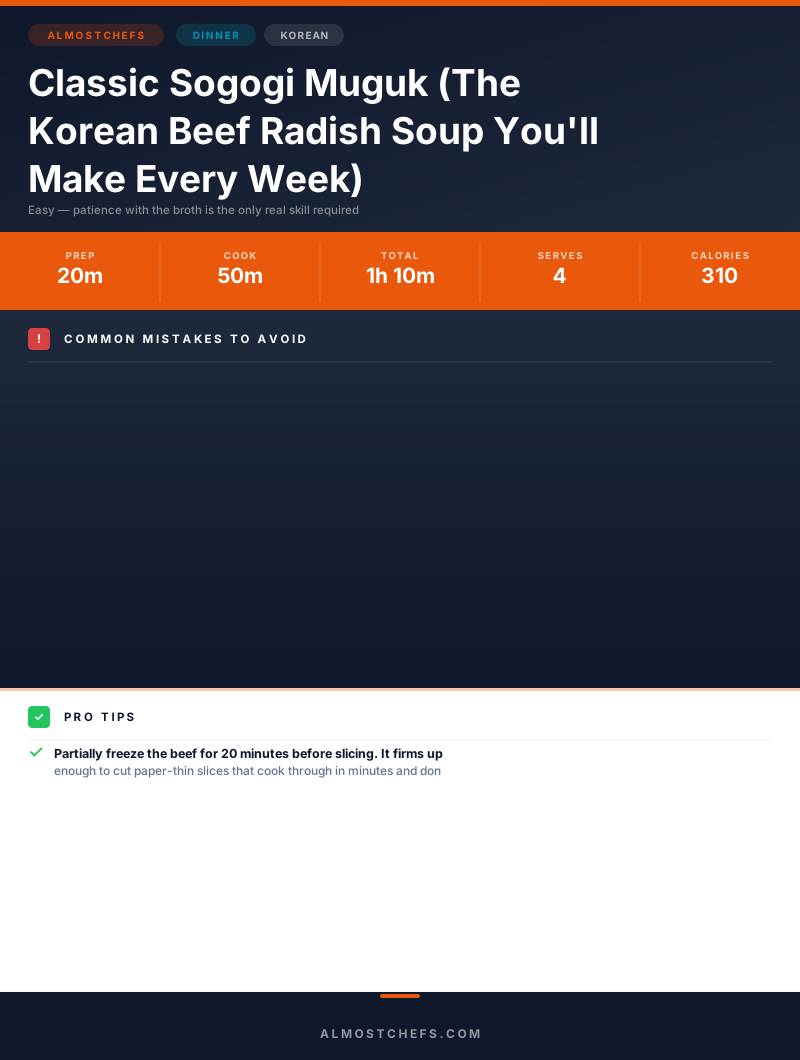
Skipping the beef blanch: Dropping raw beef directly into your soup water releases blood proteins and myoglobin into the broth, turning it gray and murky before the first boil. A two-minute blanch in separate boiling water, followed by a rinse under cold water, removes these impurities entirely. The difference between a cloudy broth and a jewel-clear one starts here.
- 2
Adding radish too early: Radish needs time to soften but not dissolve. Add it too early and it disintegrates into the broth, creating a starchy, slightly bitter base. Add it after the beef has simmered for 20 minutes and the radish will turn translucent and tender — sweet rather than sharp — by the time the soup is done.
- 3
Using dark soy sauce instead of guk ganjang: Regular soy sauce or dark soy sauce will stain the broth brown and introduce a heavy sweetness that flattens the clean flavor profile. Guk ganjang (soup soy sauce) is saltier, lighter in color, and fermented differently — it seasons without muddying. If you can't source it, use a small amount of regular soy sauce combined with fish sauce and pull back on both.
- 4
Overcrowding the pot at high heat: A rolling boil during the main simmer agitates the broth too aggressively, breaking down the beef fibers and creating a foamy, turbid result. Once the soup reaches a boil and you've skimmed the foam, drop it to a gentle simmer — small lazy bubbles only. The broth clears itself during a low simmer in a way it never can at high heat.
🛠️ Core Equipment
- Heavy-bottomed stockpot or Korean ttukbaegiEven heat distribution is essential for a long, gentle simmer without scorching the bottom. A [Dutch oven](/kitchen-gear/review/dutch-oven) or thick stainless steel pot works excellently. Thin pots create hot spots that make the broth murky and slightly bitter at the base.
- Fine-mesh skimmerFor removing the gray foam that rises during the first few minutes of simmering. This foam is denatured protein from the beef — it tastes bitter and makes the broth look unappetizing. A [skimmer](/kitchen-gear/review/fine-mesh-skimmer) with a wide bowl lets you remove it quickly before it dissolves back into the liquid.
- Sharp chef's knifeSlicing beef thinly against the grain while partially frozen, and cutting radish into uniform 1-inch cubes, requires a knife that can handle both firm and soft textures cleanly. Uneven radish chunks cook at different rates — you end up with some mushy and some undercooked in the same bowl.
- LadleFor serving into individual bowls and for skimming. Deep-bowled ladles let you reach the bottom of the pot where the beef collects without disturbing the radish on top.
Classic Sogogi Muguk (The Korean Beef Radish Soup You'll Make Every Week)
🛒 Ingredients
- ✦12 oz beef brisket or flank steak, thinly sliced against the grain
- ✦14 oz Korean radish (mu) or daikon, peeled and cut into 1-inch cubes
- ✦6 cups water
- ✦2 tablespoons guk ganjang (Korean soup soy sauce)
- ✦1 tablespoon sesame oil
- ✦4 cloves garlic, minced
- ✦3 green onions, cut into 1-inch pieces
- ✦1 teaspoon fine sea salt, plus more to taste
- ✦1/2 teaspoon freshly ground black pepper
- ✦1 teaspoon toasted sesame seeds, for garnish (optional)
👨🍳 Instructions
01Step 1
Place the beef slices in a small saucepan with enough cold water to cover. Bring to a boil over high heat and cook for 2 minutes. Drain, rinse the beef under cold running water, and set aside.
02Step 2
In a large heavy-bottomed pot, heat the sesame oil over medium heat. Add the blanched beef and minced garlic. Stir-fry for 3-4 minutes until the beef loses its raw color and the garlic is fragrant but not browned.
03Step 3
Pour in 6 cups of water. Bring to a rolling boil over high heat. As foam rises to the surface, skim it immediately and continuously for the first 3-4 minutes using a fine-mesh skimmer.
04Step 4
Reduce heat to medium-low. Add the radish cubes and guk ganjang. Stir gently to combine.
05Step 5
Simmer uncovered for 25-30 minutes until the radish is completely tender and slightly translucent. It should yield easily when pressed with a spoon but still hold its shape.
06Step 6
Add the green onions. Season with salt and black pepper to taste. Simmer for a final 2 minutes.
07Step 7
Ladle into bowls. Garnish with sesame seeds if using. Serve immediately with steamed white rice and banchan.
Nutrition Per Serving
Estimates based on standard preparation. Adjustments alter macros.
🔄 Substitutions
Instead of Beef brisket...
Use Beef chuck or sirloin
Chuck requires an extra 10-15 minutes of simmering to fully tenderize. Sirloin cooks faster but has less collagen, producing a thinner broth. Brisket is optimal for flavor and texture.
Instead of Guk ganjang (soup soy sauce)...
Use 1.5 tablespoons regular soy sauce + 1 teaspoon fish sauce
Not a perfect swap — the broth will be slightly darker and have a different fermented character — but functionally close. Reduce salt accordingly as regular soy sauce is saltier per tablespoon.
Instead of Korean radish (mu)...
Use Japanese daikon
Valid substitute with slightly more peppery bite and higher water content. Reduce added water by half a cup. The final texture is similar; the flavor is marginally sharper.
Instead of Sesame oil...
Use Perilla oil
Perilla oil (deulgirum) is used in some regional Korean versions and gives a slightly grassy, nutty note that works beautifully with the beef. Use the same quantity.
🧊 Storage & Reheating
In the Fridge
Store in an airtight container for up to 4 days. The flavor improves significantly by day two.
In the Freezer
Freeze the broth and beef separately from the radish for up to 2 months. Radish texture deteriorates after freezing — it becomes spongy. Add freshly cooked radish when reheating from frozen.
Reheating Rules
Reheat on the stovetop over medium-low heat until just steaming — do not boil or the radish will overcook and fall apart. Add a splash of water if the broth has thickened overnight.
❓ Frequently Asked Questions
Why is my broth murky instead of clear?
Almost certainly because you skipped the beef blanch or didn't skim the foam in the first few minutes of simmering. The gray foam is denatured protein — once it dissolves back into the liquid, there's no recovering a clear broth. Blanch the beef in separate water, rinse it, then build the soup. Skim aggressively in the first four minutes of the main simmer.
Can I use beef broth instead of water?
You can, but it changes the character of the soup significantly. Traditional muguk is built from scratch so the broth is clean and delicate. Store-bought beef broth tends to be heavily seasoned and can make the final soup taste salty and flat. If you use it, reduce or eliminate the guk ganjang and salt.
What cut of beef is best for sogogi muguk?
Brisket is the traditional and optimal choice — it has enough collagen to enrich the broth without falling apart, and its fat content keeps the meat tender after 30 minutes of simmering. Flank steak and chuck are acceptable substitutes. Avoid lean cuts like tenderloin; they turn dry and stringy.
Do I need to peel the radish?
Yes. Korean radish skin is tougher than the flesh and contributes a slightly bitter, astringent note to the broth that you don't want. Peel completely with a vegetable peeler, then cut into uniform cubes so they cook evenly.
Why does my radish taste bitter?
Either it was undercooked, or you used the wrong variety. Korean mu is sweeter than daikon — if you're using a large, fully mature daikon, it can have a sharper flavor. Cook radish until completely translucent and tender (no resistance at the center) to convert its bitter compounds into sweetness. A 25-30 minute simmer on medium-low is non-negotiable.
Is sogogi muguk gut-friendly?
Yes — it's one of the gentler Korean soups for digestion. The clear broth is easy on the stomach, the beef provides collagen that supports gut lining integrity, and radish contains digestive enzymes (amylase and protease) that help break down starch and protein. Korean households traditionally serve muguk during illness and recovery for exactly this reason.
The Science of
Classic Sogogi Muguk (The Korean Beef Radish Soup You'll Make Every Week)
We turned everything on this page into a beautiful, flour-proof PDF cheat sheet. Print it out, stick it to your fridge, and never mess up your classic sogogi muguk (the korean beef radish soup you'll make every week) again.
*We'll email you the high-res PDF instantly. No spam, just perfectly cooked meals.
AlmostChefs Editorial Team
We translate the internet's most popular cooking videos into foolproof, beginner-friendly written recipes. We analyze multiple methods, test them in our kitchen, and engineer a single "Master Recipe" that gives you the best possible result with the least possible stress.