Sogogi Jangjorim (The Braised Beef Banchan That Gets Better Every Day)
Soy-braised beef simmered low and slow until it shreds into savory, glossy strands — the quintessential Korean banchan that improves overnight and lasts all week. We break down the exact technique for getting the brine-to-beef ratio right and the texture you're actually aiming for.

“Jangjorim is the banchan that professional Korean cooks make in bulk on Sunday so the rest of the week's meals solve themselves. Soy-braised beef that shreds into silky, savory strands, gets packed into a jar, and improves every single day it sits in the fridge. The technique is almost embarrassingly simple — which makes it all the more frustrating when people pull it out too early, cook it too fast, or get the brine ratio wrong and end up with either salt lick or flavorless boiled beef.”
Why This Recipe Works
Jangjorim is not a recipe people make on a Tuesday night. It's a Sunday discipline — the banchan that Korean home cooks produce in bulk because they understand that the best food is often the food you thought about three days in advance. A full jar of jangjorim in the fridge means every bowl of rice this week solves itself. That's the real value proposition: front-load the work, coast through the rest of the week.
Why Brisket, Not Sirloin
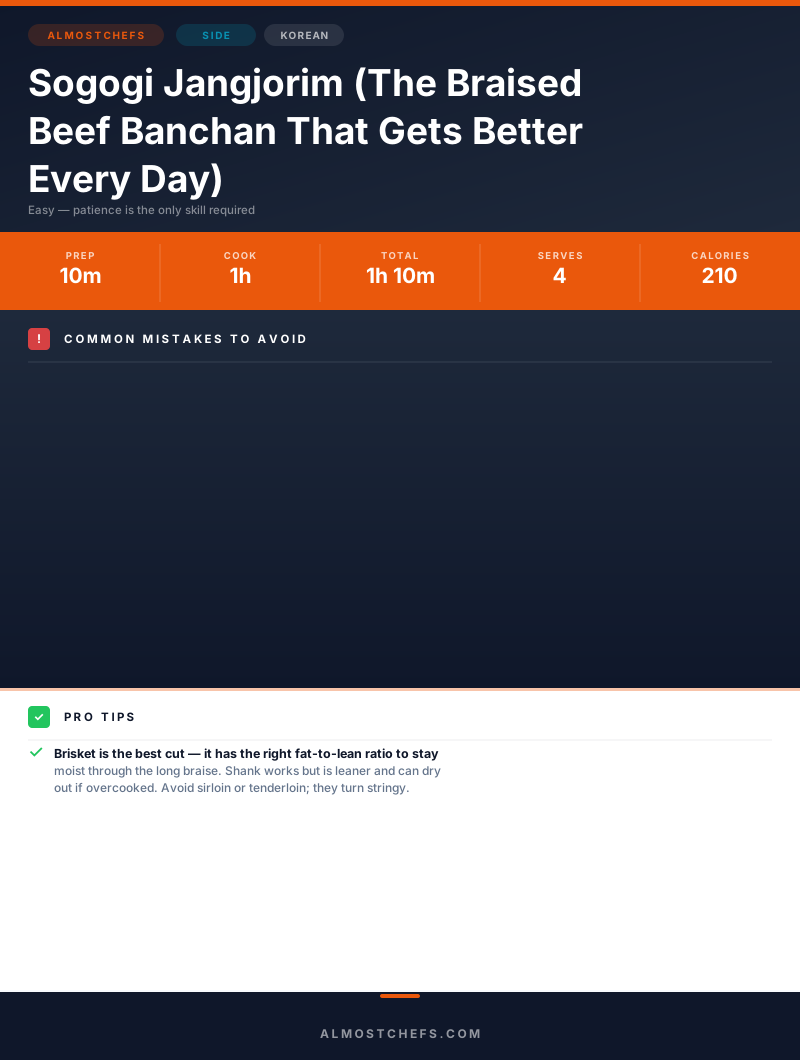
The cut is not a preference. It's a structural decision. Brisket is composed primarily of two overlapping muscles — the flat and the point — held together by significant connective tissue and intramuscular fat. During a long, low braise, that connective tissue converts to gelatin, lubricating the muscle fibers and keeping the beef moist even as the water gradually evaporates and the sauce concentrates. Pull brisket at 45 minutes and it shreds cleanly, in long textured strands that hold sauce instead of shedding it.
Try this with sirloin or tenderloin and you get shoelaces. Those cuts have almost no connective tissue, which means they dry out and tighten before the collagen conversion ever begins. Lean beef braised for an hour is just tough beef with soy sauce on it. The fat in brisket is not incidental — it's the mechanism.
The Blanching Logic
Three minutes in boiling water, drained and rinsed. This step makes experienced Korean cooks wince when they see it skipped in Western recipe adaptations. The blanching removes myoglobin, blood proteins, and surface impurities that would otherwise coagulate into grey foam during the main braise. That foam isn't dangerous — but it clouds the sauce, dulls the color, and introduces a faint metallic undertone that undermines the clean soy-sugar balance you're building toward.
Blanched and rinsed beef produces a braising liquid that reduces to a clear, mahogany gloss. Unblanched beef produces a murky, brownish sauce that tastes fine but looks like something went wrong. In a dish where the visual payoff of that lacquered finish is half the point, this matters.
The Reduction Is the Dish
Most of the cooking time in jangjorim is passive. You set the pot to a low simmer and walk away. The active skill — the part where you can actually ruin it — is the final reduction. Once the beef is shredded and returned to the braising liquid, you increase the heat and cook uncovered until the liquid tightens into a syrupy glaze that coats every strand.
This is where people stop too early. They see liquid in the pot, the beef looks cooked, and they call it done. But jangjorim without reduced sauce is just boiled beef in soy water. The reduction concentrates the flavor by a factor of three and creates the coating that makes each strand glossy, savory, and structurally interesting rather than limp.
A heavy-bottomed saucepan or small Dutch oven matters here because the reduction phase is when scorching becomes a real risk. Concentrated soy sauce burns fast in a thin pot. Heavy stainless or enameled cast iron holds heat evenly and gives you the 15-minute window you need to reduce without watching every second.
The Storage Advantage
Jangjorim is one of the few dishes where the refrigerator is a cooking vessel. The soy brine continues to penetrate the shredded beef over 48 hours, and the gelatin from the braising liquid (released from the connective tissue) thickens further as it chills, creating a coating that clings even more aggressively when you pull strands out cold. The flavor on day three is meaningfully better than day one — not just preserved, but actively improved.
This is the argument for making a double batch. The marginal effort of doubling the recipe is near zero. The return is a week of effortless meals. Store it in a wide-mouth glass jar so you can reach in with chopsticks without dismantling the whole batch. Serve it cold, directly from the fridge, on top of plain steamed rice. That's the move.
Where Beginners Mess This Up
Before we start, read this. These are the 4 reasons your sogogi jangjorim (the braised beef banchan that gets better every day) will fail:
- 1
Cooking it too fast over high heat: Jangjorim is a low-and-slow braise. High heat tightens the muscle fibers in the beef before the collagen has time to break down, leaving you with tough, chewy strands instead of the tender, pull-apart texture the dish is known for. Keep the heat at a gentle simmer — tiny bubbles at the surface, not a rolling boil.
- 2
Wrong soy-to-water ratio: Too much soy sauce and the brine becomes aggressively salty as it reduces. Too little and you get pale, underseasoned beef with no gloss. The ratio is approximately 1 part soy sauce to 4 parts water, adjusted at the end with sugar. Taste before the final reduction — not after.
- 3
Pulling it off heat before the sauce reduces: The final glossy, lacquered coating on the beef comes from reducing the braising liquid down to a syrupy consistency. If you stop too early, the beef is technically cooked but the sauce is thin and doesn't cling. Give it an extra 10-15 minutes uncovered at the end to concentrate everything.
- 4
Skipping the blanching step: Blanching the beef briefly in boiling water before the main braise removes blood, foam, and off-flavors that would otherwise cloud the sauce and make it taste muddy. It takes three minutes and changes the final flavor profile completely. Don't skip it.
🛠️ Core Equipment
- Heavy-bottomed saucepan or small Dutch ovenEven heat distribution is critical for a long, low simmer. Thin pots create hot spots that scorch the reducing soy sauce on one side while the other side barely simmers.
- Glass storage jar or airtight containerJangjorim is a make-ahead banchan designed to be stored. It keeps for up to two weeks in the fridge, and the flavor peaks around day two or three. A wide-mouth jar makes it easy to pull strands out without disturbing the whole batch.
- Fine-mesh sieve or slotted spoonFor skimming the foam during blanching and again during the early braise. Removing the foam keeps the braising liquid clear and the final sauce clean-tasting.
Sogogi Jangjorim (The Braised Beef Banchan That Gets Better Every Day)
🛒 Ingredients
- ✦1.5 pounds beef brisket or beef shank, cut into large chunks
- ✦4 cups water, plus more for blanching
- ✦1/2 cup soy sauce
- ✦2 tablespoons sugar
- ✦1 tablespoon rice wine (mirin or cheongju)
- ✦6 cloves garlic, peeled and smashed
- ✦4 dried red chilies (optional, for mild heat)
- ✦3 hard-boiled eggs, peeled (optional)
- ✦1 teaspoon sesame oil (for finishing)
- ✦1/2 teaspoon black pepper
👨🍳 Instructions
01Step 1
Place beef chunks in a pot, cover with cold water, and bring to a boil. Boil for 3 minutes, then drain and rinse the beef under cold water.
02Step 2
Return the blanched beef to the pot. Add 4 cups water, soy sauce, sugar, rice wine, garlic, black pepper, and dried chilies if using.
03Step 3
Bring to a boil over medium-high heat, then immediately reduce to a gentle simmer. Cook uncovered for 45-50 minutes, skimming any foam that rises in the first 10 minutes.
04Step 4
Remove the beef and let it cool slightly on a cutting board. Using two forks or your fingers, shred the beef along the grain into thick, rough strands.
05Step 5
If adding hard-boiled eggs, add them to the braising liquid now and let them soak while you finish the sauce.
06Step 6
Return the shredded beef to the pot with the braising liquid. Increase heat to medium and cook uncovered for 10-15 more minutes, stirring occasionally, until the sauce reduces to a thick, syrupy glaze that coats the beef.
07Step 7
Remove from heat. Drizzle sesame oil over the top and stir to coat.
08Step 8
Transfer to a glass jar or airtight container. Cool to room temperature before refrigerating. The flavor peaks at 24-48 hours.
Nutrition Per Serving
Estimates based on standard preparation. Adjustments alter macros.
🔄 Substitutions
Instead of Beef brisket...
Use Firm tofu or king oyster mushrooms
Cut tofu into thick slabs and braise exactly the same way. The tofu absorbs the soy brine aggressively — check seasoning after 20 minutes and reduce soy slightly if needed.
Instead of Soy sauce...
Use Tamari (for gluten-free)
Direct 1:1 swap. Tamari is slightly richer and less sharp than regular soy sauce. The final flavor will be marginally deeper.
Instead of Rice wine (mirin or cheongju)...
Use Dry sherry or omit entirely
The rice wine adds a subtle sweetness and helps tenderize. Dry sherry approximates this well. Omitting it produces a slightly sharper, less rounded sauce.
Instead of Dried red chilies...
Use Gochugaru (Korean red pepper flakes)
Use 1 teaspoon of gochugaru as a direct substitute. It integrates into the sauce rather than floating as whole chilies, producing a slightly redder, more uniformly spiced result.
🧊 Storage & Reheating
In the Fridge
Store in an airtight glass jar for up to 2 weeks. The soy brine acts as a preservative. Flavor peaks at 48 hours and holds strong through day 5-6.
In the Freezer
Freeze in portioned containers for up to 2 months. The texture softens slightly on thawing but the flavor is unaffected. Thaw overnight in the fridge.
Reheating Rules
Serve cold or at room temperature directly from the jar — this is traditional. If you prefer warm, heat gently in a small pan with a tablespoon of water to loosen the sauce. Do not microwave; it toughens the beef.
❓ Frequently Asked Questions
What cut of beef is best for jangjorim?
Brisket is the standard choice. It has enough intramuscular fat to stay moist through a long braise and shreds cleanly along the grain. Beef shank is a leaner alternative that produces slightly firmer strands. Avoid lean cuts like sirloin — they dry out and turn stringy before the collagen has time to break down.
Why is my jangjorim too salty?
The braising liquid reduces significantly during cooking, which concentrates the soy. If you started with too much soy relative to water, there's no fixing it after reduction — but you can dilute by adding more water and reducing again. The correct ratio is roughly 1 part soy to 4 parts water. Also remember: jangjorim is meant to be eaten in small quantities alongside plain rice, not as a standalone dish.
Can I use a slow cooker?
Yes. Blanch the beef first, then combine all ingredients in a slow cooker and cook on low for 6-8 hours. Transfer the liquid to a small saucepan and reduce it separately on the stovetop before combining with the shredded beef. Skipping the reduction step produces thin, watery sauce even from a slow cooker.
How do I know when the beef is done?
It should shred easily with two forks, pulling apart in long, clean strands without tearing unevenly. If you're fighting the beef to shred it, it needs more time. Return the chunks to the braising liquid and simmer another 15 minutes. Properly braised jangjorim beef falls apart almost on its own.
Do the eggs need to be cooked before adding?
Yes — hard-boil and peel them completely before adding to the braising liquid. They don't cook in the braise; they absorb flavor. Raw eggs added to the pot would overcook to a rubbery texture by the time the beef is done.
Can I make this ahead for the week?
This is the intended use case. Make a full batch on Sunday, refrigerate it, and you have banchan for every meal through Friday. The soy brine keeps it fresh and the flavor improves each day. It's one of the best meal-prep dishes in Korean home cooking for this exact reason.
The Science of
Sogogi Jangjorim (The Braised Beef Banchan That Gets Better Every Day)
We turned everything on this page into a beautiful, flour-proof PDF cheat sheet. Print it out, stick it to your fridge, and never mess up your sogogi jangjorim (the braised beef banchan that gets better every day) again.
*We'll email you the high-res PDF instantly. No spam, just perfectly cooked meals.
AlmostChefs Editorial Team
We translate the internet's most popular cooking videos into foolproof, beginner-friendly written recipes. We analyze multiple methods, test them in our kitchen, and engineer a single "Master Recipe" that gives you the best possible result with the least possible stress.