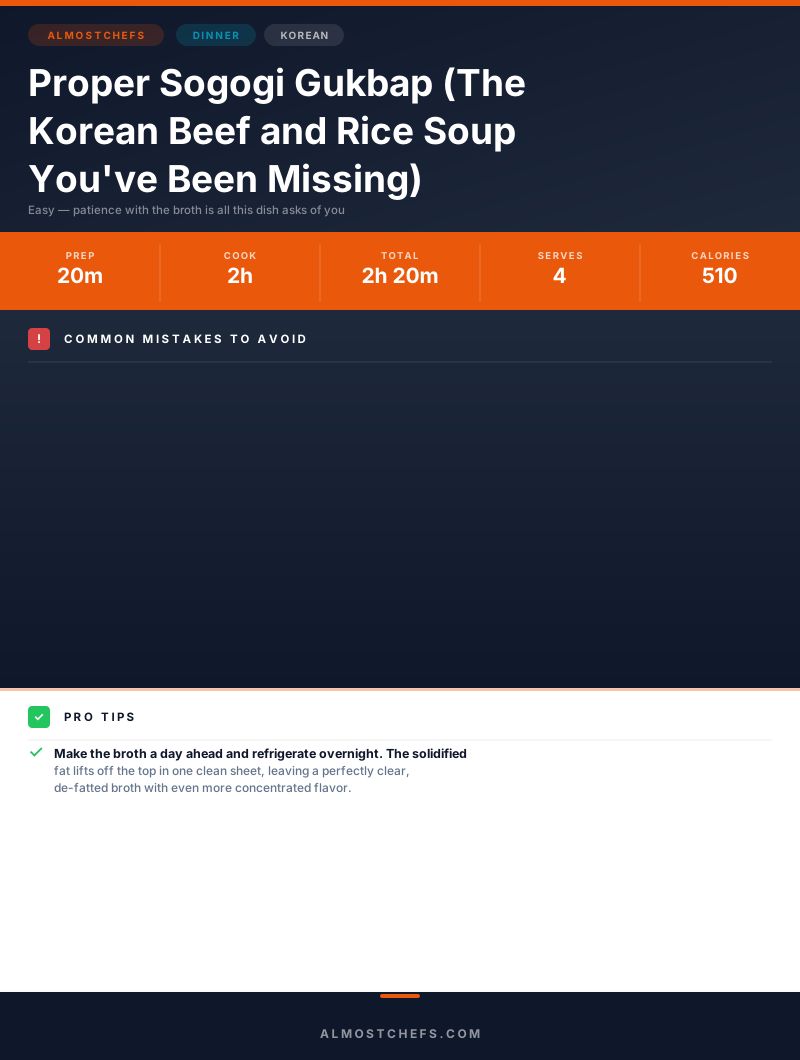
Proper Sogogi Gukbap (The Korean Beef and Rice Soup You've Been Missing)
A deeply restorative Korean beef and rice soup built on a slow-simmered brisket broth, sliced tender beef, and a bowl of rice that drinks in every drop. We broke down the broth technique, the blood-purging step most recipes skip, and why the rice goes in last.

“Gukbap means soup-rice, and that flatness of name is a deliberate Korean understatement. What you actually get is one of the most nourishing bowls in the entire cuisine — a clear, mineral-rich beef broth that took two hours to earn, sliced brisket that pulls apart without effort, and rice that absorbs everything. The restaurants that have served this since 6am for the last fifty years know something most home cooks don't: the work is all in the broth, and the broth is mostly just time.”
Why This Recipe Works
Gukbap is one of those Korean dishes that looks deceptively simple right up until you taste a properly made version and realize you've been living wrong. It is not stew. It is not porridge. It is a bowl built on hierarchy: the broth carries everything, the beef earns its place in that broth, and the rice is the final act that ties the structure together. Every shortcut undermines the architecture.
The Broth Is the Dish
Most home cooks treat broth as a byproduct — something that happens while you cook the meat. In gukbap, the relationship inverts. The meat exists to build the broth, and the broth is the point. This means the early steps aren't optional prep; they are the recipe.
The cold-water soak pulls myoglobin — the red protein that clouds broth and adds metallic edge — out of the brisket before heat locks it in. The blanch-and-rinse step removes whatever the soak missed, along with the surface proteins that foam during cooking. By the time you start your final simmer, you're working with clean, neutral beef in a clean pot. Everything that follows is additive.
The simmer must be barely a simmer. This is not a suggestion. Fat emulsifies under turbulence — boiling a broth forces fat molecules into suspension where they cannot be removed, turning the liquid opaque and coating every surface with grease. A true simmer, where the surface barely trembles and the occasional small bubble rises, keeps fat floating in distinct pools you can skim cleanly. The clarity of your finished broth is a direct measurement of how disciplined your heat was.
Brisket Is Load-Bearing
Brisket has the connective tissue structure that this broth needs. During the long, gentle simmer, collagen breaks down into gelatin, giving the broth a light body that coats the tongue without weight. Leaner cuts — round, sirloin — produce thinner, waterier results because they lack the connective tissue mass. Fattier cuts — short rib, chuck — work but require more vigilant skimming.
The slicing direction is not decorative. Brisket has long, defined muscle fibers running parallel to each other. Cutting with the grain produces long, chewy strands. Cutting against the grain — perpendicular to those fibers — shortens each individual strand to a fraction of an inch, making every piece tender rather than requiring excessive chewing. This applies to every piece of beef you will ever slice for any reason.
Rice Last, Always
The most common gukbap mistake is treating the rice like soup pasta — something to cook inside the broth until done. Rice absorbs liquid proportional to time and temperature. Given enough of both, it will absorb everything in the bowl and expand into a thick starch paste. That is not a bowl of gukbap; that is a failure state.
Cook the rice separately. Add it to the bowl hot and dry. Then pour the broth over it at the table. The rice absorbs the broth gradually as you eat, which means each spoonful is slightly different — some bites heavy with broth, some where the rice has drunk its fill. That gradient of texture is the point.
The Fermented Finish
Doenjang is optional in this recipe in the sense that air travel is optional — technically true, but you're going to want it. Stirring a small amount of Korean fermented soybean paste into the finished broth adds a deep, round umami that the beef alone cannot build. Strain it through a fine-mesh sieve directly into the pot so the paste incorporates smoothly without leaving lumps. The result should not taste like doenjang — it should taste like the broth always had this depth and you just noticed it.
Serve the condiments separately. Kimchi, gochugaru, and extra salt are personal variables, not design choices. The broth is already complete.
Where Beginners Mess This Up
Before we start, read this. These are the 4 reasons your proper sogogi gukbap (the korean beef and rice soup you've been missing) will fail:
- 1
Skipping the cold-water soak: Raw beef contains blood and myoglobin proteins that cloud the broth and add a livery, metallic edge to the flavor. Soaking the brisket in cold water for at least 30 minutes before blanching draws out the majority of these compounds. Skip this step and no amount of skimming will fully rescue your broth.
- 2
Not blanching and rinsing the beef first: The initial boil-and-discard step removes the remaining impurities that the soak missed. Bring the beef to a boil in cold water, let it go for 5 minutes, then drain and rinse both the beef and the pot under cold water. This one step is the difference between a clear, golden broth and a murky grey one.
- 3
Boiling instead of simmering: A rolling boil emulsifies fat into the broth, making it opaque and greasy. Once you start the final broth, it should barely tremble — small bubbles occasionally breaking the surface. This keeps the fat floating on top where you can skim it, and produces a clean, light broth with real depth.
- 4
Adding rice too early: Rice absorbs liquid aggressively. If you add it to the broth and walk away, you will return to a pot of thick, starchy porridge — not gukbap. Cook the rice separately or use leftover rice, and add it to each bowl just before serving, letting the hot broth do the final warming.
🛠️ Core Equipment
- Large heavy-bottomed stockpotYou need volume for the blanching step and the long broth simmer. A thin pot creates hot spots that prevent the gentle, steady simmer essential for a clear broth.
- Fine-mesh skimmer or ladleDuring the first 20 minutes of simmering, impurities and fat rise to the surface continuously. A fine-mesh skimmer removes them efficiently without pulling too much broth.
- Rice cooker or medium saucepan with lidThe rice must be cooked separately and kept warm until serving. A rice cooker holds it at the right temperature without overcooking.
- Sharp slicing knifeCold brisket slices cleanly against the grain into neat pieces. A dull knife tears the meat and produces ragged, stringy slices that fall apart in the bowl.
Proper Sogogi Gukbap (The Korean Beef and Rice Soup You've Been Missing)
🛒 Ingredients
- ✦1.75 pounds beef brisket, whole
- ✦12 cups cold water, divided
- ✦4 large garlic cloves, smashed
- ✦1 medium yellow onion, halved
- ✦3 green onion stalks, whole (plus extra thinly sliced for garnish)
- ✦1 tablespoon fish sauce
- ✦1 teaspoon sesame oil
- ✦1 teaspoon sea salt, plus more to taste
- ✦1/2 teaspoon white pepper
- ✦4 cups cooked short-grain white rice (cooked separately)
- ✦2 tablespoons doenjang (Korean fermented soybean paste), optional — stir in at the end for depth
- ✦1 tablespoon guk ganjang (soup soy sauce) or light soy sauce
- ✦Toasted sesame seeds, for garnish
- ✦Kimchi, for serving
- ✦Gochugaru (Korean red pepper flakes), optional for heat at the table
👨🍳 Instructions
01Step 1
Submerge the brisket in a large bowl of cold water and soak for 30 minutes, changing the water once halfway through.
02Step 2
Place the soaked brisket in the stockpot, cover with cold water, and bring to a full boil over high heat. Boil for 5 minutes.
03Step 3
Drain the pot, rinse the brisket thoroughly under cold running water, and scrub the pot clean. This removes the grey foam and residue.
04Step 4
Return the rinsed brisket to the clean pot with 10 cups of fresh cold water. Add the halved onion, smashed garlic, and whole green onion stalks. Bring to a boil over high heat.
05Step 5
Once boiling, reduce heat to the lowest possible simmer. Skim the surface aggressively for the first 15-20 minutes to remove any remaining fat and foam.
06Step 6
Simmer uncovered for 1 hour 30 minutes, skimming occasionally. The broth should be a clear, pale gold.
07Step 7
Remove the brisket and transfer to a cutting board. Let it rest for 10 minutes. Strain the broth through a fine-mesh sieve and discard the aromatics.
08Step 8
Season the broth with fish sauce, guk ganjang, salt, and white pepper. Taste and adjust. Add doenjang now if using — whisk it in through a fine-mesh strainer so it incorporates smoothly.
09Step 9
Once the brisket is cool enough to handle, slice it thinly against the grain. The grain runs lengthwise — cut perpendicular to it.
10Step 10
Add a generous scoop of cooked rice to each bowl. Arrange sliced brisket on top of the rice.
11Step 11
Bring the broth back to a strong simmer and ladle it over the beef and rice. The rice will begin absorbing the broth immediately.
12Step 12
Garnish with thinly sliced green onion, a drizzle of sesame oil, and toasted sesame seeds. Serve immediately with kimchi and optional gochugaru on the side.
Nutrition Per Serving
Estimates based on standard preparation. Adjustments alter macros.
🔄 Substitutions
Instead of Brisket...
Use Beef shank or short rib
Shank adds more gelatin to the broth and becomes very tender, but takes 30 additional minutes. Short rib produces a richer, fattier broth — skim more aggressively.
Instead of Fish sauce...
Use Additional guk ganjang (soup soy sauce)
Fish sauce adds depth that soy sauce alone can't fully replicate, but doubling the soup soy sauce produces a cleaner-flavored broth suitable for those avoiding fish products.
Instead of Short-grain white rice...
Use Brown rice or barley
Brown rice adds fiber and a nuttier flavor but absorbs the broth more slowly. Cook it fully before serving — it won't soften significantly from the hot broth alone.
Instead of Doenjang...
Use White miso paste
A reasonable stand-in that adds fermented depth. Use slightly less — white miso is milder and saltier than doenjang by volume.
🧊 Storage & Reheating
In the Fridge
Store broth and beef separately in airtight containers for up to 4 days. The broth improves over time. Do not store with rice mixed in — it becomes bloated and starchy.
In the Freezer
Freeze broth in portions for up to 3 months. Freeze sliced beef flat in a single layer before transferring to a bag. Thaw overnight in the fridge.
Reheating Rules
Bring broth to a simmer on the stovetop. Add sliced beef directly to the hot broth to warm through — about 2 minutes. Serve over freshly cooked rice. Microwaving the broth with rice mixed in produces an unpleasant texture.
❓ Frequently Asked Questions
Why is my broth cloudy?
Almost always because the blanching water wasn't fully discarded, the pot wasn't rinsed clean after blanching, or the broth boiled instead of simmered. A rolling boil emulsifies fat into the liquid and you cannot reverse it. Clarity requires a gentle simmer from the start.
Can I use a pressure cooker to speed up the broth?
Yes, but the result is different. Pressure cooking produces a darker, more opaque broth with a deeper flavor — closer to seolleongtang than gukbap. It works, but you lose the delicate, clear quality that defines this dish. If speed is the priority, pressure cook for 45 minutes and accept the tradeoff.
What is guk ganjang and do I need it?
Guk ganjang is a lighter, saltier soy sauce traditionally used for seasoning soups. It adds salt and umami without darkening the broth the way regular soy sauce would. If you only have regular soy sauce, use half the amount — it's more concentrated and will color the broth amber.
Why does my brisket fall apart instead of slicing?
It overcooked. Brisket for gukbap should be tender but still cohesive enough to slice. After 90 minutes of simmering, check with a chopstick — it should slide in with moderate resistance. Remove the brisket from the broth as soon as it reaches that point and chill it before slicing.
Is gukbap the same as gompTang or seolleongtang?
They're related but distinct. Seolleongtang is made from ox bones simmered for 8-12 hours until the broth turns milky white from collagen breakdown — a different beast entirely. Gomtang uses mixed beef cuts and offal. Gukbap is the category, not a single dish — any soup served over rice qualifies. Sogogi gukbap specifically means beef gukbap.
Can I make this with a smaller cut of beef?
Yes. Reducing to 1 pound of brisket works fine. The broth will be slightly less rich, but the technique is identical. You can supplement with a small piece of beef neck bone to compensate for the lost collagen.
The Science of
Proper Sogogi Gukbap (The Korean Beef and Rice Soup You've Been Missing)
We turned everything on this page into a beautiful, flour-proof PDF cheat sheet. Print it out, stick it to your fridge, and never mess up your proper sogogi gukbap (the korean beef and rice soup you've been missing) again.
*We'll email you the high-res PDF instantly. No spam, just perfectly cooked meals.
AlmostChefs Editorial Team
We translate the internet's most popular cooking videos into foolproof, beginner-friendly written recipes. We analyze multiple methods, test them in our kitchen, and engineer a single "Master Recipe" that gives you the best possible result with the least possible stress.