Sogalbi-jjim (Braised Beef Short Ribs)
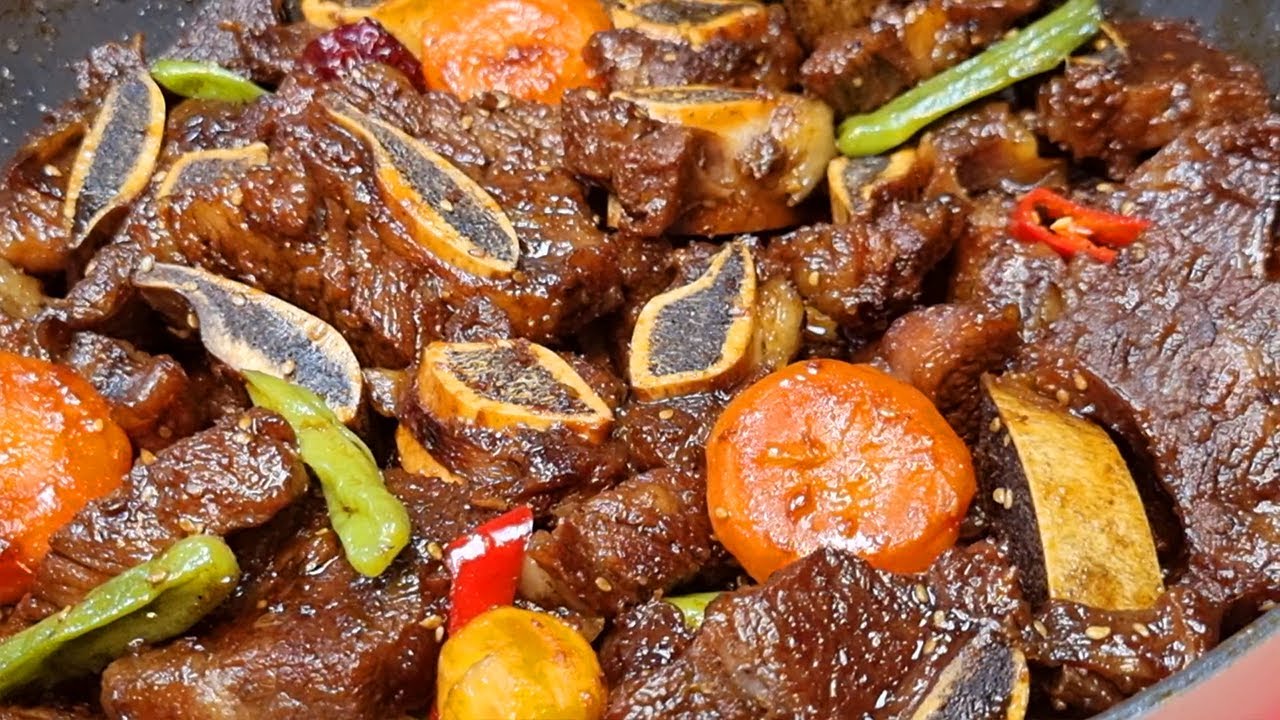
Fall-off-the-bone beef short ribs braised in a sweet soy sauce with chestnuts, carrots, and jujubes. Korea's most prestigious celebration dish.
Why This Recipe Works
Most braised meat dishes fail before they even reach the stove. The failure happens in the prep — in the casual indifference to blood, marrow impurities, and oxidized proteins that accumulate inside raw short ribs and, if left unchecked, turn a glossy celebration braise into something that looks and tastes like cafeteria gravy. Galbi-jjim does not tolerate that indifference. It was engineered, over centuries of Korean domestic culinary tradition, to reject it entirely. The double-cleaning protocol — extended cold-water soaking followed by a hard blanch — is not optional ceremony. It is the entire philosophical foundation of the dish. Do it, or make something else.
Here is what the soaking actually accomplishes: bovine short ribs contain a significant volume of blood trapped in the marrow cavity and in the muscle tissue surrounding the bone. At rest in cold water, osmotic pressure draws that blood out gradually. Change the water every thirty minutes because the water becomes saturated with hemoglobin and myoglobin — continuing to soak in that red water accomplishes nothing. After two to three hours, the water runs pale pink at worst. Now blanch: cold water start, bring to a full boil, five minutes. This denatures the surface proteins that would otherwise coagulate into grey scum and cloud your braising liquid. Rinse under cold running water. Clean every rib individually. This is the work. The payoff is a braising sauce that stays translucent, deep amber, and clean-tasting — the hallmark of galbi-jjim made by someone who understands why the steps exist rather than someone who merely follows them.
The marinade is a study in restraint and precision. Soy sauce for salinity and umami depth. Brown sugar and mirin for sweetness and a touch of acidity. Sesame oil for fat-soluble aromatics that bind the sauce together. Garlic and ginger for volatile compound layering that survives the long braise without becoming harsh. And then the Asian pear — grated, so the enzymes make direct contact with the meat fibers. Actinidin and other proteolytic enzymes in Asian pear break down myosin and actin proteins in muscle tissue, softening texture without the aggressive tenderization of kiwi (which, if left too long, reduces meat to something alarmingly close to baby food). The pear also contributes fructose and sucrose, which caramelize at the sauce-reduction stage into the glossy lacquer that defines the dish visually. This is not a "secret ingredient" in the coy culinary-content-creator sense. It is a specific enzymatic intervention with measurable, replicable results.
Braising vessel selection matters. You need a Dutch oven — heavy-walled, tight-lidded, with enough thermal mass to maintain a steady low simmer without hot spots that scorch the sauce where it contacts the bottom. A thin pot will give you uneven heat, localized caramelization in the wrong places, and ribs that are overdone on the bottom while the top half is still working. The Dutch oven distributes heat through its walls as much as its base, creating a convection environment inside that cooks the meat from all sides simultaneously. This is not a preference. It is physics.
The two-stage vegetable addition is another decision that gets dismissed as fastidiousness and is in fact straightforward logic. Carrots and Korean radish take roughly 25 to 30 minutes to reach the correct texture — translucent for the radish, fork-tender for the carrot, with enough structural integrity that they hold their cut shape when served. If you add them at the beginning of a 90-minute braise, they dissolve. You get vegetable paste in your sauce and nothing on the plate worth eating. Chestnuts and jujubes go in at the same second stage: the chestnuts need time to absorb the braising liquid and become creamy and sweet at the center; the jujubes release natural sugars that contribute to the sauce's final body. Both are also visually significant — galbi-jjim is a celebration dish, and its presentation signals occasion. Whole chestnuts and intact jujubes tell the person eating it that someone cared enough to do this correctly.
The finish is the sauce reduction. Uncover the pot, raise the heat to medium, add rice syrup, and reduce for five to seven minutes. The rice syrup — oligosaccharides rather than pure sucrose — adds viscosity without the sharp sweetness of simple sugar. The sauce thickens, concentrates, and begins to coat the ribs with a lacquered sheen that photography cannot do justice to and that, frankly, most braised dishes never achieve. When the sauce coats the back of a spoon and holds a clean line when you draw a finger through it, you are done. Garnish with toasted sesame seeds and pine nuts. Serve over steamed rice.
Galbi-jjim occupies a specific and serious position in Korean culinary culture — above bulgogi in prestige, equal in weight to samgyetang as a marker of occasion. Chef Kim Daiseok has built a following of over three million people on the back of this recipe specifically because it does not flatter or abbreviate. It explains the science. It requires the effort. And it produces a result that is, without qualification, one of the most technically refined braises in the global canon of celebration cooking.
Sogalbi-jjim (Braised Beef Short Ribs)
🛒 Ingredients
- ✦3 lbs beef short ribs (LA-style cut or English cut)
- ✦1/4 cup soy sauce
- ✦2 tablespoons brown sugar
- ✦2 tablespoons mirin
- ✦1 tablespoon sesame oil
- ✦1 Asian pear, grated (or 3 tablespoons pear juice)
- ✦4 cloves garlic, minced
- ✦1 tablespoon fresh ginger, grated
- ✦1 teaspoon black pepper
- ✦2 medium carrots, roll-cut into chunks
- ✦1 medium Korean radish (mu), cubed (or 1 large potato)
- ✦8 dried chestnuts, peeled
- ✦6 dried jujubes (daechu)
- ✦8 ginkgo nuts (optional)
- ✦2 cups water or beef broth
- ✦1 tablespoon rice syrup for finishing
- ✦Toasted sesame seeds and pine nuts for garnish
👨🍳 Instructions
01Step 1
Soak short ribs in cold water for 2-3 hours, changing the water every 30 minutes. This removes blood and impurities for a clean braise.
02Step 2
Blanch the soaked ribs: place in a pot of cold water, bring to a boil, cook for 5 minutes. Drain, rinse under cold water, and clean off any scum.
03Step 3
Combine soy sauce, brown sugar, mirin, sesame oil, grated pear, garlic, ginger, and pepper. Whisk into a smooth marinade.
04Step 4
Place cleaned ribs in a heavy pot or Dutch oven. Pour the marinade over. Add 2 cups water. Bring to a boil.
05Step 5
Reduce heat to low, cover, and braise for 60-70 minutes. The meat should be tender but not yet falling off the bone.
06Step 6
Add carrots, radish (or potato), chestnuts, and jujubes. Continue braising for another 25-30 minutes until vegetables are tender and meat is fall-off-the-bone.
07Step 7
Uncover, increase heat to medium. Add rice syrup and reduce the sauce for 5-7 minutes until glossy and thick enough to coat the ribs.
08Step 8
Garnish with sesame seeds and pine nuts. Serve with steamed rice.
Nutrition Per Serving
Estimates based on standard preparation. Adjustments alter macros.
🔄 Substitutions
Instead of Beef short ribs...
Use Bone-in pork ribs
Dwaeji galbi-jjim — braise 45 minutes instead of 90
Instead of Asian pear...
Use Apple or kiwi (half amount)
Kiwi tenderizes more aggressively — reduce marination time
Instead of Chestnuts and jujubes...
Use Potatoes and carrots only
Simpler but still delicious — the chestnuts and jujubes are celebratory garnishes
🧊 Storage & Reheating
In the Fridge
Store for 3-4 days. The sauce gels when cold — that's the collagen. Reheat gently.
In the Freezer
Freeze portioned in sauce for up to 3 months. One of the best Korean dishes for freezing.
Reheating Rules
Reheat in a pot over low heat until the sauce liquefies and the meat is warmed through.
❓ Frequently Asked Questions
What is the difference between galbi-jjim and LA galbi?
Galbi-jjim is braised (slow-cooked in liquid) — the meat is fall-off-the-bone tender in a glossy sauce. LA galbi is grilled — thin cross-cut ribs marinated and seared on high heat. Same cut of meat, completely different cooking methods and results.
Why soak the ribs for hours?
Soaking in cold water draws out blood and impurities from the bone and marrow. Combined with blanching, this produces a clean, clear braising sauce instead of a muddy one. It's extra effort but makes a visible difference in the final dish.

The Science of
Sogalbi-jjim (Braised Beef Short Ribs)
We turned everything on this page into a beautiful, flour-proof PDF cheat sheet. Print it out, stick it to your fridge, and never mess up your sogalbi-jjim (braised beef short ribs) again.
*We'll email you the high-res PDF instantly. No spam, just perfectly cooked meals.
AlmostChefs Editorial Team
We translate the internet's most popular cooking videos into foolproof, beginner-friendly written recipes. We analyze multiple methods, test them in our kitchen, and engineer a single "Master Recipe" that gives you the best possible result with the least possible stress.