Foolproof Soba Noodle Soup (30-Minute Umami Masterclass)
A deeply aromatic Japanese buckwheat noodle soup built on a shiitake-ginger broth with crisp vegetables and umami-rich toppings. We broke down the most common soba failures — gummy noodles, flat broth, wilted garnishes — and built one technique that delivers restaurant results in under 30 minutes.
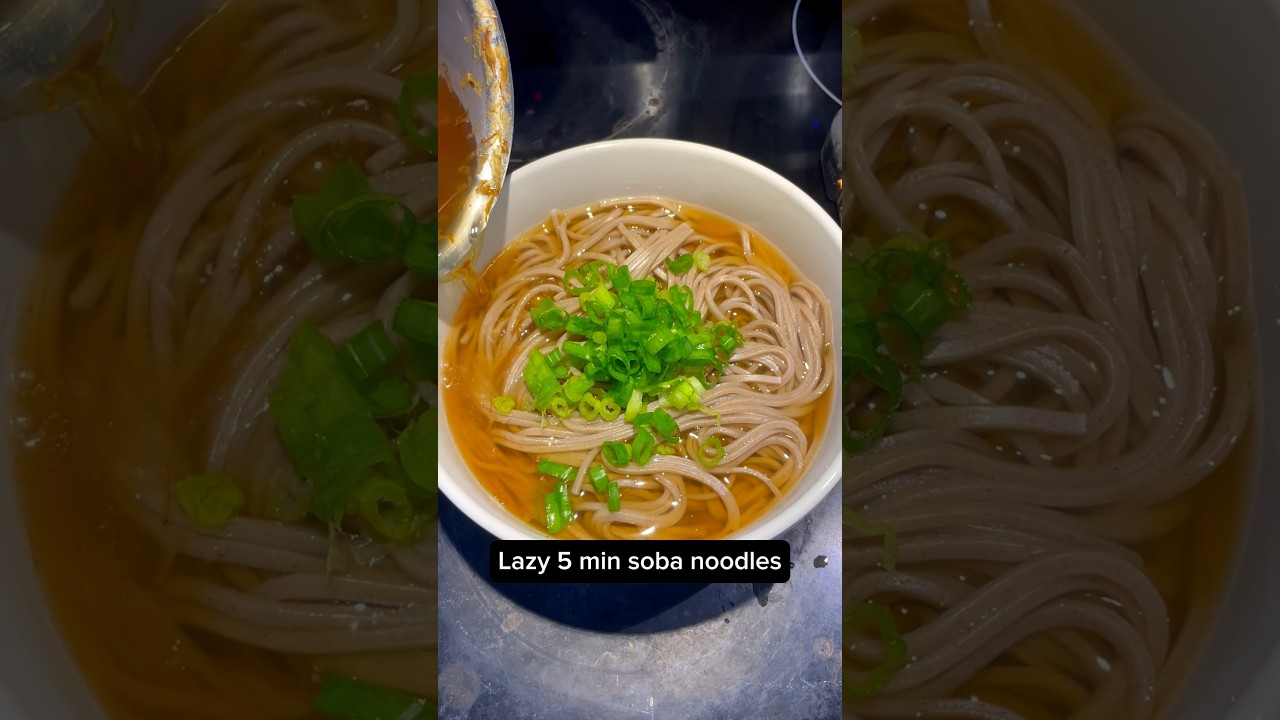
“Soba is one of the most forgiving noodle dishes in Japanese cooking. It's also one of the most ruined. The failures are always the same: gummy noodles that clump into a single mass, thin broth that tastes like salted water with ambitions, and toppings added so early they wilt before the bowl hits the table. Three mistakes. All preventable. This recipe fixes them systematically.”
Why This Recipe Works
Soba is one of the oldest fast foods in the world. Tokyo soba shops have been turning out bowls in under five minutes for three centuries, and the technique has been refined to the point where every step that remains has a reason. The problem is that most Western recipes strip out the reasoning and leave only the instructions — so when something goes wrong, the cook has no idea which variable broke.
This recipe puts the reasoning back.
The Noodle Equation
Buckwheat soba contains almost no gluten. This is why it tastes cleaner and nuttier than wheat noodles — but it's also why it behaves differently under heat. Without a significant gluten network holding the structure together, overcooked soba turns soft and sticky almost immediately. The window between properly cooked and ruined is about 90 seconds.
Cook to just-tender with a slight resistance — Japanese cooks call this koshi, the same concept as Italian al dente — and rinse aggressively in cold water the moment you drain. The rinse does two things simultaneously: it stops the residual heat from continuing to cook the noodle, and it strips the surface starch that would otherwise turn the whole batch into a single mass. This is the foundational technique. Everything else is secondary.
Building Broth Depth Without Meat
The challenge with a vegetarian soba broth is building genuine umami without the collagen and fat that animal stocks provide automatically. The answer is dried shiitake mushrooms, which are one of the most glutamate-dense ingredients in any cuisine. A single dried shiitake contains more free glutamates — the compound responsible for savory depth — than a cup of regular mushrooms, because the drying process concentrates them.
They need time. Eight to ten minutes of simmering is not arbitrary: that's how long it takes for the rehydrating mushrooms to release their compounds into the surrounding liquid. The ginger works in parallel, its volatile oils slowly dispersing through the broth and adding a clean, warming heat that doesn't compete with the tamari and mirin. Pull either element early and the broth lacks dimension. Give them the full window and the liquid tastes like it was made by someone who knew what they were doing.
A heavy-bottomed pot matters here more than people expect. Thin pots develop hot spots that scorch the mushrooms against the base, adding bitterness. Even heat keeps the simmer gentle and consistent.
The Vegetable Timing Problem
Different vegetables cook at different rates, and this is where most one-pot noodle soups fail by treating everything as interchangeable. The carrots go in first — they're dense and need 2-3 minutes to soften while maintaining their structure. The spinach goes in last, one minute before serving, because it wilts almost instantly and oxidizes to an unappetizing grey-green if cooked for any longer. The green onions, cilantro, and sesame seeds go on after the heat is off entirely, because they're garnishes — their job is freshness and texture, not cooking.
Sequence is the technique. Everything else is just ingredients.
The Assembly Window
Soba noodles are hygroscopic — they aggressively absorb surrounding liquid. This is what makes zaru soba (chilled noodles with dipping sauce) work so well as a separate preparation, because the noodles never sit in liquid long enough to swell. In the hot soup version, the clock starts the moment the broth hits the noodles. Five minutes and the noodles have absorbed a significant portion of the broth, swelling and softening past their ideal texture. Ten minutes and the bowl is a different dish entirely.
Build the bowls immediately before serving. Serve them immediately after building. The lime wedges are served on the side not as decoration but because citrus acid added at the table brightens the broth's umami in a way that adding it during cooking cannot — heat destroys the volatile aromatic compounds that make fresh lime different from cooked lime. These details are what distinguish a recipe that works from one that just describes a dish.
Where Beginners Mess This Up
Before we start, read this. These are the 4 reasons your foolproof soba noodle soup (30-minute umami masterclass) will fail:
- 1
Not rinsing the noodles after cooking: Buckwheat soba releases a significant amount of surface starch during boiling. If you skip the cold water rinse, that starch turns the noodles into a gluey clump within minutes. Rinse thoroughly for 30 seconds under cold running water — it stops the cooking instantly and strips the starch that causes clumping.
- 2
Rushing the broth: The shiitake mushrooms and ginger need a full 8-10 minutes of simmering to release their compounds into the liquid. Pull them early and you have seasoned vegetable water. Give them the full time and the broth becomes genuinely complex — earthy, slightly sweet, with a clean savory backbone that doesn't need to hide behind sodium.
- 3
Adding spinach too early: Spinach goes into the broth exactly one minute before you serve. Any longer and it oxidizes to a murky olive green and loses structural integrity. One minute produces vibrant, just-wilted leaves. This is not optional.
- 4
Assembling too far in advance: Soba noodles continue absorbing liquid after assembly. Build the bowls and serve immediately. If you let them sit for even five minutes, the noodles swell, the broth disappears, and the texture collapses. Soba waits for no one.
The Video Reference Library
Want to see it in action? Here are the exact videos we analyzed and combined to build this foolproof recipe translation:
The foundational video for this recipe. Clear demonstration of the rinsing technique and broth timing that separates clean, separated noodles from a starchy clump.
🛠️ Core Equipment
- Large heavy-bottomed potYou need two separate cooking vessels — one for the noodles, one for the broth. A [heavy-bottomed pot](/kitchen-gear/review/saucepan) ensures even heat distribution for the broth without scorching the mushrooms against a hot spot.
- Colander with fine holesSoba noodles are thin and will slip through a standard colander. Fine-hole drainage is essential for rinsing quickly and completely without losing noodles down the drain.
- Julienne peeler or mandolineJulienned carrots cut uniformly cook in the same 2-3 minute window. Hand-cut sticks vary in thickness and give you a mix of crunchy and mushy. A [mandoline](/kitchen-gear/review/mandoline) makes this a 60-second task.
- Deep serving bowlsSoba soup requires real depth — both for aesthetics and function. Shallow bowls cool too fast and can't hold the noodle nest plus broth volume plus garnishes without spillage.
Foolproof Soba Noodle Soup (30-Minute Umami Masterclass)
🛒 Ingredients
- ✦8 ounces dried buckwheat soba noodles
- ✦6 cups vegetable broth
- ✦3 tablespoons tamari or low-sodium soy sauce
- ✦2 tablespoons mirin or honey
- ✦1 tablespoon rice vinegar
- ✦1 inch fresh ginger root, peeled and sliced thin
- ✦3 dried shiitake mushrooms
- ✦2 medium carrots, julienned
- ✦1 bunch green onions, sliced thin
- ✦2 cups fresh spinach leaves
- ✦1/4 cup loosely packed fresh cilantro, chopped
- ✦2 cloves garlic, minced
- ✦1 teaspoon sesame oil
- ✦1 teaspoon wasabi paste
- ✦2 tablespoons sesame seeds
- ✦Nori seaweed sheets, cut into strips
- ✦1 lime, cut into wedges
- ✦Sea salt to taste
👨🍳 Instructions
01Step 1
Bring a large pot of unsalted water to a rolling boil over high heat. Add the soba noodles and cook for 4-5 minutes until just tender with a slight firmness to the bite.
02Step 2
Drain the noodles immediately and rinse thoroughly under cold running water for 30 seconds, tossing gently to remove all surface starch.
03Step 3
Combine the vegetable broth, tamari, mirin, rice vinegar, sliced ginger, and dried shiitake mushrooms in a separate large pot over medium-high heat.
04Step 4
Bring to a simmer and cook uncovered for 8-10 minutes until the mushrooms have fully softened and the broth smells deeply aromatic.
05Step 5
Add the minced garlic and julienned carrots to the simmering broth. Cook for 2-3 minutes until the carrots are slightly tender but still hold their shape.
06Step 6
Stir in the fresh spinach leaves. Cook for exactly 1 minute until just wilted and still vivid green.
07Step 7
Remove the pot from heat. Whisk in the sesame oil and wasabi paste. Taste and adjust with salt or additional tamari.
08Step 8
Divide the rinsed soba noodles evenly among four deep serving bowls, forming a loose nest in the center of each.
09Step 9
Ladle the hot broth and vegetables generously over each noodle portion, distributing the shiitake mushrooms and carrots evenly across all four bowls.
10Step 10
Garnish each bowl immediately with sliced green onions, fresh cilantro, sesame seeds, and strips of nori.
11Step 11
Serve immediately with lime wedges on the side. Instruct each person to squeeze lime over their bowl just before eating.
Nutrition Per Serving
Estimates based on standard preparation. Adjustments alter macros.
🔄 Substitutions
Instead of Vegetable broth...
Use Kombu and shiitake mushroom stock
Simmer 4 dried kombu strips and 5 dried shiitake mushrooms in 6 cups of water for 15 minutes. Richer umami, zero added sodium, and genuinely better flavor. If you have 15 extra minutes, this is the correct choice.
Instead of Tamari or soy sauce...
Use Coconut aminos
Slightly sweeter and less intense, with significantly lower sodium. Works well if you're reducing salt or avoiding soy entirely. Use the same quantity.
Instead of Mirin...
Use Pure maple syrup or coconut sugar
Equal amounts. Different sweetness profile but maintains the broth's balance. Lower glycemic impact than mirin's refined sugars.
Instead of Sesame oil...
Use Extra virgin olive oil
Milder and less nutty, but adds richness and contributes anti-inflammatory polyphenols. Acceptable trade-off if sesame oil is unavailable.
🧊 Storage & Reheating
In the Fridge
Store noodles and broth in separate airtight containers for up to 3 days. Combined storage destroys the noodle texture overnight.
In the Freezer
Freeze the broth only for up to 2 months. Cooked soba noodles do not freeze well — the texture becomes mealy on thawing.
Reheating Rules
Reheat broth separately on the stovetop over medium heat. Warm the noodles by briefly submerging them in hot water for 30 seconds, then drain and assemble fresh.
❓ Frequently Asked Questions
Why are my soba noodles gummy?
You either overcooked them or skipped the cold water rinse. Soba releases significant surface starch during boiling. Without a thorough cold rinse, that starch glues the noodles together within minutes. Cook to just-tender and rinse immediately and aggressively.
Can I make this with fresh soba noodles instead of dried?
Yes, but reduce the cook time to 1-2 minutes. Fresh soba is already hydrated and cooks almost instantly. The rinse step is still essential.
Is this recipe actually gluten-free?
Only if you use 100% buckwheat soba. Many commercial soba noodles contain wheat flour as a filler. Check the label — if wheat flour is listed, the noodles contain gluten. Use tamari rather than regular soy sauce regardless, as most soy sauce contains wheat.
Can I add protein to make this more filling?
Tofu is the cleanest addition — cube firm tofu and add it to the broth during the last 2 minutes of simmering. A soft-boiled egg halved over the top works equally well if you're not keeping this vegetarian.
Why does my broth taste flat even after 10 minutes of simmering?
The issue is almost always the quality of the starting broth. Low-quality commercial vegetable broth tastes thin even when reduced. Either use a better brand or make a quick kombu-shiitake stock from scratch — it takes 15 minutes and the difference is significant.
Can I serve this cold?
Yes — this is zaru soba, a classic Japanese preparation. Skip the hot broth entirely. Rinse the cooked noodles, chill over ice, and serve with a cold dipping sauce made from tamari, mirin, and a splash of cold dashi or water. Top with nori and green onion. It's the better summer meal.
The Science of
Foolproof Soba Noodle Soup (30-Minute Umami Masterclass)
We turned everything on this page into a beautiful, flour-proof PDF cheat sheet. Print it out, stick it to your fridge, and never mess up your foolproof soba noodle soup (30-minute umami masterclass) again.
*We'll email you the high-res PDF instantly. No spam, just perfectly cooked meals.
AlmostChefs Editorial Team
We translate the internet's most popular cooking videos into foolproof, beginner-friendly written recipes. We analyze multiple methods, test them in our kitchen, and engineer a single "Master Recipe" that gives you the best possible result with the least possible stress.