Korean-Japanese Soba Bowl (The Braised Short Rib Upgrade)
A fusion bowl combining Japanese buckwheat soba with Korean galbijim-style braised beef short ribs. Rich, umami-forward sauce clings to every strand. We broke down the technique so the braise comes together without babysitting — and the noodles stay silky every time.

“Short ribs braised in soy, mirin, and dried chilies over buckwheat noodles is not a traditional dish from any single culture. It is, however, one of the most satisfying bowls you can put on a weeknight table. The galbijim technique — low and slow with aromatics and broth — produces beef that shreds at the touch of a fork and a sauce so deeply flavored it barely needs seasoning. The soba absorbs it like a sponge. The only way to mess this up is to rush the braise or skip the noodle rinse.”
Why This Recipe Works
Galbijim is one of Korean cuisine's great patience tests. The dish is not technically difficult. It asks only that you brown meat properly, build a balanced liquid, and then leave it alone for a long time. The failure rate is almost entirely a consequence of people who won't do that last part.
Pairing it with soba instead of rice is the kind of decision that sounds fussy until you eat it. Buckwheat noodles have a nutty, slightly earthy backbone that stands up to the intensity of the braising liquid. White rice absorbs and disappears. Soba participates.
The Braise Logic
Short ribs are not a quick-cook cut. They are loaded with connective tissue — specifically collagen — that turns gelatinous and rich only after sustained exposure to heat. Below 160°F, that collagen remains tight and the meat stays tough regardless of how long you cook it. Above 160°F and over time, it melts into the braising liquid and creates body, gloss, and a sauce that clings rather than runs.
This is why the total cook time is 90 minutes to 2 hours, not 45. It's not arbitrary. There is a physical transformation happening inside the meat that cannot be rushed without a pressure cooker. If you're using a Dutch oven on the stovetop, commit to the timeline.
The soy-mirin-sugar base is a classic Korean braising foundation for good reason. Soy provides salt and umami. Mirin contributes sweetness and subtle fermented depth. Brown sugar amplifies the caramelization on the meat surface and rounds out sharp edges. The dried shiitake mushrooms are not optional — they dissolve almost entirely by the end of the braise and contribute a layer of glutamate-driven umami that you'll notice immediately if you skip them.
The Browning Imperative
Every good braise begins with a sear, and every cook who skips it produces a grey, underseasoned final dish and blames the recipe. The Maillard reaction — the same chemistry behind roasted coffee and crusty bread — occurs on the surface of the beef at temperatures above 300°F. That's the temperature of dry metal in a hot pan, not wet meat in liquid.
Work in batches. The ribs need space so moisture evaporates rather than accumulates. A crowded pan stays wet, the temperature drops, and you steam the meat instead of browning it. Two minutes of patience per batch produces a sauce with ten times the complexity of one that skipped this step.
The Noodle Equation
Soba has one rule: cook it fresh, rinse it cold, bowl it fast. Buckwheat releases substantial surface starch during cooking — more than wheat pasta — and if you skip the cold rinse, the strands bond together within minutes. The cold water stops the cooking, washes away the starch, and keeps each noodle distinct.
Time the soba so it's ready when the braise is. Not 30 minutes before. The braise holds. The noodles don't.
The Finish
Sesame oil and rice vinegar in the bowl are not optional garnish. They are structural. The sesame oil provides aromatic fat that coats the noodles and bridges the gap between soba and braise. The rice vinegar cuts through the richness and sharpens the entire bowl — a few drops is enough, but without it the dish reads as heavy and flat. Add both directly to the bowl, never to the pot, because heat destroys what makes them worth using.
This is a dish that rewards the cook who follows the sequence and punishes the cook who improvises on timing. Do both steps correctly — brown the ribs, then leave the braise alone — and the bowl practically finishes itself.
Where Beginners Mess This Up
Before we start, read this. These are the 4 reasons your korean-japanese soba bowl (the braised short rib upgrade) will fail:
- 1
Skipping the browning step: Every bit of flavor in the final braise starts here. Pale, steamed-looking ribs produce a wan, one-dimensional sauce. You need deeply caramelized crust on all sides — 8 to 10 minutes total, in batches so the pot stays hot. Crowding the pan drops the temperature and you get steam instead of sear.
- 2
Lifting the lid and rushing the braise: Ninety minutes is the minimum. Short ribs are loaded with collagen-rich connective tissue that only converts to gelatin above 160°F sustained over time. At 60 minutes, the meat is still tough. At 90 to 120 minutes, it surrenders. There is no shortcut. Taste the sauce at 90 minutes and keep going if the fork meets resistance.
- 3
Skipping the cold-water rinse on the soba: Buckwheat noodles release a lot of surface starch during cooking. If you skip the rinse, they clump into a gummy mass within two minutes and the braising sauce can't penetrate. Cold water stops the cooking, removes the starch, and keeps each strand distinct. This step is non-negotiable.
- 4
Adding the noodles too early: Cook the soba to order — not during the braise, not 30 minutes ahead. Soba sits poorly. It absorbs moisture and turns soft. Cook them within 15 minutes of serving, rinse immediately, and bowl up fast.
The Video Reference Library
Want to see it in action? Here are the exact videos we analyzed and combined to build this foolproof recipe translation:
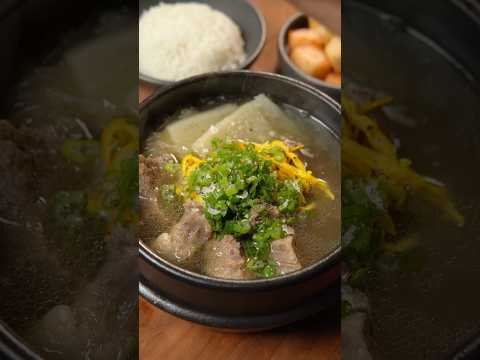
The primary reference for this dish. Covers the browning sequence, aromatics, and braise timing in detail. Watch the texture check at the 90-minute mark.
2. How to Cook Soba Noodles Properly
Clear breakdown of the cook-rinse-bowl sequence for buckwheat noodles. Covers the starch removal step and why cold water matters for texture.
3. Fusion Bowl Techniques — Building Umami DepthCovers the layering logic behind braised-meat noodle bowls and how to balance salt, acid, and fat in the finish.
🛠️ Core Equipment
- Dutch oven or heavy-bottomed pot ↗The braise needs even, sustained heat for 90-plus minutes. A thin pot creates hot spots that scorch the bottom and leave the center underdone. A heavy [Dutch oven](/kitchen-gear/review/dutch-oven) is the difference between a rich, even braise and a scorched mess.
- Large separate pot for noodles ↗Soba needs room to move in boiling water. Cramped noodles cook unevenly and tangle. Four quarts minimum, salted, rolling boil before the noodles go in.
- Fine-mesh sieve or colander ↗For rinsing the soba immediately after draining. Cold water needs to hit all the noodles simultaneously — a wide sieve lets you toss them under the tap and stop the cooking fast.
- Wooden spoon or flat-edged spatula ↗For deglazing after the browned bits build up. Those fond deposits on the bottom of the pot are concentrated beef flavor — the mirin and soy loosen them into the sauce. A flat edge gets into the corners.
Korean-Japanese Soba Bowl (The Braised Short Rib Upgrade)
🛒 Ingredients
- ✦2 pounds beef short ribs, cut into 2-inch pieces
- ✦3 tablespoons soy sauce
- ✦2 tablespoons mirin
- ✦1 tablespoon brown sugar
- ✦4 cloves garlic, minced
- ✦1 tablespoon fresh ginger, grated
- ✦2 medium yellow onions, cut into chunks
- ✦3 dried shiitake mushrooms, halved
- ✦2 cups beef broth
- ✦1 cup water
- ✦2 dried red chilies
- ✦10 ounces dried soba noodles
- ✦3 green onions, thinly sliced
- ✦2 tablespoons sesame oil
- ✦1 teaspoon rice vinegar
- ✦Sesame seeds for garnish
- ✦Salt and black pepper to taste
- ✦1 tablespoon vegetable oil for browning
👨🍳 Instructions
01Step 1
Pat the beef short ribs completely dry with paper towels, then season all sides generously with salt and black pepper.
02Step 2
Heat vegetable oil in a [Dutch oven](/kitchen-gear/review/dutch-oven) over medium-high heat until shimmering, about 2 minutes.
03Step 3
Working in batches, brown the ribs on all sides until deeply caramelized, 8-10 minutes total. Do not crowd the pot. Transfer browned ribs to a plate.
04Step 4
Reduce to medium heat. Add the onion chunks to the same pot and cook, stirring occasionally, until softened and fragrant, about 4 minutes.
05Step 5
Add the minced garlic and grated ginger. Cook 60 seconds until the raw edge disappears and the aroma sharpens.
06Step 6
Pour in the soy sauce and mirin. Use a flat wooden spoon to scrape up all the browned bits from the bottom of the pot. Simmer 1 minute.
07Step 7
Return the browned ribs to the pot along with any accumulated juices. Add beef broth, water, shiitake mushrooms, dried red chilies, and brown sugar.
08Step 8
Bring to a gentle boil, then reduce to low. Partially cover and simmer 90 minutes to 2 hours, until the beef is fork-tender and the sauce has reduced slightly.
09Step 9
About 15 minutes before serving, bring a large separate pot of salted water to a rolling boil.
10Step 10
Cook the soba noodles according to package directions, usually 4-5 minutes. Drain immediately and rinse under cold running water, tossing to remove surface starch.
11Step 11
Divide the soba among four deep bowls.
12Step 12
Ladle the braised ribs and sauce generously over each bowl. Each serving should get several pieces of meat and at least one mushroom piece.
13Step 13
Drizzle each bowl with a teaspoon of sesame oil and a few drops of rice vinegar.
14Step 14
Garnish with sliced green onions and sesame seeds. Serve immediately.
Nutrition Per Serving
Estimates based on standard preparation. Adjustments alter macros.
🔄 Substitutions
Instead of Beef short ribs...
Use Beef chuck steak, cut into 2-inch chunks
Less marbling but still becomes very tender. Reduce cook time to about 75 minutes and check early — chuck has less connective tissue than short ribs.
Instead of Soy sauce...
Use Low-sodium tamari or coconut aminos
Tamari is nearly identical in flavor, just gluten-free. Coconut aminos are slightly sweeter and less salty — add a small pinch of salt to compensate.
Instead of Mirin...
Use Honey or maple syrup (use half the quantity)
Both provide sweetness but without the subtle fermented complexity of mirin. Start with 1 tablespoon and taste before adding more — they're sweeter by volume.
Instead of Soba noodles...
Use Ramen noodles or egg noodles
Ramen has a springier texture and doesn't require the same attention to rinsing. Egg noodles are more neutral in flavor. Both pair well with the braising sauce.
🧊 Storage & Reheating
In the Fridge
Store the braise and noodles separately. Braise keeps for up to 4 days in an airtight container. Noodles are best fresh — if you must store them, toss with a small amount of sesame oil to prevent clumping, up to 1 day.
In the Freezer
The braise freezes well for up to 3 months in portioned containers. Do not freeze the soba. Thaw the braise overnight in the fridge.
Reheating Rules
Reheat the braise gently on the stovetop over low heat with a splash of broth or water to loosen the sauce. Cook fresh soba to order — reheated noodles are never as good.
❓ Frequently Asked Questions
Can I make this in a slow cooker?
Yes. Brown the ribs and aromatics on the stovetop first — this step is not optional. Then transfer everything to the slow cooker and cook on low for 7-8 hours or high for 4-5 hours. The soba is always cooked fresh and separately just before serving.
Why are my soba noodles gummy?
You either didn't rinse them after draining, or you cooked them too long. Soba should be drained the moment it's tender and rinsed under cold water for 30-45 seconds while tossing. Residual starch is the enemy of texture.
My braise sauce is too thin. What do I do?
Remove the lid and increase heat to medium. Let it reduce uncovered for 10-15 minutes, stirring occasionally. Alternatively, remove the ribs and whisk a tablespoon of cornstarch into a splash of cold water, then stir that slurry into the simmering sauce.
Can I use bone-in short ribs?
That's what the recipe uses — 2-inch pieces bone-in. The bone contributes collagen to the sauce and keeps the meat from drying out. Boneless short ribs work too but reduce cook time by about 20 minutes.
Is this dish actually Korean or Japanese?
Neither, exactly. Galbijim is a traditional Korean braised short rib dish typically served with rice. Soba is Japanese. This is a deliberate fusion — the braise logic is Korean, the noodle is Japanese. The combination isn't traditional, but the technique is sound and the result is more than the sum of its parts.
Can I add vegetables to the braise?
Daikon radish and chestnuts are traditional galbijim additions — add them in the last 30 minutes of braising. Carrots work well added at the same point. Avoid anything leafy or delicate — 90 minutes of braise time will disintegrate them completely.
The Science of
Korean-Japanese Soba Bowl (The Braised Short Rib Upgrade)
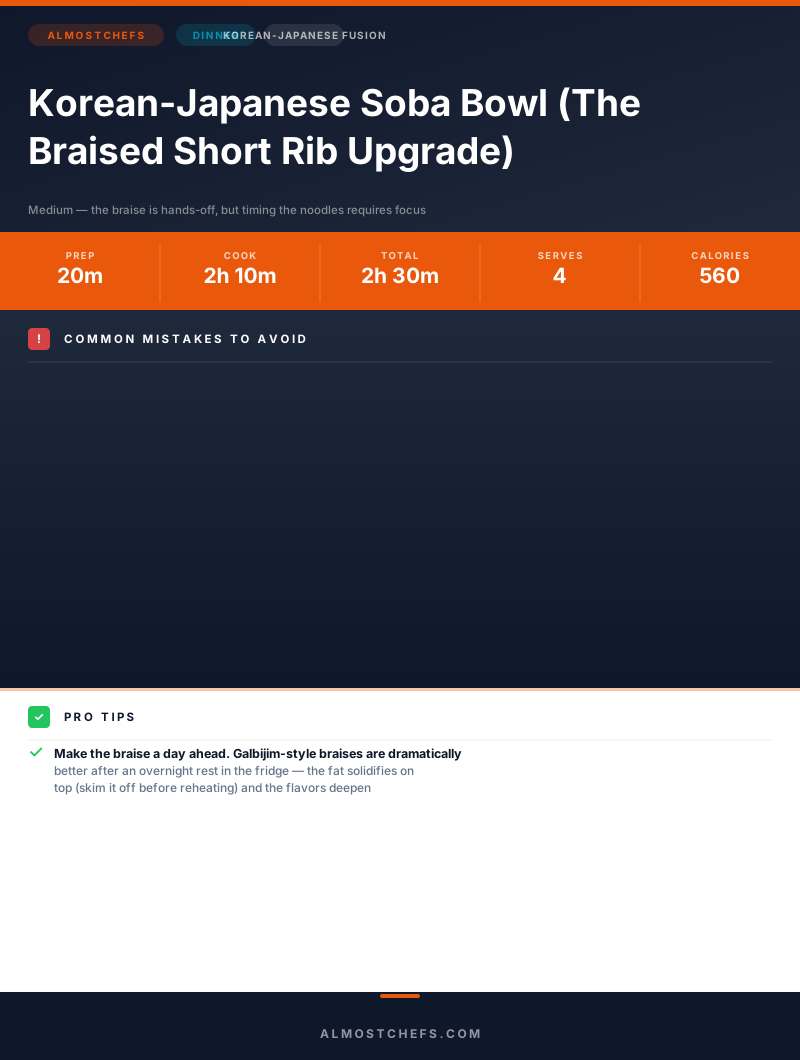
We turned everything on this page into a beautiful, flour-proof PDF cheat sheet. Print it out, stick it to your fridge, and never mess up your korean-japanese soba bowl (the braised short rib upgrade) again.
*We'll email you the high-res PDF instantly. No spam, just perfectly cooked meals.
AlmostChefs Editorial Team
We translate the internet's most popular cooking videos into foolproof, beginner-friendly written recipes. We analyze multiple methods, test them in our kitchen, and engineer a single "Master Recipe" that gives you the best possible result with the least possible stress.