Smash Burger (Ultra-Crispy Crust, Melted Cheese, The Real Method)
The smash burger technique produces a thin, lacey-edged patty with maximum Maillard crust — more crust-to-meat ratio than any other burger format. This is why smash burgers are better.

“The smash burger is not a trend — it's a physics lesson. Every burger technique is trying to solve the same problem: maximize the Maillard reaction on the surface of the meat without overcooking the interior. The smash solves it by eliminating the interior. You take a loose ball of 80/20 beef and press it flat against a screaming-hot surface with something heavy. The meat contact is total. The Maillard reaction covers every square inch. The thin patty cooks through in about 90 seconds. There's no interior to overcook. The result is a burger with more crust per bite than any thick patty could produce, and the crust has the flavor.”
Why This Recipe Works
The smash burger exists because of a single insight: the crust is where the flavor lives. Every other consideration — interior juiciness, thickness, cooking time — is secondary to that. Understanding this makes every technique decision obvious.
The Maillard reaction is the flavor source. When beef surface proteins reach approximately 285°F, they begin reacting with reducing sugars in a cascade of browning reactions that produce hundreds of flavor compounds — nutty, savory, deeply beefy notes that raw or steamed beef never develops. This is the Maillard reaction. The more surface area of the beef that undergoes Maillard browning, the more flavor the burger has. A smash patty, pressed flat with near-total contact against a cast iron skillet at 450°F+, undergoes Maillard browning across nearly its entire surface. A thick patty undergoes it only on the top and bottom face. The difference in flavor per gram of beef is not small — it's dramatic.
80/20 fat content is the lacey edge. When the ball of beef is pressed onto the hot pan surface, the fat begins to render immediately. That liquid fat flows to the edges of the thin patty and essentially fries the exterior, producing the thin, irregular, shatteringly crispy border that distinguishes a smash burger from a flat regular burger. Leaner beef renders less fat; the edges don't fry the same way. 80/20 isn't just a preference — it's a physical requirement for the format.
Loose ball construction matters. Do not pack or compress the beef. The meat's loose structure means that when it hits the hot pan, the spaces between the loose fibers help create an uneven, irregular surface rather than a smooth, uniform one. Irregular surfaces brown less evenly, producing patches of deeper crust alongside lighter areas — the variation is what creates the complex texture. Overworked, compressed beef patties produce smooth surfaces that brown uniformly and less dramatically.
The smash is immediate and forceful. The parchment-covered burger press or heavy spatula should make contact with the ball and press in one continuous motion within 2-3 seconds of the ball hitting the pan. Any delay allows steam from the meat's moisture to build beneath the ball, which creates a cushion of steam that lifts the meat slightly off the surface and prevents full metal-to-meat contact. Full contact = full crust. Delayed contact = partial crust with a steamed center.
American cheese is an engineering choice. American cheese is processed cheese — it contains emulsifying salts that prevent the fat and protein from separating when heated. This means it melts completely, uniformly, and maintains a fluid, glossy state across a wide temperature range. Sharp cheddar or Gruyere will melt, but they separate into greasy protein strands and liquid fat. For a burger sauce, you want the cheese to fuse to the surface of the patty and the adjacent cheese slice (smash burgers are always double), creating a unified cheese layer. American cheese does this. The steam dome melts it from above in 20 seconds without requiring additional cooking time.
Build the burger in the correct order: bottom bun, sauce, pickles (first, so they stay cold and crisp), onion, double patty with fused cheese, lettuce (insulates the top bun from the meat), tomato, sauce on top bun. The sauce should be on both bun surfaces for even flavor distribution.
Where Beginners Mess This Up
Before we start, read this. These are the 3 reasons your smash burger (ultra-crispy crust, melted cheese, the real method) will fail:
- 1
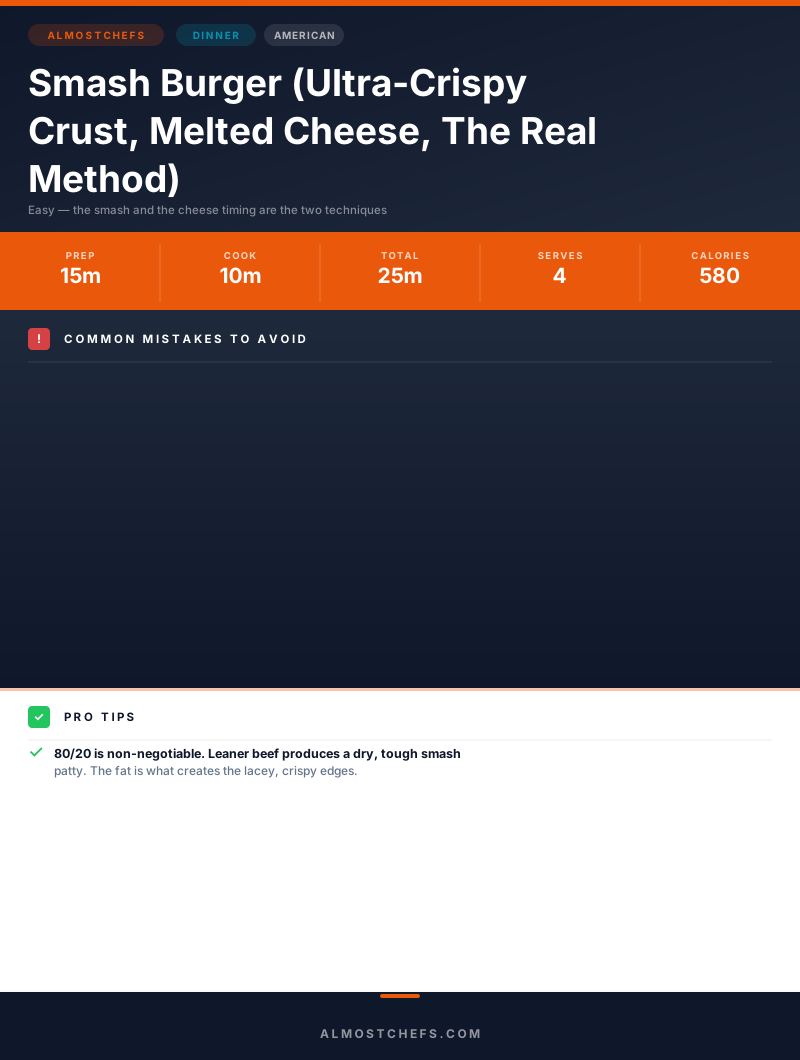
Patty didn't crust — it steamed: Skillet not hot enough, or patties smashed too far in advance. The surface needs to be ripping hot before the meat makes contact — cast iron preheated for 3-4 minutes over high heat. Smash immediately when the ball hits the pan, not after letting it sit. Any delay allows steam to build before the crust can form.
- 2
Meat sticks to the spatula when smashing: Use a sheet of parchment paper between the spatula and the meat. Press hard and immediately peel the parchment off before the meat cooks onto it. This is the technique — every smash burger operation uses this or a similar approach.
- 3
Cheese not fully melted: Cheese added too late, or no steam assist. Add cheese in the last 30 seconds of cooking and immediately cover the skillet with a dome or lid for 20 seconds — the trapped steam melts the cheese uniformly. American cheese melts fastest; other cheeses need a bit more steam time.
The Video Reference Library
Want to see it in action? Here are the exact videos we analyzed and combined to build this foolproof recipe translation:
Weissman's complete smash burger with the parchment technique, the crust formation visual, and the cheese-melting steam method. Best overall reference.
Ethan's breakdown of why smash burgers produce more Maillard surface than thick patties, with temperature comparisons. The most rigorous technical reference.
A focused technique video on the exact smash motion, timing, and cheese melt. Good reference for the physical execution.
🛠️ Core Equipment
- Cast iron skillet or flat-top griddleMaximum heat retention and even distribution. The smash technique requires a surface that doesn't lose temperature when cold meat hits it. Cast iron maintains its heat through contact; nonstick pans lose temperature too quickly.
- Heavy spatula or burger pressThe smashing tool. A wide, rigid metal spatula — the type used in commercial kitchens — provides the leverage and surface area to press evenly. A burger press works but a wide metal spatula is more versatile.
- Parchment paper squaresPlaced between spatula and meat during smashing to prevent sticking. Cut into 4-inch squares. This is the standard technique.
- Metal dome or skillet lidFor steaming the cheese in the final 20 seconds. Creates a microclimate of steam that melts cheese uniformly and faster than ambient heat alone.
Smash Burger (Ultra-Crispy Crust, Melted Cheese, The Real Method)
🛒 Ingredients
- ✦1.5 lbs 80/20 ground beef
- ✦Kosher salt and black pepper
- ✦8 slices American cheese
- ✦4 brioche or potato buns, toasted
- ✦--- Sauce ---
- ✦3 tablespoons mayonnaise
- ✦1 tablespoon ketchup
- ✦1 tablespoon yellow mustard
- ✦1 tablespoon pickle juice
- ✦1/2 teaspoon garlic powder
- ✦--- Toppings ---
- ✦Shredded iceberg lettuce
- ✦Thinly sliced white onion
- ✦Dill pickle slices
- ✦Sliced tomato
👨🍳 Instructions
01Step 1
Mix sauce ingredients together. Refrigerate until needed.
02Step 2
Divide beef into 8 loose balls, about 3 oz each (do not overwork the meat — loose balls produce better crust). Season tops generously with salt and pepper.
03Step 3
Preheat a cast iron skillet or griddle over high heat for 3-4 minutes until very hot. Add a thin film of neutral oil and let it smoke slightly.
04Step 4
Place 2-3 beef balls in the pan, seasoned side down. Immediately place a square of parchment paper on top of each ball and press firmly with a heavy spatula, applying your body weight. Hold for 10-15 seconds.
05Step 5
Peel off the parchment. Season the top of each patty with salt and pepper. Cook undisturbed for 60-75 seconds until the edges are deeply browned and crispy.
06Step 6
Scrape and flip each patty with the spatula, getting under the crust cleanly. Immediately place 2 slices of American cheese on top of each patty.
07Step 7
Cover with a metal dome or skillet lid for 20 seconds to steam and melt the cheese completely.
08Step 8
Stack two patties per bun for a double. Build: bottom bun + sauce + pickles + onion + double patty stack + lettuce + tomato + top bun (sauced).
Nutrition Per Serving
Estimates based on standard preparation. Adjustments alter macros.
🔄 Substitutions
Instead of 80/20 ground beef...
Use 85/15 (slightly leaner, less crispy edges)
Goes no leaner than 85/15. The fat is structurally important.
Instead of American cheese...
Use Cheddar or pepper jack
Use the steam method for 30 seconds instead of 20 — non-processed cheeses melt slower.
Instead of Brioche bun...
Use Potato roll or Martin's potato bread
Potato roll is the classic smash burger bun — soft, slightly sweet, holds everything together.
🧊 Storage & Reheating
In the Fridge
Cooked patties can be refrigerated for 2 days. Reheat in a hot skillet for 60 seconds per side.
In the Freezer
Form raw balls, freeze on a sheet, bag. Cook from frozen — add 30 seconds per side.
Reheating Rules
Hot skillet, 60 seconds per side. Microwave makes them tough.
❓ Frequently Asked Questions
Why is 80/20 beef necessary for smash burgers?
The fat content determines crust quality and edge texture. When the ball is smashed, the fat distributes across the contact surface and fries in the hot pan, producing the lacey, crispy edges that define a good smash burger. Leaner beef doesn't have enough fat to produce this effect — you get a flat, dry patty rather than a crispy one.
What's the best pan for smash burgers?
Cast iron or a flat-top griddle. Both hold heat well under the shock of cold meat contact. A regular nonstick pan loses temperature too quickly when the cold beef hits it, which delays crust formation. If you're using a nonstick pan, preheat longer and work in smaller batches.
Can I make smash burgers without a press or heavy spatula?
Use the bottom of a small cast iron pan or a heavy pot. The smashing tool just needs to be flat, heavy, and rigid enough to distribute your weight evenly. A regular spatula isn't rigid enough to press evenly.
Why do smash burgers need parchment paper?
The meat sticks to the spatula without it. As soon as the ball makes contact with the hot pan, the proteins on the surface begin to set. If the spatula is in direct contact with the meat during smashing, it tears the surface when you peel it back. Parchment paper creates a non-stick barrier that lets you press firmly without the meat adhering.
How do you get the cheese so melted?
American cheese plus steam. After placing the cheese on the just-flipped patty, cover the pan immediately with a dome or lid for 20 seconds. The trapped steam creates a high-humidity microclimate that melts the cheese from above without needing more cooking time from the patty below.
Why are smash burgers better than thick burgers?
Crust-to-meat ratio. A smash burger is almost entirely crust — the thin patty maximizes the amount of Maillard reaction surface relative to the total weight of meat. A thick burger has a relatively small crust (only the top and bottom face) and a large gray interior. If you like the crust and the flavor of well-browned beef, smash burgers are not a trend — they're the technically superior format.
The Science of
Smash Burger (Ultra-Crispy Crust, Melted Cheese, The Real Method)
We turned everything on this page into a beautiful, flour-proof PDF cheat sheet. Print it out, stick it to your fridge, and never mess up your smash burger (ultra-crispy crust, melted cheese, the real method) again.
*We'll email you the high-res PDF instantly. No spam, just perfectly cooked meals.
AlmostChefs Editorial Team
We translate the internet's most popular cooking videos into foolproof, beginner-friendly written recipes. We analyze multiple methods, test them in our kitchen, and engineer a single "Master Recipe" that gives you the best possible result with the least possible stress.