Sloppy Joes (Ground Beef, Tangy Sauce, The Correct Texture)
Sloppy Joes that are actually sloppy — ground beef in a tangy tomato-Worcestershire sauce that's thick enough to stay on the bun without being paste. The texture is everything.

“Sloppy Joes from a can taste like ketchup dissolved in corn syrup with some gray meat stirred in. From scratch, the same concept becomes something different entirely — a tangy, savory sauce built on real fond, with beef fat rendered into the sauce rather than floating on top of it. The difference is twenty minutes and understanding what the reduction step actually does.”
Why This Recipe Works
Sloppy Joes have a reputation problem. The name implies mess, the association is a can of Manwich, and the result is usually a bun dissolving into sweet, gloppy orange sauce with textureless meat somewhere inside it. That version exists because it's built on a shortcut: canned sauce poured over cooked beef with no attention paid to texture, balance, or the fundamental chemistry of what makes a good meat sauce.
The version that works is built differently. It starts with understanding what 80/20 beef actually contributes, what Worcestershire sauce is doing in the flavor equation, and why the reduction step is the recipe — not just a step in the recipe.
Why 80/20 Beef Produces Better Results
Ground beef is labeled by its lean-to-fat ratio. 80/20 means 80% lean muscle and 20% fat. 90/10 means 90% lean, 10% fat. The conventional advice is that leaner beef is healthier and therefore better. For Sloppy Joes, this advice produces inferior results.
Fat does two things in this recipe. First, it conducts heat more effectively than lean muscle protein, which means 80/20 beef browns faster and more evenly than 90/10. The Maillard reaction — the complex chain of chemical reactions responsible for the browned, savory crust on cooked protein — requires high surface temperatures. Fat surrounding the protein reaches and maintains those temperatures more readily than water-dense lean muscle.
Second, many flavor compounds are fat-soluble rather than water-soluble. The aromatic compounds in garlic, the sulfur compounds from browning, the fermented notes from Worcestershire — these dissolve preferentially into fat. That fat then disperses through the sauce, carrying those compounds with it. Lean beef produces a sauce with less flavor integration because there's less fat medium to transport the flavor compounds.
The trade-off is that you need to manage the fat: drain most of it after browning, leaving about a tablespoon. That tablespoon does the work. The rest is grease.
Worcestershire as Umami Architecture
Worcestershire sauce is one of the most complex condiments in a home kitchen, and most people treat it like a generic brown flavoring. It is not. A traditional Worcestershire contains: fermented tamarind (sourness, earthiness), anchovies (pure glutamate-based umami), molasses (sweetness and bitterness), malt vinegar (sharp acidity), onion, garlic, spices, and cloves. The fermentation process concentrates and transforms these ingredients over months.
The result in this sauce is layered. The anchovies contribute free glutamates — the same compounds responsible for the savory depth in Parmesan, soy sauce, and mushrooms. You cannot taste fish in the finished dish. What you taste is a quality often described as "savory depth" or "roundness" — the sensation that a sauce has more going on than its individual ingredients suggest.
Two tablespoons of Worcestershire in this recipe anchors the sauce below the brightness of the vinegar and the sweetness of the brown sugar. Removing it produces a flat, two-dimensional tomato-beef sauce. Substituting soy sauce provides the glutamates but loses the fermented complexity. There is no perfect substitute. Use the real thing.
The Reduction Step Is the Recipe
Tomato sauce from a can contains roughly 90% water. Worcestershire sauce is thin. Apple cider vinegar is liquid. You have added a significant amount of water to a meat mixture. Without reduction, the sauce is wet, thin, and runs off the bun the moment you assemble the sandwich.
The reduction step — simmering the sauce uncovered for 8-10 minutes over medium heat — is the mechanism by which water escapes the sauce as steam and the solids concentrate. The tomato solids, meat proteins, and dissolved flavor compounds represent a fixed mass. As water evaporates, that mass occupies a smaller volume of liquid, which means every spoonful of sauce has a higher concentration of flavor and the viscosity increases.
A properly reduced Sloppy Joe sauce will hold a track when you drag a spoon through it. It will mound slightly when spooned onto a bun rather than running into a puddle. The meat and sauce will behave as an integrated unit rather than beef floating in liquid. Rushing this step — turning up the heat to speed the evaporation — works but requires constant stirring to prevent the tomato solids from scorching on the pan surface where temperatures are highest.
The Bun Problem
An untoasted hamburger bun is approximately 45% moisture by weight. Hot, wet sauce in contact with that bun creates a moisture gradient — the hot liquid wants to move into the cooler, drier bun through capillary action. The bun absorbs moisture from below and simultaneously from the steam of the hot meat above. Within 60 to 90 seconds, the bottom of the bun has absorbed enough liquid to lose structural integrity.
Toasting the cut surface creates a Maillard crust — the same browned surface chemistry that happens on the beef during browning. That crust is dehydrated, dense, and significantly less permeable to moisture than the raw soft interior. It does not prevent moisture absorption permanently, but it delays it long enough to eat the sandwich before it collapses. This is the entire purpose of toasting the bun, and it is why the instruction to toast is not a preference.
The cast iron skillet does double duty here — sear the beef in it and toast the buns in the same pan without washing it between uses. The residual beef fat on the pan surface adds a subtle savory note to the toasted bun that a broiler cannot replicate.
Balance Is a Calibration, Not a Formula
The brown sugar and apple cider vinegar in this recipe are in tension with each other by design. The tomato sauce is acidic. The Worcestershire is both sweet and sharp. The beef fat is rich. The brown sugar softens the acid edges; the vinegar cuts the richness.
The correct balance depends on the brand of tomato sauce you use — some are sweeter, some are sharper. Taste after the reduction and calibrate. If it reads as too sweet, add vinegar in half-teaspoon increments. If it reads as too sharp, add brown sugar in half-teaspoon increments. If it reads as flat despite correct sweetness and acid, it needs more Worcestershire or more salt. The recipe gives you a starting ratio that works for most tomato sauces, but the final adjustment is always done by taste.
Where Beginners Mess This Up
Before we start, read this. These are the 4 reasons your sloppy joes (ground beef, tangy sauce, the correct texture) will fail:
- 1
Not draining enough fat from the beef: 80/20 ground beef renders a significant amount of fat during browning. If you don't drain most of it before building the sauce, the finished Sloppy Joe is greasy — a film of orange beef fat floats on top of the sauce and soaks into the bun. Drain all but about one tablespoon of the rendered fat. That tablespoon carries flavor. The rest is just grease.
- 2
Skipping the reduction step: Tomato sauce is approximately 90% water. Worcestershire sauce is thinner still. Without reducing the sauce for at least 8-10 minutes over medium heat after all the liquids go in, you have a wet, thin mixture that runs off the bun and pools on the plate. A proper Sloppy Joe sauce should hold a spoon's track through it. That consistency comes from evaporation — time and heat, not a thickener.
- 3
Not toasting the buns: A soft, untoasted bun in contact with hot, wet sauce wicks moisture immediately and collapses into a soggy mass within 60 seconds. Toast the cut sides of the buns in a dry skillet or under the broiler until lightly golden. The toasted surface creates a moisture barrier that buys you the time to actually eat the sandwich. This is not optional.
- 4
Underseasoning the beef before browning: Ground beef is mild. Season it with salt and pepper before it hits the pan, not after. Salt added before browning draws out surface moisture which then evaporates quickly, concentrating the Maillard reaction on the meat's surface. Salt added after produces seasoned sauce but underseasoned beef. The two textures should be integrated, not separate.
The Video Reference Library
Want to see it in action? Here are the exact videos we analyzed and combined to build this foolproof recipe translation:
The primary reference video. Pay attention to the fat-draining step and the reduction — those two details separate this from a mediocre version. The bun-toasting section at the end is worth watching even if you've toasted bread before.
A breakdown of how water evaporation concentrates sauces and what visual cues to look for. Useful context for understanding why the reduction step in Sloppy Joes is not optional.
Covers the difference between browning ground beef properly versus steaming it in its own fat. The principle here applies to anything with ground beef — tacos, meat sauce, this recipe.
🛠️ Core Equipment
- Large skillet or sauté pan (12-inch)Surface area matters for two reasons: browning the beef (you need single-layer contact with the hot surface) and reducing the sauce (wider pan = faster evaporation = less stirring time). A 10-inch pan with 1.5 lbs of beef turns into a crowded, steaming situation. 12-inch gives you room.
- Wooden spoon or stiff spatulaFor breaking the ground beef into small, even crumbles as it browns. Ground beef pressed into the pan and left alone develops fond on one side. Broken into pieces, it browns more evenly and produces more surface area for the sauce to cling to.
- Cast iron skillet or heavy-bottomed panEven heat distribution prevents the sauce from scorching during the reduction phase. See the [cast iron skillet](/kitchen-gear/review/cast-iron-skillet) review for why material matters here — hot spots in thin pans will burn the sugars in the tomato sauce before the reduction finishes.
Sloppy Joes (Ground Beef, Tangy Sauce, The Correct Texture)
🛒 Ingredients
- ✦1.5 lbs ground beef (80/20)
- ✦1 medium yellow onion, finely diced
- ✦1 green bell pepper, finely diced
- ✦4 cloves garlic, minced
- ✦1 can (15 oz) tomato sauce
- ✦2 tablespoons tomato paste
- ✦2 tablespoons Worcestershire sauce
- ✦1 tablespoon brown sugar
- ✦1 tablespoon apple cider vinegar
- ✦1 teaspoon chili powder
- ✦1/2 teaspoon ground cumin
- ✦Salt and black pepper to taste
- ✦4 burger buns, split and toasted
👨🍳 Instructions
01Step 1
Heat a large skillet over medium-high heat until hot. Add the ground beef in a single layer without stirring. Season with salt and pepper.
02Step 2
Break the beef into crumbles with a wooden spoon as it cooks. Cook for 6-8 minutes total until no pink remains and the beef is showing brown color. Drain all but about 1 tablespoon of rendered fat.
03Step 3
Reduce heat to medium. Add the diced onion and bell pepper to the pan with the beef. Cook for 4-5 minutes until softened, stirring occasionally.
04Step 4
Add the minced garlic, chili powder, and cumin. Cook for 1 minute until fragrant.
05Step 5
Add the tomato paste and stir it into the meat mixture. Cook for 2 minutes, stirring frequently, until the paste darkens slightly.
06Step 6
Pour in the tomato sauce, Worcestershire sauce, brown sugar, and apple cider vinegar. Stir to combine thoroughly.
07Step 7
Bring to a simmer over medium heat, then reduce to medium-low. Cook uncovered for 8-10 minutes, stirring occasionally, until the sauce has thickened to a scoopable, jammy consistency that holds a clear track when you drag a spoon through it.
08Step 8
Toast the split buns cut-side down in a dry skillet over medium heat or under a broiler for 2-3 minutes until lightly golden.
09Step 9
Spoon the beef mixture generously onto the toasted buns and serve immediately.
Nutrition Per Serving
Estimates based on standard preparation. Adjustments alter macros.
🔄 Substitutions
Instead of Ground beef (80/20)...
Use Ground turkey (85/15)
Lower saturated fat content. Turkey is leaner and drier, so the sauce needs to be slightly looser — reduce the simmer time by 2 minutes. Add a splash of olive oil to compensate for the lower fat content if the mixture looks dry after browning.
Instead of Apple cider vinegar...
Use White wine vinegar or red wine vinegar
Same acidity function, slightly different flavor profile. White wine vinegar is cleaner and more neutral. Red wine vinegar adds a subtle fruity depth. Either works.
Instead of Burger buns...
Use Brioche buns, potato rolls, or hoagie rolls
Brioche is richer and toasts better. Potato rolls are softer and absorb slightly more moisture — toast more aggressively. Hoagie rolls work for a larger, open-faced presentation.
🧊 Storage & Reheating
In the Fridge
Store the beef mixture in an airtight container for up to 4 days. The sauce thickens considerably in the fridge as the tomato solids set. Reheat with a splash of water to restore consistency.
In the Freezer
Freeze the beef mixture in portions for up to 3 months. Thaw overnight in the refrigerator before reheating. Do not freeze assembled sandwiches.
Reheating Rules
Reheat in a skillet over medium-low heat with 2-3 tablespoons of water, stirring occasionally, until heated through and saucy again. Microwaving works but tends to dry the beef — cover with a damp paper towel and use 70% power.
❓ Frequently Asked Questions
Why does my sauce taste flat even though I followed the recipe?
Most likely cause: insufficient reduction. A sauce with too much water tastes diluted regardless of how much flavoring you've added. Return it to medium-low heat and continue reducing, stirring occasionally, until it tightens. Taste again after another 5 minutes of reduction — you'll notice the difference.
Can I use ground pork or Italian sausage instead of beef?
Ground pork works well and produces a slightly sweeter, fattier sauce. Italian sausage (removed from casings) adds fennel and herb notes that aren't traditional but taste good. If using sausage, reduce or eliminate the chili powder since the sausage is already heavily seasoned.
Why is my Sloppy Joe mixture greasy?
You didn't drain enough fat after browning the beef. 80/20 beef renders approximately 4-6 tablespoons of fat for 1.5 lbs. You want to keep about 1 tablespoon and drain the rest. If the finished sauce looks oily, return it to the pan and continue cooking — the excess fat will partly emulsify into the sauce as it reduces further.
Can I make this in advance for a party?
Yes — this is one of the better dishes to make ahead. Cook the beef mixture completely, cool, and refrigerate for up to 4 days. Reheat in a slow cooker on the warm setting for 2 hours or in a pot on the stovetop. Have guests toast their own buns. The sauce actually improves after 24 hours as the flavors integrate.
How do I stop the bun from getting soggy immediately?
Two steps: toast the buns aggressively (they need genuine color, not just warmth) and serve immediately after assembling. The toasted surface delays moisture absorption but does not prevent it indefinitely. If you're feeding a crowd and need to assemble ahead, keep the beef mixture warm in a slow cooker and let people build their own sandwiches.
The Science of
Sloppy Joes (Ground Beef, Tangy Sauce, The Correct Texture)
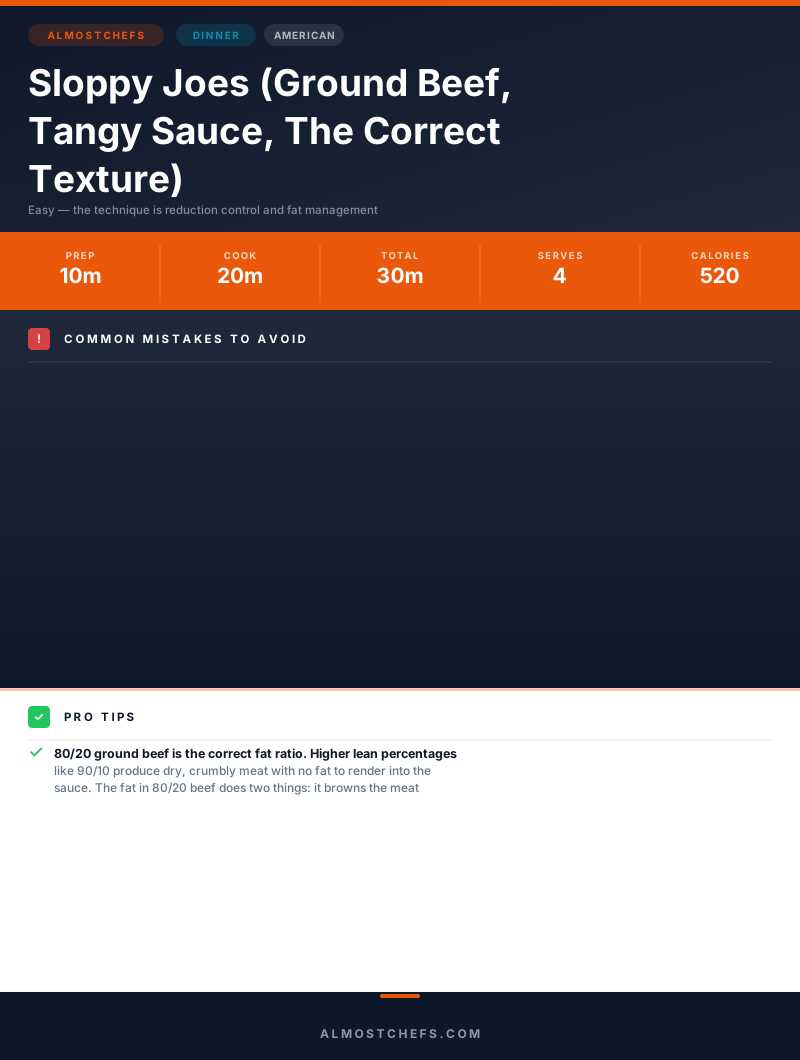
We turned everything on this page into a beautiful, flour-proof PDF cheat sheet. Print it out, stick it to your fridge, and never mess up your sloppy joes (ground beef, tangy sauce, the correct texture) again.
*We'll email you the high-res PDF instantly. No spam, just perfectly cooked meals.
AlmostChefs Editorial Team
We translate the internet's most popular cooking videos into foolproof, beginner-friendly written recipes. We analyze multiple methods, test them in our kitchen, and engineer a single "Master Recipe" that gives you the best possible result with the least possible stress.