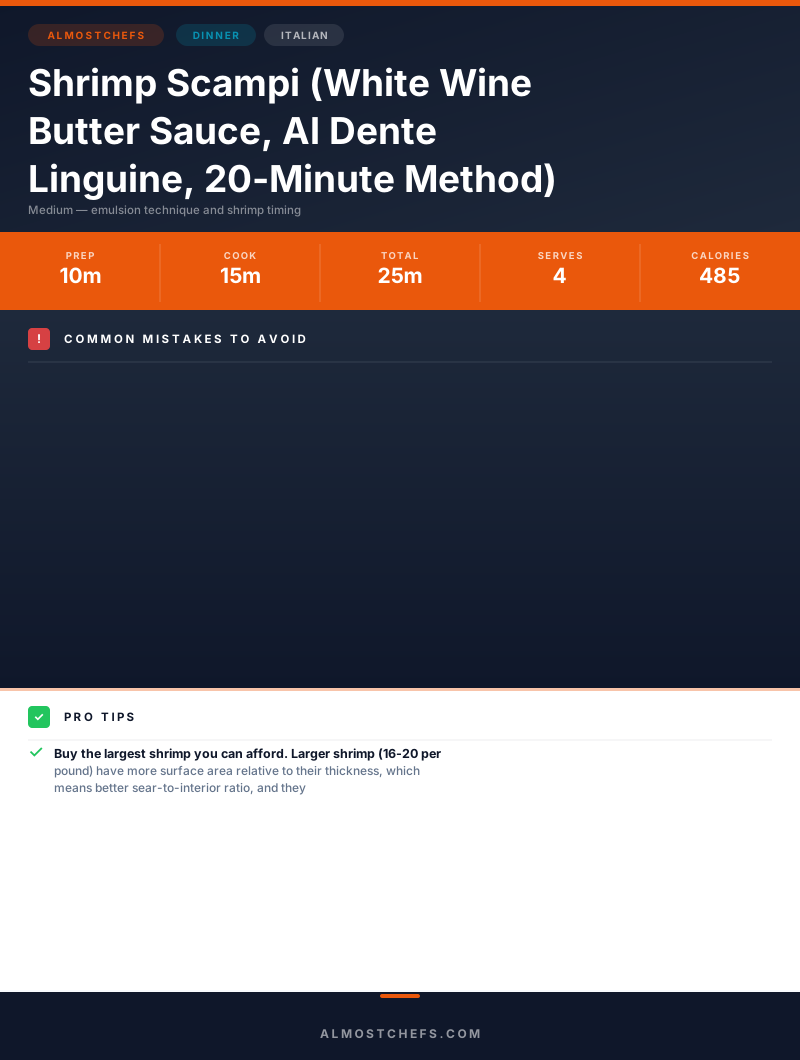
Shrimp Scampi (White Wine Butter Sauce, Al Dente Linguine, 20-Minute Method)
Classic shrimp scampi with a glossy white wine butter sauce, properly al dente linguine, and garlic cooked golden — not burned. Done in 20 minutes, no shortcuts that matter.

“Shrimp scampi has a two-minute window. Get the shrimp in on time, pull them out on time, and the dish is silky and sweet. Miss that window by 90 seconds and the shrimp are rubbery, the sauce is broken, and you're eating expensive rubber bands in garlic-flavored oil. The technique is simple. The timing is non-negotiable.”
Why This Recipe Works
Shrimp scampi is a 20-minute dish with a 90-second failure window. That window is the shrimp. Everything else — the garlic technique, the emulsion, the pasta water, the choice of linguine over spaghetti — exists to support and serve those two minutes when the shrimp are in the pan. Understand what happens to shrimp protein under heat and you understand why the recipe is structured the way it is.
Shrimp cook faster than any other protein you'll work with at the home stove. A large shrimp is roughly 1/4 to 3/8 inches thick at its thickest point. Its muscle is composed primarily of myosin and actin proteins, the same contractile proteins found in all animal muscle tissue. Myosin begins denaturing at approximately 120°F — the shrimp has barely hit the pan. Actin fully denatures at around 145-150°F. At that point, all the proteins have coagulated, all the structural water has been expelled from the muscle cells, and the shrimp is cooked through. In a hot stainless skillet, a large shrimp goes from raw to cooked in 60-90 seconds per side. The difference between perfectly cooked and overcooked is the time it takes to reach for a spoon. This is why the visual cue — the loose C shape indicating just-done, the tight O shape indicating overcooked — matters more than any timer. A shrimp curled into a tight circle has expelled its intracellular moisture and contracted into a smaller, denser, chewier piece of protein. There is no undoing this.
The other implication of this fast cook time: the shrimp must be pulled from the pan before you think they're done. They continue cooking from residual heat for 30-60 seconds after leaving the burner, and they return to the pan for a final 30-second toss at the end. Every second of cooking counts. Take them out when the thickest part is barely opaque and the interior still looks translucent at its center — it will be perfect by the time it hits the plate.
The butter-wine emulsion is a fat-water interface problem. Butter is an emulsion of approximately 80% fat and 20% water and milk solids. When butter is heated above roughly 190-200°F, the fat separates from the water phase and the emulsion breaks permanently — this is why clarified butter exists. When you finish a sauce with cold butter at a controlled temperature (160-180°F), you're exploiting the butter's existing emulsion structure. The cold butter pieces you add to the hot pan are still in their emulsified state. The fat doesn't separate because the temperature is too low for that to happen. The swirling action combines the melting butter with the reduced wine and pasta water, creating a unified sauce that's creamy, glossy, and opaque rather than greasy and separated.
Pasta water is not a backup plan — it's a structural ingredient. When pasta cooks, starch granules on the surface of the pasta swell, rupture, and dissolve into the surrounding water. A cup of pasta water contains a meaningful concentration of dissolved starch. Starch molecules are amphiphilic: one end of the molecule is hydrophilic (water-attracting), the other end is hydrophobic (fat-attracting). Dissolved in the sauce, starch molecules position themselves at the fat-water interface, stabilizing the emulsion from both sides simultaneously. This is the same mechanism that makes roux-thickened sauces stable, except the thickener is dissolved pasta starch instead of cooked flour. The practical consequence: a scampi sauce made with pasta water holds together longer, coats pasta more evenly, and resists breaking under heat better than one made without it.
Garlic burns at 350°F, and your pan will be above 400°F. This is the constraint that drives the garlic technique in this recipe. After searing the shrimp, the pan has significant residual heat. If you add garlic immediately without reducing the heat, it will go from raw to bitter and black in under 60 seconds. The recipe calls for reducing the heat to medium — not medium-high, not low, medium — before the garlic goes in. At medium heat on a residential burner, a stainless skillet will hold around 250-300°F, which is comfortably below garlic's burning point but hot enough to develop color and cook the raw sharpness out of the allicin compounds. What you want from the garlic is a golden, mellow sweetness — not the acrid bitterness of burned garlic, and not the harsh bite of raw garlic that was only heated briefly. The 60-90 seconds at medium heat threads that needle. The oil remaining in the pan after the shrimp cook is enough fat to cook the garlic without adding more — the fond from the shrimp helps too, contributing a savory depth that's released when the wine deglazes the pan.
Linguine over spaghetti is a geometry argument. Spaghetti has a circular cross-section. Linguine has a flattened oval. In practical terms, linguine has approximately 15-20% more surface area per unit of weight than spaghetti of equivalent thickness. In a butter-wine sauce with no chunky components, the sauce clings to the pasta surface — that's the entire delivery mechanism. More surface area means more sauce per bite. This is also why the pasta goes into the sauce while the sauce is still active and slightly fluid: the 60-90 seconds of tossing in the pan is not just reheating — the pasta is absorbing sauce, and the surface starch from the linguine is contributing to the final sauce texture. See the stainless steel skillet for the right pan to use — it must be able to hold the pasta during this stage without overcrowding.
The wine reduction is not optional and it is not about alcohol. Home cooks sometimes treat the wine addition as a flavoring gesture — a splash of wine for aroma. It's not. The wine goes in after the garlic and needs to reduce by half. That reduction does three things. First, it cooks off the ethanol (which is harsh) and concentrates the flavor compounds that survive evaporation — the fruit esters, the tartaric acid, the traces of sugar. Second, the acidity in the wine deglazes the pan, dissolving the fond from the shrimp sear and incorporating those Maillard reaction products into the sauce. Third, the slight concentration of carbohydrates in the wine (glycerol, residual sugars) adds body that supports the butter emulsification that follows. A wine reduction that's too short produces a sauce that tastes sharp and unintegrated. A reduction that's too long concentrates the acid too aggressively. Half the original volume is the target — it takes about 2 minutes at medium-high heat in a 12-inch pan.
The parsley goes in last and off heat. Fresh herbs contain aromatic volatile compounds — in parsley, primarily myristicin and apiol — that evaporate immediately when exposed to high heat. Adding parsley to a hot pan cooks out exactly the quality that makes fresh parsley worth using. Add it off heat, after tossing, and it stays bright green and fragrant rather than wilted and flavorless.
Where Beginners Mess This Up
Before we start, read this. These are the 4 reasons your shrimp scampi (white wine butter sauce, al dente linguine, 20-minute method) will fail:
- 1
Overcooked, rubbery shrimp: The single most common failure. Shrimp are done when they just turn opaque and curl into a loose C shape. A tight curl (the shrimp looks like a circle) means they're overcooked. Pull them from the pan the moment they're opaque — they continue cooking from residual heat even off the burner. When in doubt, pull 30 seconds early.
- 2
Broken, greasy sauce that doesn't emulsify: The butter was added to a pan that was too hot, or it was added all at once. Butter emulsification requires a controlled temperature — approximately 160-180°F. Above that, the butterfat separates from the water and milk solids and the sauce turns greasy. Add cold butter in pieces, off direct heat, and swirl constantly. The pasta water helps stabilize the emulsion.
- 3
Burned garlic that turns the sauce bitter: Garlic went into a pan that was too hot, or it sat too long without being moved. Garlic burns at around 350°F — well below the temperatures a stainless skillet reaches when preheated over medium-high. Add garlic after removing the shrimp and lowering the heat. It should sizzle gently and turn golden in 60-90 seconds. Brown edges are acceptable. Black edges mean the dish is compromised.
- 4
Watery, thin sauce that won't cling to pasta: Either the wine wasn't reduced enough before the butter was added, or no pasta water was used. The wine must be reduced by at least half before buttering the pan — this concentrates both flavor and the carbohydrates in the wine that help the sauce emulsify. Pasta water provides starch, which acts as an additional emulsifier and gives the sauce body.
The Video Reference Library
Want to see it in action? Here are the exact videos we analyzed and combined to build this foolproof recipe translation:
Chlebowski's methodical breakdown of the butter-wine emulsion and why pasta water is the secret to a sauce that clings. He also demonstrates the exact shrimp doneness cue — the loose C versus tight O — better than any written description.
Binging with Babish takes on scampi with a focus on the restaurant technique — high heat, cold butter finish, aggressive tossing. Good reference for the pace and confidence the dish requires.
The Italian technique for building butter-wine emulsions from scratch, including the temperature control method. Not scampi-specific, but the foundational technique is identical.
🛠️ Core Equipment
- 12-inch stainless steel skilletStainless builds fond — the caramelized protein residue left after searing the shrimp — which dissolves into the wine and becomes part of the sauce's flavor base. Nonstick prevents fond formation entirely. Use a [stainless steel skillet](/kitchen-gear/review/stainless-steel-skillet) that can handle both high sear heat and the lower temperature required for butter emulsification.
- Large pot for pastaLinguine needs at least 4-5 quarts of vigorously boiling water to cook evenly without sticking. Reserve a full cup of pasta water before draining — you'll use at least 1/4 cup of it to build the sauce, and you want extra on hand to adjust consistency.
- TongsFor tossing linguine in the sauce without breaking the pasta. Tongs let you lift, separate, and coat every strand of pasta simultaneously rather than stirring and compressing the noodles.
- Instant-read thermometer (optional but useful)For butter emulsification: the pan should be between 160-180°F when butter goes in. A thermometer removes the guesswork during the most technically sensitive step of the recipe.
Shrimp Scampi (White Wine Butter Sauce, Al Dente Linguine, 20-Minute Method)
🛒 Ingredients
- ✦1 lb large shrimp (16-20 count), peeled and deveined
- ✦12 oz linguine
- ✦6 tablespoons unsalted butter, cold and cut into cubes
- ✦6 cloves garlic, minced
- ✦1/2 cup dry white wine (Pinot Grigio or Sauvignon Blanc)
- ✦1/4 cup reserved pasta water
- ✦Juice of 1 lemon
- ✦1/4 cup fresh flat-leaf parsley, roughly chopped
- ✦1/4 teaspoon red pepper flakes
- ✦Kosher salt and freshly cracked black pepper
- ✦2 tablespoons olive oil
👨🍳 Instructions
01Step 1
Bring a large pot of well-salted water to a rolling boil. Cook linguine 1 minute short of package al dente time. Before draining, reserve 1 cup of pasta water. Drain and set aside.
02Step 2
Pat shrimp completely dry with paper towels. Season with salt and pepper.
03Step 3
Heat olive oil in a 12-inch stainless skillet over medium-high heat until shimmering. Add shrimp in a single layer and cook 60-90 seconds per side — just until opaque and pink. Do not crowd the pan.
04Step 4
Remove shrimp from pan and set aside on a plate. They will continue cooking from residual heat.
05Step 5
Reduce heat to medium. Add garlic and red pepper flakes to the pan — do not add more oil unless the pan looks completely dry. Cook 60-90 seconds, stirring, until garlic is golden and fragrant.
06Step 6
Add white wine and lemon juice. Scrape up any browned bits from the bottom of the pan. Raise heat to medium-high and reduce the wine by half, about 2 minutes.
07Step 7
Add 1/4 cup pasta water. Reduce heat to medium-low. The pan temperature should drop to around 160-180°F — if you have a thermometer, use it.
08Step 8
Add cold butter cubes two or three at a time, swirling the pan constantly between each addition. Do not stop swirling. The sauce should turn opaque, creamy, and glossy as each addition of butter emulsifies.
09Step 9
Add drained linguine to the pan. Toss with tongs for 60-90 seconds until the pasta is coated in sauce and finishes cooking. Add more pasta water if the sauce looks too tight.
10Step 10
Return shrimp to the pan. Toss once or twice to coat and warm through — no more than 30 seconds. Remove from heat.
11Step 11
Plate immediately. Finish with fresh parsley and an extra squeeze of lemon if desired.
Nutrition Per Serving
Estimates based on standard preparation. Adjustments alter macros.
🔄 Substitutions
Instead of Dry white wine...
Use Dry vermouth or low-sodium chicken broth
Dry vermouth (Noilly Prat or Dolin Dry) is excellent — it's herbaceous and concentrated and actually makes a superior sauce. Chicken broth works but lacks the acidity that wine provides; add an extra teaspoon of lemon juice to compensate.
Instead of Linguine...
Use Spaghetti, fettuccine, or bucatini
Linguine is preferred because its flat, slightly oval cross-section has more surface area than round spaghetti, which means more sauce contact per bite. Fettuccine is wider and works well with richer butter sauces. Bucatini's hollow tube traps sauce inside. All are valid; thin pasta shapes like angel hair are not — they become mushy in the sauce.
Instead of Unsalted butter...
Use Salted butter (reduce added salt)
Salted butter works fine — just don't add extra salt until after tasting. The butter emulsification process is identical.
Instead of Fresh parsley...
Use Fresh basil or chives
Basil adds a sweeter, slightly anise note that works well with the lemon-garlic sauce. Chives add a mild onion note. Both are acceptable. Dried herbs are not — the fresh herb is added off heat specifically to preserve its volatile aromatic oils, which dry herbs don't have.
🧊 Storage & Reheating
In the Fridge
Store sauce and pasta separately if possible, up to 2 days. The emulsified sauce will break when refrigerated and stored with the pasta — the pasta absorbs the sauce liquid and the remaining fat separates. This is expected and recoverable.
In the Freezer
Shrimp scampi does not freeze well. The shrimp become rubbery when frozen and reheated, and the butter sauce does not survive the freeze-thaw cycle intact. Make only what you'll eat.
Reheating Rules
Reheat in a skillet over medium-low heat with a splash of water and a small knob of cold butter. Toss constantly — the heat and butter will re-emulsify the sauce. Add the shrimp in the last 60 seconds to avoid overcooking them a second time. Microwave reheating will overcook the shrimp and break the sauce.
❓ Frequently Asked Questions
Why do shrimp cook so fast?
Shrimp are small, thin, and have very little collagen compared to meat. Their muscle proteins — primarily myosin and actin — begin denaturing at around 120°F and are fully set by 145°F. A 1/4-inch thick large shrimp reaches that internal temperature in approximately 60-90 seconds in a hot pan. This is not a flaw to work around — it's a feature that makes shrimp one of the fastest proteins to cook. The margin between perfect and overcooked is about 30 seconds, which is why visual cues (loose C = done, tight O = overcooked) matter more than timers.
Why use linguine instead of spaghetti?
Linguine has a slightly flattened, oval cross-section rather than a perfectly round profile. That flat surface creates more contact area between the pasta and the sauce, which means more sauce clings to each strand. In a simple butter-wine sauce with no chunky vegetables to provide textural contrast, this difference in coating is noticeable. It's not that spaghetti is wrong — it's that linguine does the job better in this specific application. The extra surface area also means the pasta absorbs more of the garlic and white wine flavor from the sauce during the final toss.
How do I keep the butter sauce from breaking?
Three variables control butter emulsification: temperature, agitation, and the presence of emulsifiers. Keep the pan between 160-180°F — high enough to melt the butter but low enough to prevent the fat from fully separating. Add cold butter in small pieces and swirl constantly between each addition. Use pasta water, which contains dissolved starch that acts as an additional emulsifier at the fat-water interface. If the sauce breaks anyway, add cold pasta water and swirl vigorously off heat — the starch re-bridges the fat and water phases.
Can I use frozen shrimp?
Yes — and most shrimp labeled 'fresh' at the counter were previously frozen and thawed anyway. Buy frozen shrimp in the bag (IQF — individually quick frozen) and thaw in cold water for 15 minutes. The quality difference between properly thawed IQF shrimp and so-called fresh shrimp is minimal. The critical step after thawing is thorough drying — frozen shrimp release more water than truly fresh shrimp, and that water must be patted out before they'll sear properly.
What wine should I use for scampi?
Dry white wine with good acidity. Pinot Grigio, Sauvignon Blanc, and unoaked Chardonnay all work. Avoid oaky, heavily buttery Chardonnay — the oak tannins turn bitter when reduced. The wine should be one you'd drink in a glass, not a 'cooking wine' product from the grocery store, which contains added sodium and lacks the acidity needed to deglaze the pan properly.
Is shrimp scampi actually Italian?
The dish is Italian-American. In Italy, 'scampi' refers to a specific crustacean — the Norway lobster (Nephrops norvegicus), also called langoustine. Italian shrimp scampi is made with those langoustines. When Italian immigrants came to America and couldn't find scampi, they substituted large shrimp and kept the name. The preparation — garlic, butter, white wine, lemon — is authentically Italian in spirit. The ingredient substitution is American. The dish as most people know it today is squarely Italian-American.
The Science of
Shrimp Scampi (White Wine Butter Sauce, Al Dente Linguine, 20-Minute Method)
We turned everything on this page into a beautiful, flour-proof PDF cheat sheet. Print it out, stick it to your fridge, and never mess up your shrimp scampi (white wine butter sauce, al dente linguine, 20-minute method) again.
*We'll email you the high-res PDF instantly. No spam, just perfectly cooked meals.
AlmostChefs Editorial Team
We translate the internet's most popular cooking videos into foolproof, beginner-friendly written recipes. We analyze multiple methods, test them in our kitchen, and engineer a single "Master Recipe" that gives you the best possible result with the least possible stress.