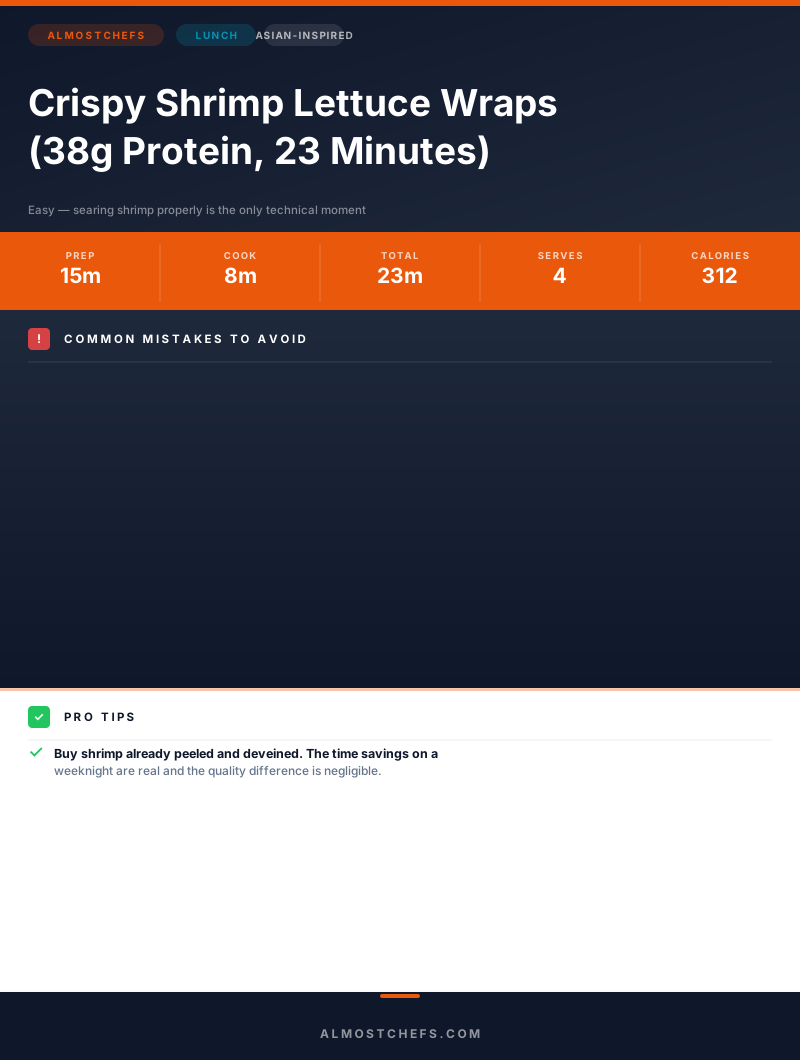
Crispy Shrimp Lettuce Wraps (38g Protein, 23 Minutes)
Light, fast, and genuinely high-protein: tender seared shrimp and edamame tossed in a Greek yogurt peanut sauce, piled into crisp butter lettuce with a crunchy purple cabbage slaw. We broke down the technique so the shrimp sears properly, the sauce emulsifies without breaking, and the whole thing hits the table in under 25 minutes.

“Most lettuce wraps are a beautiful illusion — impressive on a restaurant menu, disappointing at home because the shrimp is rubbery, the sauce is watery, and the whole thing falls apart on the way to your mouth. The fix is not a better peanut butter. It's understanding two things: shrimp finishes cooking in under four minutes and does not forgive hesitation, and a peanut sauce that includes Greek yogurt needs the right acid balance or it seizes into paste. Get those two mechanics right and this is a genuinely excellent 23-minute meal with 38 grams of protein per serving.”
Why This Recipe Works
Lettuce wraps occupy an uncomfortable position in home cooking — they look effortless in restaurant photos and feel nearly impossible to replicate at home. The shrimp is rubbery. The sauce is watery, or it's a paste. The lettuce tears the moment you try to fold it, and suddenly you're eating a deconstructed pile of ingredients that tastes fine but looks like an accident.
None of these failures are about the recipe. They're about three specific mechanics that most recipes don't bother to explain.
The Shrimp Problem
Shrimp is the fastest protein in your kitchen, and that's a trap. Most cooks either underestimate how quickly it finishes cooking and pull it at the pink-but-not-quite-done stage, or overcrowd the pan and end up with a steamed gray mass instead of a proper sear. There's almost no margin for error.
Two rules cover ninety percent of shrimp failures. First: dry the shrimp before it hits the pan. Surface moisture converts immediately to steam when it contacts hot oil, which drops the pan temperature and creates a braising environment instead of a searing one. Ten seconds with a paper towel changes the final color from pale gray to golden pink. Second: use a 12-inch stainless or cast iron skillet and don't touch the shrimp for two full minutes after they go in. Cast iron retains heat when cold protein lands on it. Nonstick pans don't — they drop temperature and the shrimp sits in a puddle of its own moisture.
The total cook time is three to four minutes. That's not an estimate. Shrimp is done when it's opaque throughout and just begins to curl into a loose C-shape. A tight curl means overcooked. A straight body means undercooked. Watch for the C and pull immediately.
The Sauce Architecture
A peanut sauce that contains Greek yogurt is not a standard peanut sauce. The yogurt's protein structure is sensitive to high heat — push it too hard and it breaks, releasing its moisture and turning the sauce grainy and separated. This is why the sauce goes in after the pan comes off the heat, not before.
The Greek yogurt replacement for mayo (common in restaurant versions) isn't just a protein boost — it changes the emulsification dynamic. Yogurt binds through its protein network rather than through fat globules, which means it needs acid to stay cohesive. The rice vinegar in this recipe does that work. Don't skip it, and don't substitute with lemon juice unless you also increase the quantity — lemon is about 6% citric acid, rice vinegar is about 5% acetic acid, and the flavor profiles are meaningfully different in this context.
If the sauce seizes before you can add it to the pan, a teaspoon of warm water whisked in will usually bring it back. The emulsion isn't destroyed — it just needs more liquid to redistribute.
The Lettuce Architecture
A dry, cold butter lettuce leaf holds structural integrity for about two minutes after filling. A wet or room-temperature one starts going limp before you finish plating. After rinsing, the leaves need five minutes on a clean towel — not a shake over the sink, an actual rest. The surface moisture has to evaporate, not just be flung off.
Butter lettuce works better than romaine here because the leaves form a natural cup shape, which keeps the filling from sliding out when you lift the wrap. Romaine is stiffer and straighter — fine for heavier fillings, awkward for these. The edamame and slaw have enough structural interest on their own; you want the leaf to be a vessel, not a structural competitor.
The cabbage slaw goes on top of the shrimp, not underneath it. This keeps the cabbage from getting warm and wilting, and it creates a textural contrast — warm, sauced shrimp below, cold, crunchy slaw above — that makes the finished wrap taste more considered than it has any right to at 23 minutes total time.
The lime at the end is not optional. It cuts the fat in the peanut sauce and reactivates the aromatic compounds in the ginger and garlic. Wraps without fresh lime taste good. Wraps with it taste finished.
Where Beginners Mess This Up
Before we start, read this. These are the 4 reasons your crispy shrimp lettuce wraps (38g protein, 23 minutes) will fail:
- 1
Overcrowding the shrimp in the pan: Shrimp release moisture rapidly when heated. Pack too many into the skillet and they steam instead of sear — you get gray, rubbery shrimp instead of a golden pink crust. Work in a single layer with space between each piece, or cook in two batches. A properly hot pan with room is the difference between a restaurant result and a sad one.
- 2
Adding the sauce too early: The peanut sauce goes in after the shrimp finishes cooking, not before. If you add it to a screaming hot pan mid-cook, the yogurt breaks, the sugar in the honey scorches, and the sauce turns grainy and bitter. Remove the pan from heat for 10 seconds, then add the sauce and toss quickly to coat.
- 3
Not drying the lettuce leaves: Wet lettuce tears and goes limp the second anything warm touches it. After rinsing, shake each leaf dry and lay them on a clean towel for five minutes. A dry, cold leaf gives you structural integrity — it should hold the filling without going transparent or collapsing.
- 4
Skipping the lime finish: The lime is not garnish. It cuts through the fat in the peanut sauce and reactivates the ginger and garlic aromas. Wraps served without fresh lime taste flat and heavy. Wraps served with it taste bright and complete. Squeeze over each wrap right before eating, not in advance.
🛠️ Core Equipment
- 12-inch stainless steel or cast iron skillet ↗You need a wide pan that retains heat when cold shrimp hits the surface. Nonstick pans drop temperature too fast and produce pale, steamed shrimp instead of a proper sear. Cast iron or stainless holds the heat through contact.
- Fine-mesh sieve or salad spinner ↗For draining and drying the lettuce leaves completely. Wet leaves destroy the texture of the finished wrap — they go limp the moment warm filling touches them. Dry is non-negotiable.
- Small mixing bowl and whisk ↗The peanut sauce needs proper emulsification. A fork leaves pockets of unmixed peanut butter. A whisk blends the yogurt, peanut butter, sesame oil, and acid into a cohesive, smooth sauce that coats instead of clumping.
Crispy Shrimp Lettuce Wraps (38g Protein, 23 Minutes)
🛒 Ingredients
- ✦1.5 lbs large shrimp, peeled and deveined
- ✦1 cup frozen shelled edamame, thawed
- ✦1 head butter lettuce or romaine, leaves separated and rinsed
- ✦2 cups shredded purple cabbage
- ✦1 cup shredded carrots
- ✦3 green onions, thinly sliced
- ✦1/4 cup natural peanut butter
- ✦1/4 cup plain Greek yogurt
- ✦2 tablespoons rice vinegar
- ✦1 tablespoon low-sodium soy sauce
- ✦1 tablespoon sesame oil
- ✦1 teaspoon fresh ginger, grated
- ✦2 cloves garlic, minced
- ✦1 tablespoon honey
- ✦2 tablespoons olive oil
- ✦1/4 teaspoon red pepper flakes
- ✦2 tablespoons fresh cilantro, chopped
- ✦1 lime, cut into wedges
- ✦Salt and black pepper to taste
👨🍳 Instructions
01Step 1
Whisk together peanut butter, Greek yogurt, rice vinegar, soy sauce, sesame oil, ginger, garlic, and honey in a small bowl until completely smooth. Set aside.
02Step 2
Pat the shrimp dry with paper towels and season both sides generously with salt and black pepper.
03Step 3
Heat olive oil in a large skillet over medium-high heat until shimmering, about 1 minute.
04Step 4
Add the shrimp in a single layer without crowding. Cook undisturbed for 2 minutes until the underside is pink and lightly golden.
05Step 5
Flip each shrimp and cook for 1-2 minutes more until fully opaque throughout.
06Step 6
Add the thawed edamame and stir to warm through, about 1 minute.
07Step 7
Remove the pan from heat. Pour the peanut sauce over the shrimp and edamame and toss gently to coat. Stir in red pepper flakes and half the cilantro.
08Step 8
Arrange dry butter lettuce leaves on a large platter or individual plates.
09Step 9
Toss shredded cabbage, carrots, and green onions together in a bowl.
10Step 10
Divide the shrimp-edamame mixture among the lettuce leaves. Top each with a handful of the cabbage slaw.
11Step 11
Drizzle any remaining sauce from the pan over the wraps. Scatter remaining cilantro on top.
12Step 12
Serve immediately with lime wedges. Squeeze fresh lime over each wrap just before eating.
Nutrition Per Serving
Estimates based on standard preparation. Adjustments alter macros.
🔄 Substitutions
Instead of Natural peanut butter...
Use Almond butter or sunflower seed butter
Almond butter is slightly more delicate in flavor; sunflower seed butter is earthier. Both work structurally. Use for peanut allergies — protein content is nearly identical.
Instead of Plain Greek yogurt...
Use Silken tofu blended smooth or cashew cream
Tofu version is neutral-tasting and keeps the sauce dairy-free. Cashew cream is richer and slightly sweeter. Both emulsify well with peanut butter.
Instead of Frozen edamame...
Use Baked crispy chickpeas or white beans
Chickpeas add crunch; white beans go softer and more filling. Both deliver 5-7g protein per half cup. Chickpeas require pre-baking — factor in extra prep time.
Instead of Large shrimp...
Use Grilled chicken breast cubes or baked tofu cubes
Chicken gives 31g protein per 3oz and a firmer, meatier texture. Tofu gives 10g per 3oz but absorbs the peanut sauce beautifully. Adjust cook time accordingly — chicken needs 6-7 minutes per side.
🧊 Storage & Reheating
In the Fridge
Store shrimp mixture, slaw, and lettuce leaves in separate airtight containers for up to 2 days. Do not pre-assemble — the lettuce goes limp and the cabbage releases water into the sauce.
In the Freezer
Not recommended. Shrimp become rubbery after freezing and thawing, and lettuce does not survive the freezer at all.
Reheating Rules
Rewarm the shrimp mixture gently in a skillet over low heat with a splash of water for 2-3 minutes. Add a teaspoon of fresh peanut sauce after reheating to restore the coating. Microwave works but risks rubbery shrimp — use it as a last resort.
❓ Frequently Asked Questions
How do I keep the lettuce leaves from tearing?
Use cold, dry leaves. After rinsing, lay each leaf on a clean kitchen towel for 5 minutes. Cold lettuce is firmer and more pliable than room-temperature lettuce. Separate the leaves from the head gently — run a butter knife around the base of each leaf before pulling.
Can I make this ahead for meal prep?
Yes, but store every component separately. The shrimp mixture keeps 2 days refrigerated. The slaw keeps 3 days. The lettuce leaves keep 2 days in a sealed container with a dry paper towel. Assemble at the last minute — assembled wraps go soggy within 30-60 minutes.
My peanut sauce seized up and turned pasty. What happened?
Either the sauce hit a pan that was too hot, or the peanut butter to liquid ratio was off. Fix it: pull the pan off heat, add 2 teaspoons of warm water and a splash of rice vinegar, and stir vigorously. It will usually come back together. For future batches, add the sauce off-heat.
Is this actually low-carb?
At 16g net carbs per serving, it qualifies as low-carb for most definitions. The carbs come primarily from edamame and the honey in the sauce — not from the lettuce wrap itself. If you need to reduce further, halve the honey and swap edamame for sliced cucumber.
Can I use frozen shrimp?
Yes — most 'fresh' shrimp at the counter was previously frozen anyway. Thaw overnight in the fridge or under cold running water for 10 minutes. Pat completely dry before cooking. Do not thaw in warm water or in the microwave — both partially cook the shrimp and produce rubbery results.
What's the difference between butter lettuce and romaine for wraps?
Butter lettuce has softer, more pliable leaves that cup naturally into a boat shape — ideal for delicate wraps. Romaine is firmer and holds heavier fillings without collapsing, but the leaves are more rigid and harder to fold. For this recipe, butter lettuce is better. Romaine is a fine backup.
The Science of
Crispy Shrimp Lettuce Wraps (38g Protein, 23 Minutes)
We turned everything on this page into a beautiful, flour-proof PDF cheat sheet. Print it out, stick it to your fridge, and never mess up your crispy shrimp lettuce wraps (38g protein, 23 minutes) again.
*We'll email you the high-res PDF instantly. No spam, just perfectly cooked meals.
AlmostChefs Editorial Team
We translate the internet's most popular cooking videos into foolproof, beginner-friendly written recipes. We analyze multiple methods, test them in our kitchen, and engineer a single "Master Recipe" that gives you the best possible result with the least possible stress.