Shepherd's Pie (Lamb Mince, Mashed Potato Crust, Proper Braise)
Shepherd's pie with the correct meat — lamb, not beef (that's cottage pie) — braised in a rich stock and topped with buttery mashed potato that forms a golden crust in the oven.

“If you made it with beef, you made cottage pie. Shepherd's pie is made with lamb — always has been, for the obvious reason that shepherds tended sheep, not cattle. The distinction is not pedantry. Lamb has a fat profile and flavor character that is fundamentally different from beef mince, and it produces a filling with more depth and complexity in a braise. The potato topping is not mashed potatoes spread from a serving bowl. It is a specific preparation: stiff enough to pipe or spread cleanly, rich enough to brown under a broiler, and seasoned so the topping pulls its own weight.”
Why This Recipe Works
Shepherd's pie is comfort food with a specific definition: ground lamb, braised in stock and wine with root vegetables, topped with mashed potato and browned in the oven. The name is literal — shepherds kept sheep, and minced lamb was a practical use of leftover roasted lamb in the days when nothing was wasted. At some point, the lamb got replaced with beef in countless home and restaurant versions and the dish got renamed shepherd's pie anyway, which is factually wrong and gastronomically inferior.
Understanding the mechanics of each component — the braise, the potato topping, and the Maillard crust — explains why each step in this recipe is structured the way it is.
The Meat: Why Lamb Is Not Interchangeable
Lamb and beef are both ruminant animals, but their fat composition is different in ways that matter for a braise. Lamb fat contains branched-chain fatty acids — particularly 4-methyloctanoic acid and 4-methylnonanoic acid — that are responsible for the characteristic gamey, slightly mineral flavor most people associate with lamb. These compounds are absent in beef fat. A braised lamb filling has a flavor depth and complexity that a braised beef filling simply does not have. This is not a quality comparison — both are good. They are different flavors from different fats.
The braising process concentrates these fat-derived flavor compounds. As the lamb browns, the Maillard reaction creates new flavor compounds from the amino acids and sugars on the meat surface. As it braises in wine and stock, the fat-soluble flavor compounds from the lamb fat dissolve into the braising liquid, enriching the sauce. By the time the filling is done, the entire liquid has been saturated with lamb-derived flavor. Substituting beef produces a different flavor in the sauce, the meat, and every vegetable in the pan.
The Flour Roux: Why the Filling Needs to Be Thick
Ground lamb and diced vegetables release water during cooking — the lamb from its intramuscular fluids, the carrots, onion, and celery from their high water content (carrots are approximately 88% water by weight). Without a thickening agent, all of that water joins the wine and stock in the pan and produces a soupy filling that doesn't hold its shape when served.
Two tablespoons of flour added after browning the meat creates a roux with the fat left in the pan. A roux is simply fat and flour heated together — the heat gelates the starch and the fat coats the starch granules, preventing lumping when liquid is added. As the braise simmers, the starch granules absorb the braising liquid and swell, thickening the sauce. The key is cooking the raw flour in the fat for a full minute before adding any liquid — raw flour contains amylase enzymes that, if not deactivated by heat, produce a thin, enzymatically broken sauce. One minute of cooking deactivates those enzymes.
The finished filling should be thick enough that a spoon dragged through it leaves a track that holds for several seconds. This thickness is what prevents the potato topping from sinking into the filling during baking and what produces a clean-edged serving when spooned onto a plate.
The Cooling Requirement: Steam and Structure
This is the most skipped step in shepherd's pie recipes, and it is the one with the most significant technical justification. A hot filling is producing steam. Steam rises. Mashed potato applied to the surface of a hot filling sits on top of rising steam, which enters the potato layer from below, hydrates the starch, and turns the underside of the topping from stiff potato into something closer to wet paste.
A cool or cold filling has no active steam production. The potato layer sits on a stable, static surface. During baking, the heat penetrates from above (oven air, then broiler) rather than from below (steam). The result is a topping that browns properly on the surface, stays structured throughout, and holds the meat and potato as distinct layers rather than a merged, soggy mass.
The minimum cooling time is 1 hour at room temperature. Making the filling a day in advance and refrigerating it overnight is the optimal approach — the filling develops flavor as it sits and is cold enough to eliminate any steam risk during assembly.
The Potato Topping: Starch Chemistry and Why You Don't Want a Mixer
Potato cells contain starch granules. When cooked, those granules gelatinize — they absorb water and swell, rupturing the cell walls and producing the soft, mashable texture. The challenge with mashed potatoes is that working them too aggressively after cooking ruptures the cells and releases the starch into the liquid phase, where it forms long chains that produce a gummy, glutinous texture. A stand mixer at medium or high speed does this in under a minute.
A potato ricer or food mill pushes the cooked potato through small holes, separating it into fluffy strands without the mechanical agitation that releases free starch. The result is a lighter, drier, more structured potato that holds its shape when piped and does not become gummy when butter and cream are folded in. Fold — not stir, not beat — the dairy in. Three to four gentle folds with a spatula. Stop when the butter and cream are just incorporated.
The piped topping, with its ridged surface, provides significantly more surface area than a flat spread — surface area that is directly exposed to broiler heat. Under a maximum-heat broiler, those ridges undergo the Maillard reaction within 3-5 minutes, producing golden-brown crust with slightly charred tips. The valleys between the ridges stay pale and soft. Every bite has both textures, which is why the piped topping is superior to the spread one and why the potato ricer that produces the stiff, pipeable potato is worth owning for this recipe.
The Maillard reaction on the potato surface requires dry heat and high temperature — two conditions the broiler provides. Do not cover the dish during broiling, do not add water to the oven, and do not use a lower heat setting that doesn't generate enough surface temperature. Three to five minutes of direct, maximum broiler heat is what creates the crust. Everything before and after is just cooking.
Where Beginners Mess This Up
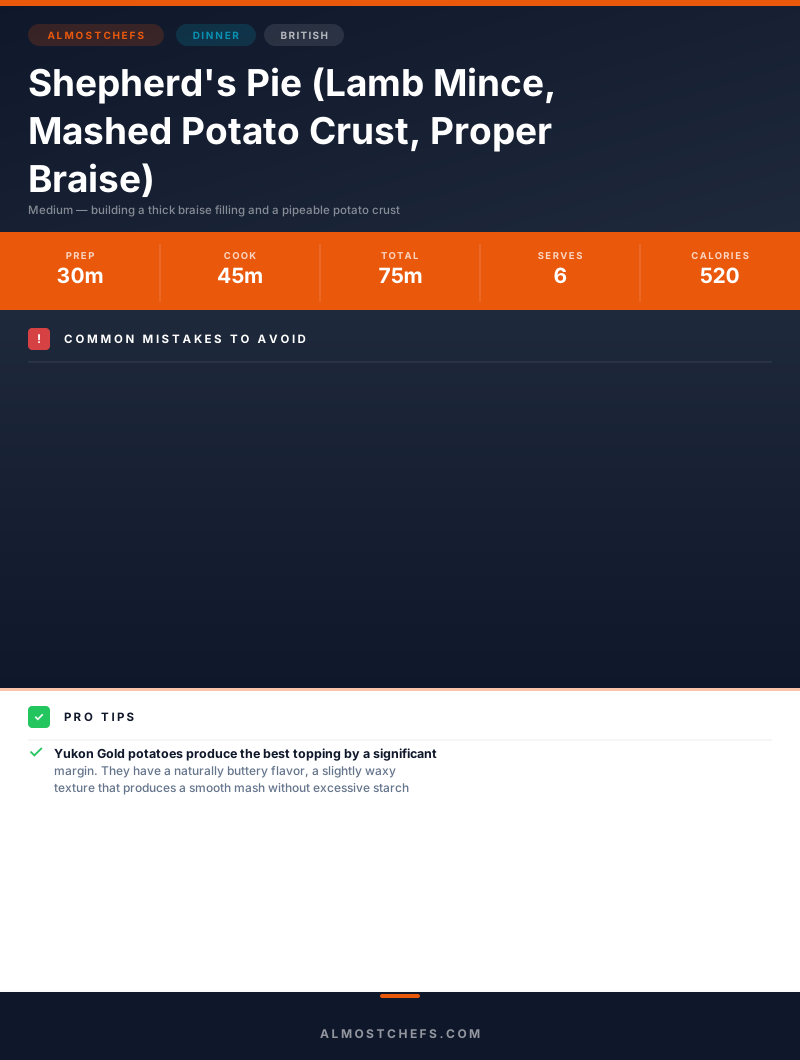
Before we start, read this. These are the 4 reasons your shepherd's pie (lamb mince, mashed potato crust, proper braise) will fail:
- 1
Using beef instead of lamb: Cottage pie uses beef mince. Shepherd's pie uses lamb mince. This is not a matter of preference — it is the definition of the dish. Lamb fat (lanolin-derived compounds) produces the distinctive slightly gamey, mineral flavor that makes the braised filling complex and interesting rather than one-dimensional. Beef mince in the same recipe produces a fine cottage pie. It does not produce shepherd's pie.
- 2
Adding potato topping to a hot filling: If you spread mashed potato directly onto a filling that is still hot or even warm, the bottom of the potato layer absorbs steam from the filling and becomes waterlogged before it ever reaches the oven. The result is a topping that is wet and pasty on the bottom, never crisps properly even under a broiler, and slides around when you try to serve it. The filling must be cooled to at least room temperature — ideally refrigerator-cold — before the potato topping goes on.
- 3
Making the potato topping too thin: The mashed potato topping needs to be thick enough to hold its shape when piped or spread — think the consistency of soft-serve ice cream, not of loose mashed potatoes. Too much cream or milk and the topping flows into the filling during baking rather than sitting on top of it. The potatoes should peak stiffly when you drag a spoon through them. If they're too loose, refrigerate for 20 minutes and they'll stiffen slightly before going on the filling.
- 4
Skipping the flour in the filling: Ground lamb and vegetables release a significant volume of liquid during cooking. Without a thickening agent, the filling is watery and runs across the plate when served. Two tablespoons of flour added after browning the meat coats the fat in the pan and creates a roux that thickens the braising liquid as it simmers. The finished filling should be thick enough to hold a shape when scooped — not pourable. Cook the flour in the fat for 1 full minute before adding any liquid.
The Video Reference Library
Want to see it in action? Here are the exact videos we analyzed and combined to build this foolproof recipe translation:
The primary reference for this recipe. Covers the lamb braise, the correct consistency for the potato topping, and the broiler technique for achieving a Maillard-browned crust on the potato surface.
🛠️ Core Equipment
- Large oven-safe skillet or Dutch oven (12-inch)The ideal scenario is a vessel that goes from stovetop to oven in one piece. This eliminates a transfer step that can disturb the potato topping. A 12-inch cast iron or enameled Dutch oven works perfectly — high enough sides to contain the filling and topping, oven-safe up to 500°F for the broiler finish.
- Potato ricer or food millThe smoothest, most pipeable mashed potato topping comes from a potato ricer or food mill, not a mixer. A stand mixer beats air into the potatoes but also risks overworking the starch and producing a gluey, gummy texture. A ricer produces an airy, light potato that holds its shape without overworked starch chains. See our [potato ricer review](/kitchen-gear/review/potato-ricer) for the specific model we prefer.
- Piping bag with large star tip (optional but recommended)Piping the potato topping produces a ridged surface with more surface area than a flat spread. More surface area means more browning under the broiler. The ridges char and brown while the valleys stay soft — you get textural contrast in every bite. A large zip-lock bag with a corner snipped off is a functional substitute.
- Broiler-safe baking dish or skilletThe final browning step requires 3-5 minutes under a broiler at maximum temperature. Ensure your vessel is rated for broiler use. Glass baking dishes can shatter under direct broiler heat. Ceramic, cast iron, and metal baking dishes are safe choices.
Shepherd's Pie (Lamb Mince, Mashed Potato Crust, Proper Braise)
🛒 Ingredients
- ✦1 1/2 lbs ground lamb
- ✦1 large yellow onion, finely diced
- ✦3 medium carrots, peeled and diced small
- ✦3 celery stalks, diced small
- ✦4 cloves garlic, minced
- ✦2 tablespoons all-purpose flour
- ✦1 cup dry red wine
- ✦1 cup beef or lamb broth
- ✦2 tablespoons tomato paste
- ✦1 teaspoon Worcestershire sauce
- ✦1 teaspoon fresh thyme leaves (or 1/2 teaspoon dried)
- ✦1 cup frozen peas
- ✦Fine salt and black pepper
- ✦2 lbs Yukon Gold potatoes, peeled and cut into 2-inch pieces
- ✦4 tablespoons unsalted butter
- ✦1/2 cup heavy cream, warmed
- ✦Fine salt to taste (for potatoes)
👨🍳 Instructions
01Step 1
Brown the ground lamb in a large oven-safe skillet or Dutch oven over medium-high heat, breaking it into small pieces, until well browned — about 8-10 minutes. Do not drain all the fat; leave about 2 tablespoons in the pan.
02Step 2
Add the diced onion, carrots, and celery to the browned lamb. Cook over medium heat for 7-8 minutes until the vegetables are softened and the onion is translucent.
03Step 3
Add the minced garlic and cook for 1 minute, stirring constantly, until fragrant.
04Step 4
Sprinkle the flour over the meat and vegetable mixture. Stir to coat everything in a thin layer of flour. Cook for 1 full minute, stirring constantly, until the raw flour smell dissipates.
05Step 5
Add the tomato paste and stir it into the meat mixture. Cook for 1-2 minutes until the tomato paste darkens slightly from bright red to brick red.
06Step 6
Pour in the red wine and stir to deglaze the pan, scraping up any browned bits from the bottom. Cook for 2-3 minutes until the wine has reduced by half.
07Step 7
Add the broth, Worcestershire sauce, and thyme. Stir to combine. Bring to a simmer and cook uncovered for 15-20 minutes, stirring occasionally, until the filling has thickened considerably and the liquid sits just below the surface of the meat and vegetables.
08Step 8
Remove from heat. Stir in the frozen peas. Season generously with salt and pepper. Transfer to a baking dish or leave in the oven-safe skillet. Allow to cool completely — at least 1 hour at room temperature, or refrigerate for up to 24 hours.
09Step 9
While the filling cools, make the potato topping: boil the peeled Yukon Gold potato chunks in heavily salted water until completely tender when pierced with a knife, about 18-20 minutes. Drain thoroughly.
10Step 10
Pass the hot potatoes through a potato ricer or food mill back into the pot. Add butter and warm cream in stages, folding gently with a spatula until the topping is smooth, rich, and stiff enough to hold a shape when scooped.
11Step 11
Transfer the potato topping to a piping bag fitted with a large star tip. Pipe the topping over the cooled filling in rows, covering the entire surface completely. Alternatively, spread it with a spatula and create ridges by dragging a fork across the surface.
12Step 12
Preheat the broiler to maximum heat. Place the dish under the broiler 5-6 inches from the heat source for 3-5 minutes until the potato peaks are deeply golden-brown and charred in spots.
13Step 13
Rest for 5 minutes before serving to allow the filling to set slightly. Serve directly from the baking dish.
Nutrition Per Serving
Estimates based on standard preparation. Adjustments alter macros.
🔄 Substitutions
Instead of Ground lamb...
Use Ground lamb mixed with 20% ground pork
The pork fat is less assertive than lamb fat, which slightly mellows the gamey character while maintaining the lamb flavor profile. This combination is used in some traditional Irish versions of the dish. If you use pure beef, you have cottage pie — not shepherd's pie.
Instead of Dry red wine...
Use Additional broth with 1 tablespoon red wine vinegar
The wine's role is acid and tannins plus liquid volume. The additional broth covers the liquid, and the red wine vinegar provides the acid. The result is slightly less complex than wine but fully functional. Use sparingly — 1 tablespoon vinegar in 2 cups of liquid is plenty of acid.
Instead of Heavy cream (potato topping)...
Use Warm whole milk with an extra tablespoon of butter
The cream's fat content is what creates richness and helps the topping brown. Whole milk works but produces a lighter, slightly less luxurious topping. An extra tablespoon of butter compensates partially. Do not use low-fat milk — the topping will be thin and will not hold its shape when piped.
🧊 Storage & Reheating
In the Fridge
Assembled and baked shepherd's pie keeps covered in the refrigerator for up to 4 days. The filling continues to develop flavor and the potato topping absorbs some moisture from the filling, changing from a crisp-topped crust to a softer, more integrated layer on day 2-3.
In the Freezer
Freeze assembled but unbaked (filling cool, topping piped or spread) for up to 2 months. Cover tightly with foil. Bake from frozen at 375°F for 50-60 minutes until heated through, then broil for 3-5 minutes to brown the topping.
Reheating Rules
Reheat individual portions in a 350°F oven for 20-25 minutes until the filling is bubbling at the edges, then 2-3 minutes under the broiler to recrisp the topping. Microwave reheating softens the potato crust completely — oven reheating is superior.
❓ Frequently Asked Questions
What is the difference between shepherd's pie and cottage pie?
The meat. Shepherd's pie is made with ground or minced lamb. Cottage pie is made with ground or minced beef. The distinction is etymological: shepherds tend sheep, farmers tend cattle. Both are topped with mashed potato and baked. The lamb in shepherd's pie produces a richer, more complex filling with a slightly gamey character. Using beef does not make shepherd's pie — it makes a different dish.
Why does my potato topping sink into the filling during baking?
The filling was still warm when the topping was applied, or the topping was too thin. A warm filling creates steam that liquefies the bottom of the potato layer and allows it to sink in. The filling must be fully cooled before the topping goes on. The topping itself should be stiff enough to hold a peak — if it flows from the spoon, it's too loose.
Can I use leftover mashed potatoes for the topping?
Yes, if they are stiff enough. Day-old mashed potatoes are often drier and stiffer than freshly made, which can actually work in your favor here. Warm them gently with a tablespoon of butter if needed to make them spreadable. Avoid mashed potatoes made with excessive milk or cream — they will be too thin to form a proper crust.
Does the wine need to be a specific type?
No, but it should be drinkable. Cheap 'cooking wine' contains added salt and preservatives and often tastes sour and harsh. A standard dry red wine — Merlot, Malbec, Côtes du Rhône, Bordeaux — produces a good braise. Spend the same on the wine you'd spend on a glass at a restaurant. It's a cup of wine in a recipe for six people.
Why Yukon Gold potatoes specifically?
Yukon Gold potatoes have a naturally buttery flavor from their higher sugar content, a slightly waxy texture that resists becoming gluey when mashed, and a yellow flesh that browns more readily under a broiler than the starchier white flesh of a Russet. They produce a richer, more flavorful topping with less risk of gummy texture if slightly overworked.
Can I make this recipe ahead and freeze it?
Yes — assemble with cooled filling and piped potato topping, cover tightly with foil, and freeze for up to 2 months. Bake from frozen at 375°F for 50-60 minutes until heated through and bubbling, then broil uncovered for 3-5 minutes to brown the top. This is one of the best make-ahead freezer meals in British cooking — it freezes and reheats without meaningful quality loss.
The Science of
Shepherd's Pie (Lamb Mince, Mashed Potato Crust, Proper Braise)
We turned everything on this page into a beautiful, flour-proof PDF cheat sheet. Print it out, stick it to your fridge, and never mess up your shepherd's pie (lamb mince, mashed potato crust, proper braise) again.
*We'll email you the high-res PDF instantly. No spam, just perfectly cooked meals.
AlmostChefs Editorial Team
We translate the internet's most popular cooking videos into foolproof, beginner-friendly written recipes. We analyze multiple methods, test them in our kitchen, and engineer a single "Master Recipe" that gives you the best possible result with the least possible stress.