Authentic Shawarma Wraps (Better Than the Street Cart)
Tender marinated chicken strips loaded with warm Middle Eastern spices, caramelized onions, crisp vegetables, and creamy tahini sauce — all wrapped in soft flatbread. We broke down the technique behind the spice blend and char to build one foolproof home method that delivers real shawarma flavor without the vertical rotisserie.
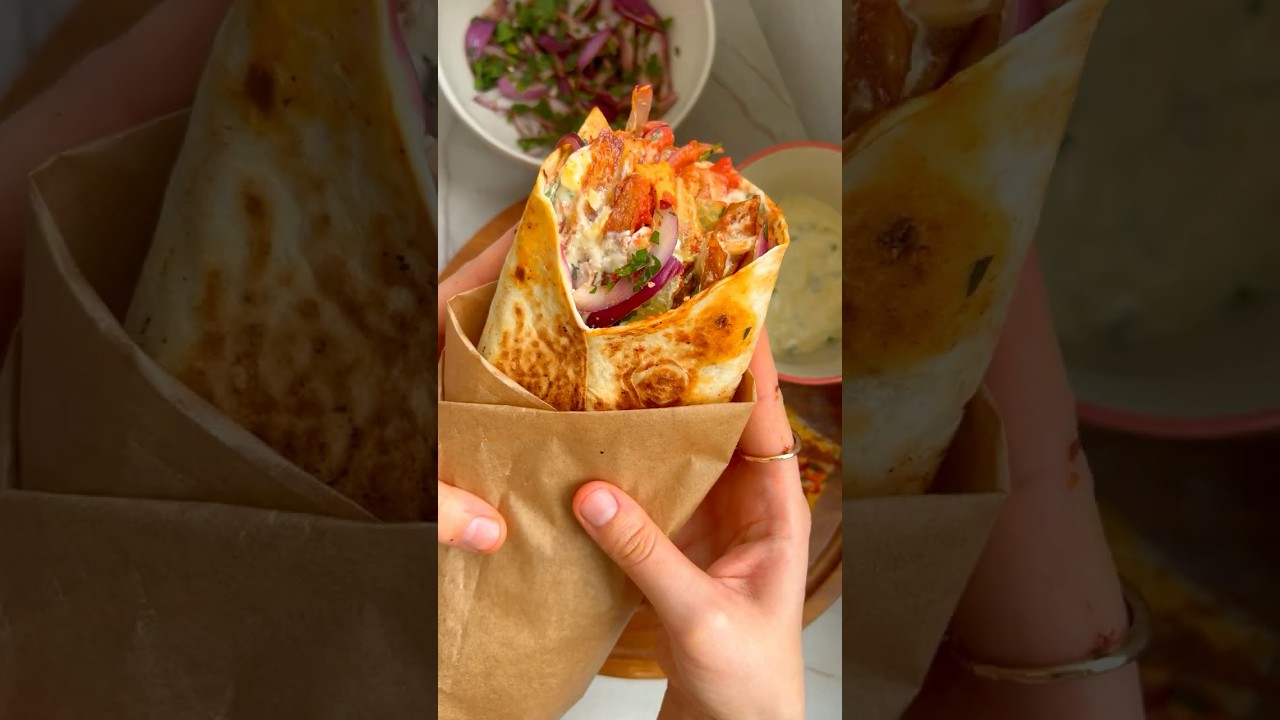
“Shawarma is one of those dishes that tastes impossibly complex until you understand what's actually happening. The spice stack is simple. The technique is simple. What separates the wraps that taste like street food from the ones that taste like seasoned chicken in a pita is char, onion timing, and a tahini sauce that isn't watery. We fixed all three.”
Why This Recipe Works
Shawarma is street food that got famous for one reason: it tastes like more work than it is. The spice stack reads long — cumin, coriander, smoked paprika, cayenne — but it comes together in one bowl in three minutes. The complexity people taste isn't complexity in the cooking. It's complexity in the chemistry, and most of it happens while the chicken sits in the marinade doing nothing while you go about your day.
The Marinade Is Doing the Heavy Lifting
Olive oil is the delivery vehicle for every fat-soluble compound in this spice blend. Cumin, smoked paprika, and coriander don't dissolve in water — they dissolve in fat. The olive oil saturates the surface of the chicken strips and carries the spice compounds into the outer layers of the meat. Lemon juice does the opposite work: its citric acid lightly denatures the surface proteins, opening up the structure so the oil-spice mixture can penetrate more effectively.
The garlic does both jobs. Raw minced garlic contains allicin — a sulfur compound that dissolves in both fat and water, meaning it works in tandem with the oil and the acid to drive flavor into the meat from both directions simultaneously.
Thirty minutes accomplishes surface-level seasoning. Four hours gets you something that tastes genuinely marinated to the center. The choice is yours, but the difference is noticeable.
The Pan Is the Rotisserie Substitute
Traditional shawarma uses a vertical rotisserie where thin layers of meat rotate continuously past an open flame, browning on the outside while the interior stays moist. A skillet can't replicate that literally, but it can replicate the outcome: fast, high-heat contact browning that caramelizes the spice coating and chars the edges without drying out the interior.
This only works if the cast iron skillet is genuinely hot before the chicken goes in, and if the chicken isn't dripping wet from the marinade. Wet chicken in a hot pan creates a steam pocket that prevents direct contact — you get gray steamed strips instead of seared ones. Let the excess marinade drip off, not shake off. You want the spice coating to stay on the meat, just not a pool of liquid underneath it.
The Onion Timing Is Intentional
Onions go in after the chicken, not before — and into the same pan. By the time the chicken is cooked, the skillet has a layer of browned chicken fat and spice residue (fond) across the surface. The onions cook directly in that fond, absorbing every compound the chicken left behind. This is why the onions in this recipe taste like shawarma and not like regular caramelized onions. They're not flavored — they're saturated.
Three to four minutes is enough to soften them and pick up the pan flavor. You're not trying to fully caramelize them the way you would for biryani or French onion soup. You want them sweet and translucent with a little color — pliable enough to integrate with the chicken when you stir them together for that final minute.
Tahini Is a Sauce, Not a Paste
Every shawarma wrap that disappoints does so because someone spread cold tahini paste directly onto the bread. Pure tahini is too thick, too bitter, and too intense to eat unsauced. It needs to be emulsified with water — whisked aggressively into a smooth, pourable sauce that coats the vegetables without overwhelming them.
The trick is patience. Add water one tablespoon at a time, whisking between additions. The mixture will look broken and grainy at first — that's normal. Keep whisking and it will suddenly come together into a glossy, uniform sauce. The parsley isn't garnish here. It adds a grassy brightness that cuts the sesame richness, the same way mint cuts through lamb fat.
Assembly Is Architecture
The layering order — greens first, then meat and onions, then cold vegetables — isn't arbitrary. The greens act as a moisture barrier between the wet tahini sauce and the pita. The meat goes on top of the greens so it sits in the center of the wrap's cross-section, making it structurally stable when rolled. The cold vegetables go on last because they release water fastest — they should have the least contact time with the bread before it's eaten.
A warm pita is not optional. Cold pita cracks at the fold line and turns clammy against hot filling within minutes. Sixty seconds per side in a dry skillet is all it takes, and the difference is the difference between a wrap you can actually hold and one that comes apart in your hand.
Where Beginners Mess This Up
Before we start, read this. These are the 4 reasons your authentic shawarma wraps (better than the street cart) will fail:
- 1
Under-marinating the chicken: Thirty minutes is the floor, not the target. Shawarma spices — cumin, coriander, paprika — are fat-soluble. The olive oil in the marinade carries them into the meat. At 30 minutes you get surface flavor. At 2-4 hours you get depth. If you're eating tonight, start the marinade this morning.
- 2
A cold or wet pan: Shawarma gets its character from high-heat browning — that slightly charred edge on the chicken strips. A pan that isn't properly preheated or chicken that hasn't drip-dried from the marinade will steam instead of sear. You'll get gray, limp meat with none of the caramelized edges that make shawarma taste like shawarma.
- 3
Watery tahini sauce: Tahini seizes up when you add water — it looks broken and grainy before it suddenly comes smooth. Most people add too much water before it emulsifies, ending up with a thin, bitter sauce. Add water one tablespoon at a time, whisking constantly. Stop when it drizzles off the spoon in a thick ribbon.
- 4
Cold pita on warm filling: A cold wrap cracks when you fold it and turns the whole thing clammy within 60 seconds. Thirty seconds per side in a dry skillet — or directly over a gas flame — makes the pita pliable, slightly toasted, and warm enough to hold the filling without sogging out immediately.
The Video Reference Library
Want to see it in action? Here are the exact videos we analyzed and combined to build this foolproof recipe translation:
The source video for this recipe's technique. Strong focus on the spice marinade ratios and skillet sear method that replicates rotisserie char without special equipment.
🛠️ Core Equipment
- Cast iron skillet or heavy stainless panRetains heat through contact with cold, wet chicken without losing temperature. Thin pans drop heat immediately and you lose the sear. Cast iron also creates better fond (the browned bits) that flavors the onions when you add them to the same pan.
- Meat thermometerChicken breast is unforgiving — it goes from juicy to dry in under 2 minutes. A thermometer removes the guesswork. Pull the strips at exactly 165°F and no higher.
- Small whiskTahini sauce cannot be stirred into submission with a fork. The fat and water fractions need to be emulsified, which requires continuous mechanical action. A small whisk does this in 60 seconds. A fork takes five minutes and still misses.
Authentic Shawarma Wraps (Better Than the Street Cart)
🛒 Ingredients
- ✦1.5 pounds boneless, skinless chicken breasts, cut into thin strips
- ✦3 tablespoons extra virgin olive oil
- ✦3 tablespoons fresh lemon juice
- ✦4 cloves garlic, minced
- ✦2 teaspoons ground cumin
- ✦1.5 teaspoons smoked paprika
- ✦1 teaspoon ground coriander
- ✦0.5 teaspoon cayenne pepper
- ✦0.5 teaspoon black pepper
- ✦0.25 teaspoon sea salt
- ✦1 medium yellow onion, thinly sliced
- ✦8 whole wheat pita wraps or flatbreads
- ✦0.5 cup tahini paste
- ✦3 tablespoons water
- ✦2 tablespoons fresh parsley, finely chopped
- ✦2 cups fresh spinach or mixed greens
- ✦1 large tomato, diced
- ✦0.5 cucumber, julienned
- ✦0.25 cup red onion, thinly sliced
👨🍳 Instructions
01Step 1
Combine olive oil, lemon juice, minced garlic, cumin, paprika, coriander, cayenne pepper, black pepper, and salt in a medium bowl to make the marinade.
02Step 2
Add the sliced chicken to the marinade, toss to coat every piece thoroughly, then refrigerate for at least 30 minutes or up to 4 hours.
03Step 3
Heat a [cast iron skillet](/kitchen-gear/review/cast-iron-skillet) over medium-high heat for 2-3 minutes until it shimmers and a drop of water evaporates immediately on contact.
04Step 4
Remove chicken from the marinade, letting excess liquid drip back into the bowl — don't shake it off, just let it drip. Transfer to the hot skillet in a single layer.
05Step 5
Sauté the chicken for 6-8 minutes, stirring occasionally, until edges are golden-brown and the internal temperature reads 165°F on a [meat thermometer](/kitchen-gear/review/instant-read-thermometer).
06Step 6
Push the cooked chicken to one side of the skillet. Add the sliced yellow onion to the empty space and cook for 3-4 minutes until translucent and lightly caramelized.
07Step 7
Stir the chicken and onions together for 1 final minute, then transfer to a plate.
08Step 8
Whisk tahini paste and water together in a small bowl, adding water one tablespoon at a time, until the sauce reaches a thick, pourable consistency. Stir in the parsley and salt to taste.
09Step 9
Warm the pita wraps in a dry skillet for about 1 minute per side, or briefly over an open gas flame, until soft and pliable.
10Step 10
Spread 2 tablespoons of tahini sauce onto each warm wrap, leaving a border around the edges.
11Step 11
Layer fresh spinach down the center, followed by the chicken and caramelized onions, then top with diced tomato, julienned cucumber, and sliced red onion.
12Step 12
Fold the bottom edge of the wrap up over the filling, fold in both sides, then roll tightly away from you until fully sealed.
13Step 13
Serve immediately while warm, with extra tahini sauce on the side.
Nutrition Per Serving
Estimates based on standard preparation. Adjustments alter macros.
🔄 Substitutions
Instead of Boneless chicken breasts...
Use Extra-firm tofu or tempeh, pressed and cut into strips
Press tofu for at least 30 minutes before marinating. Tempeh absorbs the spice marinade faster due to its porous structure. Reduce cook time to 4-5 minutes per side.
Instead of Whole wheat pita wraps...
Use Large romaine lettuce leaves
Cuts roughly 40 calories and 30g of carbs per wrap. No folding — just pile the filling lengthwise and eat like a taco. Best when the filling is slightly cooled so the lettuce doesn't wilt immediately.
Instead of Tahini paste...
Use Greek yogurt with 1 tablespoon tahini and a squeeze of lemon
Tangier and lighter than straight tahini. The yogurt adds probiotics and cuts the richness. Thins naturally — no added water needed.
Instead of Olive oil (3 tablespoons)...
Use 2 tablespoons olive oil plus 1 tablespoon low-sodium chicken broth
Reduces total fat by about 40 calories per serving while maintaining marinade moisture. The broth adds a subtle savory base note.
🧊 Storage & Reheating
In the Fridge
Store cooked chicken and onions separately from the assembled wrap components for up to 3 days. Once assembled, wraps deteriorate within hours.
In the Freezer
Freeze the cooked chicken and onions in a flat zip-lock bag for up to 2 months. Thaw overnight in the fridge.
Reheating Rules
Reheat chicken in a hot dry skillet for 60-90 seconds rather than microwaving. Microwave makes the strips rubbery and steams out the sear. Warm fresh pita separately before assembling.
❓ Frequently Asked Questions
Can I use chicken thighs instead of breasts?
Yes — and they're arguably better. Thighs have more intramuscular fat, which means they stay juicy even if you cook them 30 seconds past 165°F. They also brown more evenly. The trade-off is slightly higher calories and saturated fat per serving.
Why does my tahini sauce turn gray and grainy?
You added water too fast. Tahini is an emulsion — sesame fat suspended in water. Add water too quickly and the fat and water separate before they can combine. Start over with a clean bowl, fresh tahini, and add water one tablespoon at a time while whisking constantly.
How do I stop my wrap from falling apart when I roll it?
Two causes: too much filling, or cold pita. Warm the pita until it's fully pliable before loading it, and resist overfilling — the filling should occupy no more than the center third of the wrap. Fold the bottom edge up first, then fold in the sides before rolling forward.
Is smoked paprika necessary or can I use regular paprika?
Regular sweet paprika works but produces a noticeably different result. Smoked paprika is what gives the chicken its pseudo-rotisserie depth — that faint char note that makes it taste like it came off a spit. If you only have sweet paprika, add a quarter teaspoon of chipotle powder to compensate.
Can I prep this ahead for meal prep?
The chicken and onions reheat well for 3 days. Store the tahini sauce, vegetables, and pita separately and assemble fresh each time. Pre-assembled wraps should be eaten within 2 hours — the cucumber and tomato make the bread soggy fast.
What vegetables work best beyond the ones listed?
Pickled red onion (raw red onion brined in lemon juice for 20 minutes) is a significant upgrade over fresh. Roasted red peppers, shaved cabbage, and sliced banana peppers all work well. Avoid watery vegetables like fresh bell pepper or shredded iceberg — they drain onto the pita within minutes.
The Science of
Authentic Shawarma Wraps (Better Than the Street Cart)
We turned everything on this page into a beautiful, flour-proof PDF cheat sheet. Print it out, stick it to your fridge, and never mess up your authentic shawarma wraps (better than the street cart) again.
*We'll email you the high-res PDF instantly. No spam, just perfectly cooked meals.
AlmostChefs Editorial Team
We translate the internet's most popular cooking videos into foolproof, beginner-friendly written recipes. We analyze multiple methods, test them in our kitchen, and engineer a single "Master Recipe" that gives you the best possible result with the least possible stress.