Classic Rose Sharbat (The Summer Drink You've Been Missing)
A chilled, aromatic South Asian syrup drink built on rose water, sabja seeds, and fresh lemon — cool, floral, and barely sweet. We broke down the traditional method and the science behind getting the syrup concentration right so every glass delivers the same silky, refreshing balance.
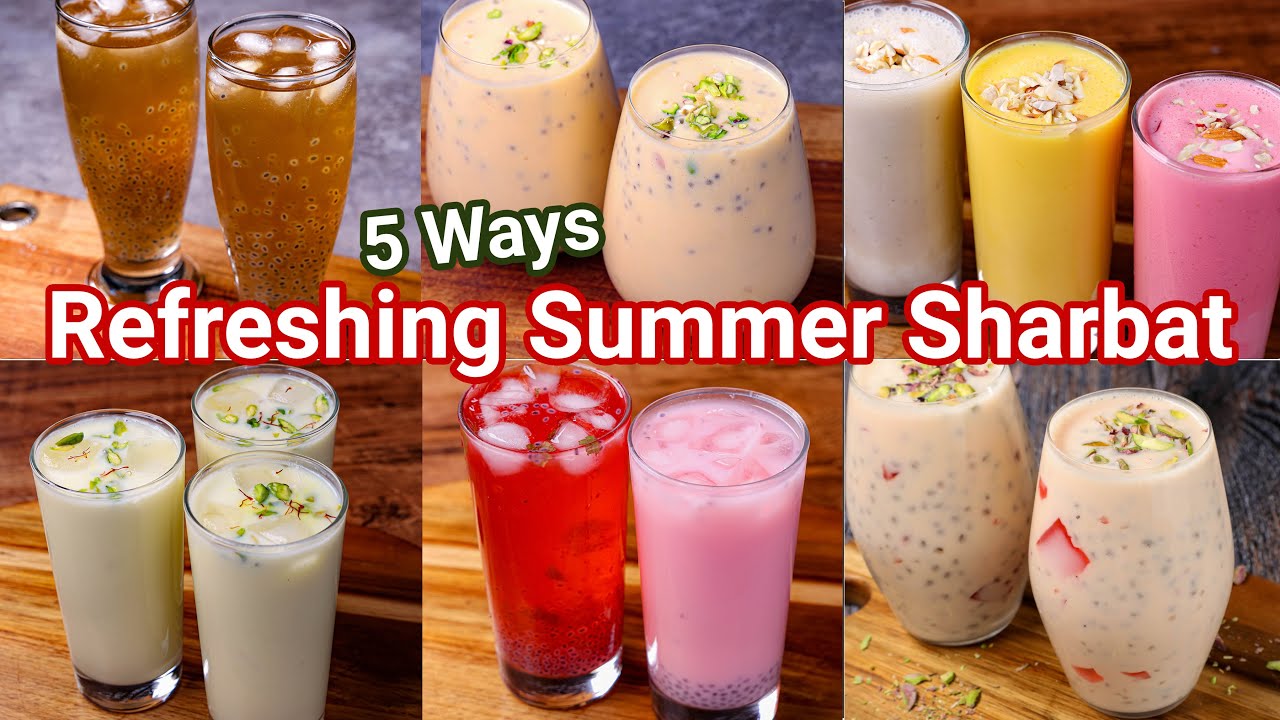
“Most people who grew up drinking sharbat at weddings and Eid gatherings spend decades assuming it requires some secret grandmother knowledge to reproduce. It doesn't. What it requires is understanding two things: syrup concentration and bloom time. Get both right and you have a drink that tastes impossibly floral, silky, and cooling in a way that no commercially produced rose drink has ever come close to replicating.”
Why This Recipe Works
Sharbat is not a recipe that requires technique. It requires understanding what it is: a precision-diluted aromatic syrup served cold, where the ratio between syrup, water, and bloom time determines whether you get something transcendent or something that tastes like a floral cough drop dissolved in tap water. Most people who make bad sharbat at home are not making mistakes in execution — they are making category errors in conception.
The Syrup Is the Whole Point
Everything else in the glass — the water, the ice, the seeds — is infrastructure. The syrup is the architecture. A properly made sharbat syrup should be thick enough to coat the back of a spoon when cold, sweet but not cloying, and fragrant in a way that registers in your sinuses before the glass even reaches your lips. Getting there requires a 1:1 ratio by weight, not by volume. A cup of sugar weighs roughly 200 grams. A cup of water weighs 240 grams. If you measure by volume alone, your syrup will always run slightly thin.
The other syrup error is heat. Sugar dissolves completely at around 80°C — well below a rolling boil. The moment you push past that temperature and sustain it, the sucrose molecules begin breaking down into glucose and fructose through inversion, and the Maillard reaction starts adding toasty, caramel-adjacent notes to your syrup. That's desirable in salted caramel and entirely wrong here. Sharbat is a cool drink built on delicate floral aromatics. Competing caramel notes are noise. Pull the pan off heat the moment the sugar vanishes.
Rose Water: The Non-Negotiable Variable
The single most important purchasing decision you will make for this recipe happens at the grocery store, not at the stove. Culinary rose water — the kind sold in glass bottles at South Asian and Middle Eastern grocery stores — is made by steam-distilling fresh rose petals. The result is a clear, lightly fragrant liquid that smells like a rose garden at dawn: soft, slightly dewy, genuinely floral.
Rose extract, which looks identical in its bottle and costs less, is a concentrated aromatic compound dissolved in alcohol. It smells intense and synthetic and translates directly into a soapy, perfume-adjacent flavor in the finished drink. There is no amount of technique that rescues sharbat made with extract. Spend the extra dollar on the real thing. The quality difference is not subtle.
The Sabja Seed Is a Texture Event
Sabja seeds — called tukmaria in some markets, sweet basil seeds in health food stores — are the textural heart of classic sharbat. Raw, they are small, hard, and entirely unremarkable. Properly bloomed in cold water for 20-25 minutes, each seed swells to three times its original size, developing a translucent gel coating around a firm black center. The sensation of drinking sharbat with well-bloomed sabja seeds is genuinely unlike anything else: the liquid is cool and floral, and punctuating every sip are these tiny, yielding spheres that pop gently and then dissolve.
The critical mistake is confusing sabja seeds with chia seeds, which are visually similar and increasingly stocked in the same grocery aisle. Chia seeds develop a much thicker, gummier hydrocolloid coating when wet — great for puddings, wrong for drinks. They turn sharbat into something with the texture of diluted tapioca. Use sabja seeds only. A fine-mesh sieve is useful here both for straining your syrup to clarity and for draining and rinsing the bloomed seeds if you prepare them ahead of time.
Cold Is a Flavor Ingredient
Aromatic volatile compounds — the molecules responsible for the floral character of rose water and kewra — are temperature-sensitive. They are most perceptible to your olfactory receptors when the drink is very cold because cold liquids release these compounds more slowly and uniformly across the surface of the glass. A sharbat served at 15°C tastes flat, overly sweet, and one-dimensional. The same sharbat served at 4°C over crushed ice tastes layered, fragrant, and alive.
This is why a glass pitcher matters more than it might seem. The visual display of a pale rose-tinted drink over ice with bloomed seeds suspended in it is part of the experience — but the practical benefit is that you can see the ice level and ensure the drink stays cold throughout serving. Use crushed ice over cubes when possible: it increases surface area contact with the liquid and chills the drink faster, and the first sip from a properly built sharbat glass should feel like stepping into shade on a hot afternoon.
Where Beginners Mess This Up
Before we start, read this. These are the 4 reasons your classic rose sharbat (the summer drink you've been missing) will fail:
- 1
Using rose extract instead of rose water: Rose extract is concentrated artificial fragrance. Rose water is the real, distilled byproduct of rose petal steam distillation. They smell similar in the bottle and taste completely different in a glass. Extract reads as synthetic and soapy on the palate. Rose water is floral, soft, and slightly earthy. There is no substitution — only rose water works here.
- 2
Skipping the sabja seed bloom: Sabja seeds (sweet basil seeds, also called tukmaria) must soak in cold water for at least 20 minutes before use. Unsoaked seeds are hard, tasteless, and unpleasant. Properly bloomed seeds swell to triple their size and develop a translucent gel coating with a delicate crunch. The texture is half the point of drinking sharbat.
- 3
Making the syrup too thin or too sweet: A 1:1 sugar-to-water ratio by weight produces a pourable syrup that dilutes correctly when mixed. Too much water and the syrup loses viscosity, making the drink watery. Too much sugar and the sweetness overwhelms the floral notes. The right syrup coats a spoon lightly when cold — it should flow, not pour like water.
- 4
Serving without sufficient ice: Sharbat is a cold-shock drink. Its aromatics are volatile and more perceptible when the drink is very cold. A lukewarm sharbat tastes flat and overly sweet. You want the glass to be frosted, the ice plentiful, and the syrup mixed just before serving.
The Video Reference Library
Want to see it in action? Here are the exact videos we analyzed and combined to build this foolproof recipe translation:
The foundational walkthrough covering syrup preparation, sabja bloom timing, and the final assembly. Clear demonstration of the correct syrup consistency and the bloomed seed texture you're aiming for.
A deep dive into regional sharbat variants — from tamarind to sandalwood to kewra — with emphasis on balancing sweetness against acidity. Useful reference for understanding the flavor architecture behind the base recipe.
Contextualizes sharbat within the broader South Asian cold drink tradition and explains why sabja seeds behave differently than chia seeds, despite the superficial similarity.
🛠️ Core Equipment
- Small saucepanFor making the simple syrup base. A heavy-bottomed pan prevents sugar from scorching on the bottom while you stir.
- Fine-mesh sieve or cheeseclothFor straining any impurities from the rose water and ensuring the syrup is crystal clear. Cloudy syrup affects both appearance and flavor.
- Glass pitcher or mason jarsSharbat is a drink meant to be seen. A clear vessel shows off the bloomed sabja seeds and the soft blush color. Opaque containers hide the best part.
- Kitchen scaleSyrup concentration is a ratio by weight, not volume. A cup of sugar and a cup of water are not equal by mass. Eyeballing produces inconsistent results.
Classic Rose Sharbat (The Summer Drink You've Been Missing)
🛒 Ingredients
- ✦1 cup granulated white sugar (200g by weight)
- ✦1 cup water (for syrup base)
- ✦3 tablespoons rose water, high-quality (not rose extract)
- ✦2 tablespoons sabja seeds (sweet basil seeds / tukmaria)
- ✦1/2 cup cold water (for blooming sabja seeds)
- ✦3 tablespoons fresh lemon juice
- ✦1/4 teaspoon kewra water (optional, adds depth)
- ✦1/8 teaspoon fine sea salt
- ✦3 cups cold water or chilled milk (for serving)
- ✦Crushed ice or ice cubes, generous amount
- ✦Fresh rose petals for garnish (optional)
- ✦Thin lemon slices for garnish (optional)
👨🍳 Instructions
01Step 1
Place the sabja seeds in a small bowl and cover with 1/2 cup cold water. Stir once and leave undisturbed for 20-25 minutes until each seed swells and develops a clear gel coating.
02Step 2
Combine the sugar and 1 cup of water in a small saucepan over medium heat. Stir continuously until the sugar completely dissolves, about 3-4 minutes. Do not let it boil.
03Step 3
Remove the saucepan from heat. Stir in the rose water, kewra water (if using), and sea salt. Let the syrup cool to room temperature, about 15 minutes.
04Step 4
Once cooled, add the fresh lemon juice to the syrup and stir to combine. Taste — it should be sweet-tart with a clear floral note. Adjust lemon juice one teaspoon at a time if needed.
05Step 5
To serve, fill each glass generously with crushed ice or ice cubes.
06Step 6
Add 3-4 tablespoons of the rose syrup per glass, then pour 3/4 cup of cold water or chilled milk over the ice.
07Step 7
Spoon a heaping tablespoon of bloomed sabja seeds into each glass and stir gently to distribute.
08Step 8
Garnish with a fresh rose petal and a thin lemon wheel if desired. Serve immediately.
Nutrition Per Serving
Estimates based on standard preparation. Adjustments alter macros.
🔄 Substitutions
Instead of Rose water...
Use Kewra water (pandanus flower distillate)
Shifts the flavor from floral-pink to floral-green — more aromatic and slightly savory. Common in North Indian versions. Use slightly less than rose water as kewra is more intense.
Instead of Sabja seeds...
Use Chia seeds (in an emergency)
Chia seeds develop a different gel coating that is thicker and gummier. The texture is inferior but acceptable if sabja seeds are unavailable. Bloom for 30 minutes instead of 20.
Instead of White sugar...
Use Raw cane sugar or jaggery syrup
Raw cane sugar adds a faint molasses note that works surprisingly well with rose water. Jaggery produces a more complex, earthy sweetness that makes the drink feel more rustic and traditional.
Instead of Fresh lemon juice...
Use Citric acid solution (1/4 teaspoon citric acid dissolved in 2 tablespoons water)
Cleaner, more consistent acidity without the additional flavor compounds in fresh lemon. Works well when you want the rose to be the undisputed primary flavor.
🧊 Storage & Reheating
In the Fridge
Store the rose syrup separately in an airtight jar for up to 2 weeks. Store bloomed sabja seeds submerged in water in a covered container for up to 3 days. Assemble glasses only at serving time.
In the Freezer
The syrup can be frozen in ice cube trays for up to 3 months — drop 2-3 cubes directly into a glass of cold water for an instant sharbat.
Reheating Rules
This is a cold drink — do not reheat. If the syrup crystallizes in the fridge, place the jar in warm water for a few minutes and stir.
❓ Frequently Asked Questions
Where do I find sabja seeds?
Any South Asian grocery store carries them labeled as sabja seeds, tukmaria seeds, or sweet basil seeds. They are distinct from Thai basil seeds and regular basil seeds — the plant is Ocimum basilicum but the seeds are specifically harvested for culinary use. They are also increasingly available in health food stores under the label 'basil seeds.'
Can I use store-bought rose syrup instead of making my own?
You can, but commercial rose syrups like Rooh Afza contain added colors, preservatives, and flavoring agents that produce a distinctly synthetic result. The homemade version takes 15 minutes and tastes dramatically better. If you must use a commercial syrup, dilute it — most are formulated to be intensely sweet to accommodate low serving volumes.
Is sharbat the same as sherbet?
They share an etymology — both descend from the Arabic 'sharbah,' meaning a drink — but modern sherbet (the frozen dairy dessert) and sharbat are entirely different preparations. Sharbat is the original: a chilled, sweetened, aromatic drink. The word traveled through Persian, Ottoman Turkish, and eventually into European languages where it mutated into the frozen confection.
Why does my sharbat taste soapy?
You used rose extract instead of rose water, or you used too much rose water. Rose aromatics are powerful — the correct amount should be subtle and floral, not perfume-forward. Start with 2 tablespoons of rose water and taste before adding more. The flavor should whisper, not shout.
Can I make this without sugar — is there a low-sugar version?
Yes. Replace the sugar with an equal weight of erythritol or monk fruit sweetener. The syrup consistency will be slightly thinner since these sweeteners have different viscosity profiles, but the flavor is comparable. Avoid stevia, which interacts poorly with rose water and produces a bitter finish.
What's the difference between sharbat and nimbu pani?
Nimbu pani is a lemonade — its primary flavor is citrus, with sugar as a support element. Sharbat is a flower-water or fruit-extract drink where the syrup is the feature, and citrus plays a background balancing role. The structure of the two drinks is inverted. Sharbat is also typically more aromatic and more festive — it's a celebration drink in a way that nimbu pani, for all its merit, is not.

The Science of
Classic Rose Sharbat (The Summer Drink You've Been Missing)
We turned everything on this page into a beautiful, flour-proof PDF cheat sheet. Print it out, stick it to your fridge, and never mess up your classic rose sharbat (the summer drink you've been missing) again.
*We'll email you the high-res PDF instantly. No spam, just perfectly cooked meals.
AlmostChefs Editorial Team
We translate the internet's most popular cooking videos into foolproof, beginner-friendly written recipes. We analyze multiple methods, test them in our kitchen, and engineer a single "Master Recipe" that gives you the best possible result with the least possible stress.