Perfect Shakshuka with Feta (The One-Pan Breakfast Worth Waking Up For)
Eggs poached in a spiced tomato sauce with crumbled feta, fresh herbs, and a squeeze of lemon — all in one skillet in 25 minutes. We dissected the most-watched shakshuka videos to isolate the technique that gets runny yolks and a sauce that doesn't turn watery.
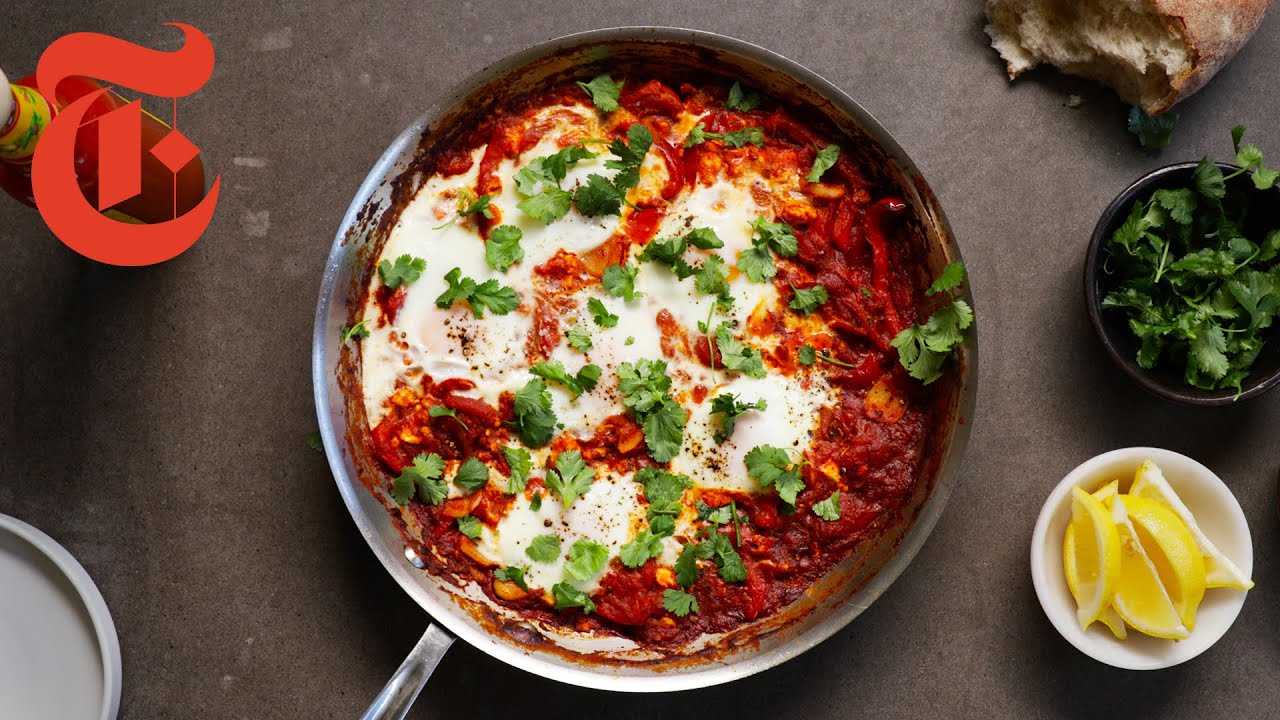
“Shakshuka has been simplified into oblivion online. Most recipes turn it into watery tomato soup with eggs floating on top. The actual technique requires three things: reducing the sauce long enough that it holds its shape around the eggs, building your well correctly so the whites set before the yolks cook through, and covering the pan at exactly the right moment. We tracked down the methods behind the most-viewed shakshuka videos to give you a single version that works every time.”
Why This Recipe Works
Shakshuka is one of those dishes that looks deceptively simple — tomatoes, eggs, a pan — right up until you make it and produce something that tastes like jarred marinara with hard-cooked eggs floating in it. The gap between forgettable shakshuka and the version you'll want to make every weekend comes down to three things that most recipes gloss over: sauce consistency, well depth, and lid timing.
The Sauce Has to Hold Its Shape
Shakshuka is not tomato soup. The sauce needs enough body to cradle six eggs independently without them merging into a single scrambled mass. That body comes from reduction, and reduction requires time and patience that most 25-minute recipe headlines quietly skip past.
Eight minutes of simmering on medium heat is the minimum. You're looking for the sauce to coat the back of a spoon cleanly and pull slightly away from the edges of the pan — the same visual cue used for pasta sauce, for good reason. A thin sauce spreads egg whites across the entire pan surface, preventing the whites from setting in defined portions and guaranteeing runny, underdone centers. A thick sauce keeps each egg in its lane.
The bell pepper and onion soften into the sauce during this reduction, which is why they go in first and why they need real heat to soften properly. Pale, barely-softened onion contributes almost nothing to the flavor base. Take them to translucent — glassy-looking, slightly sweet, no sharp raw onion smell — before you add anything else.
The Well Is Architecture
The well you press into the sauce before cracking the egg is not decorative. It's a container, and it needs to function like one. Press the back of a large spoon firmly into the sauce until you're nearly touching the bottom of the pan. The egg needs depth on all sides to keep the white from spreading outward.
Shallow wells produce pancake-flat egg whites. Deep wells produce lifted, cloud-shaped whites that set evenly because they're surrounded by hot sauce on multiple sides rather than just resting on a flat surface. A cast iron skillet holds residual heat in the base that assists this process — the bottom of the well stays hotter than the surface of the sauce, which accelerates white setting from below while the lid handles it from above.
The Lid Timing Is Everything
Cover the pan immediately after cracking in all six eggs. Not after the whites start setting. Not after you add the eggs one at a time. Immediately. The lid's job is to trap steam, and steam is what cooks egg whites from above without overcooking the yolks below. By the time whites are visibly beginning to set, they've already absorbed most of the ambient heat they need — the lid's contribution is marginal at that point.
Four minutes under a tight lid produces runny yolks with fully set whites. Five minutes produces barely-jammy yolks. Six minutes produces hard-cooked eggs in tomato sauce, which is a different and lesser dish. Check the pan at four minutes by giving it a gentle shake — whites should be firm with no jiggle, yolks should still wobble slightly. That wobble is what you're protecting.
The Feta Moment
Feta goes on after the pan comes off the heat. This is not negotiable. Crumbled feta exposed to active pan heat melts into the sauce and disappears — you get saltiness without the creamy, distinct pockets that define the dish. Off heat, the residual warmth softens the feta just enough to make it yielding without making it invisible.
The same logic applies to the fresh herbs. Parsley and cilantro wilted under a lid for six minutes turn gray and flavorless. Scattered on at the end over warm food, they stay bright green and contribute freshness that counterbalances the rich, spiced tomato base. Finish with lemon juice and serve directly from the pan — shakshuka is a skillet dish and it knows it.
Where Beginners Mess This Up
Before we start, read this. These are the 4 reasons your perfect shakshuka with feta (the one-pan breakfast worth waking up for) will fail:
- 1
Not reducing the sauce enough: A thin tomato sauce doesn't cradle the eggs — it swallows them. Simmer the sauce until it coats the back of a spoon and pulls away slightly from the edges of the pan. This takes at least 8 minutes on medium heat. Rushing it produces watery shakshuka where the whites spread out flat instead of setting in defined portions.
- 2
Making the wells too shallow: A shallow divot in the sauce lets the egg slide sideways as soon as you crack it in. Press the back of a large spoon firmly into the sauce to create a well that goes nearly to the bottom of the pan. The egg needs to be cradled, not just resting on the surface.
- 3
Covering the pan too late: The lid traps steam that cooks the egg whites from above. If you wait until the whites are already visibly setting before you cover, the steam has nothing left to do — and your yolks will overcook before the whites finish. Cover immediately after cracking in all six eggs.
- 4
Burning the garlic: Garlic goes in for 30 seconds only — long enough to bloom its aromatics in the hot oil, not long enough to turn it bitter. Bitter garlic ruins the entire flavor base of the sauce and you cannot cook it out. If it browns even slightly, start the aromatic base over.
The Video Reference Library
Want to see it in action? Here are the exact videos we analyzed and combined to build this foolproof recipe translation:
The source video behind this recipe. Clear technique on sauce reduction, well construction, and the exact moment to cover the pan. Watch the egg whites — that's the clock.
🛠️ Core Equipment
- 12-inch skillet with a tight-fitting lidThe skillet needs to be wide enough to space six eggs without crowding, and the lid must trap steam efficiently. A [cast iron skillet](/kitchen-gear/review/cast-iron-skillet) holds heat evenly and transitions beautifully from stovetop to table — shakshuka is traditionally served directly from the pan.
- Large wooden spoon or silicone spatulaFor building the wells in the sauce. The tool needs a rounded back and enough surface area to press a deep divot without tearing the sauce apart. A [silicone spatula](/kitchen-gear/review/silicone-spatula) works better than a spoon here — broader surface, more control.
- Microplane or fine graterIf you're finishing with lemon zest in addition to juice, a [microplane](/kitchen-gear/review/microplane-grater) lets you get the bright citrus oils without any bitter white pith. Optional but genuinely elevating.
- Small bowl for cracking eggsCrack each egg into a small bowl before sliding it into the well. This lets you check for broken yolks and shell fragments before they hit the sauce — once an egg is in the pan, you cannot remove a shell shard cleanly.
Perfect Shakshuka with Feta (The One-Pan Breakfast Worth Waking Up For)
🛒 Ingredients
- ✦3 tablespoons extra virgin olive oil
- ✦1 large yellow onion, finely diced
- ✦3 cloves garlic, minced
- ✦1 red bell pepper, diced
- ✦1 can (28 ounces) crushed tomatoes
- ✦1 teaspoon ground cumin
- ✦1 teaspoon smoked paprika
- ✦1/2 teaspoon cayenne pepper
- ✦1 teaspoon sea salt
- ✦1/2 teaspoon freshly ground black pepper
- ✦1/4 teaspoon red pepper flakes
- ✦6 large eggs
- ✦4 ounces crumbled feta cheese
- ✦1/4 cup fresh flat-leaf parsley, chopped
- ✦2 tablespoons fresh cilantro, chopped
- ✦Fresh lemon juice from 1/2 lemon
👨🍳 Instructions
01Step 1
Heat olive oil in a 12-inch skillet over medium-high heat until it shimmers slightly, about 1 minute.
02Step 2
Add the diced onion and sauté until translucent and softened, stirring occasionally, about 4 minutes.
03Step 3
Stir in the minced garlic and cook for exactly 30 seconds until fragrant. Do not let it brown.
04Step 4
Add the diced bell pepper and cook for 3 minutes, stirring frequently, until it begins to soften.
05Step 5
Pour in the crushed tomatoes with their juices. Add the cumin, smoked paprika, cayenne, salt, black pepper, and red pepper flakes. Stir to combine.
06Step 6
Reduce heat to medium and simmer for 8 minutes, stirring occasionally, until the sauce thickens and coats the back of a spoon.
07Step 7
Using the back of a large spoon, press six deep wells into the sauce, spacing them evenly around the skillet.
08Step 8
Crack each egg individually into a small bowl first, then slide one egg gently into each well.
09Step 9
Immediately cover the skillet with a tight-fitting lid and cook for 4-5 minutes until the egg whites are fully set but the yolks remain runny.
10Step 10
Remove from heat. Scatter crumbled feta over the entire skillet, followed by the fresh parsley and cilantro.
11Step 11
Finish with a squeeze of fresh lemon juice over the top.
12Step 12
Serve immediately, directly from the skillet, with crusty bread or warm pita for scooping.
Nutrition Per Serving
Estimates based on standard preparation. Adjustments alter macros.
🔄 Substitutions
Instead of Crushed canned tomatoes...
Use 1.5 cups fresh diced tomatoes plus 3/4 cup low-sodium vegetable broth
Brighter, more acidic flavor. Requires an extra 2-3 minutes of simmering to reduce the broth to the right sauce consistency. In-season summer tomatoes only — off-season fresh tomatoes are waterier and less flavorful than canned.
Instead of Feta cheese...
Use Goat cheese or ricotta
Goat cheese gives a similar tang with a creamier melt. Ricotta is milder and significantly less salty — adjust seasoning accordingly. Neither is as structurally interesting as feta, but both work.
Instead of Eggs...
Use 4 large eggs plus 2 egg whites
Reduces cholesterol and saturated fat while maintaining protein content. The egg whites set slightly faster than whole eggs — check the pan at 3.5 minutes instead of 4.
Instead of Smoked paprika...
Use Sweet paprika plus 1/4 teaspoon chipotle powder
Recreates the smoke note with more complexity. The chipotle adds heat as well as smoke — reduce cayenne to 1/4 teaspoon if you're sensitive to spice.
🧊 Storage & Reheating
In the Fridge
Store the tomato sauce (without eggs) in an airtight container for up to 4 days. Do not store shakshuka with the eggs already poached — they continue cooking and turn rubbery overnight.
In the Freezer
The sauce freezes well for up to 2 months. Thaw overnight in the fridge and reheat on the stovetop before adding fresh eggs.
Reheating Rules
Reheat sauce in the skillet over medium heat until bubbling. Make wells and poach fresh eggs to order. Do not reheat eggs — always poach fresh.
❓ Frequently Asked Questions
Why are my egg whites still clear but the yolks are already set?
Your heat is too high. High heat cooks the yolk from below faster than the steam can cook the white from above. The moment you cover the pan, reduce to medium-low. Whites need gentle, ambient steam heat — not direct contact heat.
Can I make shakshuka without a lid?
Technically yes, but the technique changes entirely. Without a lid, you need to spoon hot sauce over the egg whites repeatedly to set them — a process that takes longer and risks breaking the yolks. A lid is far simpler. If yours doesn't fit, a sheet of aluminum foil pressed tightly over the pan works nearly as well.
Is shakshuka actually Middle Eastern or North African?
Both claim it with good reason. The word is Arabic and the dish appears across Tunisia, Libya, Israel, and Turkey. The Israeli version with feta is now the most widely recognized internationally, but Tunisian shakshuka predates it and uses a different spice profile with more harissa.
My sauce is too acidic. How do I fix it?
Add a pinch of sugar — half a teaspoon is usually enough to bring canned tomato acidity into balance. Alternatively, a tablespoon of unsalted butter stirred in at the end rounds out sharp edges without sweetening. Both are legitimate techniques used in professional kitchens.
Can I add meat to shakshuka?
Merguez sausage is the traditional addition in North African versions. Brown the sausage first in the skillet, remove it, build the sauce in the rendered fat, then return the sausage when you add the tomatoes. Chorizo works identically. The rendered fat becomes part of the sauce's flavor base.
Why does restaurant shakshuka taste better than mine?
Two reasons. First, restaurant sauce has almost always been made earlier in the day and reheated — the spices have had hours to bloom and meld. Second, restaurants use significantly more olive oil than most home recipes call for. The oil carries flavor. This recipe uses 3 tablespoons, which is already on the restrained side.
The Science of
Perfect Shakshuka with Feta (The One-Pan Breakfast Worth Waking Up For)
We turned everything on this page into a beautiful, flour-proof PDF cheat sheet. Print it out, stick it to your fridge, and never mess up your perfect shakshuka with feta (the one-pan breakfast worth waking up for) again.
*We'll email you the high-res PDF instantly. No spam, just perfectly cooked meals.
AlmostChefs Editorial Team
We translate the internet's most popular cooking videos into foolproof, beginner-friendly written recipes. We analyze multiple methods, test them in our kitchen, and engineer a single "Master Recipe" that gives you the best possible result with the least possible stress.