The Real Seonji Guk (Korea's Most Underrated Hangover Cure)
A deeply restorative Korean ox blood soup made with congealed beef blood, brisket, and a long-simmered bone broth seasoned with doenjang and perilla. One of Korea's oldest hangover remedies and a gut health staple — earthy, iron-rich, and genuinely unlike anything else.

“Seonji guk is the Korean soup that restaurants never put on the English menu. It is made from congealed ox blood, slow-simmered in bone broth with brisket and seasoned with fermented soybean paste. It has been served at Korean pojangmacha stalls for centuries as the definitive hangover cure, and it works. The iron content is extraordinary, the broth is as deep and restorative as beef can get, and the texture of the blood — silky, custardy, nothing like you'd expect — is a revelation once you stop letting the ingredient intimidate you.”
Why This Recipe Works
Seonji guk sits at the uncomfortable intersection of two things most Western food culture avoids: organ ingredients and restorative medicine. Korea has no such discomfort. This soup has been served at roadside pojangmacha tents since at least the Joseon dynasty, prescribed by grandmothers for hangovers, prescribed by doctors for anemia, and ordered by construction workers at 7 a.m. on weekdays. It is not a novelty. It is infrastructure.
The ingredient that gives the soup its name — seonji, congealed ox blood — is what stops most non-Korean cooks from attempting it. This is a mistake based entirely on unfamiliarity. Seonji has no aggressive bloodiness to it. When properly blanched and simmered, it takes on the texture of very soft tofu — silky, yielding, with a mild mineral depth. It functions as a sponge for whatever surrounds it, which in this case is a long-simmered beef broth seasoned with doenjang and gochugaru. The result is a bowl that tastes like the most serious version of itself: dark, restorative, irreducibly savory.
The Blood Handling Problem
Most recipes that fail with seonji fail at the very beginning. They add the raw blood directly to cold broth and wonder why the result tastes metallic and looks like a crime scene. The fix is a two-minute blanch in boiling water before the blood ever touches the soup. At high heat, the proteins on the surface of the blood coagulate and seal the cube, locking in the interior texture while purging the surface impurities that cause bitterness. This single step is the entire difference between a soup that tastes clean and one that doesn't.
After blanching, the blood goes into a broth that is already simmering — never boiling. A heavy-bottomed stockpot is essential here. High heat shatters the delicate protein matrix inside the seonji cubes, turning them grainy and causing them to crumble into the broth. You want a pot that holds heat evenly at a low setting, where small lazy bubbles break the surface every few seconds. This is the temperature the blood likes. It firms slightly on the outside while staying silky within.
Why Doenjang and Not Just Salt
Every Korean soup has a seasoning decision at its center. For some it's guk ganjang (soup soy sauce) alone. For others it's gochujang. Seonji guk belongs to doenjang — Korean fermented soybean paste, aged and pungent, with none of the delicacy of Japanese white miso and all of the depth of something that has been fermenting in an earthenware pot for months.
Doenjang does something in this soup that salt cannot. Its fermentation adds bacterial complexity — the same Maillard-adjacent umami concentration you get from long-aged cheese or fish sauce. When dissolved into the simmering beef broth alongside garlic, it creates a base note that makes the blood taste intentional rather than incidental. The gochugaru adds heat and color but does not dominate. The perilla leaves at the end cut through everything with their slightly herbal, anise-adjacent bitterness. These elements are not garnishes. They are load-bearing.
The Restorative Logic
Korea's category of hangover soups — haejangguk — operates on practical nutritional logic. Alcohol is a diuretic that depletes iron, B vitamins, and electrolytes. Seonji is one of the most bioavailable sources of heme iron available in any food — significantly more readily absorbed by the body than the non-heme iron in spinach or lentils. The long-simmered beef bone broth is rich in collagen, glycine, and minerals. The doenjang contributes live fermented cultures. This is a recovery meal built on centuries of empirical observation, not folk myth.
If you eat this soup, you will feel different afterward. That's not marketing. That's iron.
Sourcing Notes
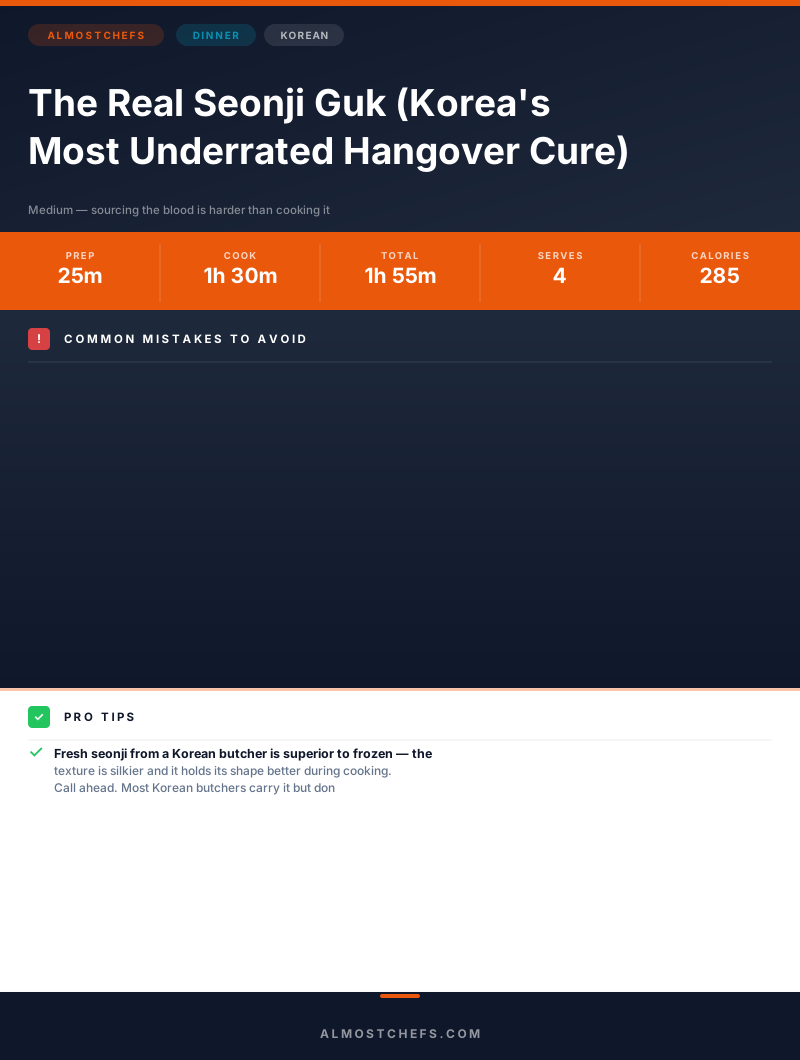
The only genuinely difficult part of this recipe is finding seonji. Large Korean supermarkets carry it, usually frozen in vacuum-sealed blocks. Call ahead — it is often kept in the back and not displayed. Fresh seonji from a Korean butcher produces a noticeably better texture than frozen: the protein matrix hasn't been disrupted by ice crystal formation, which means the cubes hold their shape through a full simmer without releasing loose proteins into the broth. If fresh is available, use it. If frozen is all you can find, thaw it overnight in the refrigerator and handle it gently. It is not forgiving of rough treatment.
This is not a difficult soup to make. It is a soup that requires you to trust unfamiliar ingredients and follow a precise sequence. Do both and you will have a bowl that makes complete, obvious sense on the first spoonful.
Where Beginners Mess This Up
Before we start, read this. These are the 4 reasons your the real seonji guk (korea's most underrated hangover cure) will fail:
- 1
Skipping the blood blanching step: Raw seonji straight into the broth releases impurities and creates a grayish, muddy soup with a pronounced metallic edge. Blanching the blood cubes briefly in boiling water for 2-3 minutes removes surface proteins and neutralizes the sharpest iron notes. This single step separates a clean, nuanced broth from one that tastes like a nosebleed.
- 2
Boiling instead of simmering: A hard boil destroys the custard-like texture of the blood cubes. They become grainy and fall apart, turning the broth murky. Once the blood goes in, reduce to a gentle simmer — small bubbles only. The cubes should hold their shape through the entire cook.
- 3
Under-seasoning the broth: Seonji guk needs doenjang (fermented soybean paste) as its seasoning backbone, not salt alone. The fermentation adds umami depth that pure salt cannot replicate. Start with one tablespoon, taste after 10 minutes of simmering, and adjust. The broth should taste complex and savory, not just salty.
- 4
Using pre-frozen blood without thawing properly: Frozen seonji released too fast develops an uneven texture — mushy on the outside, icy at the core. Thaw overnight in the refrigerator and handle gently. Pressing or squeezing the block will collapse the delicate protein matrix that gives it the custardy bite.
🛠️ Core Equipment
- Heavy-bottomed stockpotFor the long bone broth simmer. A thin pot scorches the bottom before the collagen has time to extract. You need steady, even heat over 60 minutes minimum.
- Fine-mesh skimmerBlood and brisket release considerable foam during the first 15 minutes of cooking. Skimming this foam repeatedly is what produces a clear, clean broth instead of a cloudy gray one.
- Sharp chef's knifeSeonji needs to be cut into clean 1.5-inch cubes. A dull knife drags and tears through the delicate protein structure, producing ragged edges that fall apart in the broth.
- Large mixing bowlFor the initial cold water soak that draws residual blood from the brisket before cooking. This is the same pre-soak used for any Korean beef soup.
The Real Seonji Guk (Korea's Most Underrated Hangover Cure)
🛒 Ingredients
- ✦1.5 pounds congealed ox blood (seonji/선지), cut into 1.5-inch cubes
- ✦10 ounces beef brisket, cut into bite-sized pieces
- ✦6 cups beef bone broth (or water with 2 cups of store-bought beef stock)
- ✦1.5 tablespoons doenjang (Korean fermented soybean paste)
- ✦1 tablespoon gochugaru (Korean red pepper flakes), adjust to heat preference
- ✦1 tablespoon soup soy sauce (guk ganjang)
- ✦1 teaspoon sesame oil
- ✦4 cloves garlic, minced
- ✦1 bunch perilla leaves (kkaennip), roughly torn
- ✦3 green onions, cut into 1-inch pieces
- ✦1 small white onion, halved
- ✦1-inch piece fresh ginger
- ✦Sea salt to taste
- ✦Cooked white rice, for serving
👨🍳 Instructions
01Step 1
Soak the brisket pieces in a large bowl of cold water for 20 minutes to draw out residual blood. Drain and pat dry.
02Step 2
Bring a small pot of water to a boil. Add the seonji cubes and blanch for 2-3 minutes. Remove with a slotted spoon and set aside. Discard the blanching water.
03Step 3
In a heavy-bottomed stockpot, combine the brisket, beef bone broth, white onion, ginger, and 6 cups of water. Bring to a boil over high heat.
04Step 4
Reduce to a strong simmer. Skim the gray foam from the surface continuously for the first 10-15 minutes until the broth runs clear.
05Step 5
Remove the white onion and ginger pieces. Add the minced garlic, doenjang, gochugaru, and soup soy sauce. Stir well to dissolve the doenjang completely.
06Step 6
Reduce heat to a gentle simmer — small, lazy bubbles only. Add the blanched seonji cubes. Do not stir aggressively.
07Step 7
Simmer on low for 20-25 minutes until the brisket is fully tender and the blood cubes have taken on a rich, dark color throughout.
08Step 8
Add the green onions and perilla leaves. Stir gently and cook for 2 more minutes.
09Step 9
Finish with sesame oil. Taste and adjust seasoning with salt or additional doenjang.
10Step 10
Ladle into deep bowls over a scoop of white rice, or serve the rice separately on the side.
Nutrition Per Serving
Estimates based on standard preparation. Adjustments alter macros.
🔄 Substitutions
Instead of Seonji (ox blood)...
Use Pig's blood (available at some Asian markets)
Slightly stronger flavor, slightly darker color. Works in the same application but is more assertive. Blanching is even more important with pork blood.
Instead of Doenjang...
Use Japanese miso (white or red)
White miso is milder and sweeter — use 2 tablespoons. Red miso is closer in intensity — use 1 tablespoon. Neither replicates the Korean fermentation character exactly, but both produce a coherent broth.
Instead of Beef bone broth...
Use Homemade dashima (kelp) broth
Creates a lighter, more delicate base. Adds umami without the collagen richness. A reasonable option for those avoiding beef fat, though the soup loses some of its restorative weight.
Instead of Perilla leaves...
Use Shiso leaves
Japanese shiso is essentially the same plant with a slightly more pronounced anise note. Direct substitute at the same quantity.
🧊 Storage & Reheating
In the Fridge
Store in an airtight container for up to 2 days. The blood cubes will continue firming as they cool — this is normal. Do not store beyond 2 days as the blood deteriorates faster than other proteins.
In the Freezer
Not recommended. The seonji cubes lose their texture completely upon freezing and thawing, becoming grainy and crumbling into the broth. Make fresh.
Reheating Rules
Reheat gently on the stovetop over low heat. Do not microwave — the high spots will break apart the blood cubes. Add a splash of water or broth if the soup has thickened overnight.
❓ Frequently Asked Questions
Where do I buy seonji?
Korean butchers or large H Mart-style Korean grocery stores are your best sources. Call ahead — seonji is often kept in the back and not displayed. Some stores sell it frozen in vacuum-sealed blocks. If you're in an area without Korean markets, some Chinese butcher shops carry congealed pork or duck blood, which works in the same application with minor flavor differences.
Does seonji guk actually cure hangovers?
The science supports the tradition. Alcohol depletes iron, B vitamins, and electrolytes. Seonji (ox blood) is one of the most bioavailable iron sources in any food — far more easily absorbed than plant-based iron. The bone broth replenishes electrolytes and collagen. The doenjang adds gut-supporting fermented bacteria. Taken together, this is a nutritionally coherent recovery meal, not folk superstition.
What does seonji taste like?
The texture is the surprise: silky and custardy, closer to soft tofu than to anything meaty. The flavor is mild and deeply savory — earthy, slightly mineral, with none of the sharp metallic edge people expect. Properly blanched and simmered in a seasoned broth, it functions as a flavor sponge, absorbing the doenjang, garlic, and gochugaru around it.
Is this dish safe to eat?
Yes, when the blood is sourced from a reputable butcher and cooked thoroughly. The blanching and simmering process brings the internal temperature well above food safety thresholds. This is a dish eaten by millions of Koreans weekly. The risk profile is no different from any other offal or organ dish — it requires fresh, quality sourcing and proper cooking.
Can I make this without the brisket?
You can, but the broth will be thinner and less complex. If omitting brisket, increase the bone broth concentration and add a small piece of dried dashima (kelp) during simmering to compensate. The blood will still work, but the soup will taste more one-dimensional.
Why is my seonji guk bitter?
Two possible causes: the blood was not blanched long enough (residual surface proteins create a harsh, metallic bitterness), or the doenjang was added at too high a heat and the fermented paste burned slightly against the pot. Always blanch first, always dissolve doenjang in liquid before turning up the heat.
The Science of
The Real Seonji Guk (Korea's Most Underrated Hangover Cure)
We turned everything on this page into a beautiful, flour-proof PDF cheat sheet. Print it out, stick it to your fridge, and never mess up your the real seonji guk (korea's most underrated hangover cure) again.
*We'll email you the high-res PDF instantly. No spam, just perfectly cooked meals.
AlmostChefs Editorial Team
We translate the internet's most popular cooking videos into foolproof, beginner-friendly written recipes. We analyze multiple methods, test them in our kitchen, and engineer a single "Master Recipe" that gives you the best possible result with the least possible stress.