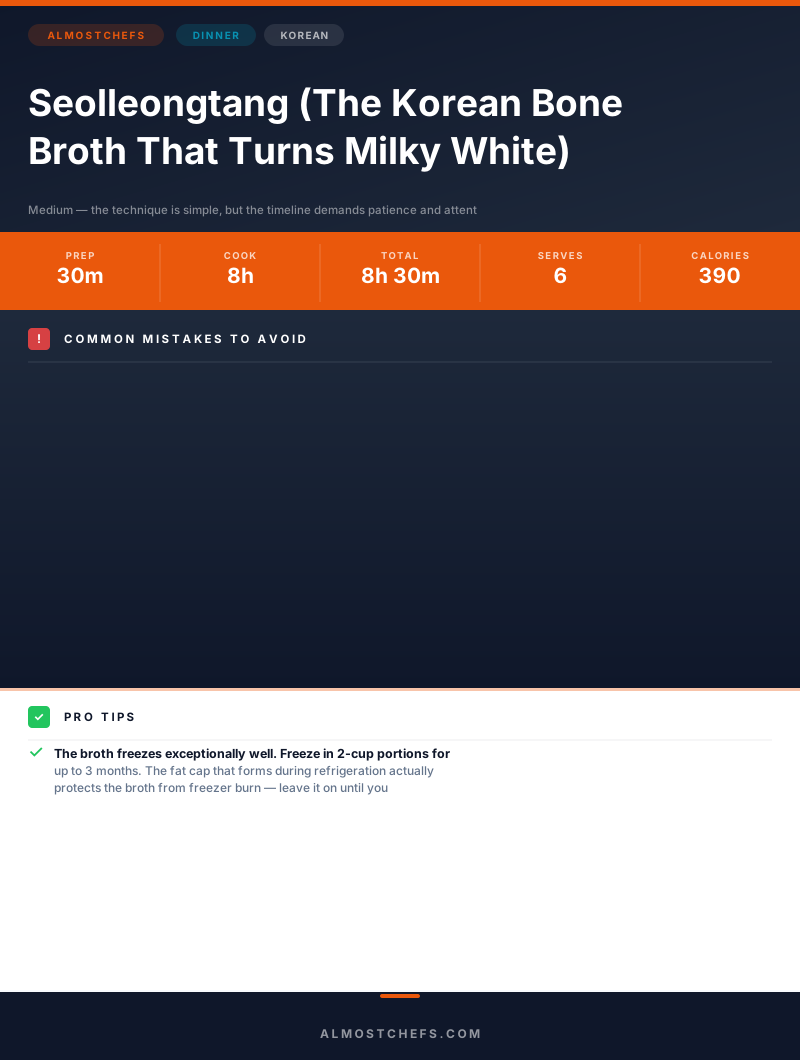
Seolleongtang (The Korean Bone Broth That Turns Milky White)
A long-simmered Korean ox bone soup that achieves its signature milky-white broth through hours of high-heat boiling that emulsifies collagen and bone marrow into the water. We break down the soaking, blanching, and boil technique that separates cloudy, rich seolleongtang from a clear, flavorless disappointment.

“Most soups get better the longer you cook them. Seolleongtang is one of the few where the wrong kind of 'longer' produces the wrong result entirely. The milky white color is not a seasoning or a trick — it's physics. Collagen and bone marrow emulsify into the water only under a sustained rolling boil. Drop to a simmer and you get clear broth. The entire recipe is an exercise in understanding that one rule.”
Why This Recipe Works
Seolleongtang is Korean cuisine's answer to a question most cultures have never thought to ask: what happens if you boil bones not until the stock is done, but until the water itself changes state? The answer is eight hours away, and it looks like warm milk.
The White Is Not an Accident
The opacity of properly made seolleongtang is the result of emulsification — the same physics that makes mayonnaise white, that makes whole milk opaque, that makes a properly made tonkotsu ramen broth look like cream. Collagen from the bones hydrolyzes into gelatin under prolonged heat. Bone marrow releases its fat. Under a sustained rolling boil, these particles are broken into droplets small enough to stay suspended in the water rather than rising to the surface. The result is a stable emulsion that is simultaneously broth and fat and gelatin — all at once, inseparable.
Drop the heat to a simmer, and the physics change. The agitation stops. The particles rise. The broth clarifies. You have made a different soup entirely.
This is why every seolleongtang recipe specifies high heat, and why most home attempts fail. The instinct to reduce heat on a long-cooking broth is correct for French stock, correct for chicken soup, and completely wrong here.
The Blanching Ritual
Before the long cook begins, the bones need to give up everything that would make the broth taste wrong. Blood. Myoglobin. Coagulated proteins from the marrow cavities. These are purged in two stages: the cold-water soak draws impurities out slowly over two hours, and the opening boil drives everything remaining to the surface in the first ten minutes.
The critical move is to discard that first water entirely and rinse every bone by hand under the tap. Cooks who skip this step — who skim the scum and continue — are cooking their broth in diluted blood. No amount of simmering will fix the metallic bitterness that results. The blanch-and-rinse is not optional. It takes five minutes. It determines the entire flavor of the soup.
The Patience Economy
Eight hours is not an exaggeration and it is not padding. The first two hours develop the emulsification and cook the brisket through. The middle four hours extract the deep marrow flavor and build the body. The final two hours concentrate everything.
The brisket comes out at the two-hour mark — tender, flavorful, and still worth eating. Left in for the full eight hours, it becomes fibrous rope. Slice it thin against the grain, refrigerate it, and return it to the bowl only at serving.
A large stockpot with high sides is not optional here. You need room for the bones to churn without the broth boiling over, and you need enough volume to maintain a consistent liquid level as water evaporates over eight hours. A wide, heavy-based pot also distributes the heat evenly enough that the bottom layer doesn't scorch while the top fails to boil — a real risk with thin pots on high heat for this duration.
The Table as the Kitchen
Seolleongtang arrives at the table completely unseasoned. This is not oversight — it is the dish. Each diner salts their bowl to their own threshold, adds pepper, and loads green onions according to taste. The soup is a canvas; the condiments are the painting.
The logic is practical. Eight hours of boiling concentrates the broth significantly. Different amounts of rice in each bowl dilute the salt differently. A pot seasoned for one bowl will be oversalted for the bowl with extra rice and undersalted for the bowl with none. The table-seasoning tradition solves a real problem — and it is one of the most honest expressions of what Korean communal dining actually is: shared foundation, personal finish.
Where Beginners Mess This Up
Before we start, read this. These are the 4 reasons your seolleongtang (the korean bone broth that turns milky white) will fail:
- 1
Skipping the cold-water soak: Ox bones must soak in cold water for at least 2 hours before blanching. The soak draws out blood and myoglobin from the marrow cavities. Skip this step and the finished broth will be grey, metallic-tasting, and bitter — the opposite of seolleongtang's clean, sweet flavor.
- 2
Under-blanching the bones: The first boil is not for flavor — it's for purging. Bring the bones to a full boil, discard all the water and scum, and rinse every bone individually under cold running water. Cooks who reuse the first boil water end up with murky, off-flavored broth that no amount of seasoning can fix.
- 3
Simmering instead of boiling: Seolleongtang's white broth is created by vigorous, rolling boil — not a gentle simmer. A simmer produces clear gomtang. A rolling boil physically breaks the fat and collagen particles into an emulsion that turns the water opaque and white. You cannot achieve the signature color on low heat. Keep the heat high and the surface agitated.
- 4
Seasoning the pot instead of the bowl: Seolleongtang is served completely unseasoned from the pot. Diners add salt, pepper, and green onions to their individual bowl. If you salt the pot, you lose control of the final balance — and the sodium concentrates dramatically as the broth reduces over eight hours.
🛠️ Core Equipment
- Large stockpot (at least 10-quart)The bones and water need room. A small pot forces you to crowd the bones and makes it impossible to maintain the rolling boil that creates the white emulsification. A wide, tall pot also reduces uneven boiling hot spots.
- Spider skimmer or fine-mesh ladleFor pulling scum and fat from the surface during the first 30 minutes of the main cook. Skimming early produces a cleaner-tasting broth without sacrificing the milky color that develops later.
- Tongs and a colanderFor the initial blanch step. You need to pull every bone out quickly and rinse them individually. Having a colander ready next to the sink makes this fast enough to matter.
- Insulated containers or thermosesSeolleongtang is traditionally served scalding hot. The broth cools rapidly in a bowl. Preheating your serving bowls with hot water for 5 minutes before serving keeps the soup at proper temperature through the meal.
Seolleongtang (The Korean Bone Broth That Turns Milky White)
🛒 Ingredients
- ✦4.5 pounds ox leg bones (sagol), cut into 3-inch segments
- ✦1.5 pounds beef brisket or shank, whole
- ✦16 cups cold water, plus more for soaking and blanching
- ✦1 large yellow onion, halved
- ✦10 garlic cloves, smashed
- ✦2-inch knob of fresh ginger, sliced
- ✦3 green onions, root ends trimmed
- ✦1 tablespoon neutral oil (if needed to start emulsification)
- ✦Sea salt to taste (served at the table, not in the pot)
- ✦Freshly ground black pepper to taste (served at the table)
- ✦4 green onions, finely sliced (for serving)
- ✦Cooked short-grain white rice (for serving)
- ✦Kimchi (for serving)
👨🍳 Instructions
01Step 1
Place the ox bones in a large bowl or pot. Cover completely with cold water and soak for at least 2 hours, changing the water once halfway through. Drain and discard the soaking water.
02Step 2
Transfer the soaked bones to a large stockpot. Add the brisket or shank. Cover with fresh cold water and bring to a vigorous boil over high heat. Boil hard for 10 minutes.
03Step 3
Drain the pot completely. Transfer all bones and meat to a colander in the sink and rinse each piece individually under cold running water, scrubbing off any grey residue. Rinse the pot clean.
04Step 4
Return the cleaned bones and meat to the pot. Add 16 cups cold water, the halved onion, smashed garlic, ginger, and whole green onions. Bring to a hard rolling boil over high heat.
05Step 5
Boil hard on high heat for the first 30 minutes, skimming any remaining scum from the surface with a spider skimmer or fine-mesh ladle. After 30 minutes the surface should be mostly clear.
06Step 6
Continue boiling on medium-high heat — still vigorous, still agitated — for 5 to 7 more hours. Add water as needed to keep the bones submerged. The broth should look progressively more white and opaque as the hours pass.
07Step 7
At the 2-hour mark, remove the brisket or shank. It will be fully cooked and tender. Slice thin against the grain and set aside. Return only the bones to the pot.
08Step 8
Remove and discard the onion, garlic, ginger, and green onions after 4 hours. Their flavor has fully transferred to the broth. Leaving aromatics in for the full cook can make the broth bitter.
09Step 9
After 7-8 hours total cook time, the broth should be opaque white and rich. Strain through a colander to remove all bones. Discard the bones — they have given everything they have.
10Step 10
Skim the surface fat if desired, or let the broth cool completely and lift the solidified fat cap for a cleaner result. Reheat the strained broth before serving.
11Step 11
Serve the broth scalding hot in prewarmed bowls. Add sliced brisket. Let diners season their own bowls with salt, pepper, and sliced green onions at the table. Serve with white rice and kimchi on the side.
Nutrition Per Serving
Estimates based on standard preparation. Adjustments alter macros.
🔄 Substitutions
Instead of Ox leg bones...
Use Beef knuckle bones or neck bones
Knuckle bones have higher cartilage content and produce excellent gelatin. Neck bones have more meat but slightly less marrow. Either works — the boil technique remains identical.
Instead of Brisket...
Use Beef shank (saji)
Shank has more connective tissue and contributes additional collagen to the broth. Slightly richer result. Pull at 2.5 hours instead of 2 — the thicker connective tissue takes longer.
Instead of Short-grain white rice...
Use Nurungji (scorched rice)
Traditional accompaniment in some regional styles. The slightly toasty flavor of scorched rice contrasts well with the clean, neutral broth. Add it directly to the bowl.
Instead of Fresh ginger...
Use Omit entirely
Some traditionalists skip ginger in seolleongtang to keep the flavor profile purely beefy. If your broth is clean and well-purged, it doesn't need ginger to mask off-flavors.
🧊 Storage & Reheating
In the Fridge
Cool completely and store in an airtight container for up to 4 days. The broth will solidify into a gel — this is correct and indicates excellent collagen content. Reheat on the stovetop.
In the Freezer
Freeze in portioned containers for up to 3 months. Leave the fat cap on during freezing for protection. Remove after thawing.
Reheating Rules
Reheat in a saucepan over medium heat until scalding — seolleongtang must be served very hot or the fat becomes unpleasant. Microwave works in a pinch but heats unevenly.
❓ Frequently Asked Questions
Why is my seolleongtang broth clear instead of white?
The heat was too low. Milky white seolleongtang requires a sustained rolling boil — not a simmer. The vigorous agitation physically emulsifies fat and collagen particles into the water, turning it opaque. A gentle simmer produces clear gomtang. Increase your heat until the surface is actively churning and maintain that for the full cook.
Can I make seolleongtang in a pressure cooker?
Yes, with tradeoffs. Two hours at high pressure produces a broth that's roughly 80% as opaque and rich as the 8-hour stovetop method. The color is slightly less white, the flavor slightly less layered. It's a valid weeknight adaptation, not a full replacement.
Do I have to season it at the table?
Traditionally, yes. The pot is served completely unseasoned and each diner adds salt, pepper, and green onions to their bowl. This is practical — the broth is highly concentrated after 8 hours and different amounts of rice dilute the salt differently per bowl. Season your own and you control your own experience.
Why did my broth turn brown instead of white?
Either the blanching step was insufficient (residual blood proteins turned brown under heat) or the heat was too low to maintain emulsification and the fat separated rather than incorporated. Repeat the blanch step more thoroughly next time, and keep the boil more vigorous.
What is the difference between seolleongtang and gomtang?
Both are Korean ox bone soups, but gomtang is typically clear and is simmered gently. Seolleongtang is opaque and milky because of the rolling boil that emulsifies the collagen and marrow. Gomtang is often made with more meat and fewer marrow bones. They are related techniques, not the same dish.
Can I add vegetables to the broth?
Aromatics — onion, garlic, ginger — are added and removed during the cook. But seolleongtang is deliberately sparse. Adding vegetables for the full 8 hours makes the broth taste like vegetable soup, not bone broth. The clean beef flavor is the point.
The Science of
Seolleongtang (The Korean Bone Broth That Turns Milky White)
We turned everything on this page into a beautiful, flour-proof PDF cheat sheet. Print it out, stick it to your fridge, and never mess up your seolleongtang (the korean bone broth that turns milky white) again.
*We'll email you the high-res PDF instantly. No spam, just perfectly cooked meals.
AlmostChefs Editorial Team
We translate the internet's most popular cooking videos into foolproof, beginner-friendly written recipes. We analyze multiple methods, test them in our kitchen, and engineer a single "Master Recipe" that gives you the best possible result with the least possible stress.