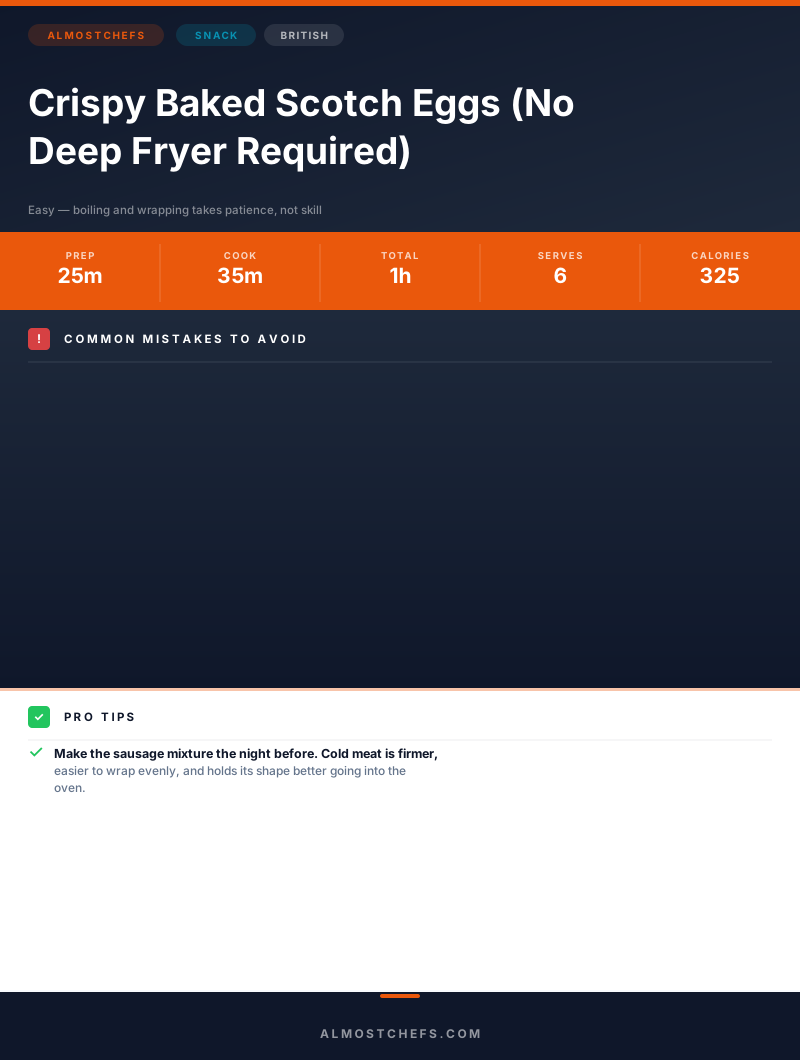
Crispy Baked Scotch Eggs (No Deep Fryer Required)
A baked take on the British classic — hard-boiled eggs wrapped in seasoned pork-turkey sausage, coated in a panko-Parmesan crust, and roasted at high heat until shatteringly crisp. Same satisfying crunch as the pub version, without the oil slick.

“Scotch eggs have a reputation problem. The pub versions are soggy, the supermarket versions are rubbery, and every deep-fry tutorial on the internet requires a thermometer, a splatter screen, and the confidence of someone who has burned themselves before. This baked version solves all three problems. High-heat roasting at 400°F with a Parmesan-spiked breadcrumb crust delivers genuine crunch — and you can make six of them in under an hour without touching a drop of frying oil.”
Why This Recipe Works
The Scotch egg is one of the most structurally honest foods in British cuisine. No pretension. No sauce architecture. Just an egg, wrapped in seasoned meat, wrapped in crunchy breadcrumbs — a complete protein delivery system that has survived every food trend since 1738 because it works on a fundamental level. The problem isn't the concept. The problem is execution.
The Egg Timeline
Most Scotch egg failures begin before the first piece of meat touches anything. The eggs are either overcooked — rubbery whites, chalky yolks, that tell-tale gray-green ring — or they're so perfectly cooked that no one accounts for the 22-25 minutes they'll spend in a 400°F oven afterward.
The 12-minute boil is calibrated to account for the oven phase. You pull the eggs when the yolk is fully set but still bright yellow — not the overcooked, powdery texture that marks a 15-minute egg. The ice bath stops carry-over cooking immediately. Skip it and the yolk keeps cooking on the counter while you get the meat ready. By the time it goes into the oven it's already at 90% done, and it exits overdone.
The Meat Question
Traditional Scotch eggs use pure pork sausage meat — seasoned, fatty, and deeply savory. This version blends pork and turkey 50/50, which trades some of that fat for protein density without sacrificing the juiciness that makes the coating worth eating. The key is in the mixing: fold the seasonings in gently. Ground meat that gets worked hard develops a tight, dense texture — it contracts aggressively in the oven instead of staying tender. You want cohesion, not elasticity.
The minced onion is load-bearing. As it cooks inside the meat layer, it releases moisture that keeps the sausage from drying out during the bake. The thyme and parsley add fragrance rather than heat. Paprika gives color from within. And the Dijon mustard on the side isn't an afterthought — its acidity cuts the fat of the sausage the same way lemon cuts fish. Don't skip it.
The Crust Architecture
The Parmesan in the breadcrumb mix is the structural innovation here. Standard panko stays sandy — individual crumbs that fall off the meat coating the moment someone picks up the egg. Parmesan melts as it bakes, fusing the breadcrumbs into a continuous shell that holds its integrity from oven to table. The whole wheat breadcrumbs add a slightly nuttier baseline flavor and give the crust more substance than all-panko alone.
The olive oil drizzle matters more than it looks. Without a fat coating, even panko doesn't brown — it just dries out and turns pale. A rimmed baking sheet lined with parchment keeps the oil from pooling under the eggs while allowing the heat to circulate around the entire surface. The result is even, deep golden color on every side without rotating or flipping.
Baking vs. Frying
Deep-frying produces a crunchier crust — that's not in dispute. The oil surrounds the egg at a consistent 350°F, cooking every surface simultaneously. But baking at 400°F with a properly oiled Parmesan crust gets within 10% of that crunch with a fraction of the mess and none of the oil absorption. For a snack that already has two eggs per serving worth of dietary fat, the baked version is the one you'll make again on a Tuesday.
Scotch eggs are a structure problem, not an ingredient problem. Get the egg timing right, seal the meat coating properly, and let the oven do its job. Everything else is seasoning.
Where Beginners Mess This Up
Before we start, read this. These are the 4 reasons your crispy baked scotch eggs (no deep fryer required) will fail:
- 1
Overcooking the eggs before baking: You're baking these at 400°F for 22-25 minutes. If the eggs are fully hard-boiled and rubbery before they even hit the oven, the yolks will be chalky and green-rimmed by the time the meat is cooked through. The 12-minute cook time produces a yolk that's set but still bright — account for the oven time.
- 2
Leaving gaps in the meat coating: Any crack or thin spot in the sausage layer will split open in the oven. The egg expands slightly as it heats, and the gap becomes a tear. Flatten the meat patty thin enough to wrap fully, press firmly at the seams, and smooth out any ridges before coating.
- 3
Skipping the egg wash: The beaten egg wash is the glue between the meat and the breadcrumb crust. Without it, the coating slides off during baking and you get a naked, pallid scotch egg that no one wants to eat. Brush it evenly — don't dip, don't drench.
- 4
Not patting the boiled eggs dry: Wet eggs repel the meat coating. After the ice bath, dry each egg thoroughly with paper towels. Moisture between the egg and the sausage creates steam during baking that puffs the coating away from the surface.
The Video Reference Library
Want to see it in action? Here are the exact videos we analyzed and combined to build this foolproof recipe translation:

The source video for this method. Clear technique for wrapping the meat evenly and achieving even browning in a standard oven without deep-frying.
2. How to Make Perfect Scotch Eggs
Detailed walkthrough of the egg-boiling timeline and why the ice bath matters for clean peeling and yolk color.
3. British Pub Snacks at HomeContext on the Scotch egg's history and how the baked version compares to the traditional chip-shop deep-fry. Good for understanding what you're aiming for texturally.
🛠️ Core Equipment
- Rimmed baking sheet with parchment ↗Parchment prevents sticking and allows even air circulation under the eggs. A dark, unlined baking sheet absorbs too much heat and scorches the bottom of the coating before the meat cooks through.
- Instant-read thermometer ↗The only reliable way to confirm the sausage is at 160°F. Cutting into one scotch egg to check ruins it. A thermometer inserted at the widest point of the meat coating gives a definitive read in three seconds.
- Large mixing bowl ↗Sausage meat needs to be mixed gently. A large bowl gives you room to fold the seasonings in without compressing the mixture. Overworked meat binds tight and turns dense in the oven.
- Shallow dish for breading ↗A shallow dish lets you roll the egg-wrapped sausage balls through the breadcrumbs evenly. A deep bowl creates uneven pressure and clumping on one side.
Crispy Baked Scotch Eggs (No Deep Fryer Required)
🛒 Ingredients
- ✦6 large eggs
- ✦1 pound ground pork and turkey blend (50/50)
- ✦1/2 cup panko breadcrumbs
- ✦1/4 cup whole wheat breadcrumbs
- ✦2 tablespoons grated Parmesan cheese
- ✦1 medium yellow onion, finely minced
- ✦2 cloves garlic, minced
- ✦2 tablespoons fresh flat-leaf parsley, chopped
- ✦1 teaspoon fresh thyme leaves
- ✦1 teaspoon paprika
- ✦1/2 teaspoon cayenne pepper
- ✦1 teaspoon sea salt
- ✦1/2 teaspoon ground black pepper
- ✦1 large egg, beaten (for egg wash)
- ✦2 tablespoons olive oil
- ✦1 tablespoon Dijon mustard
👨🍳 Instructions
01Step 1
Place 6 eggs in a pot of cold water and bring to a rolling boil over high heat. Remove from heat, cover, and let sit for 12 minutes.
02Step 2
Transfer eggs to an ice bath immediately and chill for at least 5 minutes. Peel carefully under cool running water and pat completely dry with paper towels.
03Step 3
Combine the ground pork-turkey blend with minced onion, garlic, parsley, thyme, paprika, cayenne, salt, and pepper in a large mixing bowl. Stir gently until just incorporated — do not overwork.
04Step 4
Mix the panko, whole wheat breadcrumbs, and grated Parmesan in a shallow dish. Set aside.
05Step 5
Divide the meat mixture into 6 equal portions. Flatten each into a thin, even patty in your palm.
06Step 6
Wrap one meat patty around each peeled egg, pressing firmly at the seams and smoothing the surface until the egg is completely enclosed with no gaps.
07Step 7
Beat the egg wash in a small bowl. Brush a light, even coat over each meat-wrapped egg.
08Step 8
Roll each egg through the breadcrumb mixture, pressing gently so the crust adheres evenly. Place on a parchment-lined rimmed baking sheet.
09Step 9
Drizzle the olive oil over each scotch egg, covering the breadcrumb surface lightly for even browning.
10Step 10
Bake in a preheated 400°F oven for 22-25 minutes, until the coating is deep golden brown and an instant-read thermometer reads 160°F at the thickest point of the meat.
11Step 11
Rest on the baking sheet for 3-4 minutes before transferring to a serving platter.
12Step 12
Serve warm or at room temperature with Dijon mustard on the side.
Nutrition Per Serving
Estimates based on standard preparation. Adjustments alter macros.
🔄 Substitutions
Instead of Ground pork and turkey blend...
Use All-pork sausage meat (Italian or breakfast style)
Richer, more traditional flavor. Higher saturated fat, but the texture is more forgiving and the seasoning is built in. Reduce added salt accordingly.
Instead of Panko and whole wheat breadcrumbs...
Use All panko
Crunchier exterior with a lighter, more neutral flavor. Less fiber, but a more classically crisp crust. The pub standard.
Instead of Olive oil drizzle...
Use Light cooking spray (avocado or canola)
More even coverage with less effort. Slightly lower fat content. Works well if you're worried about uneven browning.
Instead of Fresh thyme and parsley...
Use 1 teaspoon dried Italian seasoning
Acceptable convenience swap. Dried herbs are more concentrated — use half the volume. Loses the brightness of fresh herbs but the sausage still seasons well.
🧊 Storage & Reheating
In the Fridge
Store in an airtight container for up to 4 days. The crust softens slightly but firms up again after a few minutes in a 350°F oven.
In the Freezer
Freeze fully cooked and cooled scotch eggs individually on a baking sheet, then transfer to a freezer bag. Keeps for up to 2 months.
Reheating Rules
Reheat from fridge in a 375°F oven for 10 minutes to restore crunch. Microwaving works in a pinch but softens the crust beyond recovery.
❓ Frequently Asked Questions
Why did my meat coating split open during baking?
A gap or thin spot in the sausage layer. When the egg heats and expands slightly, any weak point in the meat coating tears open. Press the seams firmly before coating and make sure the layer is even across the entire surface — no thin spots at the top or bottom of the egg.
Can I deep-fry these instead of baking?
Yes. Heat oil to 350°F and fry for 7-8 minutes, turning occasionally, until deep golden brown. The exterior will be crunchier and richer. Internal meat temperature still needs to hit 160°F — use a thermometer on the first batch until you know your timing.
My yolks came out gray-green. What happened?
The eggs were overcooked before baking — likely boiled beyond 12 minutes, or not cooled in an ice bath quickly enough. The gray-green ring is iron sulfide, formed when the egg sits at high heat too long. Pull them at 12 minutes and into the ice bath immediately.
Do these work as make-ahead for a party?
Yes — one of the best party snacks for this reason. Make them the day before, refrigerate, and serve at room temperature or refresh in a 375°F oven for 8-10 minutes before serving. They hold their structure well and the flavor is actually better after resting overnight.
Can I make these with plant-based sausage?
Yes, with caveats. Plant-based sausage is stickier and wetter than ground meat, which makes wrapping harder. Chill the mixture for 30 minutes before forming, and wrap with slightly wet hands to prevent sticking. Bake at the same temperature but check at 20 minutes — some plant-based products brown faster.
What dipping sauces work beyond Dijon?
Brown sauce (HP) is the British standard. Spicy mayo (1 part sriracha, 3 parts mayo) works well. Piccalilli is traditional in the north of England. For a sharper contrast, a simple malt vinegar drizzle cuts through the richness cleanly.
The Science of
Crispy Baked Scotch Eggs (No Deep Fryer Required)
We turned everything on this page into a beautiful, flour-proof PDF cheat sheet. Print it out, stick it to your fridge, and never mess up your crispy baked scotch eggs (no deep fryer required) again.
*We'll email you the high-res PDF instantly. No spam, just perfectly cooked meals.
AlmostChefs Editorial Team
We translate the internet's most popular cooking videos into foolproof, beginner-friendly written recipes. We analyze multiple methods, test them in our kitchen, and engineer a single "Master Recipe" that gives you the best possible result with the least possible stress.