German Sauerbraten (The Braised Beef That Earns the Wait)
A traditional German pot roast with beef braised low and slow in a tangy apple cider vinegar sauce with aromatic vegetables and whole spices. We broke down the technique to show exactly why the acid, the sear, and the braise time aren't optional — they're the whole point.
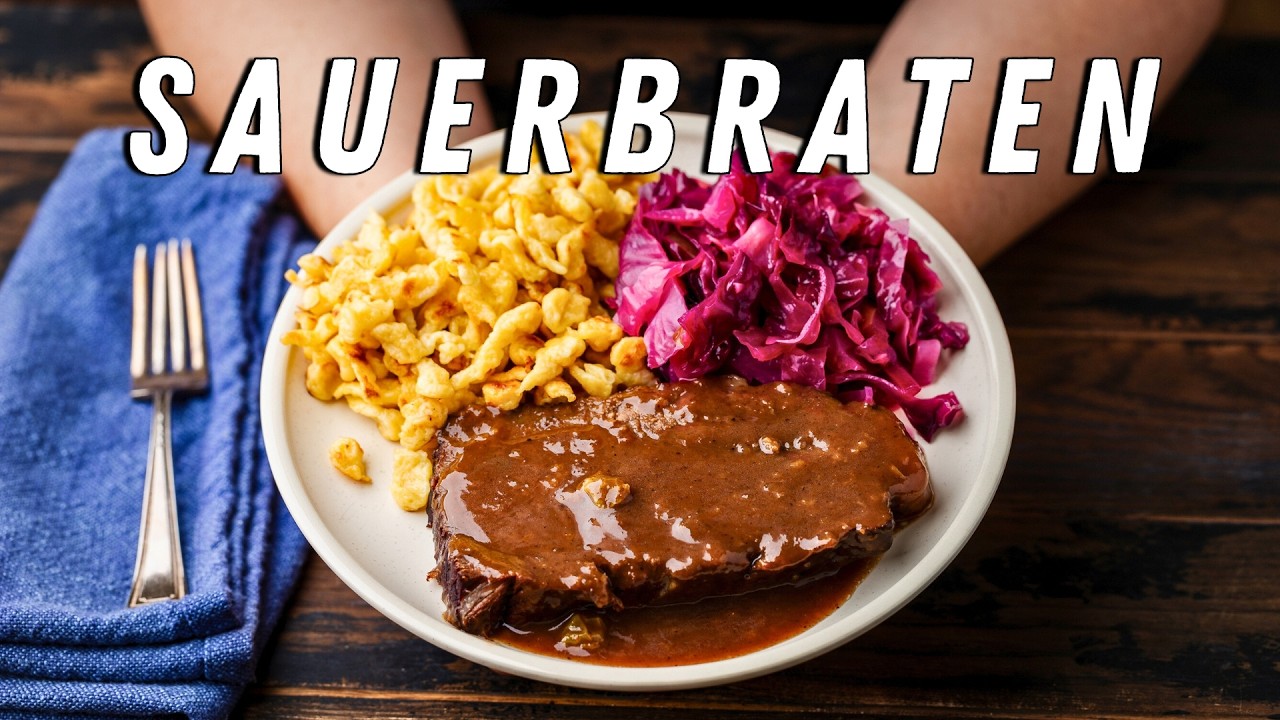
“Sauerbraten looks intimidating because it sounds like a chemistry experiment. Acid marinade, whole spices, three hours in a sealed pot. But every single one of those steps exists for a concrete reason, and once you understand the why, the dish becomes almost impossible to get wrong. The vinegar doesn't just flavor the beef. The sear doesn't just add color. The long braise isn't filler. This is German cooking at its most logical.”
Why This Recipe Works
Sauerbraten is German engineering applied to dinner. Every element of the technique — the acidity, the sear, the aromatics, the long sealed braise — exists to solve a specific problem with a tough cut of beef. Understanding the logic is what separates a dish that tastes like effort from one that tastes like it cost you nothing.
The Acid Question
Two cups of apple cider vinegar is not a typo. The acidity serves two functions. First, it begins breaking down the surface proteins of the beef, creating a more porous structure that absorbs the aromatic compounds from the spices and vegetables more efficiently. Second, during the long braise, the acid prevents the braising liquid from becoming flat and one-dimensional — it stays bright and complex even after three hours of low heat.
This is why the liquid tastes shockingly tart before you thicken it. That's the correct state. The cornstarch slurry and the beef fat and collagen that have dissolved into the liquid during braising all contribute to mellowing the final sauce. If you taste the raw braising liquid and panic, you're tasting a work in progress, not a finished product.
The Sear Is Not Optional
There is a tendency to skip browning steps in long braise recipes on the logic that "it all cooks together anyway." This is wrong, and it's especially wrong here. The Maillard crust formed during the initial 3-4 minute sear per side generates hundreds of flavor compounds that don't exist in unseared beef. More critically, the fond — the browned bits left stuck to the bottom of the Dutch oven — dissolves into the braising liquid when you add the vinegar and broth. That moment of deglazing, when you scrape the bottom of the pot with a wooden spoon, is where half the flavor of the final sauce originates.
Skipping the sear produces a braised beef dish. Doing it properly produces Sauerbraten.
Low Heat Does the Chemistry
Chuck roast is a working muscle. It contains significant collagen — the fibrous connective tissue that makes the raw cut tough — and intramuscular fat distributed throughout the meat. At sustained low heat over 2.5 to 3 hours, three things happen simultaneously: the collagen converts to gelatin, which thickens and enriches the braising liquid; the fat renders slowly, basting the muscle fibers from the inside; and the muscle proteins relax into that fork-tender state that makes the beef pull apart without resistance.
Hard boiling reverses this process. High heat contracts muscle fibers and squeezes moisture out before the collagen has time to convert. You end up with dry, stringy meat swimming in thin, overcooked liquid. The entire technique depends on maintaining a barely-there simmer — a slow, occasional bubble under a tight lid for the full cooking time.
The Sauce Architecture
After the roast comes out, what's left in the pot is three hours of concentrated flavor — spent aromatics and all. The fine-mesh sieve step is where you separate what's useful from what's done. Press the vegetables firmly to extract every last drop of braising liquid, then discard the solids. What you're left with is intensely flavored and slightly thin. The cornstarch slurry thickens it to a sauce that coats beef cleanly without becoming gluey.
The caraway seeds and ground cloves in this sauce deserve attention. Both are slightly unusual in modern American cooking, and both are doing specific work. Caraway contributes an anise-adjacent bitterness that cuts through the richness of the beef fat. Cloves add a warm, slightly medicinal depth that makes the sauce taste older and more complex than its ingredient list suggests. Don't substitute around them.
Why It's Better the Next Day
Sauerbraten reheats better than almost any other braise. The gelatin that developed from the collagen continues to integrate with the sauce as it cools and sits, creating a silkier texture by day two. The spice volatiles that were sharp and distinct when fresh meld into a single cohesive flavor profile overnight. Make this on a Sunday, refrigerate it, and serve it Monday. The patience required to cook it is exceeded only by the patience required to not eat it immediately.
Where Beginners Mess This Up
Before we start, read this. These are the 4 reasons your german sauerbraten (the braised beef that earns the wait) will fail:
- 1
Skipping or shortening the sear: The Maillard crust you build in the first four minutes per side is the structural flavor backbone of the entire dish. It's not cosmetic. The browned fond stuck to the bottom of the pot dissolves into the braising liquid when you add the vinegar and broth — that's where the depth comes from. A pale, underseared roast produces a pale, flat sauce.
- 2
Boiling instead of braising: The liquid should barely move — a gentle simmer with an occasional lazy bubble. Hard boiling contracts the muscle fibers and squeezes moisture out of the meat rather than letting connective tissue dissolve slowly into gelatin. The result is stringy, dry beef that no amount of sauce can rescue. Low heat, covered lid, 2.5 to 3 hours minimum.
- 3
Skipping the strain on the sauce: After three hours, the vegetables have given everything they have. They're spent. If you leave them in and serve the sauce chunky, you're adding texture without flavor and diluting the concentration of the braising liquid. Strain, press, discard — then thicken what remains.
- 4
Slicing the roast too soon: Ten minutes of resting after you pull the beef is not optional. The muscle fibers are still contracting from the heat. Slice immediately and the juices flood the cutting board instead of redistributing into the meat. Rest it, then slice or shred.
The Video Reference Library
Want to see it in action? Here are the exact videos we analyzed and combined to build this foolproof recipe translation:
The primary reference video. Covers the full braising technique, how to read the simmer temperature visually, and what properly tender beef looks like before you pull it.
🛠️ Core Equipment
- Dutch ovenThe non-negotiable vessel for this recipe. You need the heavy base for an even, scorching sear and the thick walls for consistent low heat during the long braise. Thin pots create hot spots that dry out the bottom layer of liquid before the beef is done.
- Fine-mesh sieveFor straining the braising liquid after the roast comes out. You're pressing three hours of aromatics through this to extract every last drop of flavor. A coarse strainer leaves too much behind.
- Wooden spoonEssential for deglazing — scraping up the fond from the bottom of the pot when the vinegar and broth go in. That browned layer is concentrated flavor. If it stays stuck to the pot, it doesn't end up in your sauce.
German Sauerbraten (The Braised Beef That Earns the Wait)
🛒 Ingredients
- ✦3 pounds beef chuck roast, trimmed of excess fat
- ✦2 cups apple cider vinegar
- ✦1 cup beef broth
- ✦3 tablespoons olive oil
- ✦2 medium yellow onions, finely diced
- ✦3 large carrots, cut into 1-inch chunks
- ✦3 stalks celery, cut into 1-inch pieces
- ✦4 cloves garlic, minced
- ✦3 tablespoons whole grain mustard
- ✦2 tablespoons tomato paste
- ✦2 bay leaves
- ✦1 tablespoon fresh thyme leaves
- ✦1 teaspoon whole black peppercorns
- ✦1 teaspoon caraway seeds
- ✦1 teaspoon sea salt
- ✦½ teaspoon ground cloves
- ✦2 tablespoons cornstarch
- ✦3 tablespoons water
👨🍳 Instructions
01Step 1
Pat the beef chuck roast completely dry with paper towels and season generously on all sides with sea salt and freshly cracked black pepper.
02Step 2
Heat olive oil in a large Dutch oven over medium-high heat until shimmering, about 2 minutes.
03Step 3
Place the seasoned roast into the hot oil and sear each side for 3-4 minutes until deeply browned. Transfer to a clean plate.
04Step 4
Add the diced yellow onions to the same pot and sauté over medium heat, stirring occasionally, until translucent and softened, about 5 minutes.
05Step 5
Stir in the minced garlic and tomato paste and cook for 1-2 minutes until fragrant and the tomato paste darkens slightly.
06Step 6
Pour in the apple cider vinegar and beef broth, scraping up all the browned bits from the bottom of the pot with a wooden spoon.
07Step 7
Whisk in the whole grain mustard until fully combined, then add the bay leaves, fresh thyme, black peppercorns, caraway seeds, and ground cloves.
08Step 8
Return the seared roast to the pot along with any accumulated resting juices, nestling it among the aromatics.
09Step 9
Bring the liquid to a gentle simmer, then cover the pot and reduce heat to low.
10Step 10
Braise for 2.5 to 3 hours, turning the roast once halfway through, until it is fork-tender and pulls apart easily.
11Step 11
Remove the roast and place on a cutting board to rest for 10 minutes.
12Step 12
Strain the braising liquid through a fine-mesh sieve into a separate saucepan, pressing the cooked vegetables firmly to extract all their liquid. Discard solids.
13Step 13
Whisk together the cornstarch and water to form a slurry, then stir it into the strained braising liquid over medium heat.
14Step 14
Simmer the sauce for 2-3 minutes, stirring frequently, until it thickens enough to coat the back of a spoon.
15Step 15
Slice or shred the rested beef into serving portions, arrange on a platter, and pour the sauce over the top. Serve immediately.
Nutrition Per Serving
Estimates based on standard preparation. Adjustments alter macros.
🔄 Substitutions
Instead of Apple cider vinegar...
Use Red wine vinegar or balsamic vinegar
Red wine vinegar is the more traditional European choice and adds depth. Balsamic brings subtle sweetness that softens the sharp tang. Both work — balsamic produces a slightly darker sauce.
Instead of Beef chuck roast...
Use Grass-fed or pasture-raised beef chuck roast
Marginally richer flavor and a better nutritional profile. No technique change required. If you can find it, use it — if not, conventional chuck is fine.
Instead of Whole grain mustard...
Use Dijon mustard or spicy brown mustard
Dijon creates a silkier, more refined sauce with a cleaner tang. Spicy brown is coarser and more assertive. Either works — Dijon is the more elegant swap.
Instead of Cornstarch...
Use Arrowroot powder or tapioca starch
Arrowroot produces a glossier, cleaner sauce that holds up better to reheating. Use the same ratio as cornstarch. Tapioca is slightly more viscous. Both are fine.
🧊 Storage & Reheating
In the Fridge
Store in an airtight container with the sauce for up to 4 days. The flavors deepen significantly by day two.
In the Freezer
Freeze in portions for up to 3 months. Store the beef and sauce together so the meat doesn't dry out during freezing. Thaw overnight in the fridge.
Reheating Rules
Reheat covered in a pot over low heat with a splash of beef broth. The sauce will tighten back up as it warms. Avoid the microwave — it dries out the beef and breaks the sauce texture.
❓ Frequently Asked Questions
Do I need to marinate the beef overnight?
This recipe skips the traditional overnight marinade and builds the acid environment during the braise instead. The apple cider vinegar and aromatics do their work during the 3-hour cook time. If you want to marinate, combine the vinegar, broth, and spices, submerge the beef, and refrigerate for 24-48 hours before searing and braising — the flavor will be deeper and more complex.
Why is my beef tough after three hours?
The heat was too high. Tough beef after a long braise almost always means you simmered too aggressively. The collagen in chuck roast converts to gelatin slowly at low temperatures — rush it with a boil and the fibers tighten instead of relaxing. If your beef is still tough at the three-hour mark, lower the heat and add another 30-45 minutes.
Can I make this in a slow cooker?
Yes, but do not skip the sear on the stovetop first. Brown the beef and build the base in a Dutch oven, then transfer everything to the slow cooker and cook on low for 7-8 hours. The sear is load-bearing — slow cooker Sauerbraten without it is technically braised beef but not the same dish.
Is the sauce supposed to taste this sour?
Before thickening, yes — the braising liquid is aggressively tangy. This is correct. Once you add the cornstarch slurry and simmer for a few minutes, the sauce mellows considerably. The beef fat and collagen that dissolved into the liquid during the braise also round out the sharpness. Taste it after thickening, not before.
What should I serve with Sauerbraten?
Traditionally: Spätzle (German egg noodles), braised red cabbage, or potato dumplings. Practically: any starchy side that can absorb the sauce. Egg noodles and mashed potatoes both work well. The dish needs something soft and starchy underneath it.
Can I use a different cut of beef?
Chuck roast is strongly preferred. It has the right ratio of connective tissue and intramuscular fat to stay moist and rich over a long braise. Brisket is acceptable but leans drier. Round roast is too lean and will produce stringy, dry results. Avoid anything labeled 'lean' for a dish that cooks for three hours.

The Science of
German Sauerbraten (The Braised Beef That Earns the Wait)
We turned everything on this page into a beautiful, flour-proof PDF cheat sheet. Print it out, stick it to your fridge, and never mess up your german sauerbraten (the braised beef that earns the wait) again.
*We'll email you the high-res PDF instantly. No spam, just perfectly cooked meals.
AlmostChefs Editorial Team
We translate the internet's most popular cooking videos into foolproof, beginner-friendly written recipes. We analyze multiple methods, test them in our kitchen, and engineer a single "Master Recipe" that gives you the best possible result with the least possible stress.