Samosas (Spiced Potato Filling, Crispy Pastry, Deep-Fried or Baked)
Samosas with the correct pastry — flaky, not doughy — and a properly spiced potato-pea filling. The pastry requires minimal water and maximum fat. The filling requires bloomed spices and dry mashed potato.

“The reason most homemade samosas come out doughy and soft is not the recipe — it's the dough. The pastry for a proper samosa is built on the principle of fat inhibiting gluten development. Less water, more fat, and a specific kneading method that produces a tight, smooth dough that fries into layers rather than biting back like bread.”
Why This Recipe Works
Samosa failure is almost always pastry failure. The filling is simple — spiced potato and peas is not a technically demanding preparation. The pastry is where home attempts consistently go wrong, and it fails in a specific, predictable way: it comes out soft, doughy, and chewy rather than flaky and shattering. Understanding why requires understanding what the pastry is structurally supposed to be, and what the fat is doing in it.
Pastry Architecture: Gluten Inhibition
Samosa pastry is not bread dough, and it is not pie crust. It is a distinct category: a tight, low-hydration dough with a high fat-to-flour ratio, designed to produce a structure that fries into distinct layers rather than a uniform crumb.
The mechanism is gluten inhibition. Gluten is a protein network formed when glutenin and gliadin proteins in wheat flour are hydrated and mechanically developed. It creates the elastic, stretchy structure that makes bread chewy. In samosa pastry, you explicitly do not want gluten development — you want a fragile, layered structure that crisps under heat rather than resisting it.
Fat accomplishes this by coating the flour particles before water contacts them. When oil is rubbed into flour first, it creates a physical barrier around each particle that partially blocks water penetration. The water that does contact the flour can form some gluten — enough to hold the dough together — but the fat-coated particles cannot form the extensive cross-linked gluten network that dough with full hydration and no fat coating produces. The result is a tender, fragile pastry that breaks along layers rather than stretching.
This is why the oil is rubbed in before any water is added, and why the quantity of water is minimized aggressively. Every additional tablespoon of water you add to this dough contributes to gluten development. The correct technique produces dough that looks too dry — crumbly, rough-textured, not cohesive — but holds together when firmly pressed. That apparent dryness is correct.
Why Dry Potato Filling Is Non-Negotiable
The interior of a sealed samosa during frying is a closed system. Heat from the surrounding oil raises the temperature of the filling rapidly. Any moisture in the filling converts to steam at 212°F. Steam occupies approximately 1,700 times the volume of the liquid water it came from. In a sealed pastry pocket, that volume expansion has nowhere to go except outward — against the sealed seams.
This is why samosas with wet fillings burst. It is simple physics. The pastry seal, even a well-made one, cannot withstand the internal pressure of trapped steam from a moisture-laden filling. The solution is complete drying of the mashed potato before assembly.
Boiling drives water into the potato. Draining removes the bulk of it. But residual steam moisture remains in the potato cells and on the surface after draining, and it is this residual moisture that causes failures. Returning the drained potatoes to the hot pot over low heat for two minutes, stirring continuously, evaporates this residual moisture. You can see it working — steam rises from the potato as it moves around the pot. When the steam stops rising and the mash starts to look slightly dry and paste-like, it is ready.
Cool the filling completely before assembling the samosas. Hot filling creates internal steam the moment it contacts the pastry, softening the raw dough from the inside and compromising the seal before frying even begins.
Blooming Cumin Seeds: Why the Oil Must Be Hot
The spice layer in samosa filling is built on bloomed whole cumin seeds. Blooming — adding whole spices to hot fat and allowing them to cook until fragrant and slightly darkened — extracts fat-soluble volatile aroma compounds that water cannot dissolve and that are destroyed by the addition of cold fat.
Cumin contains cuminaldehyde, cymene, and terpene compounds that are responsible for its characteristic warm, earthy, slightly citric aroma. These compounds are fat-soluble and are encased within the cellular structure of the dried seed. When a whole cumin seed contacts hot oil — oil that is hot enough to sizzle the seed immediately on contact — two things happen: the heat ruptures the cellular walls of the seed and releases the volatile compounds, and the hot fat immediately captures those released compounds in solution. The result is cumin-infused fat that carries flavor throughout the filling far more effectively than ground cumin stirred into a cold mixture.
The temperature requirement is not vague. The oil must be hot enough to sizzle on contact with the cumin seeds. If the seeds sit in warm oil and slowly heat, the cellular walls rupture gradually rather than explosively, and a significant portion of the volatile compounds escape into the air rather than being captured by the fat. You can verify correct temperature by adding a single cumin seed — if it sizzles and bobs immediately, the oil is ready.
The Folding and Sealing Geometry
Samosa construction follows a specific geometry: a semicircle of pastry is formed into a cone, filled, and sealed. The integrity of the cone seam and the top closing seam are what separates a samosa that holds together in the fryer from one that falls apart.
The flour-water paste used to seal is a glue, not a moistener. A 1:2 ratio of flour to water creates a viscous paste that bonds two pastry surfaces together physically. Water alone moistens the surface and creates a temporary tack that frying heat easily breaks. The paste creates a bond that remains intact through the thermal shock of entering hot oil and the subsequent steam pressure from within.
The cone seam — the side seam of the pastry triangle — is the most critical. Press it firmly with the flat of your thumb and run your finger down its length twice. A loose cone seam allows filling to leak into the oil during frying, which causes the oil temperature to plummet and the samosa to absorb excessive oil before the seam can be resealed by the heat.
Frying Temperature and the 325-350°F Window
This temperature window exists for a specific physical reason. At 325°F, the pastry surface encounters oil that is hot enough to seal the exterior layer within the first 30 seconds of submersion. This sealed exterior prevents oil penetration into the pastry layers below while allowing heat to conduct inward and cook the interior layers through. The frying time at this temperature — 6-8 minutes — gives the interior layers enough time to cook fully and develop the layered, crisp structure that characterizes properly made samosa pastry.
Below 325°F, the exterior does not seal quickly enough and oil wicks into the pastry layers by capillary action before the surface closes. The result is a heavy, oil-saturated samosa that is not crispy even when it looks golden.
Above 350°F, the exterior browns rapidly — in 3-4 minutes — before the interior pastry has had time to cook through. The surface is golden but the interior is partially raw dough, soft and gluey rather than flaky. This is why samosas made at aggressively high temperatures come out with a thin, browned shell over a soft, underdeveloped interior.
Use a thermometer. Allow the oil to fully recover between batches — each batch entry drops the oil temperature by 20-30°F. Adding the next batch before the temperature recovers is the most common cause of inconsistent results across multiple batches.
The Dutch Oven Advantage
A Dutch oven with thick cast walls is the optimal frying vessel for samosas for one reason: thermal mass. The thick walls store substantial heat energy and release it back into the oil when cold samosas drop the temperature on entry. A thin-walled pot loses the frying window temperature faster and takes longer to recover between batches. The practical result when frying the same samosas in a Dutch oven versus a thin stockpot is a more consistent frying temperature across all batches, which means consistent results across all samosas rather than the first batch being perfect and subsequent batches progressively worse as the oil temperature management becomes harder to maintain.
Where Beginners Mess This Up
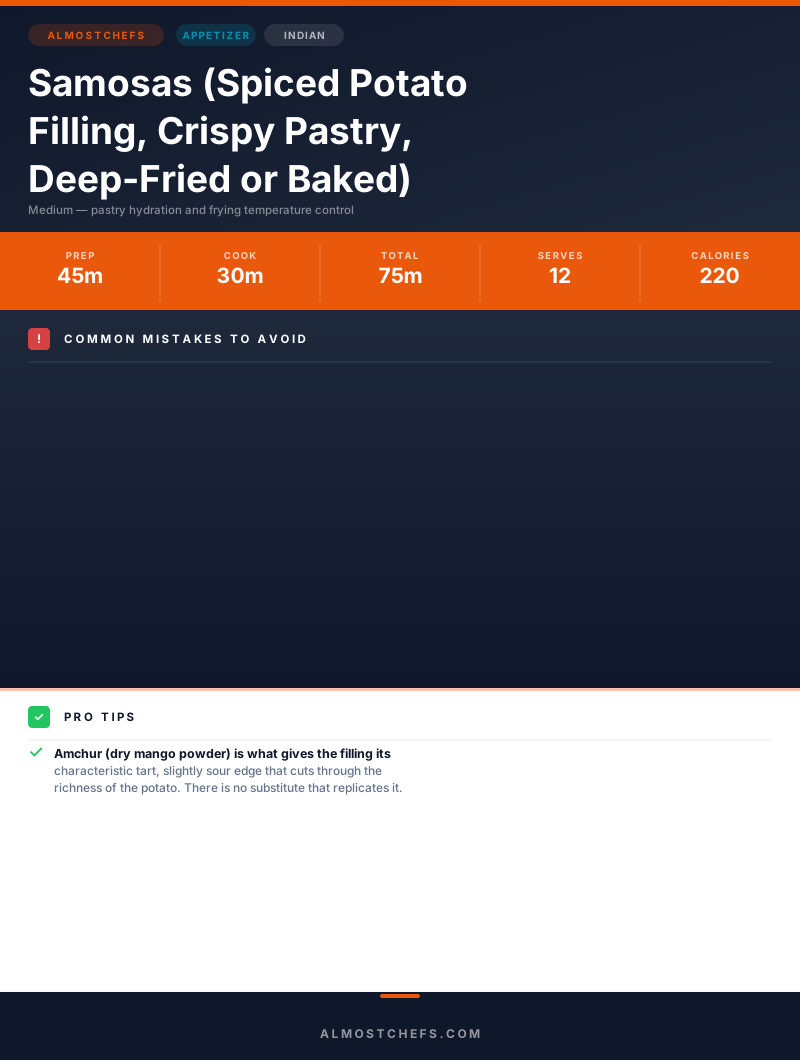
Before we start, read this. These are the 4 reasons your samosas (spiced potato filling, crispy pastry, deep-fried or baked) will fail:
- 1
Over-hydrating the pastry dough: Samosa pastry is a low-hydration dough — significantly drier than bread dough, deliberately less cohesive than pasta dough. The rule is to add water tablespoon by tablespoon, stopping the moment the dough holds together when pressed. Excess water develops more gluten than the fat can inhibit, and the result is a tough, elastic pastry that puffs and softens rather than shattering into flaky layers. Start with 5 tablespoons of water and add more only if the dough absolutely refuses to come together.
- 2
Wet potato filling: Any moisture in the potato filling becomes steam inside a sealed pastry shell during frying. Steam pressure against the sealed edges of the samosa is the primary cause of burst seams and exploded samosas in the fryer. The potato must be boiled dry — after draining, return the potatoes to the hot pot for 2 minutes over low heat to drive off residual steam moisture, then mash completely. If there is any visible water in the mash, it is not dry enough.
- 3
Frying at the wrong temperature: Samosa pastry requires a specific frying window: 325-350°F. Below 325°F, the pastry absorbs oil before the surface seals and the result is a greasy, heavy samosa. Above 350°F, the exterior browns and crisps before the interior pastry layers have cooked through, leaving a raw doughy layer beneath the surface. Use a thermometer. The temperature drop when samosas enter the oil is significant — do not crowd the pot.
- 4
Skipping the resting time on the dough: Samosa dough must rest covered for at least 20 minutes after kneading. Gluten strands formed during kneading are under tension immediately afterward — the dough is elastic and snaps back when rolled. Resting allows the gluten to relax, making the dough rollable to the thin sheets required without fighting the rolling pin. Skipping this produces pastry too thick to fry properly and unevenly thick at the edges versus the center.
The Video Reference Library
Want to see it in action? Here are the exact videos we analyzed and combined to build this foolproof recipe translation:
The primary technique reference. The folding and sealing sequence is particularly useful to watch before your first attempt — the cone-to-pocket construction is explained visually far more clearly than any written description. Watch the sealing method multiple times.
🛠️ Core Equipment
- Heavy-bottomed pot or Dutch oven for fryingA [Dutch oven](/kitchen-gear/review/dutch-oven) with thick walls maintains frying temperature stability better than a thin pot. Each batch of samosas entering the oil drops the temperature — a thick-walled pot with substantial thermal mass recovers faster, keeping the frying window consistent across multiple batches.
- Instant-read or candy thermometerOil temperature for frying is not guessable. A thermometer is the only way to verify you are in the correct 325-350°F range before each batch enters the oil. Allow the temperature to recover fully between batches.
- Rolling pinThe pastry circles must be rolled to approximately 3mm thickness — thin enough to become flaky and crisp during frying, thick enough to hold the seal at the edges. A tapered wooden rolling pin gives better control over the thinning at the edges of the circle, where the seal is formed.
- Spider strainer or slotted spoonSamosas must be transferred from oil to a wire rack quickly and gently. A spider strainer supports the full surface of the samosa and prevents the sealed edges — still slightly soft as they come out of the oil — from being damaged by a single-point slotted spoon contact.
Samosas (Spiced Potato Filling, Crispy Pastry, Deep-Fried or Baked)
🛒 Ingredients
- ✦2 cups all-purpose flour
- ✦1/2 teaspoon salt
- ✦1/4 cup vegetable oil or melted ghee
- ✦5-7 tablespoons ice cold water
- ✦4 medium russet potatoes, boiled and dried
- ✦1 cup frozen peas, thawed
- ✦1 tablespoon vegetable oil
- ✦1 teaspoon cumin seeds
- ✦1 teaspoon ground coriander
- ✦1 teaspoon garam masala
- ✦1/2 teaspoon turmeric
- ✦1/2 teaspoon amchur (dry mango powder)
- ✦2 green chilies, minced
- ✦3 tablespoons fresh cilantro, roughly chopped
- ✦1 teaspoon salt (for filling)
- ✦Neutral oil for deep frying (approximately 4 cups)
👨🍳 Instructions
01Step 1
Make the pastry: Whisk flour and salt in a large bowl. Add the vegetable oil or melted ghee and rub it into the flour with your fingertips until the mixture resembles coarse breadcrumbs and no dry flour remains. This fat-coating step is not optional — it is what inhibits gluten development.
02Step 2
Add ice cold water one tablespoon at a time, mixing with a fork after each addition. Stop adding water the moment the dough comes together when pressed. It will look crumbly but should hold when squeezed firmly.
03Step 3
Turn the dough onto a clean surface and knead firmly for 3-4 minutes until smooth. The dough should be tight and non-sticky. Wrap in plastic wrap and rest for 20 minutes at room temperature.
04Step 4
Make the filling: Boil potatoes until fully tender when pierced with a knife. Drain completely, return to the empty pot over low heat, and cook for 2 minutes while stirring to drive off steam moisture.
05Step 5
Mash the potatoes completely. There should be no lumps — large potato pieces create pressure points inside the pastry that can rupture the seal during frying.
06Step 6
Heat 1 tablespoon of oil in a skillet over medium-high heat until shimmering. Add cumin seeds and cook for 30-45 seconds until they pop and darken. The oil must be hot enough that the seeds sizzle immediately on contact.
07Step 7
Add ground coriander, garam masala, turmeric, and amchur to the bloomed cumin. Stir for 30 seconds. Add green chilies and cook another 30 seconds. Remove from heat.
08Step 8
Combine the spice mixture with the mashed potato, thawed peas, and cilantro. Season with salt. Mix thoroughly. Allow to cool completely before filling the pastry.
09Step 9
Divide the rested dough into 6 equal balls. Roll each ball into a thin oval approximately 6-7 inches long and 4 inches wide, about 3mm thick.
10Step 10
Cut each oval in half to create two semicircles. Form each semicircle into a cone by bringing the two straight-edge corners together, overlapping by 1/2 inch, and sealing with a flour-and-water paste (1 tablespoon flour mixed with 2 tablespoons water).
11Step 11
Fill each cone with approximately 2 tablespoons of filling — enough to fill it firmly without overstuffing. Press the filling down gently to eliminate air pockets.
12Step 12
Seal the open top of the cone by pressing the pastry edges together firmly, folding the edge in a crimping pattern, and sealing with flour-water paste. The finished samosa should be a tightly closed triangle with no gaps.
13Step 13
Heat frying oil to 325-340°F in a heavy pot. Fry 3-4 samosas at a time for 6-8 minutes, turning occasionally, until uniformly golden brown and the pastry surface is dry and crisp.
14Step 14
Transfer to a wire rack — not paper towels, which trap steam under the samosa and soften the bottom. Serve within 20 minutes for maximum crispness.
Nutrition Per Serving
Estimates based on standard preparation. Adjustments alter macros.
🔄 Substitutions
Instead of Amchur (dry mango powder)...
Use 1 teaspoon lemon juice added to the filling
Lemon juice approximates the sourness but not the dry, slightly resinous quality of amchur. Add it to the filling mixture last, after cooking, and adjust to taste. Start with 1/2 teaspoon.
Instead of Vegetable oil in pastry...
Use Melted ghee
Ghee produces a richer, more flavorful pastry with a slightly different crumb structure. It is the more traditional fat for samosa pastry. The ratio is identical — 1/4 cup ghee for 2 cups flour.
Instead of Russet potatoes...
Use Yukon Gold potatoes
Yukon Golds are slightly waxier and produce a creamier, denser mash. They work well in samosa filling but require more thorough drying in the pot after boiling — the higher moisture content of waxy potatoes means more steam to drive off.
🧊 Storage & Reheating
In the Fridge
Store cooked samosas in an airtight container for up to 2 days. They will soften significantly. Reheat in the oven or air fryer to restore crispness — never the microwave.
In the Freezer
Freeze uncooked, sealed samosas on a sheet pan until solid, then bag for up to 3 months. Fry from frozen at 325°F. Do not thaw before frying — condensation on thawed samosas splatters violently in hot oil.
Reheating Rules
Reheat cooked samosas in a 375°F oven for 10-12 minutes on a wire rack, or in an air fryer at 350°F for 5-6 minutes. Both methods restore meaningful crispness. Microwave reheating produces a steamed, limp result.
❓ Frequently Asked Questions
Why did my samosas burst open in the oil?
Burst seams have two causes: overfilling or a failed seal. Overfilling creates internal pressure as the filling heats and any residual moisture becomes steam. The 2-tablespoon filling quantity is the maximum — resist the impulse to add more. Seal failures happen when the flour-water paste wasn't applied thoroughly or the pressed seam wasn't given enough contact time to bond. Press the seam firmly and hold for 5 seconds before moving on.
Why is my pastry doughy and soft instead of flaky and crispy?
Soft pastry is the result of too much water in the dough, too thick rolling, or too-low frying temperature. Check all three. The dough should be visibly tight and slightly difficult to roll. The pastry sheet should be thin enough to see light through it when held up. And the oil must be at 325°F minimum when the samosas go in — below this temperature, oil absorbs into the pastry before the surface seals.
Can I make the dough and filling ahead of time?
Yes, separately. The dough keeps wrapped in plastic for up to 24 hours in the refrigerator — allow it to come to room temperature for 30 minutes before rolling. The filling keeps refrigerated for up to 3 days. Assemble the samosas immediately before frying for best results.
My samosas are absorbing too much oil. What's wrong?
Over-oiled samosas result from frying temperature that is too low. Below 325°F, the pastry surface does not seal quickly enough and oil penetrates the layers before the exterior sets. Verify your temperature with a thermometer before each batch. Also ensure the samosas are dry on the outside — any moisture on the pastry surface triggers aggressive oil splatter and absorption.
Can I air-fry these instead of deep frying?
Yes. Brush assembled samosas generously with oil on all surfaces and air-fry at 375°F for 15-18 minutes, flipping once at the halfway point. The result is noticeably less flaky than deep-fried — the hot air does not create the same rapid surface sealing that submerged oil produces — but it is a legitimate alternative with significantly less oil. Baked samosas and air-fried samosas are different products from fried samosas.
The Science of
Samosas (Spiced Potato Filling, Crispy Pastry, Deep-Fried or Baked)
We turned everything on this page into a beautiful, flour-proof PDF cheat sheet. Print it out, stick it to your fridge, and never mess up your samosas (spiced potato filling, crispy pastry, deep-fried or baked) again.
*We'll email you the high-res PDF instantly. No spam, just perfectly cooked meals.
AlmostChefs Editorial Team
We translate the internet's most popular cooking videos into foolproof, beginner-friendly written recipes. We analyze multiple methods, test them in our kitchen, and engineer a single "Master Recipe" that gives you the best possible result with the least possible stress.