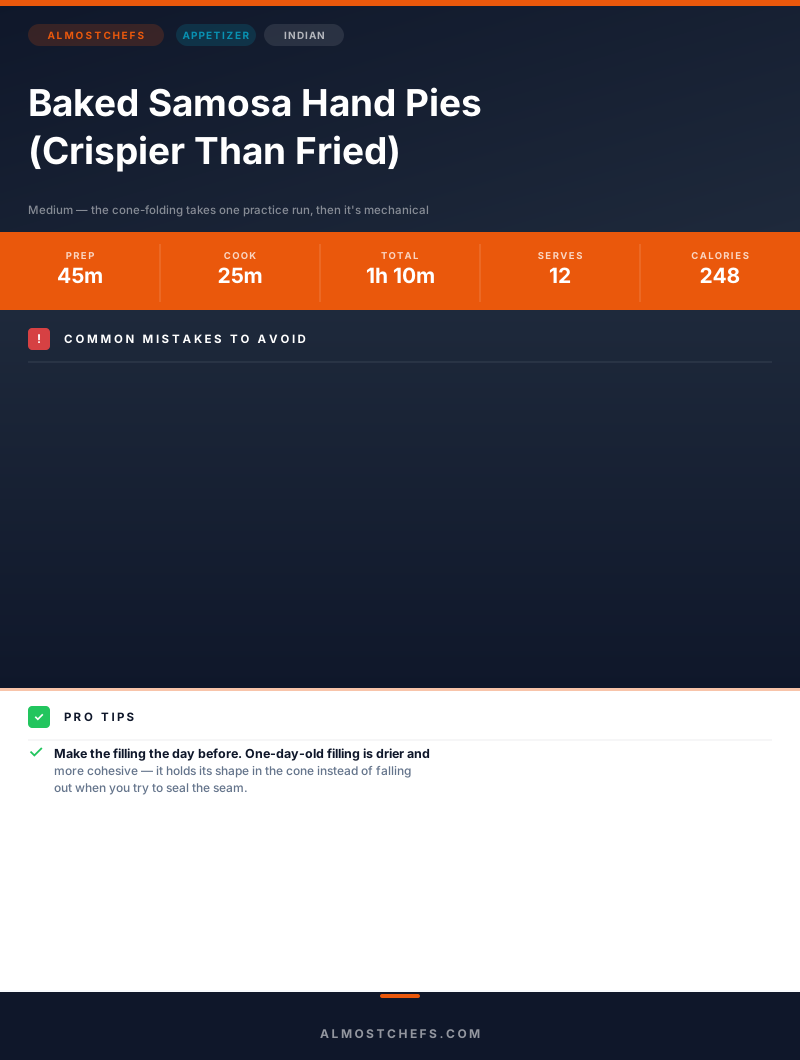
Baked Samosa Hand Pies (Crispier Than Fried)
Baked samosa hand pies with a spiced potato and pea filling, crispy ghee-brushed pastry, and zero deep-frying required. We analyzed the technique to build one method that delivers authentic crunch and bold aromatics without a vat of oil.

“Deep-fried samosas are extraordinary. They're also a commitment — a liter of oil, a thermometer, batch frying, grease splatter on your backsplash. This baked version doesn't pretend fried samosas don't exist. It just argues that a thin coat of ghee and a 375°F oven can get you 95% of the way there with 20% of the effort. The filling is identical. The pastry crisps up properly. The only thing you lose is the oil hangover.”
Why This Recipe Works
The argument for baked samosas is not that deep-frying is hard. Deep-frying is not hard. The argument is that 375°F dry heat and a coat of ghee can produce a crust so similar to fried that the distinction becomes academic — and that the elimination of a liter of hot oil makes this a recipe you'll actually make on a Tuesday instead of saving for a special occasion.
The Dough Architecture
Samosa dough is not bread dough and it's not pie crust. It occupies a specific structural middle ground: stiff enough to hold a cone shape under the weight of filling, pliable enough to roll paper-thin without cracking, and fat-rich enough to crisp when dry heat hits it. The fat-to-flour ratio — 6 tablespoons of ghee to 2.5 cups of flour — is calibrated exactly for this. More fat and the dough becomes too fragile to fold. Less fat and the baked crust stays chewy instead of crispy.
The resting phase is non-negotiable. Gluten is an elastic network, and freshly mixed gluten fights back. Rolling unrested dough is a war you lose — it springs back to half its rolled thickness the moment the rolling pin leaves it. Thirty minutes of covered rest relaxes that network completely, and suddenly the dough rolls to the necessary thinness with almost no resistance.
The Filling Logic
Traditional samosa filling is essentially a dry curry — potatoes cooked with whole and ground spices until every surface is coated and the moisture has cooked off. The dryness is functional, not stylistic. A wet filling creates steam inside the sealed pastry cone, which softens the crust from the inside before the oven can set it from the outside. You need a filling that contributes flavor without contributing liquid.
This is why you toast the cumin seeds dry before adding the onions — a technique called tadka. The seeds crack open and release their volatile oils directly into the hot pan, where they bond with the fat that renders from the onions. Ground cumin added later would give you cumin flavor. Whole toasted cumin gives you cumin that has been chemically transformed by heat into something rounder, smokier, and distinctly more complex.
The asafetida — hing — is the ingredient most Western recipes quietly omit because it's unfamiliar. Do not omit it. It is a sulfur-containing resin from a flowering plant, and in tiny quantities it adds an onion-garlic depth that fundamentally changes the flavor profile of the filling. A quarter teaspoon is invisible. Its absence is not.
The Baking Mechanics
Ghee on the surface of the dough serves the same function that immersion in hot oil serves in deep-frying: it transfers heat into the pastry faster than air alone can, and it facilitates the Maillard reaction that produces the golden-brown crust and the associated flavor compounds. The difference is quantity. Deep frying surrounds the pastry with oil on all sides simultaneously. Brushing applies a controlled thin layer that achieves the same chemical reaction with a fraction of the fat.
The wire cooling rack step is not optional. Placing hot samosas on a plate traps steam under the base — the same steam that just spent 20 minutes trying to escape — and it softens the bottom crust in under two minutes. A wire rack allows air circulation on all sides simultaneously, keeping the crust rigid while the interior finishes setting.
The result is a samosa that eats crisp, smells like every good version you've had, and requires nothing more than a heavy baking sheet and an oven you already own. The fried version has its place. This version has a Tuesday.
Where Beginners Mess This Up
Before we start, read this. These are the 4 reasons your baked samosa hand pies (crispier than fried) will fail:
- 1
Not letting the dough rest: Samosa dough without a 30-minute rest is elastic and fights you — it springs back every time you roll it thin. The rest allows the gluten to relax so you can achieve the paper-thin pastry that actually crisps in the oven. Skip it and you get thick, bready hand pies that are neither crispy nor satisfying.
- 2
Filling that's too wet: If you add the peas while the potatoes are still hot and steaming, the filling traps moisture. That moisture turns to steam in the oven, softening the pastry from the inside out. Cool the filling completely before stuffing — it should be room temperature or colder.
- 3
Overfilling the cones: Two to three tablespoons is the maximum. More filling means the seams can't close properly, and they burst open in the oven. A burst samosa loses its steam and comes out flat and soggy rather than puffed and crisp.
- 4
Skipping the rotation halfway through baking: Oven heat is never perfectly even. The back is always hotter than the front. If you don't rotate the baking sheet at the 12-minute mark, half your samosas will be pale and soft while the other half are golden and done.
The Video Reference Library
Want to see it in action? Here are the exact videos we analyzed and combined to build this foolproof recipe translation:

The source video for this recipe. Clear demonstration of the cone-folding technique and how to identify the correct pastry color before pulling from the oven.
2. How to Fold Samosa Cones Perfectly
Step-by-step cone-folding walkthrough that covers the overlap angle and sealing pressure needed for seams that hold through baking.
3. Classic Indian Samosa Filling From ScratchDeep dive into the spice layering for potato-pea filling, including how to identify when the cumin has bloomed versus when it's starting to burn.
🛠️ Core Equipment
- Heavy baking sheet ↗Thin baking sheets warp under high heat and create uneven surfaces. A heavy-gauge sheet distributes heat evenly across the base of all 12 samosas simultaneously.
- Pastry brush ↗Even, thin ghee coverage is what separates crispy baked pastry from greasy baked pastry. A pastry brush applies a controlled layer. Spooning ghee on top pools in crevices and burns.
- Parchment paper ↗Samosa pastry has enough fat in the dough to stick aggressively to an unlined pan. Parchment also makes cleanup instant and prevents the bottom crust from over-browning.
- Wire cooling rack ↗Placing hot samosas directly on a plate traps steam under the base, softening the bottom crust within minutes. A wire rack keeps airflow circulating around all sides.
Baked Samosa Hand Pies (Crispier Than Fried)
🛒 Ingredients
- ✦2.5 cups all-purpose flour
- ✦6 tablespoons ghee or vegetable oil, divided
- ✦1 teaspoon salt
- ✦0.75 cup warm water
- ✦4 medium yellow potatoes, peeled and diced
- ✦0.75 cup fresh green peas
- ✦2 medium yellow onions, finely diced
- ✦2 tablespoons ginger-garlic paste
- ✦2 green chilies, minced
- ✦2 teaspoons cumin seeds
- ✦1 teaspoon ground coriander
- ✦0.5 teaspoon ground turmeric
- ✦0.5 teaspoon red chili powder
- ✦0.25 teaspoon asafetida (hing), optional
- ✦1 tablespoon fresh cilantro, chopped
- ✦2 tablespoons ghee or oil for brushing
👨🍳 Instructions
01Step 1
Combine all-purpose flour and salt in a large mixing bowl. Make a well in the center and drizzle with 6 tablespoons of ghee or oil.
02Step 2
Gradually add warm water while mixing with your fingertips until a soft, pliable dough forms — slightly firmer than bread dough.
03Step 3
Knead the dough on a lightly floured surface for 5-7 minutes until smooth and elastic. Cover with a damp cloth and rest for 30 minutes.
04Step 4
Boil the diced potatoes in salted water over medium-high heat until fork-tender, about 8-10 minutes. Drain thoroughly and set aside.
05Step 5
Toast cumin seeds in a dry skillet over medium-high heat for 30 seconds until fragrant. Add diced onions and cook for 5 minutes until golden and translucent.
06Step 6
Stir in ginger-garlic paste and minced green chilies. Cook for 2 minutes until the raw garlic aroma disappears.
07Step 7
Add boiled potatoes, green peas, ground coriander, turmeric, red chili powder, and asafetida. Mix gently to combine.
08Step 8
Season with salt to taste, fold in fresh cilantro, and remove from heat. Allow the filling to cool completely before using.
09Step 9
Preheat oven to 375°F. Line a heavy baking sheet with parchment paper.
10Step 10
Divide the rested dough into 12 equal portions and roll each into a smooth ball. Keep covered with a damp cloth.
11Step 11
Roll one dough ball into a thin circle about 6 inches in diameter on a lightly floured surface. Cut the circle in half to create two semicircles.
12Step 12
Wet the straight edge of one semicircle with water and form a cone by overlapping the two corners of the straight edge slightly. Press to seal.
13Step 13
Fill the cone with 2-3 tablespoons of cooled potato filling, leaving a small margin at the top. Press the open edges firmly together to seal completely.
14Step 14
Brush each samosa generously but evenly with ghee using a pastry brush. Arrange on the prepared baking sheet 2 inches apart.
15Step 15
Bake for 20-25 minutes, rotating the baking sheet halfway through, until the pastry is deep golden brown and crisp.
16Step 16
Transfer to a wire cooling rack and rest for 5 minutes before serving with mint chutney or tamarind sauce.
Nutrition Per Serving
Estimates based on standard preparation. Adjustments alter macros.
🔄 Substitutions
Instead of All-purpose flour...
Use 50/50 whole wheat and all-purpose flour
Slightly denser, nuttier pastry. The whole wheat also browns faster, so watch the oven more closely after the 15-minute mark.
Instead of White potatoes...
Use Sweet potatoes or a 50/50 mix
Sweeter filling that pairs well with the heat of the chilies. Sweet potatoes have more moisture — drain them more aggressively after boiling.
Instead of Ghee...
Use Avocado oil or extra virgin olive oil
Loses the nutty dairy depth of ghee but still produces crispy pastry. Avocado oil has a neutral flavor that stays out of the way of the spices.
Instead of Baking at 375°F...
Use Air frying at 350°F for 12-15 minutes
The air fryer produces a slightly crispier exterior with faster results. Work in batches — overcrowding kills the crispiness.
🧊 Storage & Reheating
In the Fridge
Store in an airtight container for up to 3 days. The pastry softens slightly overnight but crisps back up in the oven.
In the Freezer
Freeze unbaked samosas on a baking sheet until solid, then transfer to a zip-lock bag for up to 2 months. Bake from frozen at 375°F for 28-32 minutes.
Reheating Rules
Place on a wire rack over a baking sheet and reheat at 350°F for 8-10 minutes. Do not microwave — it turns the pastry to soft rubber.
❓ Frequently Asked Questions
Why is my samosa pastry soft instead of crispy?
Three possible causes: the filling was too wet, the pastry was rolled too thick, or the oven temperature was too low. Ensure the filling is completely cooled and drained, roll the dough as thin as you can without tearing, and verify your oven is actually at 375°F with an oven thermometer — most home ovens run 25-50°F low.
Can I make the dough ahead of time?
Yes. Wrap the rested dough tightly in plastic and refrigerate for up to 24 hours. Bring it back to room temperature for 20 minutes before rolling — cold dough is stiff and tears.
Do I need asafetida?
Technically no, but practically yes. Asafetida is the compound ingredient that gives the filling its distinctly samosa-like depth. Without it, you have spiced potatoes. With it, you have samosa filling. Omit it only if you have a genuine allergy or can't find it.
Why do my seams keep splitting open during baking?
The seams need moisture to bond. Wet both the inside edge and the outside edge with water before pressing firmly. Also check that the filling isn't too hot — warm filling creates steam that pressurizes the inside of the cone and forces seams apart.
Can I use store-bought pastry dough?
Puff pastry works and produces a dramatically flakier result, though it doesn't have the same density as traditional samosa dough. Phyllo is too delicate and tears around the cone shape. If using puff pastry, reduce oven temperature to 350°F to prevent over-browning.
How do I know when the samosas are done?
Color is your indicator. You want deep golden brown — not pale yellow, not dark tan. The pastry should feel firm and rigid when you tap it lightly with a finger. If it gives slightly, it needs another 3-4 minutes.
The Science of
Baked Samosa Hand Pies (Crispier Than Fried)
We turned everything on this page into a beautiful, flour-proof PDF cheat sheet. Print it out, stick it to your fridge, and never mess up your baked samosa hand pies (crispier than fried) again.
*We'll email you the high-res PDF instantly. No spam, just perfectly cooked meals.
AlmostChefs Editorial Team
We translate the internet's most popular cooking videos into foolproof, beginner-friendly written recipes. We analyze multiple methods, test them in our kitchen, and engineer a single "Master Recipe" that gives you the best possible result with the least possible stress.