Samgyetang (Ginseng Chicken Soup)
A whole young chicken stuffed with glutinous rice, ginseng, jujubes, and garlic, simmered until the meat falls off the bone. Korea's legendary restorative soup.
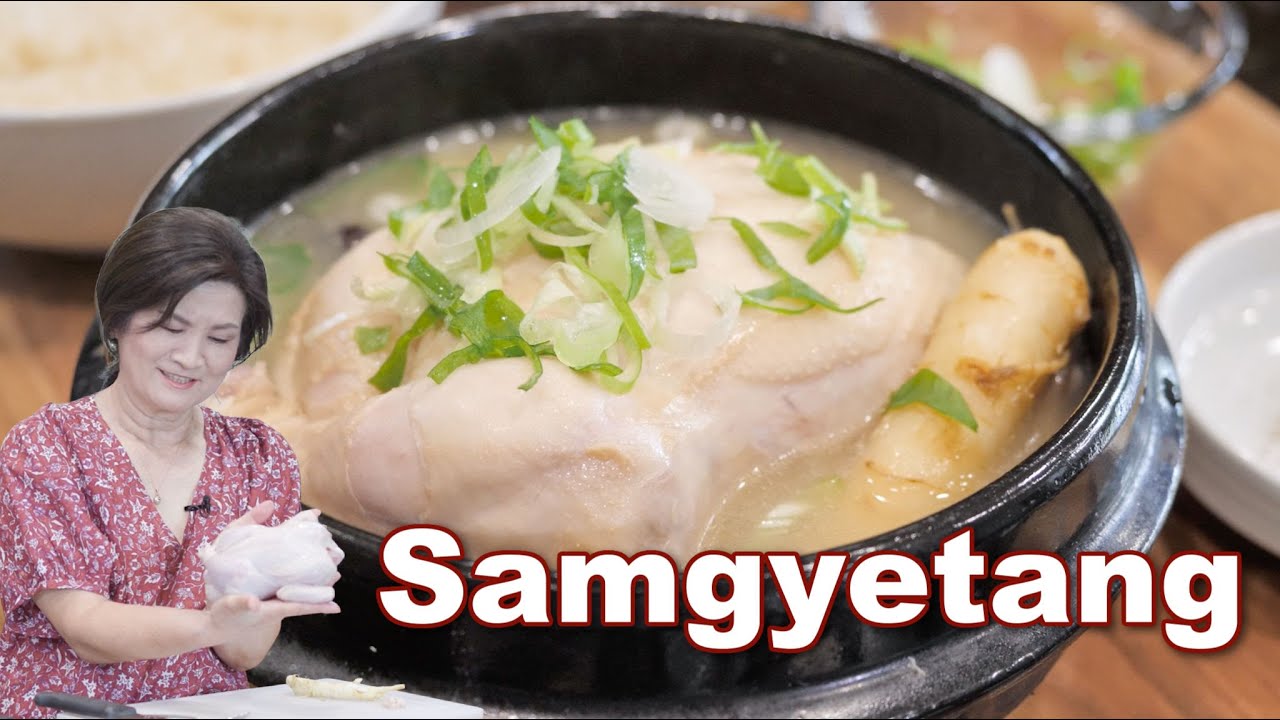
Why This Recipe Works
Most chicken soups are accidents. You throw a carcass in water, add vegetables because someone told you to, and call whatever emerges "nourishing." Samgyetang is the opposite of that. It is a precisely engineered thermal intervention with a two-thousand-year development cycle behind it — a dish so methodically constructed that every single component has a documented physiological rationale. If that sounds extreme, consider that Korean court physicians were prescribing this exact combination of ingredients during the Joseon dynasty while Western medicine was still bleeding people to cure fevers.
This is not chicken soup. This is a system.
The Collagen Extraction Problem — Solved by Whole-Bird Geometry
Boneless chicken breast simmered in water produces flavored water. That is the ceiling. The reason Samgyetang uses whole Cornish game hens — stuffed, intact, submerged — is a matter of surface-area-to-collagen ratio. The connective tissue in the back, neck joint, wing joints, and ribcage of a whole young bird contains Type I and Type III collagen. At a sustained simmer between 82°C and 93°C (180–200°F), these collagen chains hydrolyze into gelatin over the course of 50–60 minutes. Gelatin is why the broth sets to a soft trembling solid when refrigerated. It is also responsible for that coating mouthfeel — the reason good Samgyetang broth feels like it has body rather than tasting like hot water that once met a chicken.
A heavy pot is not optional equipment here. Thin-walled stockpots create hot spots that push boiling rather than simmering. Vigorous boiling does two destructive things: it emulsifies fat into the broth (creating a greasy, murky result instead of the characteristic milky-white clarity) and it agitates the bird enough to dislodge the stuffing. Heavy-gauge construction maintains even, controlled heat so the low simmer stays low. The milky-white color you're after comes from starch leaching out of the glutinous rice stuffing, not from turbulent fat emulsification. These are different things. The pot decides which one you get.
Why the Rice Is Inside the Bird (This Is Not Aesthetic)
Placing the glutinous rice inside the cavity is not a presentation choice or a space-saving trick. It is a deliberate cooking mechanism. As the bird simmers, internal cavity temperature lags behind broth temperature — the bird itself acts as insulation. This slower, more contained heat environment allows the soaked chapssal (sweet glutinous rice) to hydrate further, swell, and gelatinize at a controlled rate, absorbing the rendered chicken fat and juices directly as they release. The result is not cooked rice that happens to be near chicken. It is rice that has cooked in chicken, saturated with rendered fat and collagen-rich liquid from the inside out. It becomes dense, sticky, and rich in a way that no amount of chicken broth poured over separately-cooked rice can replicate.
Soaking the rice for a minimum of one hour before stuffing is not a suggestion — it is a structural requirement. Dry glutinous rice absorbs aggressively. Unsoaked rice stuffed into a cavity and subjected to one hour of simmering will expand beyond the limits of the cavity, splitting the bird at the cavity opening and expelling the stuffing into the broth. Beyond the structural failure, unsoaked rice will also be gritty at the center by the time the chicken reaches doneness. The pre-soak brings the rice to a partially hydrated state where it finishes cooking evenly in the time the chicken requires.
Kitchen twine to cross and tie the legs is the mechanical solution to the geometry problem. It closes the cavity opening enough to keep the stuffing contained under simmering pressure without sealing it completely — the rice still communicates with the broth, releasing starch while containing the aromatics.
Ginseng: The Ingredient That Cannot Be Substituted Without Acknowledgment
Panax ginseng (Korean red ginseng, specifically) contains ginsenosides — a class of triterpenoid saponins with documented effects on HPA axis regulation, cortisol modulation, and mitochondrial energy production. The bitter-sweet, slightly medicinal flavor it imparts to the broth is not incidental. It is the entire point. The Joseon-era medical text Dongui Bogam (1613) categorizes ginseng as a superior tonic herb — one that can be taken long-term to support fundamental vitality rather than treat acute conditions. Samgyetang is not pharmaceutical. But it is not random either. The ginseng is doing specific work that jujubes (which contribute iron, potassium, and mild sweetness) and garlic (allicin, antimicrobial, warming) cannot replicate.
If you use ginseng tea granules as a substitution, understand what you are trading: convenience for the volatile aromatic compounds that evaporate during granule processing. Add them in the last ten minutes of cooking to minimize further degradation. It will be less complex. It will still be recognizable.
The Boknal Logic: Fighting Heat With Heat
Samgyetang is eaten on the three hottest days of the Korean lunar calendar — chobok, jungbok, and malbok — collectively called boknal. Eating hot soup when it is 35°C outside seems perverse until you understand the physiological mechanism. The Korean concept of iyeol-chiyeol (이열치열, "fight fire with fire") is not folk superstition. Consuming hot food raises core body temperature slightly, triggering aggressive perspiration. Sweat evaporation is the body's most efficient cooling mechanism, dissipating heat at roughly 2,430 joules per gram of water evaporated. Meanwhile, the caloric density of the soup — 520 calories per serving, 48g of protein, 38g of complex carbohydrate — replenishes the electrolytes and energy lost to heat stress and sweating throughout the day.
This is not magic. It is thermodynamics with garlic in it.
Serving Protocol: Season at the Table, Not in the Pot
Samgyetang arrives unseasoned. Salt and pepper are set on the table. This is deliberate and correct. The broth's flavor is clean and specific — chicken, ginseng, jujube, garlic — and aggressive seasoning during cooking flattens the distinctions between these elements into generic savory background noise. By salting at the table in a deep bowl, each person calibrates the seasoning to their own sodium tolerance and tunes the broth to their preference. The bowl also matters: Samgyetang is served in individual bowls, one whole hen per person. This is not a shared dish. It is a personal restoration.
Korea's Healing Soup
Samgyetang is prescriptive food in a culture that does not separate medicine from cuisine as sharply as Western tradition does. It is eaten after illness, after childbirth, after a period of physical depletion — and on the three hottest days of summer when the body's energy reserves are at their annual low. The entire dish is a delivery mechanism for protein (48g), complex carbohydrate (38g), adaptogens (ginseng), and hydration (the broth itself). That it also happens to be deeply satisfying — a whole bird, rich milky broth, sticky rice, the slight bitterness of ginseng softened by the sweetness of jujube — is not coincidence. Effective medicine rarely tastes like punishment in Korean cooking.
Make it on a hot day. Sweat through it. Feel better afterward. The science is not complicated.
Samgyetang (Ginseng Chicken Soup)
🛒 Ingredients
- ✦2 Cornish game hens (or 1 small whole chicken, about 2 lbs)
- ✦1/2 cup sweet glutinous rice (chapssal), soaked 1 hour
- ✦4-6 cloves garlic, peeled
- ✦2 small dried ginseng roots (or 1 tablespoon ginseng tea granules)
- ✦4 dried jujubes (daechu)
- ✦2 dried chestnuts (optional)
- ✦6-8 cups water
- ✦Salt and black pepper to taste
- ✦2 green onions, sliced (for garnish)
👨🍳 Instructions
01Step 1
Soak glutinous rice in cold water for at least 1 hour. Drain well.
02Step 2
Clean the Cornish hens inside and out. Remove any giblets. Trim excess fat around the cavity opening.
03Step 3
Stuff each hen with soaked rice (about 1/4 cup per bird), 2-3 garlic cloves, 1 ginseng root, and 2 jujubes. Don't overstuff — the rice expands.
04Step 4
Place stuffed hens in a heavy pot. Add enough cold water to just cover the birds — about 6-8 cups.
05Step 5
Bring to a boil over high heat. Skim off any foam and impurities that rise to the surface.
06Step 6
Reduce heat to a gentle simmer. Cover and cook for 50-60 minutes until the chicken is fall-off-the-bone tender and the rice inside is fully cooked.
07Step 7
Serve each hen in a deep bowl with plenty of broth. Garnish with sliced green onions. Season with salt and pepper at the table.
Nutrition Per Serving
Estimates based on standard preparation. Adjustments alter macros.
🔄 Substitutions
Instead of Cornish game hens...
Use Small whole chicken (2-3 lbs)
One chicken serves 2-3 — increase cook time to 70-80 minutes
Instead of Dried ginseng...
Use Ginseng tea granules (1 tablespoon)
Dissolve into the broth in the last 10 minutes — milder but still authentic
Instead of Glutinous rice...
Use Regular short-grain rice
Less sticky and chewy but works — reduce soaking time to 30 minutes
Instead of Jujubes...
Use Dried dates
Similar sweetness — use pitted Medjool dates, halved
🧊 Storage & Reheating
In the Fridge
Store for up to 2 days. The broth gels when cold — that's the collagen.
In the Freezer
Freeze broth and chicken separately for up to 2 months.
Reheating Rules
Reheat gently in a pot until bubbling. The rice inside continues to absorb broth, so add water if needed.
❓ Frequently Asked Questions
Why do Koreans eat hot soup in summer?
The Korean concept of 'iyeol-chiyeol' (이열치열) means 'fight fire with fire.' The idea is that eating hot, nourishing food on the hottest days makes you sweat, which cools you down and replenishes lost energy. Samgyetang is the go-to boknal (hottest days) food.
Where do I find ginseng and jujubes?
Korean grocery stores stock both in the dried goods section. Dried ginseng roots come in small bags or boxes. Jujubes (daechu) are dried red dates — they look like wrinkled red olives. Both are also available online from Korean food retailers.

The Science of
Samgyetang (Ginseng Chicken Soup)
We turned everything on this page into a beautiful, flour-proof PDF cheat sheet. Print it out, stick it to your fridge, and never mess up your samgyetang (ginseng chicken soup) again.
*We'll email you the high-res PDF instantly. No spam, just perfectly cooked meals.
AlmostChefs Editorial Team
We translate the internet's most popular cooking videos into foolproof, beginner-friendly written recipes. We analyze multiple methods, test them in our kitchen, and engineer a single "Master Recipe" that gives you the best possible result with the least possible stress.