Perfect Samgyeopsal (The Lemon Butter Finish Changes Everything)
Thick-cut Korean pork belly grilled skin-side down until the fat renders completely, then finished with crushed garlic, butter, and a squeeze of lemon that cuts through the richness and elevates the whole thing. We broke down the most-watched Korean BBQ technique video to give you the method that actually delivers restaurant-quality results at home.

“Most people grill samgyeopsal the same way they grill everything else: too hot, too fast, flipped once. The result is pork belly that's charred on the outside and underdone in the thick fatty layers where all the flavor lives. The Korean BBQ masters do two things differently — they start skin-side down to render the fat slowly, and they finish with lemon butter, which sounds wrong until you taste it. We extracted the full technique from the most-watched samgyeopsal video on YouTube so you can stop guessing and start grilling.”
Why This Recipe Works
Samgyeopsal is not complicated food. It is pork belly, a fire source, and the knowledge of what order to do things in. Most people get the order wrong. They throw the meat down flat, flip it once like a steak, and wonder why the fat layer tastes like rubber and the skin has the texture of wet cardboard.
The entire technique hinges on understanding what you are actually trying to cook. Pork belly is not a single ingredient — it is three or four distinct tissues stacked on top of each other, each with different fat content, moisture levels, and ideal cooking temperatures. The skin needs sustained, moderate heat to dehydrate and crisp. The subcutaneous fat layer needs slow rendering to melt from solid to liquid to crispy. The lean meat needs high heat and Maillard browning. Getting all three right simultaneously requires a specific sequence, not just turning the heat up and hoping.
The Maillard Problem
Every Korean BBQ master is a Maillard reaction obsessive, even if they've never heard the term. The browning you see on properly grilled pork belly — that deep mahogany crust — is the result of amino acids and reducing sugars reacting at temperatures above 140°C to produce hundreds of new flavor compounds. This reaction cannot happen in the presence of surface moisture. Steam lowers the surface temperature below the threshold, and the meat boils in its own juices instead of browning.
This is why patting the meat dry is non-negotiable. This is also why the pan must be properly preheated before the meat touches it — the water-droplet test is not a cooking show affectation, it's a temperature indicator. If the water evaporates instead of beading and rolling, you're not hot enough. Add the meat too early and you spend the first two minutes of cooking slowly evaporating moisture instead of building a crust.
The Fat Rendering Architecture
The skin-down-first rule is the most important thing in this recipe. A cast iron skillet distributes heat evenly across the skin layer and maintains temperature through the 4-5 minute render without dropping when cold meat hits the surface. Thin pans can't do this — they create hot spots that burn the skin in one area while leaving the fat unrendered in another.
What you're aiming for during the skin-down phase: the fat layer melts from the inside out, the skin slowly dehydrates and stiffens, and the rendered fat pools in the pan where it continues to fry the exterior. Done correctly, the skin becomes shatteringly crispy on the outside and chewy at its base — a dual texture that's the entire point of ogyeopsal over skinless samgyeopsal.
After the skin is done, everything else moves fast. Multiple flips build Maillard coverage across every surface. Kitchen tongs let you stand the meat on edge to brown the sides, which most people miss entirely. "No colour, no flavour" — Gordon Ramsay said it about everything, and he was right about pork belly specifically.
The Lemon Finish Is the Recipe
The butter and garlic at the end are good. The lemon is the innovation. Pork belly sits at roughly 54g of fat per serving — this is not a lean protein. It's designed to be rich. The problem is that rich flavors accumulate on your palate with each bite, dulling your perception of the food you're still eating. The Korean BBQ experience at a restaurant works partly because you're eating the pork in small bites wrapped in vegetables with sharp condiments. At home, eating the pork straight, you need something that resets the equation.
Lemon juice's citric acid breaks down the fat film on your tongue. Thirty seconds in the hot pan with butter and garlic isn't long enough to cook off the acidity — it stays sharp, it stays bright, and it makes every piece of pork taste like the first piece. This is not a garnish decision. It's a palate science decision.
Save every drop of rendered fat from the pan. It is, as the source video creator puts it, flavor concentrated to its essence.
Where Beginners Mess This Up
Before we start, read this. These are the 4 reasons your perfect samgyeopsal (the lemon butter finish changes everything) will fail:
- 1
Moisture on the meat surface: Any water on the pork belly surface turns to steam the moment it hits the pan, which drops the surface temperature and prevents the Maillard reaction from happening. Pat every surface completely dry with paper towels before the meat goes anywhere near heat. This single step is the difference between a golden crust and a grey boiled exterior.
- 2
Skipping the skin-first render: The skin and thick subcutaneous fat layer need low, slow heat to render properly. If you throw the meat flat-side down first, the fat never fully melts and you get a rubbery, gelatinous layer under the skin instead of the shatteringly crispy exterior you're after. Skin goes down first, every time.
- 3
Only flipping once: The 'flip once' rule does not apply here. Multiple flips create faster, more even Maillard browning across every surface. The interior temperature stays consistent because heat is being applied from alternating sides. Flip frequently, press firmly, and chase color on every face of the meat.
- 4
Skipping the lemon finish: Pork belly is rich to the point of heaviness. The lemon acid doesn't just add flavor — it chemically cuts through the fat coating your palate and resets it so every bite tastes as good as the first. Thirty seconds in the pan with the butter and garlic is all it takes. Skipping this step is leaving the best part of the dish on the table.
The Video Reference Library
Want to see it in action? Here are the exact videos we analyzed and combined to build this foolproof recipe translation:
🛠️ Core Equipment
- Heavy cast iron skillet or thick grill panEven heat distribution is essential for rendering the fat without burning the skin. A thin pan creates hot spots that scorch the exterior while the fat layer stays unrendered. Cast iron holds temperature through flips and doesn't drop when cold meat hits the surface.
- Kitchen tongsYou need to stand the pork belly on its edge to render the skin and side fat layers. Tongs let you hold the meat upright without burning yourself. Essential, not optional.
- Instant-read thermometerThe USDA target is 63°C (145°F) internal with a 3-minute rest. At 2cm thick, this meat looks done before it is. A thermometer removes the guesswork and prevents both undercooking and the dry overcooked interior that happens when you add an extra two minutes just to be safe.
- Paper towelsFor patting the meat dry before it goes on the heat. Moisture is the enemy of browning. Have a generous stack ready — you want every surface bone dry.
Perfect Samgyeopsal (The Lemon Butter Finish Changes Everything)
🛒 Ingredients
- ✦1 lb thick-cut pork belly, 2cm thick, skin-on (오겹살, ogyeopsal)
- ✦Cooking oil, for the pan
- ✦Salt, to season
- ✦2-3 garlic cloves, crushed
- ✦1-2 tablespoons unsalted butter
- ✦1/2 lemon, for juicing
👨🍳 Instructions
01Step 1
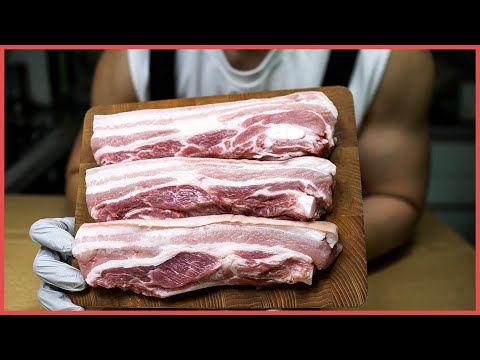
Select thick-cut pork belly from the rib side near the cartilage (not the soft belly side), cut to 2cm thickness, skin-on if possible. Request this cut specifically from your butcher — pre-packaged display cuts are usually too thin.
02Step 2
Pat every surface of the pork belly completely dry with paper towels. Do not skip this.
03Step 3
Heat a heavy cast iron skillet or thick grill pan over medium heat. Test readiness by flicking a few drops of water onto the surface — they should form beads and roll around rather than evaporating immediately.
04Step 4
Drizzle a thin layer of cooking oil across the pan surface even though the pork belly will render its own fat. This ensures even Maillard browning from the first moment of contact.
05Step 5
Place the pork belly skin-side down on medium heat. Listen for an immediate, confident sizzle. If it doesn't sizzle, the pan isn't hot enough — remove the meat and wait another 60 seconds.
06Step 6
Render the skin and fat layer slowly over medium heat for 4-5 minutes, tilting the pan occasionally to drain excess rendered fat. The skin should turn deep golden and begin to feel firm and crispy.
07Step 7
Once the skin is golden and crispy, lay the meat flat and begin cooking each face, pressing firmly with tongs or a spatula to maximize pan contact. Flip multiple times — every 60-90 seconds — until all surfaces are deep mahogany brown.
08Step 8
Remove the pork when all surfaces are deeply browned. Check internal temperature — target 63°C (145°F). Rest for 3 minutes.
09Step 9
Slice the rested pork belly into thick pieces — about 1.5-2cm per slice.
10Step 10
Return the sliced pieces to medium heat, cut-side down. Sear the cut surfaces quickly, 30-45 seconds per side. Work fast — sliced pork belly overcooks rapidly.
11Step 11
Add the crushed garlic cloves to the pan and cook for 30 seconds until fragrant. Add the butter and let it melt and foam around the meat and garlic.
12Step 12
Squeeze the lemon juice directly over the meat. The acid will sizzle. Cook for 30 seconds, turning the pieces once to coat everything in the lemon butter.
13Step 13
Serve immediately. Reserve the rendered pork fat and cooking juices left in the pan — this is concentrated flavor. Use it for fried rice, sautéed vegetables, or kimchi stir-fry.
Nutrition Per Serving
Estimates based on standard preparation. Adjustments alter macros.
🔄 Substitutions
Instead of Skin-on pork belly (오겹살)...
Use Skinless thick-cut pork belly (삼겹살)
You lose the crispy skin layer but the technique is otherwise identical. The skin is what separates ogyeopsal from samgyeopsal — worth seeking out but not a dealbreaker.
Instead of Unsalted butter...
Use Ghee or clarified butter
Higher smoke point means less risk of burning during the final sear. The nutty flavor profile works well with pork fat. Adds richness without the milk solids that can scorch.
Instead of Fresh lemon...
Use Rice vinegar or yuzu juice
Rice vinegar is milder and slightly sweeter — use 1 tablespoon rather than a half lemon's worth. Yuzu juice is the most authentic Korean-adjacent option and adds a floral citrus note that's genuinely excellent.
Instead of Crushed garlic cloves...
Use Thinly sliced garlic
Sliced garlic browns faster and becomes chip-like in the butter. Reduces the raw garlic intensity slightly. Either works — sliced gives more texture, crushed gives more flavor diffusion into the butter.
🧊 Storage & Reheating
In the Fridge
Store leftover cooked pork belly in an airtight container for up to 3 days. The skin softens in the fridge — this is expected.
In the Freezer
Freeze cooked portions for up to 1 month. Wrap tightly in plastic before placing in a freezer bag to prevent freezer burn.
Reheating Rules
Reheat in a dry skillet over medium heat, skin-side down first, to re-crisp the exterior. Microwave reheating is acceptable for speed but produces soft, steamed results. The skillet method takes 3-4 minutes and is worth the extra time.
❓ Frequently Asked Questions
What's the difference between samgyeopsal and ogyeopsal?
Samgyeopsal (삼겹살) means 'three-layer pork' — the lean meat, fat, and lean meat visible in cross-section. Ogyeopsal (오겹살) means 'five-layer pork' and includes the skin, making it skin-on pork belly. The additional skin layer adds a chewy-crispy texture that's considered the premium version. Both are grilled identically, but ogyeopsal has that extra textural dimension.
Why start with the skin side down?
The skin and subcutaneous fat layer need sustained, moderate heat to render properly. Starting skin-side down allows the fat to melt from the inside out over several minutes, creating a crispy skin with fully rendered fat beneath it. If you skip this step and cook the skin last, you get rubbery, underrendered fat under a browned exterior.
Is it safe to eat pork belly at 63°C? It looks slightly pink.
Yes. The USDA updated its pork safety guidelines to 63°C (145°F) internal temperature with a 3-minute rest, which is the same standard applied to whole cuts of beef and lamb. At this temperature, pork is safe, tender, and retains its juices. The pink color is normal and does not indicate undercooking.
Why does the lemon make such a difference?
Pork belly is extremely high in fat — around 54g per serving. Fat coats your palate and builds up with each bite, which is why rich foods feel heavy toward the end of a meal. Lemon juice's citric acid cuts through that fat coating on your tongue and resets your palate, making each bite taste as vivid as the first. It also adds brightness that contrasts against the Maillard browning flavors.
Do I need a Korean BBQ grill or can I use a regular pan?
A regular heavy skillet or cast iron pan produces excellent results. The Korean tabletop grill is about the experience of cooking at the table, not the technique. What matters is even heat and a surface hot enough to produce an immediate sear. Cast iron is ideal because it holds temperature when cold meat hits the surface.
What do I do with the leftover rendered pork fat?
Do not discard it. Strain it through a fine-mesh sieve and store in a jar in the fridge for up to two weeks. Use it as the fat base for kimchi fried rice, sautéed spinach, or any dish that calls for cooking oil. It has a deeply savory, porky flavor that transforms anything cooked in it.
The Science of
Perfect Samgyeopsal (The Lemon Butter Finish Changes Everything)
We turned everything on this page into a beautiful, flour-proof PDF cheat sheet. Print it out, stick it to your fridge, and never mess up your perfect samgyeopsal (the lemon butter finish changes everything) again.
*We'll email you the high-res PDF instantly. No spam, just perfectly cooked meals.
AlmostChefs Editorial Team
We translate the internet's most popular cooking videos into foolproof, beginner-friendly written recipes. We analyze multiple methods, test them in our kitchen, and engineer a single "Master Recipe" that gives you the best possible result with the least possible stress.