Glazed Salmon Teriyaki Bowl (42g Protein, No Compromise on Flavor)
A Japanese-inspired power bowl featuring skin-on salmon glazed in a homemade teriyaki sauce, served over rice with steamed edamame. We broke down the most popular methods to build one technique that gets the glaze glossy, the skin crispy, and the protein count serious — without tasting like diet food.

“Most teriyaki salmon recipes are either underseasoned health food or sticky-sweet takeout imitations. The difference between a bowl that tastes like a reward and one that tastes like a compromise comes down to three things: how dry your salmon is before it hits the pan, how you thicken the glaze, and whether you actually cook the skin side first. We built this recipe to deliver 42 grams of complete protein per bowl while tasting like something you'd order twice.”
Why This Recipe Works
Teriyaki salmon is one of those dishes that sounds simple until you make it and wonder why it tastes nothing like the restaurant version. The fish is underseasoned. The glaze runs off. The skin is rubbery. The bowl tastes like health food instead of dinner. This recipe exists to solve all of those problems simultaneously — and the solutions are all technique, not ingredient lists.
The Dry Surface Problem
Salmon is approximately 70% water by weight, and that water needs to stay inside the fish, not on the surface of it. Every drop of moisture on the exterior of a fillet when it hits a hot pan creates a steam microenvironment that prevents the Maillard reaction from occurring. Instead of a golden-brown crust that locks in flavor and provides textural contrast, you get grey, steamed protein with no exterior structure for the glaze to adhere to.
The fix is aggressive drying. Use multiple paper towels, press firmly, and repeat on both sides until the fillet surface feels slightly tacky rather than slick. This takes 30 seconds and is the single highest-leverage action in this entire recipe. A dry fillet sears in 4 minutes. A wet fillet steams for 8 minutes and still doesn't brown.
The Sear Sequence
Starting the salmon flesh-side down first is not standard practice in Japanese cooking, but it is correct technique for monitoring doneness. The translucent-to-opaque color change that travels up the side of the fillet is your cook indicator — when opacity reaches two-thirds of the way up the side, the internal temperature is approaching 125°F and the fish is ready to flip. You cannot see this indicator when the fish is skin-side down.
Once flipped, the skin gets 3-4 minutes on a surface that's already been seasoned by the first sear, at a temperature that's settled into an even medium-high. This produces consistently crispy skin without the guesswork of trying to flip a stuck fillet at the wrong moment.
A heavy-bottomed skillet is essential. Thin stainless pans drop temperature dramatically when cold fish hits them, stalling the sear and extending cook time until the exterior finally dries out enough to brown. Cast iron or heavy stainless holds temperature through the impact and maintains even heat across the entire base of the fillet.
The Glaze Architecture
Teriyaki glaze is a four-component system: tamari for savory depth, mirin for sweetness and body, rice vinegar for brightness and cut, and honey for viscosity and caramelization. Each element has a job. Remove any one of them and the balance collapses — you get either flat brine, cloying sweetness, or a sauce with no acidity to balance the richness of the salmon.
The cornstarch slurry is the final step most home cooks skip or skimp on. Without it, the glaze stays thin enough to run off the fish and pool at the bottom of the bowl where it turns the rice into a soggy, overseasoned mass. One teaspoon of cornstarch, mixed cold with water and stirred in at the end, transforms that loose liquid into a lacquered coating that clings to every curve of the fillet. The visual difference is stark — dull versus glossy. The textural difference is everything.
The Protein Architecture
This bowl delivers 42 grams of complete protein per serving through the deliberate pairing of two sources: wild salmon and edamame. Salmon provides approximately 28-30 grams of protein per 5-ounce fillet alongside a dense omega-3 fatty acid profile that reduces systemic inflammation and supports cardiovascular function. Edamame provides the remainder — and critically, it provides complete protein, meaning it contains all nine essential amino acids in sufficient quantities. Most plant proteins don't qualify. Edamame does.
The low-sodium tamari substitution in this recipe is not a compromise. Standard soy sauce contains 900-1,000mg of sodium per tablespoon. Low-sodium tamari sits at 300-350mg — a reduction of 600mg per tablespoon, which across a full recipe amounts to meaningful cardiac risk reduction without any detectable flavor difference in the finished dish.
The Bowl as a System
Assembly order matters in a bowl the same way layering matters in biryani. Rice goes down first as a heat-absorbing base that prevents the glaze from cooling too fast. Salmon goes directly on top, skin-side up, so the crust doesn't steam and soften against the warm rice below. Edamame goes to the side — not underneath, where it would compress and lose texture. The glaze drizzles last, coating the fish and running naturally into the grain below.
A fish spatula makes the flip clean and the plating precise. The thin flexible blade angles under the skin without tearing, which preserves the structural integrity of the crust through transfer from pan to bowl. A standard spatula is too thick, too rigid, and will leave half the skin on the pan. For skin-on fish, the right tool is the only tool.
Where Beginners Mess This Up
Before we start, read this. These are the 4 reasons your glazed salmon teriyaki bowl (42g protein, no compromise on flavor) will fail:
- 1
Not patting the salmon dry: Surface moisture is the enemy of a proper sear. Wet salmon steams in the pan instead of browning, which means no crust, no texture contrast, and a glaze that slides right off. Pat aggressively with paper towels — the fillet should feel almost tacky before it hits the oil.
- 2
Flipping the salmon too early: The skin side needs 4-5 uninterrupted minutes over medium-high heat. Moving or checking it tears the skin and leaves it stuck to the pan. When the flesh is opaque two-thirds of the way up the side of the fillet, it's ready to flip. Not before.
- 3
Adding the glaze before the fish is cooked through: Pour the teriyaki glaze over fully or nearly cooked salmon only. If you add it early, the sugar in the mirin and honey burns before the fish finishes, coating your fillet in bitter char. The glaze takes 2-3 minutes to reduce and thicken — and so does the last stage of the salmon.
- 4
Skipping the cornstarch slurry: Without the slurry, the teriyaki glaze stays thin and watery, running off the fish and pooling at the bottom of the bowl. A teaspoon of cornstarch is all it takes to transform a loose sauce into a lacquered, glossy coating that clings to every inch of the fillet.
The Video Reference Library
Want to see it in action? Here are the exact videos we analyzed and combined to build this foolproof recipe translation:
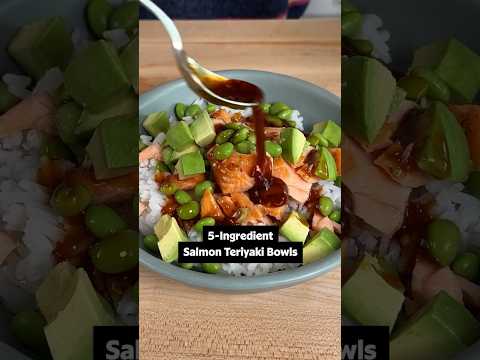
The source video for this recipe. Covers the full sear-and-glaze method with clear visual cues for when the salmon is ready to flip and when the glaze has thickened to the right consistency.
2. How to Make Teriyaki Sauce From Scratch
A focused breakdown of the teriyaki glaze — mirin ratios, how honey interacts with heat, and the cornstarch slurry technique that produces a lacquered finish instead of a watery puddle.
3. High-Protein Bowl Meal Prep GuideCovers how to scale this bowl for four days of meal prep, including how to store the glaze separately to prevent the rice from turning soggy overnight.
🛠️ Core Equipment
- Large heavy-bottomed skillet or cast iron pan ↗Even heat distribution is critical for a consistent sear across the entire fillet. A thin pan creates hot spots that burn the tail while leaving the thickest part undercooked. Cast iron retains heat through the flip without temperature drops.
- Fish spatula ↗The thin, flexible blade slides cleanly under the skin without tearing. A standard spatula is too thick and will destroy the crust you just spent 5 minutes building. Non-negotiable for skin-on fillets.
- Small whisk and mixing bowl ↗The teriyaki glaze needs to be fully emulsified before hitting the hot pan. Layering tamari, mirin, vinegar, honey, garlic, and ginger without proper mixing produces uneven flavor — you'll get a mouthful of raw garlic in one bite and straight vinegar in the next.
- Fine-mesh sieve or colander ↗For draining the edamame quickly after boiling. Overcooked edamame loses its satisfying pop and turns mushy. You want tender-crisp, which means stopping the cook fast.
Glazed Salmon Teriyaki Bowl (42g Protein, No Compromise on Flavor)
🛒 Ingredients
- ✦4 salmon fillets, 5 oz each, skin-on
- ✦2 cups frozen shelled edamame
- ✦2 cups cooked brown rice or cauliflower rice
- ✦1/4 cup low-sodium tamari or soy sauce
- ✦3 tablespoons mirin
- ✦2 tablespoons rice vinegar
- ✦1 tablespoon honey
- ✦2 cloves garlic, minced
- ✦1 tablespoon fresh ginger, grated
- ✦1 teaspoon sesame oil
- ✦2 tablespoons olive oil, divided
- ✦3 scallions, sliced thin
- ✦2 tablespoons sesame seeds
- ✦1 teaspoon cornstarch mixed with 2 tablespoons water
- ✦Salt and black pepper to taste
- ✦Optional: 1/4 teaspoon red pepper flakes, fresh cilantro for garnish
👨🍳 Instructions
01Step 1
Bring a pot of salted water to a boil and cook the edamame for 4 minutes until tender-crisp, then drain and set aside.
02Step 2
Whisk together tamari, mirin, rice vinegar, honey, minced garlic, grated ginger, and sesame oil in a small bowl to create the teriyaki glaze.
03Step 3
Pat the salmon fillets thoroughly dry with paper towels and season both sides generously with salt and black pepper.
04Step 4
Heat 1 tablespoon of olive oil in a large skillet over medium-high heat until shimmering, about 2 minutes.
05Step 5
Place salmon skin-side up in the hot skillet and cook for 4-5 minutes without moving until the flesh side is golden brown and the fish is opaque about two-thirds of the way up.
06Step 6
Flip the salmon carefully using a fish spatula and cook the skin side for another 3-4 minutes until the skin crisps and the fish flakes easily with a fork.
07Step 7
Pour the teriyaki glaze over the salmon fillets and reduce heat to medium, simmering for 2 minutes, spooning the glaze over the top as it reduces.
08Step 8
Stir the cornstarch slurry into the glaze and simmer for 1 more minute until the sauce thickens and becomes glossy.
09Step 9
Warm the remaining 1 tablespoon of olive oil in a separate skillet over medium heat and toss in the cooked edamame with a pinch of salt, stirring for 2 minutes until heated through.
10Step 10
Divide the cooked rice or cauliflower rice among four bowls as your base.
11Step 11
Top each bowl with one salmon fillet and a generous portion of the warm edamame.
12Step 12
Drizzle any remaining teriyaki glaze from the pan over each bowl.
13Step 13
Garnish with sliced scallions, sesame seeds, and fresh cilantro if desired, then serve immediately.
Nutrition Per Serving
Estimates based on standard preparation. Adjustments alter macros.
🔄 Substitutions
Instead of Brown rice...
Use Cauliflower rice or quinoa
Cauliflower rice cuts carbs to roughly 12g per serving. Quinoa adds 2-3g extra protein and a nuttier flavor. Both work structurally — the bowl holds either without becoming loose.
Instead of Honey...
Use Monk fruit sweetener or 1/2 tablespoon maple syrup
Reduces sugar by roughly 8g per serving. Monk fruit is the cleanest swap — it behaves similarly under heat without the aftertaste of artificial sweeteners.
Instead of Regular soy sauce...
Use Low-sodium tamari
Cuts sodium by up to 600mg per serving while deepening the umami flavor. Tamari is also gluten-free, which makes this bowl accessible to more people without any flavor compromise.
Instead of 2 cups edamame...
Use 2.5 cups edamame plus 1/4 cup hemp seeds
Increases total protein to approximately 47g per serving. Hemp seeds add complete amino acids and healthy fats. The texture contrast — soft edamame against the slight crunch of hemp — improves the bowl.
🧊 Storage & Reheating
In the Fridge
Store components separately in airtight containers for up to 3 days. Salmon reheats best when kept apart from the rice and edamame — combined storage makes the fish rubbery.
In the Freezer
Freeze cooked salmon and edamame for up to 2 months. Rice freezes well separately in portions. Do not freeze the glaze — it separates on thawing.
Reheating Rules
Reheat salmon in a covered skillet over low heat with 1 tablespoon of water for 3-4 minutes. Microwave works but dries the fish out noticeably. Warm edamame and rice separately, then assemble fresh.
❓ Frequently Asked Questions
Why is my teriyaki glaze watery instead of glossy?
You either skipped the cornstarch slurry or didn't let it simmer long enough after adding it. Stir the slurry in and give it a full minute over medium heat, stirring constantly. The glaze should coat the back of a spoon and hold for 2-3 seconds when you drag a finger across it.
Can I use skinless salmon fillets?
You can, but you lose the textural contrast that makes this bowl work. Crispy skin against tender flesh against chewy edamame is the whole point. If you're using skinless, reduce the first sear to 3 minutes per side and watch closely — skinless fillets overcook faster.
Is this recipe good for meal prep?
It's excellent for meal prep with one rule: store the teriyaki glaze in a separate container. Glaze poured over assembled bowls makes the rice absorb all the liquid overnight, turning the base into dense, sticky mush. Keep it separate and drizzle fresh when you eat.
Why start skin-side up instead of skin-side down?
Starting flesh-side down lets you monitor the cook through the translucent color change climbing up the side of the fillet. When it reaches two-thirds, you flip — and the skin gets the last 3-4 minutes on a hot, already-seasoned surface. Skin-side down first means you're flipping blind.
Can I use frozen salmon?
Yes, but thaw it completely in the fridge overnight and pat it even drier than fresh fillets. Frozen salmon releases significantly more water during cooking. If you skip thorough drying, you'll be steaming the fish in its own liquid instead of searing it.
What makes this bowl so high in protein?
It's the combination of two complete protein sources — wild salmon and edamame — in substantial portions. Each 5 oz salmon fillet delivers roughly 28-30g of protein. Two cups of edamame across four servings adds another 10-12g. That stacking, not any supplement or trick, is how you hit 42g per bowl.
The Science of
Glazed Salmon Teriyaki Bowl (42g Protein, No Compromise on Flavor)
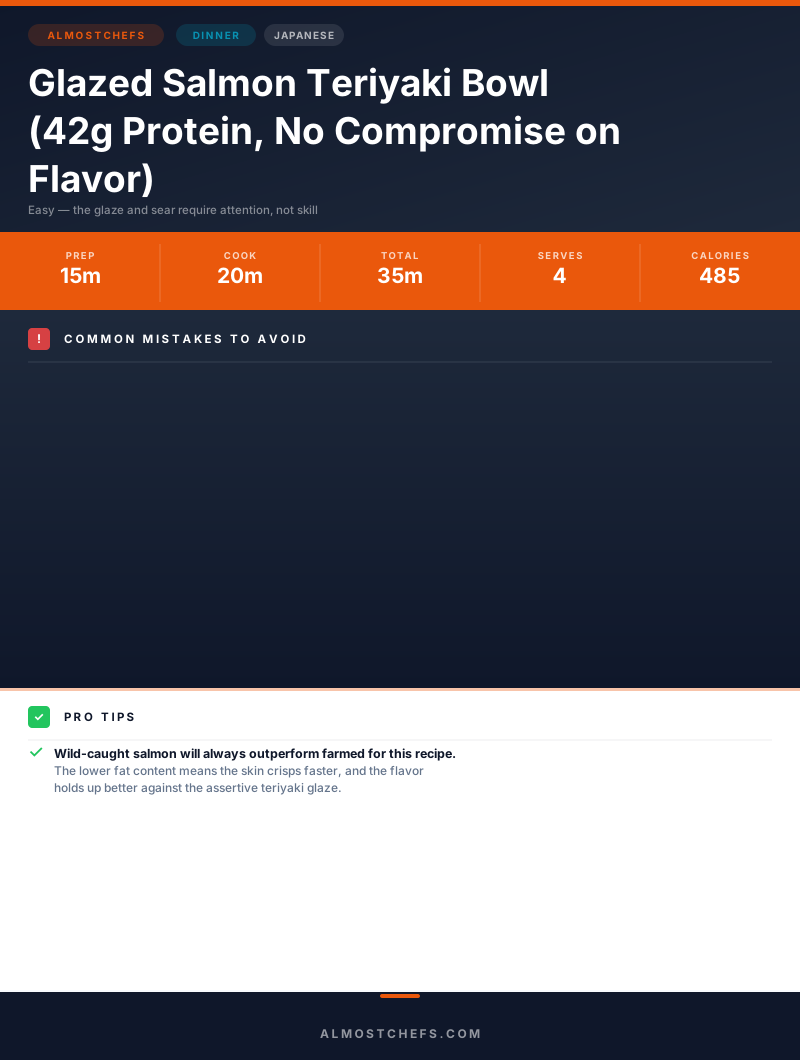
We turned everything on this page into a beautiful, flour-proof PDF cheat sheet. Print it out, stick it to your fridge, and never mess up your glazed salmon teriyaki bowl (42g protein, no compromise on flavor) again.
*We'll email you the high-res PDF instantly. No spam, just perfectly cooked meals.
AlmostChefs Editorial Team
We translate the internet's most popular cooking videos into foolproof, beginner-friendly written recipes. We analyze multiple methods, test them in our kitchen, and engineer a single "Master Recipe" that gives you the best possible result with the least possible stress.