Salmon & Brown Rice Power Bowls (38g Protein, Zero Excuses)
Four meal-prep containers built around wild-caught salmon and brown rice that deliver 38g of complete protein per serving. Anti-inflammatory, blood-sugar stable, and designed to taste just as good on day four as day one. We built the technique so the salmon stays flaky, not rubbery, every time.
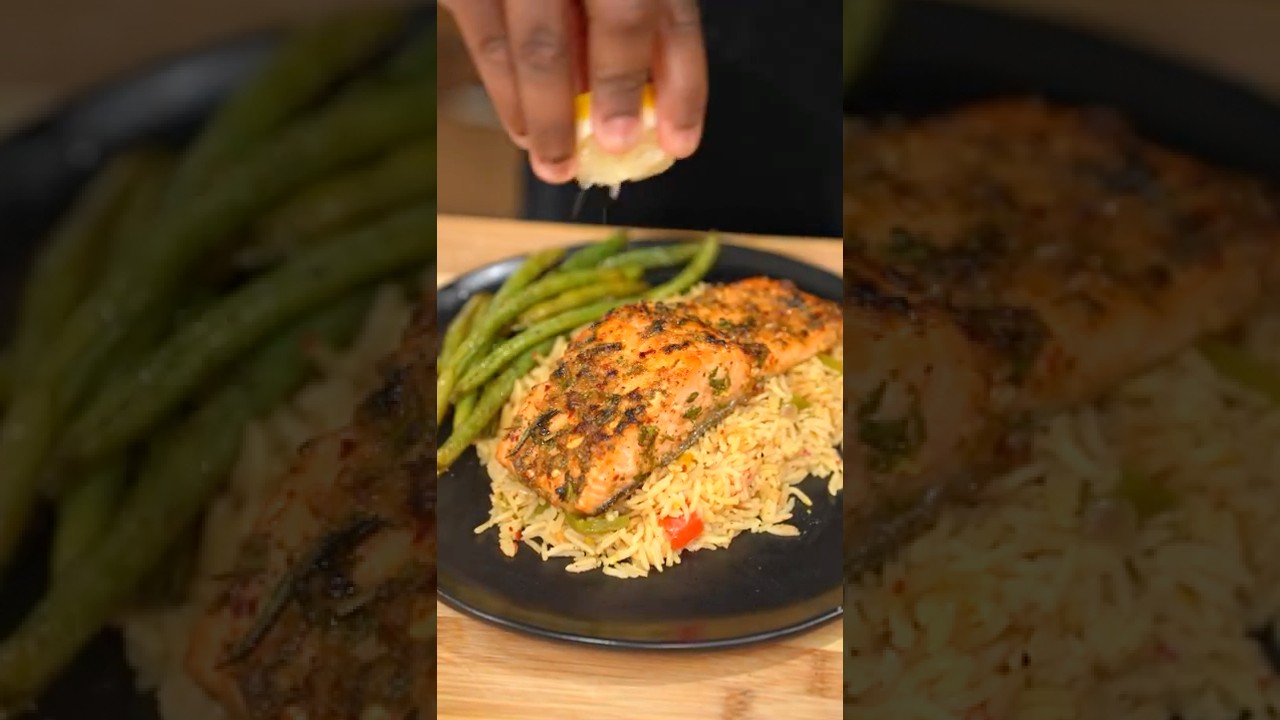
“Most meal-prep salmon bowls fail the same way: rubbery fish, gluey rice, and wilted vegetables that taste like regret by Tuesday. The problem is sequencing. Salmon has a narrow window between perfectly flaky and overcooked, brown rice needs 45 minutes of patience, and vegetables cooked too early turn to mush in a sealed container. Get the order right, and these containers genuinely improve over four days as the dressing absorbs into the rice. Get it wrong, and you're ordering takeout by Wednesday.”
Why This Recipe Works
Meal prep fails not because of bad recipes, but because of bad sequencing. You cook everything at once, it all goes into containers at the same temperature, and by Tuesday you have a box of textures that have collapsed into each other. This bowl is designed around a single principle: every component should be at its structural peak when it hits the container, so it degrades gracefully over four days rather than catastrophically overnight.
The Salmon Problem
Salmon is the most time-sensitive protein in your meal-prep rotation. The difference between perfectly flaky and overcooked is about 30 seconds of direct heat. The internal structure is a series of protein fibers that set progressively — at 125°F they're just cooked through, moist, and still gelatinous between the flakes. At 145°F they start contracting, squeezing out moisture, turning the flesh dense and chalky. Every reheating cycle takes you further up that scale. If you start at 145°F, by Thursday you're eating cardboard.
Pull the salmon at 125°F. It will carry over to 130-135°F as it rests, and after four days of refrigeration and gentle reheating, it will still have a texture worth eating.
The skin-side-up first technique is not a preference — it's structural. Starting flesh-side down in a hot, oiled cast iron skillet gives the flesh a clean sear that holds together when you flip. Starting skin-side down first causes the skin to contract and curl the fillet, creating an uneven cook. Flip, finish on the skin side, and the geometry works in your favor.
The Brown Rice Foundation
Brown rice is slower and more nutritionally dense than white rice — 45 minutes to cook versus 15, but also 4g of fiber per cup versus 0.6g, and a genuinely nutty flavor that holds up under four days of refrigeration without turning into paste. That last quality is the important one for meal prep.
The rinse is not optional. Surface starch on unrinsed brown rice gelatinizes during cooking and coats every grain in a sticky film. In a sealed container, that film thickens overnight into a gummy matrix that turns your fluffy rice into a single cohesive block. Sixty seconds under cold running water eliminates the problem entirely.
Cooking in vegetable broth instead of water is the invisible upgrade. Every grain absorbs the broth as it cooks, distributing savory depth throughout the base of the bowl. When you eat the rice cold on day four without reheating, it still has flavor — something water-cooked rice cannot claim.
The Vegetable Strategy
Broccoli and carrots are not arbitrary choices. Both hold texture in a sealed container for four days in a way that softer vegetables — spinach, zucchini, mushrooms — simply cannot. Broccoli florets seared to tender-crisp with visible char on the edges retain structural integrity even after two rounds of reheating. Shredded carrots provide sweetness and crunch as a textural counterpoint.
The Dijon-maple-soy dressing goes on off-heat. This is the most frequently skipped instruction in the recipe and the one with the largest consequences. The maple syrup in a hot pan caramelizes in under 30 seconds and burns in 60. Pull the pan, wait a minute, dress the vegetables. The residual warmth in the vegetables is sufficient to bloom the dill and marry the flavors — no direct heat required.
The Container Architecture
Layer order in a meal-prep container is as load-bearing as layer order in a biryani. Rice on the bottom creates a stable, absorbent base that soaks up any liquid that settles. Vegetables in the middle form a buffer layer. Salmon on top stays dry, retains its flake structure, and doesn't compress under its own weight.
Invert that order — salmon on the bottom, rice on top — and by Tuesday the fish is sitting in a puddle of vegetable liquid and condensation, turning gray and soft. The container architecture is the difference between a meal you look forward to and one you eat out of obligation.
These bowls peak at day two. Plan accordingly.
Where Beginners Mess This Up
Before we start, read this. These are the 4 reasons your salmon & brown rice power bowls (38g protein, zero excuses) will fail:
- 1
Cooking the salmon skin-side down first: Starting skin-side up — not down — is the move. The flesh sears and releases cleanly from the pan after 4-5 minutes. Then you flip onto the skin side to finish. This prevents the fish from sticking and breaking apart during the flip, which destroys the flake structure you need for a meal-prep container.
- 2
Not drying the salmon before seasoning: Wet salmon steams instead of sears. Pat each fillet completely dry with paper towels before it hits the pan. Moisture on the surface drops the pan temperature and prevents the Maillard browning that seals in flavor. Dry fish = crispy edges. Wet fish = gray, steamed disappointment.
- 3
Skipping the rinse on brown rice: Unrinsed brown rice releases excess surface starch that turns the broth into a thick paste, making the cooked grains clump together in the container. Rinse under cold water until the water runs completely clear — this takes about 60 seconds and eliminates the gummy texture problem entirely.
- 4
Adding the dressing while vegetables are still hot: A hot pan continues cooking the dressing, burning off the maple syrup and leaving a sharp, acidic residue instead of a balanced glaze. Pull the pan off the heat, wait 60 seconds, then drizzle and toss. The residual heat is enough to marry the flavors without destroying them.
The Video Reference Library
Want to see it in action? Here are the exact videos we analyzed and combined to build this foolproof recipe translation:
The source video that informed this technique. Strong on the searing sequence and container assembly order.
🛠️ Core Equipment
- Large heavy-bottomed skilletEven heat distribution is critical for salmon. A thin pan creates hot spots that cook the edges while leaving the center undercooked. [Cast iron](/kitchen-gear/review/cast-iron-skillet) or heavy stainless steel gives you the consistent surface temperature needed for a clean, even sear.
- Heavy-bottomed saucepan with tight lidBrown rice is basically a dum cook — it needs sustained, even low heat with no steam escaping. A thin pot scorches the bottom before the top grains are done. [A 3-quart saucepan](/kitchen-gear/review/saucepan) with a tight-fitting lid is the right tool.
- Airtight glass meal-prep containersPlastic containers trap fish odor and stain from the dressing. [Glass containers](/kitchen-gear/review/meal-prep-containers) seal better, reheat more evenly in the microwave, and don't absorb flavor. Four 32-oz containers are the right volume for this recipe.
- Instant-read thermometerSalmon is done at 125°F for medium or 145°F for fully cooked. The fork-flake test is imprecise. A [thermometer](/kitchen-gear/review/instant-read-thermometer) removes the guesswork and prevents the overcooking that ruins the texture by day three.
Salmon & Brown Rice Power Bowls (38g Protein, Zero Excuses)
🛒 Ingredients
- ✦1.5 lbs wild-caught salmon fillets, skin-on
- ✦2 cups uncooked brown rice
- ✦4 cups low-sodium vegetable broth
- ✦3 tablespoons extra-virgin olive oil, divided
- ✦2 medium yellow onions, finely diced
- ✦3 cloves garlic, minced
- ✦2 cups fresh broccoli florets
- ✦1 cup shredded carrots
- ✦2 tablespoons fresh lemon juice
- ✦1 tablespoon Dijon mustard
- ✦2 teaspoons dried dill, or 2 tablespoons fresh dill
- ✦1 teaspoon sea salt
- ✦0.5 teaspoon black pepper
- ✦0.25 teaspoon cayenne pepper
- ✦2 tablespoons low-sodium soy sauce
- ✦1 tablespoon maple syrup
- ✦2 green onions, thinly sliced for garnish
👨🍳 Instructions
01Step 1
Rinse the brown rice under cold water until the water runs completely clear, then drain thoroughly.
02Step 2
Bring the vegetable broth to a boil in a large saucepan over medium-high heat. Add the rinsed rice, stir once, reduce heat to low, and cover with a tight lid. Simmer for 45 minutes until tender and liquid is absorbed.
03Step 3
While the rice cooks, pat salmon fillets completely dry with paper towels. Season both sides with salt, pepper, cayenne, and 1 teaspoon of dill.
04Step 4
Heat 1.5 tablespoons of olive oil in a large skillet over medium-high heat until shimmering. Place salmon skin-side up and cook for 4-5 minutes until the exposed flesh is opaque two-thirds of the way through.
05Step 5
Flip the salmon carefully and cook for another 3-4 minutes until the flesh flakes easily with a fork or reaches 125°F internal temperature for medium, 145°F for fully cooked.
06Step 6
Transfer salmon to a cutting board. Let cool for 5 minutes, then flake into bite-sized pieces, removing any bones.
07Step 7
In the same skillet, add remaining 1.5 tablespoons of olive oil over medium heat. Sauté diced onions for 5 minutes until translucent.
08Step 8
Add minced garlic and cook for 1 minute until fragrant. Add broccoli florets and shredded carrots. Stir-fry over medium-high heat for 6-7 minutes until tender-crisp with slight char on the broccoli edges.
09Step 9
Remove the skillet from heat. Whisk together lemon juice, Dijon mustard, remaining dill, soy sauce, and maple syrup in a small bowl. Wait 60 seconds, then drizzle over vegetables and toss to coat.
10Step 10
Fluff the cooked rice with a fork. Divide evenly among four airtight containers.
11Step 11
Top each container with equal portions of flaked salmon and the dressed vegetable mixture. Garnish with sliced green onions.
12Step 12
Seal containers and refrigerate for up to 4 days.
Nutrition Per Serving
Estimates based on standard preparation. Adjustments alter macros.
🔄 Substitutions
Instead of Wild-caught salmon fillets...
Use Canned wild salmon, drained and flaked
Identical protein content at 25g per 3oz. Zero cook time required. Texture is softer but works well in a meal-prep context where everything melds together anyway. Saves 15 minutes and roughly half the cost.
Instead of Brown rice...
Use Quinoa (1.5 cups uncooked) or farro (2 cups uncooked)
Quinoa cooks in 15 minutes, adds 2g extra protein per serving, and is a complete amino acid profile. Farro has an earthier, nuttier flavor and holds texture exceptionally well over 4 days. Both work better for the impatient cook.
Instead of Dijon mustard and maple syrup dressing...
Use Tahini-lemon dressing (3 tbsp tahini + 2 tbsp lemon juice + 1 tbsp water + 1 clove minced garlic)
Adds 5g extra protein per serving and creates a richer, creamier sauce with Middle Eastern character. No added sugar. Coats vegetables more evenly and holds up better in the refrigerator without separating.
Instead of Olive oil for cooking...
Use Avocado oil or ghee
Avocado oil has a higher smoke point (520°F vs 375°F for olive oil) — genuinely better for the high-heat salmon sear. Ghee adds subtle buttery notes and the same smoke point advantage. Either is a direct upgrade for the cooking step specifically.
🧊 Storage & Reheating
In the Fridge
Store sealed in airtight containers for up to 4 days. Flavor peaks at day two when the dressing has fully absorbed into the rice.
In the Freezer
Freeze individual portions for up to 2 months. Freeze the salmon and rice separately from the vegetables — vegetables turn waterlogged when frozen and thawed together with the fish.
Reheating Rules
Add a tablespoon of water to the container before microwaving, loosely covered, for 2 minutes on 70% power. Full power dries the salmon out instantly. Alternatively, reheat in a covered skillet over low heat for 5-6 minutes.
❓ Frequently Asked Questions
Why is my salmon rubbery in the container by day three?
Two causes. First, the fish is overcooked — pull it at 125°F internal temperature for medium, not 145°F. It continues cooking slightly as it cools, and the carryover heat adds up over four reheats. Second, the salmon is sitting in pooled liquid at the bottom of the container. Always layer rice first, then vegetables, then salmon on top so it's not submerged.
Can I use frozen salmon?
Yes, but thaw it completely in the refrigerator overnight before cooking — never at room temperature or in the microwave. Pat it even drier than fresh fillets before seasoning. Frozen-then-thawed salmon releases more moisture during cooking, so the dry step is non-negotiable.
Why cook the rice in broth instead of water?
Brown rice has a mild, slightly nutty flavor on its own. Cooking it in vegetable broth infuses every grain with a savory base layer that makes the whole bowl more cohesive. The sodium difference between low-sodium broth and water is negligible — the flavor difference is not.
How do I know when the broccoli is done?
Tender-crisp is the target — bright green, slight resistance when you bite it, with visible char on the floret edges. This takes 6-7 minutes over medium-high heat. Fully soft broccoli turns to mush in the container within 24 hours. If you can easily squish a floret between two fingers, it's already too far.
Can I eat these cold?
Yes, and for many people they're better cold. The dressing absorbs fully into the rice overnight, the salmon flavor mellows, and the broccoli firms back up slightly from the refrigerator. Add a squeeze of fresh lemon before eating cold to wake the flavors up.
Is this actually 38g of protein per serving?
Yes, if you use wild-caught salmon and cook the rice in broth. A 6oz salmon fillet provides roughly 34g of protein on its own. Brown rice contributes an additional 5g per cup cooked, and the vegetables add the balance. The modified recipe using the tahini dressing substitution adds another 5g from the tahini if you go that route.
The Science of
Salmon & Brown Rice Power Bowls (38g Protein, Zero Excuses)
We turned everything on this page into a beautiful, flour-proof PDF cheat sheet. Print it out, stick it to your fridge, and never mess up your salmon & brown rice power bowls (38g protein, zero excuses) again.
*We'll email you the high-res PDF instantly. No spam, just perfectly cooked meals.
AlmostChefs Editorial Team
We translate the internet's most popular cooking videos into foolproof, beginner-friendly written recipes. We analyze multiple methods, test them in our kitchen, and engineer a single "Master Recipe" that gives you the best possible result with the least possible stress.