42g-Protein Salmon & Lentil Power Bowl (The Lunch That Actually Keeps You Full)
A Mediterranean-inspired power bowl stacking wild-caught salmon and green lentils for 42g of protein per serving. We broke down the technique to nail crispy-skinned salmon, perfectly dressed lentils, and a bright lemon vinaigrette that ties it together — without the sad desk salad energy.

“Most high-protein salads are just plain chicken on lettuce with a protein count bolted on as marketing. This one is different. Two complementary protein sources — wild-caught salmon and green lentils — deliver complete amino acids, a gut health score of 9, and genuine satiety that lasts until dinner. The lemon vinaigrette is sharp enough to cut through the richness of the salmon without drowning the earthy lentils. This is the bowl you actually want to eat at your desk on a Tuesday.”
Why This Recipe Works
The protein salad is a category riddled with compromises. Most are either boring (plain chicken, plain greens, plain life) or nutritionally gimmicky — a handful of seeds and a "protein" label on a base that's 80% lettuce. This bowl is different because it stacks two structurally complementary proteins: wild-caught salmon, which is rich in omega-3 fatty acids and cooks in under 10 minutes, and green lentils, which are the most underrated protein source in Western cooking and require zero skill to prepare.
The Protein Architecture
Salmon and lentils are not random partners. Salmon provides a complete amino acid profile from animal protein. Lentils provide fiber, plant protein, and a starchy earthiness that grounds the dish. Together they create satiety that neither delivers alone — the combination of protein, fat from the salmon, and soluble fiber from the lentils slows gastric emptying in a way that keeps hunger suppressed for 4-5 hours. This is the actual mechanism behind "this salad keeps me full." It's not magic. It's fiber plus fat plus protein working in sequence.
The Sear Is Everything
Green lentils can be cooked days in advance and the vinaigrette takes two minutes. The salmon is the only component that requires real-time execution, and the single most common failure is overcooking it. Salmon has a brutal temperature window: below 120°F internal, the fat hasn't rendered and the texture is slick. Above 145°F, the proteins have tightened so hard that moisture has been pushed out entirely and you're eating expensive dry fish.
The target is 130-135°F — just slightly past translucent in the center when you flake it. A cast iron skillet is the right tool because it holds heat consistently, which means the surface temperature doesn't plummet when you lay the cold fillet down. Thin pans do exactly that, causing the fish to steam in its own moisture rather than sear. A proper sear builds a crust that holds the internal moisture in. It's the difference between salmon that's juicy and salmon that's dry even though you "barely cooked it."
The Vinaigrette as Structure
Most salad dressings are an afterthought. This one is structural. The Dijon mustard in the lemon vinaigrette acts as an emulsifier — it contains mucilaginous compounds that bind oil and water into a stable, coated mixture that clings to every ingredient rather than pooling at the bottom. This matters more in a hearty bowl than in a delicate green salad, because lentils and cucumber have surfaces that shed dressing quickly without a proper emulsion.
The acidity split between lemon juice and red wine vinegar is intentional. Lemon juice is bright and volatile — its citrus aromatics hit immediately but fade fast. Red wine vinegar is more persistent, lower and more complex. The combination gives the dressing both an immediate punch and a lasting finish that holds up to the richness of the salmon fat and feta.
Why Lentils Win
Lentils cook in 20 minutes from dry with no soaking, deliver 18g of protein per cooked cup, and cost less per serving than almost any other protein source available. They are also one of the highest fiber legumes — 7-8g per cup of soluble and insoluble fiber combined — which is why this bowl scores a gut health score of 9. That fiber feeds the gut microbiome, slows glucose absorption, and drives the sustained satiety the recipe is built around.
Use a fine-mesh sieve when draining cooked or canned lentils. They're small enough to fall through a standard colander. Rinse them in cold water until the water runs clear — this removes excess sodium from canned varieties and stops the cooking on fresh-boiled ones immediately, preserving the slightly firm texture that holds up in the salad instead of turning to paste.
The pumpkin seeds on top are not decoration. They add crunch contrast that makes each bite more interesting and contribute another 2-3g of protein per tablespoon. Every element in this bowl earns its place.
Where Beginners Mess This Up
Before we start, read this. These are the 4 reasons your 42g-protein salmon & lentil power bowl (the lunch that actually keeps you full) will fail:
- 1
Overcooking the salmon: Salmon goes from perfect to dry in under 60 seconds. The window is narrow. Cook skin-side up first for 4-5 minutes — when the flesh turns opaque about two-thirds of the way up the side, flip once. If you wait until the top looks cooked before flipping, the bottom is already overdone. Pull it while the center is still very slightly translucent. Carryover heat finishes the job.
- 2
Dressing warm lentils too early: Hot lentils absorb vinaigrette aggressively and turn the greens underneath them into wilted mush. Let the lentils cool to at least room temperature before combining with the salad. If you're meal prepping, dress the greens and lentils separately and combine at serving time.
- 3
Skipping the emulsification step: Whisking the vinaigrette together — oil, lemon, vinegar, Dijon, garlic — creates an emulsion that coats every ingredient evenly. If you just pour the components separately onto the bowl, you get puddles of oil and uneven acidity. The Dijon acts as the emulsifying agent. Whisk vigorously for 30 full seconds.
- 4
Using canned lentils without rinsing: Canned lentils are packed in sodium-heavy liquid. Skipping the rinse adds roughly 400mg of extra sodium per serving and dulls the brightness of the vinaigrette. Rinse thoroughly in cold water and pat dry.
The Video Reference Library
Want to see it in action? Here are the exact videos we analyzed and combined to build this foolproof recipe translation:
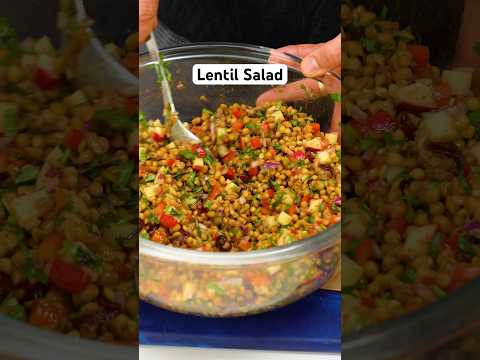
The source video for this recipe. Covers the sear technique, lentil prep, and vinaigrette ratios in a tight, no-fluff format.
2. Perfect Pan-Seared Salmon Every Time
Deep dive into salmon searing technique — skin rendering, internal temperature targets, and the carryover window. Essential if you've been overcooking fish.
3. High-Protein Meal Prep Bowls for the WeekShows how to batch this type of bowl across four containers, including how to keep dressing and greens separate so nothing wilts by day three.
🛠️ Core Equipment
- Heavy stainless steel or cast iron skillet ↗Even heat distribution is critical for getting a proper sear on salmon without burning one side. Thin non-stick pans create temperature inconsistencies that steam the fish instead of searing it. A [cast iron skillet](/kitchen-gear/review/cast-iron-skillet) handles high heat without warping.
- Small whisk ↗A proper emulsion requires vigorous whisking, not stirring. A fork technically works but a small balloon whisk breaks the oil into smaller droplets faster, creating a stable vinaigrette that stays coated rather than pooling at the bottom of the bowl.
- Large mixing bowl ↗Tossing a full four-serving salad requires room. In a bowl that's too small, half the greens end up on the counter and the dressing pools at the bottom instead of coating evenly. Go larger than you think you need.
- Fish spatula ↗Thin, flexible, and angled — a [fish spatula](/kitchen-gear/review/fish-spatula) slides under a salmon fillet without breaking it apart. A regular spatula digs in and destroys the structure of the flake. If you're flipping salmon more than once a week, this tool pays for itself.
42g-Protein Salmon & Lentil Power Bowl (The Lunch That Actually Keeps You Full)
🛒 Ingredients
- ✦6 oz wild-caught salmon fillet
- ✦1 cup cooked green lentils
- ✦4 cups fresh mixed greens (spinach, arugula, romaine)
- ✦1 medium cucumber, diced
- ✦1 cup cherry tomatoes, halved
- ✦1/2 red onion, thinly sliced
- ✦1/4 cup fresh dill, chopped
- ✦1/4 cup fresh parsley, chopped
- ✦3 tablespoons extra-virgin olive oil, divided
- ✦2 tablespoons fresh lemon juice
- ✦1 tablespoon red wine vinegar
- ✦1 teaspoon Dijon mustard
- ✦1 clove garlic, minced
- ✦1/4 teaspoon sea salt
- ✦1/8 teaspoon black pepper
- ✦2 tablespoons crumbled feta cheese
- ✦2 tablespoons raw pumpkin seeds
👨🍳 Instructions
01Step 1
Pat the salmon fillet completely dry with paper towels. Season both sides generously with salt and pepper.
02Step 2
Heat 1 tablespoon of olive oil in a skillet over medium-high heat until shimmering, about 1 minute.
03Step 3
Place the salmon skin-side up in the hot skillet and cook undisturbed for 4-5 minutes until the flesh turns opaque about two-thirds of the way up the side.
04Step 4
Flip the salmon once and cook for another 2-3 minutes until the skin crisps. Transfer to a plate and let cool slightly.
05Step 5
Whisk together the remaining 2 tablespoons olive oil, lemon juice, red wine vinegar, Dijon mustard, minced garlic, salt, and pepper in a small bowl for 30 full seconds until emulsified.
06Step 6
Combine the mixed greens, cooked lentils, diced cucumber, halved cherry tomatoes, and thinly sliced red onion in a large mixing bowl.
07Step 7
Pour the lemon vinaigrette over the salad and toss gently to coat all ingredients evenly.
08Step 8
Divide the dressed salad among four bowls or plates.
09Step 9
Flake the cooled salmon into bite-sized pieces, discarding the skin if preferred, and distribute evenly over each salad.
10Step 10
Scatter fresh dill and parsley over the top of each serving.
11Step 11
Finish each bowl with crumbled feta and a scatter of raw pumpkin seeds. Serve immediately.
Nutrition Per Serving
Estimates based on standard preparation. Adjustments alter macros.
🔄 Substitutions
Instead of Wild-caught salmon...
Use Canned wild salmon (drained) or grilled chicken breast
Canned salmon has softer texture but the same omega-3 profile and zero cooking required. Chicken breast is leaner but loses the omega-3 benefit — compensate with a tablespoon of flaxseed sprinkled on top.
Instead of Green lentils...
Use Cooked chickpeas or white beans
Chickpeas are slightly earthier and creamier in texture. White beans are milder and more delicate. Both deliver 15g+ protein per cup and hold their shape in a cold salad without turning mushy.
Instead of Feta cheese...
Use 2 tablespoons Greek yogurt whisked into the dressing, or cottage cheese
Greek yogurt adds 3-4g extra protein per serving while reducing saturated fat and sodium. Cottage cheese adds creaminess and protein with a milder flavor. Neither replicates the salty brine funk of feta, so add a pinch of extra salt.
Instead of Pumpkin seeds...
Use Hemp seeds or sliced almonds
Hemp seeds pack 3g protein per tablespoon with a softer, nuttier texture. Almonds provide more audible crunch and a milder flavor. Both add healthy fats without changing the flavor profile of the bowl.
🧊 Storage & Reheating
In the Fridge
Store components separately: dressed greens wilt within a few hours. Undressed greens and lentils keep for up to 3 days. Cooked salmon keeps for 2 days. Vinaigrette keeps for 1 week in a sealed jar in the fridge — shake or re-whisk before using.
In the Freezer
Salmon freezes well for up to 2 months. Lentils freeze well in portions. Do not freeze the assembled salad — greens and cucumber do not survive the thaw.
Reheating Rules
This bowl is designed to be eaten cold or at room temperature. If you prefer warm salmon, reheat gently in a skillet over low heat with a splash of water, covered, for 2-3 minutes. Microwave dries it out significantly.
❓ Frequently Asked Questions
Can I use canned salmon instead of fresh?
Yes, and it's one of the better meal-prep swaps in this recipe. Wild-caught canned salmon has the same omega-3 content as fresh, costs a fraction of the price, and requires zero cooking. Drain it well, break it into large chunks, and add it exactly as you would flaked cooked salmon. Look for sockeye over pink for better flavor and higher fat content.
Why do I need both lemon juice and red wine vinegar in the dressing?
They serve different roles. Lemon juice provides bright, citrus-forward acidity with floral top notes. Red wine vinegar provides deeper, more complex acidity with a slight fermented tang. Together they create a layered dressing that's more interesting than either alone. If you only have one, use lemon juice — it pairs better with fish than straight vinegar.
How do I know when the salmon is done?
The easiest test: press the thickest part gently with your finger. It should feel firm but give slightly — like a well-cooked steak. Alternatively, slide a fork along the grain and it should flake cleanly in large sections. If it shreds into tiny pieces, it's overcooked. If it resists and holds together in one piece, give it another 60 seconds.
Can I make this ahead for meal prep?
Yes, with one important rule: keep the dressing separate. Dressed greens wilt within a few hours. Instead, prep all components and store them in separate containers — greens, lentils, salmon, dressing, toppings. Assemble each bowl the morning of, and add the pumpkin seeds right before eating to preserve the crunch.
Is 42g of protein realistic for a salad?
Yes, and the math is straightforward. A 6 oz salmon fillet provides roughly 34g of protein. One cup of cooked green lentils adds another 18g. Across four servings, that averages 42g per bowl before accounting for the feta and pumpkin seeds. If you want to push higher, add a second ounce of salmon per serving or swap feta for cottage cheese.
What greens hold up best for this recipe?
For same-day eating: mixed greens or arugula for their peppery bite. For meal prep containers: massaged kale or baby spinach — they're denser, hold up against the weight of the lentils, and don't wilt under refrigeration the way mixed greens do. Arugula is the worst for prepping ahead; it turns limp within two hours of dressing.
The Science of
42g-Protein Salmon & Lentil Power Bowl (The Lunch That Actually Keeps You Full)
We turned everything on this page into a beautiful, flour-proof PDF cheat sheet. Print it out, stick it to your fridge, and never mess up your 42g-protein salmon & lentil power bowl (the lunch that actually keeps you full) again.
*We'll email you the high-res PDF instantly. No spam, just perfectly cooked meals.
AlmostChefs Editorial Team
We translate the internet's most popular cooking videos into foolproof, beginner-friendly written recipes. We analyze multiple methods, test them in our kitchen, and engineer a single "Master Recipe" that gives you the best possible result with the least possible stress.