Smoked Salmon Breakfast Burrito (38g Protein, No Cream Cheese Required)
A high-protein breakfast wrap built on smoked salmon, Greek yogurt, cottage cheese, and scrambled eggs in a warm whole wheat tortilla. We rebuilt the classic cream cheese version from the ground up to hit 38g of protein without sacrificing any of the luxe brunch energy.

“The cream cheese breakfast burrito is a brunch menu staple that looks impressive and delivers almost nothing nutritionally. Swapping the cream cheese for a Greek yogurt and cottage cheese blend doesn't just fix the protein number — it changes the entire texture and flavor profile in ways that are objectively better. You get 38g of protein, a tangier, creamier spread, and a filling that doesn't sit like a brick. This is the version you make when you actually want to function until noon.”
Why This Recipe Works
The cream cheese breakfast burrito exists because someone needed to put smoked salmon somewhere and cream cheese was nearby. It's a serviceable combination — but it's also 8 grams of saturated fat doing almost no nutritional work. The Greek yogurt and cottage cheese swap isn't a compromise. It's an upgrade that happens to fix a protein problem at the same time.
The Spread Problem, Solved
Cream cheese is 90% fat and functionally zero protein. That's not an accusation — it's a job description. In a bagel context, the fat is the point. In a burrito that needs to carry you through a morning of actual cognitive work, you want something that earns its calories.
Greek yogurt and cottage cheese together deliver a spread that is tangier, lighter, and structurally more complex. The Greek yogurt provides lactic acid sharpness that cuts through the oily richness of the salmon. The cottage cheese adds casein protein — the slow-digesting kind that extends satiety for hours, not minutes. Combined and stirred smooth, they produce a spread with a creamier texture than cream cheese alone, because you're getting protein structure instead of pure fat emulsion.
The flavor is objectively better. That's not subjective wellness-food spin. It's what happens when you replace a one-dimensional fat with a two-component system that has both acid and protein doing separate flavor jobs.
Egg Technique in a Burrito Context
Scrambled eggs for a burrito are not scrambled eggs for a plate. On a plate, you want them fully set — clean, defined curds that hold their shape. In a burrito, they continue cooking after you roll it. The residual heat from the tortilla, the warm salmon, and the exothermic fold all push the eggs past the point you left them at.
Pull them at creamy. Not wet, not glossy-runny, but creamy — the point where the curds are just barely holding and the eggs look 80% done. The spinach fold-in reinforces this: the residual heat that wilts the greens is the same heat finishing the eggs. You're using the thermal mass of the pan strategically, not abandoning it.
A non-stick skillet is non-negotiable here. The fat margin in this recipe — one tablespoon of olive oil — is not enough to prevent sticking in stainless or cast iron at the temperatures scrambled eggs require. The non-stick surface lets you work at lower heat with less fat, which is precisely why the eggs stay tender instead of rubbery.
The Architecture of a Burrito That Holds
Assembly order matters more than most people realize. The yogurt spread goes down first because it functions as adhesive — it grips the tortilla and anchors everything above it. Eggs on top of the spread create a stable thermal mass. Salmon over the eggs prevents the fish from sliding during the roll. Cucumber and capers on top stay where they belong because they're resting on a surface, not sandwiched between two wet layers where they'd migrate.
The roll itself requires a warm tortilla. A cold whole wheat tortilla has no flexibility — it cracks along the grain lines and splits the burrito open before you've taken a bite. Twenty seconds over a gas flame, and the gluten relaxes enough to stretch without tearing. This is basic physics, not a cooking tip.
Meal Prep Reality
This burrito was designed for repetition. Four servings in 22 minutes means Monday through Thursday breakfast sorted in a single Sunday session. The yogurt spread actually improves overnight as the flavors meld. The salmon stays cold-cured and structurally intact for three days. The eggs hold their texture better than you'd expect because they were pulled early.
The only ingredient that doesn't travel well is the cucumber. Raw cucumber contains 95% water, which migrates out under pressure and turns the tortilla translucent with moisture by day two. Leave it out during batch assembly. Add it fresh each morning. That one accommodation is the difference between a meal-prep burrito worth eating and one you throw away Wednesday.
Where Beginners Mess This Up
Before we start, read this. These are the 4 reasons your smoked salmon breakfast burrito (38g protein, no cream cheese required) will fail:
- 1
Overcooking the eggs: Scrambled eggs for a burrito need to come off the heat while they still look slightly underdone. Residual heat from the pan and the warm tortilla will finish them. If they're fully set in the skillet, they'll be rubbery by the time you take a bite. Pull them at creamy, not dry.
- 2
Skipping the tortilla warm-up: A cold tortilla cracks when you roll it, splitting the burrito open and dumping your filling. Twenty seconds over a gas flame or in a dry skillet makes the tortilla pliable enough to roll tight without tearing. This is not optional.
- 3
Spreading the yogurt mixture too thin: The Greek yogurt and cottage cheese blend is the structural glue of this burrito. Too little and the salmon shifts, the eggs slide, and the whole thing falls apart mid-bite. Two tablespoons spread generously down the center is the minimum — don't ration it.
- 4
Using wet ingredients without draining: Capers and cucumber both carry excess moisture. Undrained capers turn the tortilla soggy within minutes. Pat the cucumber dry before dicing. Rinse and drain the capers thoroughly. Moisture is the enemy of a clean burrito roll.
The Video Reference Library
Want to see it in action? Here are the exact videos we analyzed and combined to build this foolproof recipe translation:
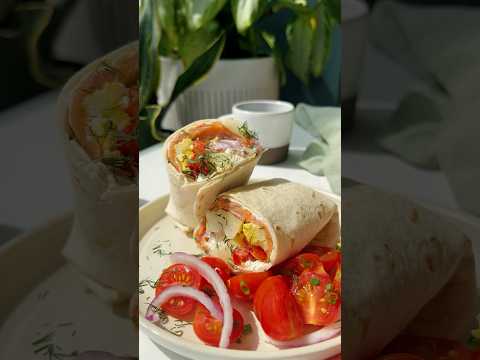
The source video demonstrating the full build technique — egg scramble, spread application, and roll method. Watch specifically for the tortilla warming step and how tightly the final roll is executed.
2. High-Protein Breakfast Wrap Techniques
Overview of protein-forward breakfast wrap construction, including how to layer wet and dry ingredients to prevent sogginess during meal prep storage.
3. Meal Prep Breakfast Burritos — Make-Ahead GuideStep-by-step guide to batch-prepping breakfast burritos for the week, covering cooling, wrapping, and reheating without losing texture.
🛠️ Core Equipment
- Non-stick skillet ↗Scrambled eggs require gentle, even heat and easy release. A stainless pan sticks aggressively unless you're precise with fat and temperature. A quality non-stick makes the difference between creamy curds and a scraped-up mess.
- Small mixing bowl ↗For combining the Greek yogurt and cottage cheese into a smooth, spreadable blend. Mixing directly on the tortilla produces uneven distribution and structural failure.
- Parchment paper ↗Essential for meal prep wrapping. Parchment holds the burrito shape during storage and makes reheating cleaner. Foil works but conducts heat unevenly in the microwave.
Smoked Salmon Breakfast Burrito (38g Protein, No Cream Cheese Required)
🛒 Ingredients
- ✦4 large eggs
- ✦1/2 cup non-fat Greek yogurt
- ✦1/4 cup low-fat cottage cheese
- ✦4 oz smoked salmon, sliced into strips
- ✦4 large whole wheat tortillas (10-inch)
- ✦1 cup fresh baby spinach, roughly chopped
- ✦1/2 medium red onion, thinly sliced
- ✦1/2 cup diced cucumber, patted dry
- ✦2 tablespoons fresh dill, finely chopped
- ✦1 tablespoon lemon juice
- ✦1 tablespoon olive oil
- ✦1/4 teaspoon sea salt
- ✦1/8 teaspoon black pepper
- ✦1/4 teaspoon garlic powder
- ✦2 tablespoons capers, drained and rinsed
- ✦Hot sauce or sriracha to taste (optional)
👨🍳 Instructions
01Step 1
Whisk together the eggs with salt, pepper, and garlic powder in a medium bowl until fully combined and slightly frothy.
02Step 2
Heat olive oil in a non-stick skillet over medium heat. Add the sliced red onion and sauté for about 3 minutes until softened and slightly translucent.
03Step 3
Pour the whisked eggs into the skillet and scramble gently, stirring occasionally with a rubber spatula, until just set but still slightly creamy — about 4 minutes.
04Step 4
Remove the skillet from heat. Fold the chopped spinach into the warm eggs and let the residual heat wilt the greens for about 1 minute.
05Step 5
In a small bowl, combine the Greek yogurt and cottage cheese. Stir until smooth and spreadable with no large curds visible.
06Step 6
Warm each tortilla directly over a gas flame or in a dry skillet for about 20 seconds per side until pliable and warm.
07Step 7
Lay a tortilla flat on a clean surface. Spread 2 tablespoons of the yogurt-cottage cheese mixture down the center, leaving a 2-inch border on each side.
08Step 8
Layer one-quarter of the scrambled egg mixture over the spread, then add one-quarter of the smoked salmon strips.
09Step 9
Distribute one-quarter of the diced cucumber, capers, and fresh dill evenly across the filling. Drizzle with lemon juice and a small pinch of black pepper.
10Step 10
Fold the left and right sides of the tortilla inward by about 2 inches, then roll tightly from the bottom up, keeping the filling compressed as you roll.
11Step 11
Repeat with the remaining three tortillas and filling. Serve immediately, or wrap tightly in parchment paper for meal prep storage.
Nutrition Per Serving
Estimates based on standard preparation. Adjustments alter macros.
🔄 Substitutions
Instead of Greek yogurt and cottage cheese blend...
Use Regular cream cheese
Reverts to the classic. Richer, heavier mouthfeel. Protein drops by roughly 15g per serving. Viable if that's what you have — just don't mistake it for an equivalent swap.
Instead of Smoked salmon...
Use Smoked trout
Often cheaper and equally rich in omega-3s. Slightly more pronounced smokiness. Works identically in the assembly. Add an extra ounce to maintain the same protein contribution.
Instead of Whole wheat tortillas...
Use Almond flour or cassava tortillas
Grain-free option for low-carb or paleo eating patterns. Cassava tortillas behave nearly identically to flour tortillas. Almond flour versions are more fragile — warm gently and roll carefully.
Instead of Fresh dill...
Use Fresh chives plus flat-leaf parsley
Different flavor direction — brighter and sharper versus the anise-adjacent quality of dill. Both work with salmon. Use equal quantities by volume.
🧊 Storage & Reheating
In the Fridge
Wrap assembled burritos individually in parchment paper and store in an airtight container for up to 3 days. The yogurt spread holds well; the cucumber softens slightly by day two.
In the Freezer
Freeze before adding the cucumber and capers — raw cucumber does not freeze well. Wrap tightly in parchment, then foil. Freeze for up to 1 month. Add fresh cucumber and capers after reheating.
Reheating Rules
Wrap in a damp paper towel and microwave on medium power for 90 seconds, flipping halfway through. Alternatively, reheat in a dry skillet over medium-low heat for 3-4 minutes per side until warmed through and the tortilla crisps slightly.
❓ Frequently Asked Questions
Why use cottage cheese instead of just Greek yogurt?
Cottage cheese adds casein protein — a slow-digesting protein that extends satiety beyond what Greek yogurt alone provides. The combination also creates a creamier, less tangy spread than Greek yogurt by itself. The textures complement each other in a way that neither achieves solo.
Can I make these burritos the night before?
Yes, but skip the cucumber when assembling. Raw cucumber releases water overnight and turns the tortilla soggy by morning. Add diced cucumber fresh when you're ready to eat. Everything else holds well for 24 hours wrapped in parchment.
Is the salmon cooked or raw in this recipe?
Smoked salmon is cold-smoked and cured — it's safe to eat without cooking. It goes in cold, directly from the package. Do not add it to the hot skillet; heat destroys its delicate texture and mutes the flavor significantly.
How do I keep the burrito from falling apart?
Three things: warm the tortilla so it's pliable, don't overfill past the center third, and tuck the sides in before rolling rather than rolling first and tucking after. The yogurt spread acts as structural adhesive — use the full 2 tablespoons per burrito.
Can I use canned salmon instead of smoked?
You can, but the flavor profile shifts dramatically. Canned salmon is milder and fishier. If going this route, add 1 teaspoon of liquid smoke to the yogurt blend and increase the dill and capers to compensate for the absent cured-salmon brininess.
What's the sodium count and is it too high?
At 720mg per burrito, this is moderate. The sodium comes almost entirely from the smoked salmon and capers. To reduce: use low-sodium smoked salmon (widely available), rinse the capers more aggressively, and omit the added salt entirely. This brings sodium closer to 500mg without any meaningful flavor loss.
The Science of
Smoked Salmon Breakfast Burrito (38g Protein, No Cream Cheese Required)
We turned everything on this page into a beautiful, flour-proof PDF cheat sheet. Print it out, stick it to your fridge, and never mess up your smoked salmon breakfast burrito (38g protein, no cream cheese required) again.
*We'll email you the high-res PDF instantly. No spam, just perfectly cooked meals.
AlmostChefs Editorial Team
We translate the internet's most popular cooking videos into foolproof, beginner-friendly written recipes. We analyze multiple methods, test them in our kitchen, and engineer a single "Master Recipe" that gives you the best possible result with the least possible stress.