Salisbury Steak (Seasoned Beef Patties, Mushroom Gravy, Diner Style)
Salisbury steak — not a hamburger — built on seasoned ground beef patties cooked in a mushroom-onion gravy that simultaneously cooks the meat and builds flavor. The patties are the vessel; the gravy is the point.

“Salisbury steak is not a hamburger with gravy on top. The distinction matters because the entire point of the dish is that the patties and gravy cook together, with the beef flavoring the gravy and the gravy completing the beef. Most home versions get this wrong in both directions — underseasoned patties that taste like hamburgers, and thin, floury gravy that tastes like a packet mix. Neither problem is hard to fix.”
Why This Recipe Works
Salisbury steak is a dish that most people have encountered in a TV dinner tray and many have written off because of it. That version is a gray oval of compressed beef product sitting in brown liquid that has roughly the flavor complexity of warm water. The real version — built on properly seasoned patties, a genuine mushroom-onion gravy constructed from the sear's fond, and a finish where the meat and sauce cook together — is a completely different proposition.
The dish works because it's built on a clear logic: the Maillard sear produces flavor on the patties and in the pan, the mushroom browning produces depth in the gravy, and the braising finish ties everything together. Every step has a specific function. Skipping or rushing any one of them produces the TV dinner.
Salisbury Steak Is Not a Hamburger: The Seasoning Difference
This distinction is not semantic. The seasoning strategy for a hamburger is minimal: salt, maybe pepper, and the flavor of the beef doing the work. The Maillard reaction on a seared beef patty produces an enormous range of flavor compounds on the surface, and a good hamburger is designed to showcase that.
Salisbury steak patties operate differently. They contain egg and breadcrumbs, which dilute the beef flavor slightly. They cook partially in gravy, which means the surface char is partially washed away. The flavoring from the sear must compete with and complement the gravy's flavor. This is why the internal seasoning needs to be robust: Worcestershire for umami, garlic and onion powder for aromatic depth, adequate salt to make all of it perceptible.
The egg does more than bind. Egg yolk contains lecithin — an emulsifier — and various fat-soluble flavor compounds. It also contributes protein that sets when the patty is cooked, helping to hold the structure intact during the braising phase. Without the egg, the patty loses structural integrity in the gravy and breaks into chunks.
The breadcrumbs are a binder and a moisture reservoir simultaneously. At the ratio of 1/4 cup per 1.5 lbs of beef, the breadcrumbs absorb the rendered fat and juices within the patty during cooking rather than letting those juices run out into the pan. The result is a slightly moister patty than a plain ground beef patty of the same dimensions. This is why the breadcrumb ratio is specific — too little and the binding function fails, too much and the texture reads as meatloaf.
The Maillard Foundation
The sear is where the dish begins to acquire its flavor identity. Ground beef, when pressed flat into a hot oiled pan and left alone for 3-4 minutes, undergoes the Maillard reaction across the entire contact surface. Hundreds of new flavor compounds are formed: pyrazines (nutty, roasted), furans (caramel, meaty), and thiophenes (sulfury, savory) among others.
Those compounds transfer to the pan surface as fond. When the onions and butter go in after the patties are removed, the moisture from the onions begins dissolving the fond, incorporating it into the gravy foundation. The flour roux picks up those dissolved compounds. The beef broth completes the dissolution. The gravy contains the entire flavor history of the sear — which is why a properly made Salisbury steak gravy tastes deeply beefy even though it's built mostly from broth and aromatics. The beef donated its flavor to the pan, and the pan donated it to the sauce.
A kitchen essentials setup with a proper heavy skillet is the right tool for this: even heat distribution ensures the fond develops across the entire pan surface rather than burning in hot spots. You want dark brown fond, not black fond. The difference is flavor versus bitterness.
The Mushroom Problem: Water Before Brown
Mushrooms are biological sponges. Cremini mushrooms contain approximately 92% water by weight. When they hit a hot pan, the cell walls begin to break down and that water evacuates rapidly. The pan fills with liquid and the temperature drops from searing to steaming. The mushrooms are now cooking in their own moisture rather than browning.
This is not a failure — it is a necessary phase. The water must evaporate before browning can begin. The problem is that most home cooks interpret the wet, steaming mushrooms as a sign to add more heat or more stirring, neither of which accelerates the outcome. The water evaporates at the same rate regardless of how vigorously you stir.
What you need is a hot, wide pan (12 inches for 8 oz of mushrooms gives them room to spread in a single layer), medium-high heat, and patience. The mushrooms go through the wet phase over 4-5 minutes, then the pan begins to look dry, and then — only then — the mushrooms begin to sizzle and brown. The caramelization happens quickly once the water is gone. Cremini mushrooms at this point produce a rich, slightly earthy, deeply savory flavor that is the backbone of the gravy's complexity.
The umami contribution from browning mushrooms is substantial. Mushrooms contain glutamates — free amino acids that activate umami receptors directly — and nucleotides like guanosine monophosphate, which synergize with glutamates to produce a perception of savory intensity greater than either compound alone. When mushrooms brown, these compounds concentrate. The gravy built on properly browned mushrooms has an inherent savory depth that broth and Worcestershire alone cannot produce.
Why the Patties Cook in the Gravy
The final braising step — patties returned to the pan and submerged partially in gravy for 10-12 minutes — is what separates this recipe from "beef patties with gravy poured on top." The patties are not fully cooked when they go into the gravy. They finish cooking in the liquid, and during that process, they contribute: rendered beef fat, released meat juices, and dissolved Maillard compounds from the seared surface.
The gravy simultaneously receives flavor from the cooking patties and transfers flavor back into them. The patties absorb some of the mushroom-Worcestershire depth from the surrounding liquid. The gravy absorbs the beef flavor the patties are releasing. By the time the patties reach 160°F internal temperature, the patties and gravy have merged into a coherent dish rather than two separate components sitting in the same pan.
This is the fundamental distinction between Salisbury steak and a hamburger with gravy. In the hamburger, the patty and the sauce are separate; one is a topping for the other. In Salisbury steak, they co-produce each other. The patties are the vessel, but the gravy is where the meal happens.
Where Beginners Mess This Up
Before we start, read this. These are the 4 reasons your salisbury steak (seasoned beef patties, mushroom gravy, diner style) will fail:
- 1
Treating it like a hamburger: A hamburger gets its flavor from the Maillard reaction on a bare beef patty — fat, heat, and protein doing their work with minimal seasoning. Salisbury steak patties are built differently: they contain Worcestershire, onion, egg, and breadcrumbs, and they finish cooking in the gravy rather than on dry heat alone. The seasoning needs to be assertive enough to read through the gravy. Under-seasoned Salisbury steak patties produce a dish where the patty is a flavorless protein vehicle for the sauce. Season boldly.
- 2
Not evaporating the mushroom water: Raw mushrooms are approximately 92% water by weight. When mushrooms hit a hot pan, they release most of that water before they begin to brown. If you try to rush this step — high heat, constant stirring — the water never fully evaporates and you're left with pale, wet, steamed mushrooms with no caramelization. The mushrooms need to go in a hot, wide pan with enough room to spread out. Stir occasionally. Let the water cook off completely before the mushrooms begin to brown. This takes 7-9 minutes and cannot be rushed.
- 3
Adding the flour to under-cooked fat: The roux — butter plus flour — that thickens the gravy must cook for at least 1-2 minutes in the fat before the liquid goes in. Raw flour added directly to liquid produces a gravy that tastes starchy and floury. Cooking the flour in butter first converts the starch granules so they gelatinize smoothly in the broth without leaving a raw-flour aftertaste. It also allows the flour to absorb fat, which produces a smoother, more stable thickening when liquid is added.
- 4
Not searing the patties before adding to gravy: The temptation is to skip the sear and cook the patties entirely in the gravy. This produces pale, gray patties that look and taste like they were boiled. The Maillard reaction on the surface of the seared patty produces an entirely different flavor dimension than poached ground beef. Sear the patties to deep brown on both sides before the gravy gets built. The fond from that sear also flavors the gravy.
The Video Reference Library
Want to see it in action? Here are the exact videos we analyzed and combined to build this foolproof recipe translation:
The primary reference for this recipe. The mushroom-browning section is the most instructive part — the visual cues for when mushrooms have properly evaporated and started to caramelize are clearer on video than in text.
A technical breakdown of the butter-flour roux and how liquid is incorporated without lumping. The same technique applies to any pan gravy, béchamel, or cream sauce.
Covers the differences between hamburger-style patties and Salisbury-style patties in terms of seasoning, binding ratios, and shaping. Useful for understanding why the breadcrumb amount in this recipe is specific.
🛠️ Core Equipment
- Large skillet or sauté pan (12-inch)Surface area is critical for two steps: searing the patties (four patties need room to sear without steaming each other) and evaporating mushroom water (wider pan = more evaporation surface = faster browning). A 12-inch pan handles both. A 10-inch pan will crowd the mushrooms and the patties.
- Meat thermometerGround beef must reach 160°F internal temperature for food safety. Unlike a whole steak, ground beef has been mechanically processed, which distributes any surface bacteria throughout the patty. The thermometer is not optional for ground beef — you cannot judge doneness by color in a gravy-braised patty.
- Wooden spoon or whiskFor building the roux and gravy. A whisk works better for smooth gravy — it breaks up lumps as the broth goes in. A wooden spoon is fine if you add the broth slowly and stir continuously. See the [kitchen essentials](/kitchen-gear/review/kitchen-essentials) guide for the specific tools worth having for sauces and gravies.
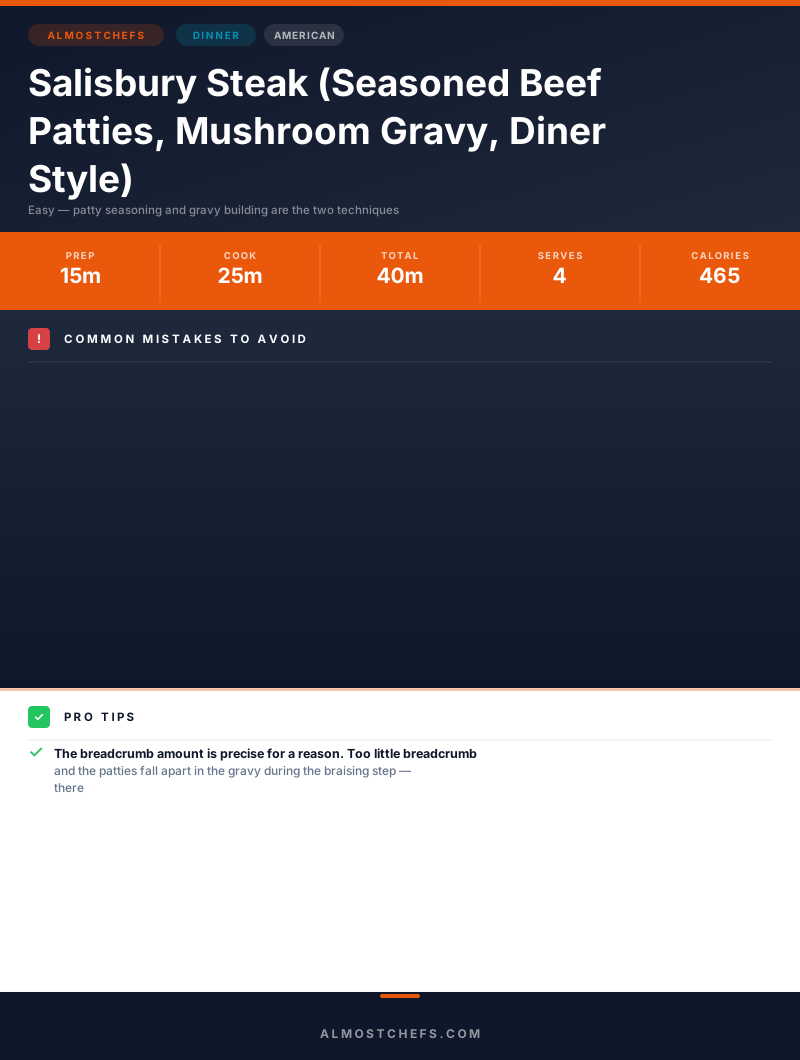
Salisbury Steak (Seasoned Beef Patties, Mushroom Gravy, Diner Style)
🛒 Ingredients
- ✦1.5 lbs ground beef (80/20)
- ✦1 large egg
- ✦1/4 cup plain breadcrumbs
- ✦1 tablespoon Worcestershire sauce
- ✦1 teaspoon garlic powder
- ✦1/2 teaspoon onion powder
- ✦1 teaspoon kosher salt
- ✦1/2 teaspoon black pepper
- ✦2 tablespoons vegetable oil
- ✦2 tablespoons unsalted butter
- ✦1 medium yellow onion, thinly sliced
- ✦8 oz cremini mushrooms, sliced
- ✦2 tablespoons all-purpose flour
- ✦2 cups low-sodium beef broth
- ✦1 tablespoon Worcestershire sauce
- ✦1 teaspoon Dijon mustard
- ✦Fresh thyme leaves, to taste
- ✦Salt and black pepper to taste
👨🍳 Instructions
01Step 1
Combine ground beef, egg, breadcrumbs, Worcestershire, garlic powder, onion powder, 1 teaspoon salt, and 1/2 teaspoon pepper in a large bowl. Mix with your hands until just combined — do not overwork.
02Step 2
Divide the mixture into 4 equal portions. Shape each into an oval patty about 3/4 inch thick, flattening slightly in the center. The center depression prevents the patty from doming as it cooks.
03Step 3
Heat 2 tablespoons of vegetable oil in a large skillet over medium-high heat until shimmering. Add the patties and sear for 3-4 minutes without moving until a deep brown crust forms. Flip and sear the other side for 3 minutes. Transfer to a plate — they will not be fully cooked through.
04Step 4
Reduce heat to medium. Add the butter to the pan with the drippings. Add the sliced onion and cook for 4-5 minutes, stirring occasionally, until softened and beginning to take on color.
05Step 5
Add the sliced mushrooms in a single layer. Season with salt and pepper. Cook without stirring for 2-3 minutes to let the mushrooms begin releasing water, then stir occasionally for another 5-6 minutes until all the water has evaporated and the mushrooms are golden brown.
06Step 6
Add the minced fresh thyme leaves (about 1 teaspoon). Sprinkle the flour evenly over the mushrooms and onions. Stir to coat everything in the flour and cook for 1-2 minutes until the raw flour smell disappears.
07Step 7
Pour in the beef broth slowly while stirring constantly with a whisk or wooden spoon, scraping the pan bottom to incorporate the fond.
08Step 8
Add the Worcestershire sauce and Dijon mustard. Stir to combine. Bring to a simmer.
09Step 9
Nestle the seared patties back into the gravy, along with any accumulated juices from the plate. The patties should be partially submerged. Reduce heat to medium-low, cover, and cook for 10-12 minutes until the patties reach 160°F internal temperature.
10Step 10
Taste the gravy and adjust salt, pepper, and Worcestershire. If the gravy is too thick, stir in a splash of beef broth. If too thin, increase heat and simmer uncovered for a few minutes.
11Step 11
Serve the patties on mashed potatoes or egg noodles, spooning the mushroom gravy generously over everything.
Nutrition Per Serving
Estimates based on standard preparation. Adjustments alter macros.
🔄 Substitutions
Instead of Cremini mushrooms...
Use Baby portobello or shiitake mushrooms
Shiitake mushrooms have a more pronounced umami flavor due to their high glutamate content. They produce a darker, more intensely flavored gravy. Remove and discard tough shiitake stems before slicing.
Instead of Ground beef (80/20)...
Use Ground turkey (85/15)
Lower saturated fat. Turkey produces a slightly drier patty since it lacks the intramuscular fat of 80/20 beef. Increase breadcrumbs to 1/3 cup to improve binding and add 1 tablespoon of olive oil to the mixture to compensate for reduced fat.
Instead of Beef broth...
Use Chicken broth plus 1 tablespoon soy sauce
Chicken broth is lighter in color and flavor. The soy sauce adds glutamate-based umami to approximate the depth of beef broth. This produces a slightly less rich but acceptable gravy.
🧊 Storage & Reheating
In the Fridge
Store patties and gravy together in an airtight container for up to 4 days. The gravy thickens considerably in the fridge as the starch sets. Reheat in a covered skillet over medium-low with a splash of beef broth to restore consistency.
In the Freezer
Freeze patties and gravy together in portions for up to 3 months. Thaw overnight in the refrigerator before reheating. The gravy may require whisking after reheating to re-emulsify.
Reheating Rules
Reheat covered in a skillet over medium-low heat with 3-4 tablespoons of beef broth, turning the patties once and spooning gravy over them as they warm. Do not microwave the patties alone — they dry out. Microwave the gravy separately on 70% power if you must, then spoon it over the patties.
❓ Frequently Asked Questions
What is the difference between Salisbury steak and a hamburger?
A hamburger is seasoned ground beef — usually minimally — cooked on dry heat and served on a bun. The flavor comes from the seared beef itself. Salisbury steak is a seasoned ground beef patty containing egg, breadcrumbs, Worcestershire, and aromatics, cooked in a gravy that simultaneously finishes the meat and serves as the primary flavor vehicle. The patty is a vessel for the gravy in Salisbury steak. In a hamburger, the patty is the entire point.
Why do my patties fall apart in the gravy?
Insufficient binder (egg and breadcrumbs) or overworked meat mixture that tightened and then crumbled when the fat rendered in the gravy. Make sure you use a full egg and a full 1/4 cup of breadcrumbs per 1.5 lbs of beef. Mix just until combined — stop before the mixture feels dense and homogenous. Also make sure the patties are fully seared before they go into the gravy; a raw patty has no crust to hold it together.
Can I make the gravy ahead?
Yes. The gravy can be made completely ahead and refrigerated for up to 4 days. Make the patties fresh or reheat pre-seared patties in the reheated gravy, covered, for 10-12 minutes. The gravy actually improves after a day as the mushroom and beef flavors integrate.
My gravy has lumps. How do I fix it?
Transfer the lumpy gravy to a blender or use an immersion blender to smooth it out, then return to the pan. Going forward, the key is adding broth slowly while whisking continuously — add the first quarter cup in a thin stream, whisk until smooth, then continue adding. If the roux is properly cooked (not clumped into a mass), lumping is avoidable.
What do I serve with Salisbury steak?
Mashed potatoes are the classic pairing — they're a delivery vehicle for the gravy. Egg noodles work equally well and are more traditional in some regional versions. Steamed green beans or roasted broccoli balance the richness. Crusty bread for the gravy is not a requirement but is never a mistake.
The Science of
Salisbury Steak (Seasoned Beef Patties, Mushroom Gravy, Diner Style)
We turned everything on this page into a beautiful, flour-proof PDF cheat sheet. Print it out, stick it to your fridge, and never mess up your salisbury steak (seasoned beef patties, mushroom gravy, diner style) again.
*We'll email you the high-res PDF instantly. No spam, just perfectly cooked meals.
AlmostChefs Editorial Team
We translate the internet's most popular cooking videos into foolproof, beginner-friendly written recipes. We analyze multiple methods, test them in our kitchen, and engineer a single "Master Recipe" that gives you the best possible result with the least possible stress.